
News
CB Governor says economy is estimated to have grown by 5% in 2024


Sri Lanka’s economy is estimated to have grown by 5.2 percent, in the first three quarters of 2024, with key economic sectors recording expansions, Central Bank (CBSL) Governor Dr. Nandalal Weerasinghe said on Wednesday, at an event in Colombo.
Addressing the launch of ‘Central Bank’s Policy Agenda for 2025 and Beyond,’ Dr. Weerasinghe said leading economic indicators of industry and service sectors reflect a continuation of the expansion in output in the last quarter of 2024 as well. Thus, the real GDP is projected to have grown by around 5.0 percent in 2024, registering the highest annual growth since 2017, Dr. Weerasinghe said.
This higher-than-expected growth shows that deflation in recent months was not due to demand factors but mainly due to supply-side factors, the CBSL Governor said.
Dr. Weerasinghe said that in 2024, the Central Bank had eased monetary policy on three occasions leading to lower interest rates.
This supported the economy to progress and encouraged consumer spending and promoted investments that laid the basis for the economic recovery, he said.
He added that the credit extended to the private sector expanded notably in 2024, while credit obtained by the public sector contracted, freeing up financial resources for private-sector investment.
The CBSL Governor said the Central Bank facilitated the increased demand for currency by providing adequate currency notes and coins to the banking system, which ensured that transactions could be carried out unhindered amidst the recovery in domestic economic activity.
He added that in 2024, the public adoption of digital payments continued to increase rapidly, and customers’ payments to government institutions through online payment platforms have also recorded a notable expansion.
He added that the Central Bank purchased the highest-ever annual amount of foreign exchange from the domestic foreign exchange market in 2024, exceeding 2.8 billion (net) U.S dollars.
The gross official reserves increased to around 6.1 billion dollars by the end of 2024 compared to 4.4 billion dollars at the end 2023, Dr. Weerasinghe said.
He added that in 2024 restrictions, in place since 2020, on investments made outside Sri Lanka by resident Sri Lankans and capital transfers by emigrants were significantly relaxed.
Meanwhile, the rules relating to the repatriation of export proceeds to Sri Lanka and their conversion into Sri Lanka rupees were relaxed, he said.
He mentioned that the Central Bank’s focus going forward will be on stabilizing inflation around 5 percent, while ensuring that the economy remains on track towards achieving sustained growth over the medium term, thereby ensuring the prosperity of the nation.
Dr. Weerasinghe added that with a view to making low-interest rate credit accessible, the Central Bank will closely work with banks and other financial institutions, in 2025, to reduce the excessive interest rates still prevalent in the market. (RK)


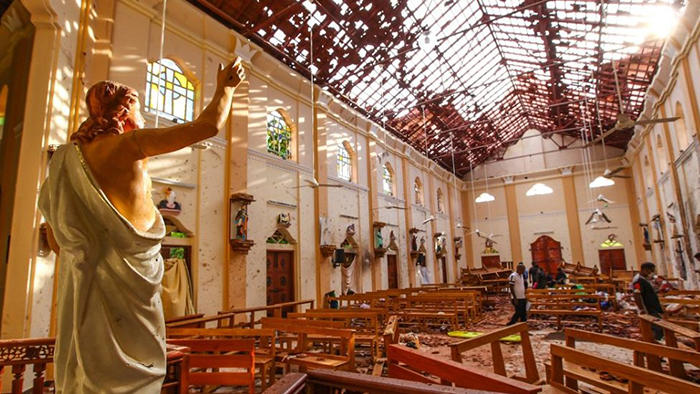
Former Defence Secretary Hemasiri Fernando told court on Thursday that then State Intelligence Service (SIS) Director Nilantha Jayawardena was also aware of intelligence information and had acted to conceal it, while also testifying that he believed former President Maithripala Sirisena had prior knowledge of the Easter Sunday terror attacks.
Fernando made the statement while giving evidence before a Trial-at-Bar in the case filed against him over alleged negligence in failing to prevent the 2019 Easter Sunday suicide bombings.
He said he believed that Sirisena, who at the time also held the posts of Defence Minister and Commander-in-Chief of the Armed Forces, had been aware of intelligence inputs relating to the impending attacks.
The former Defence Secretary further alleged that Jayawardena, then Director of the SIS, was also privy to the information and had acted to suppress it.
Fernando is indicted on charges of criminal dereliction of duty for allegedly failing to act on prior intelligence warnings ahead of the coordinated attacks.
Defending his position in court, he maintained that responsibility for the failure lay elsewhere.
“The President, who was the Defence Minister and head of the armed forces, had left the country. As the most senior official, I have been dragged into this case. If the information I presented had been properly examined, this case would not have been filed against me. Those responsible are still at large,” he told court.
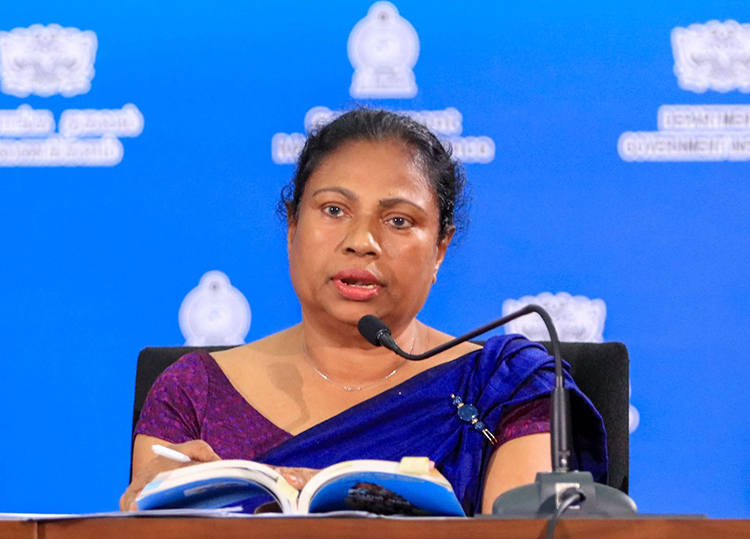
The National Child Protection Authority has warned that corporal punishment continues to cause serious harm to children, revealing that it receives between 2,000 and 2,500 complaints of physical violence against children each year — averaging between five and seven complaints a day.
Issuing a statement to mark the International Day to End Corporal Punishment on April 30, the NCPA said both short-term and long-term physical and psychological punishment could severely affect a child’s personality development and emotional wellbeing.
NCPA Chairperson Preethi Inoka Ranasinghe said research had consistently demonstrated the damaging effects of corporal punishment used in disciplining children.
“For decades, parents, elders and teachers have used various forms of physical punishment to discipline children, making it a socially and culturally accepted practice both at home and in schools,” she said.
The Authority stressed that corporal punishment constitutes physical abuse and should not be used under any circumstances.
According to the NCPA, complaints relating to physical violence remain the second highest category of complaints received annually by the institution, with between 2,000 and 2,500 incidents reported each year.
Based on those figures, the Authority receives approximately 5.5 to 6.8 complaints of child physical violence every day.
The NCPA further noted that under Article 19 of the United Nations Convention on the Rights of the Child, children are entitled to protection from all forms of abuse and neglect, an obligation binding on Sri Lanka since 1990.
The Authority also pointed to Article 11 of the 1978 Constitution, which guarantees freedom from cruel, inhuman or degrading treatment, as well as provisions under Section 308(A) of the Penal Code and Education Ministry circulars prohibiting physical and psychological punishment in schools.
The NCPA urged parents, teachers and caregivers to adopt non-violent disciplinary methods and to prioritise the safety and mental wellbeing of children.
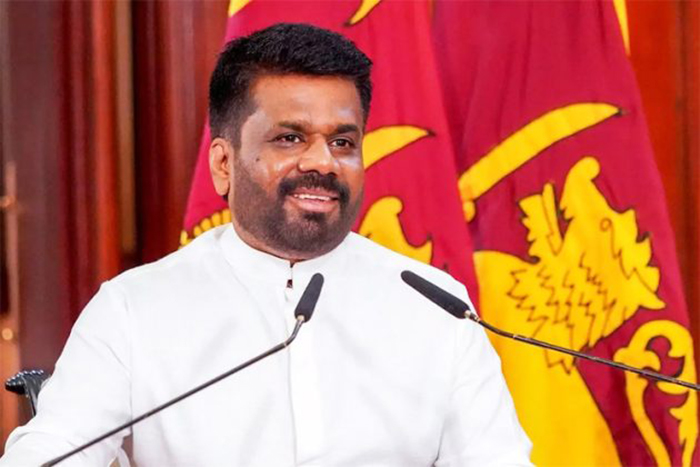
President Anura Kumara Dissanayake said that all individuals accused of fraud, corruption and other offences will be brought before the law in the coming weeks, as investigations are being intensified under the NPP administration.
Addressing the Nuwara Eliya District May Day rally on Friday, the President said the government had already strengthened key investigative institutions, including the Criminal Investigation Department and the Bribery Commission, to expedite ongoing probes.
He said a large number of cases involving alleged wrongdoing were now progressing through the legal system, with ten cases scheduled to be taken up in court during May and one case already ordered for a verdict within the month following a directive issued on April 30.
President Dissanayake stressed that the government was acting on a public mandate to ensure accountability, warning that law enforcement action would continue in the months ahead.
He said the administration had taken steps to reverse what he described as a culture of privilege enjoyed by former rulers, while focusing instead on public welfare and governance reform.
“We are making decisions for the people and ensuring that privileges of the ruling class are reduced,” he said, adding that previous governments had worked to expand their own benefits while placing burdens on citizens.
The President claimed that the NPP government had secured the trust of people across all regions, describing it as a “people’s administration” committed to working-class interests.
He also outlined the government’s broader policy direction, including ensuring stable incomes, improved education, housing, the rule of law and national unity.
Warning of further legal action, he said a significant number of individuals accused of corruption would face imprisonment in 2026, adding that no one would be above the law regardless of position or family background.
“We do not distinguish between Presidents, Prime Ministers or their families. The law will apply equally to all offenders,” he said.

‘Dates have the highest sugar content to fight Coronavirus’

Sunday Island 27 December – Headlines

#SundayIsland 17th December – Headlines

Sunday Island – 28th March

Sunday Island Headlines – 21 March

Sunday Island – 21st February – Headlines
-
 News4 days ago
Treasury chief’s citizenship details sought from Australia
-

 News6 days ago
BIA drug bust: 25 monks including three masterminds arrested
-

 News3 days ago
Rooftop Solar at Crossroads as Sri Lanka Shifts to Distributed Energy Future
-

 News6 days ago
Banks alert customers to phishing attacks
-
 News5 days ago
Govt. assures UN of readiness to introduce ‘vetting process’ for troops on overseas missions
-
 News2 days ago
“Three-in-one blood pressure pill can significantly reduce risk of recurrent strokes”
-

 Business5 days ago
ADB-backed grid upgrade tender signals next phase of Sri Lanka’s energy transition
-

 News4 days ago
Central Province one before last in AL results