
Opinion
Cattle Slaughter: A moral or religious issue?

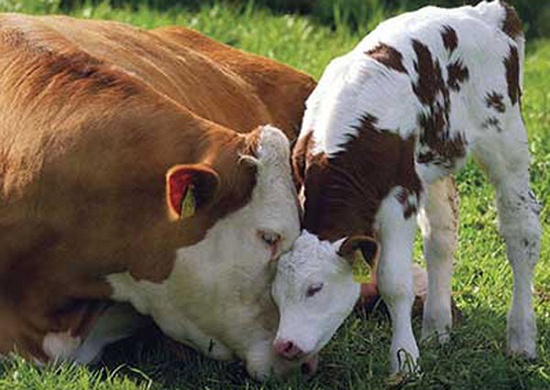
The proposed prohibition of cattle slaughter has created a forceful and noisy public response, mostly in favour and to a lesser extent against. Unfortunately, most of both parties have viewed or related it to the religious context. The decision of banning, or slaughtering the cattle, should be based on moral issues, more than religious issues.
We are aware that certain animals (e.g. wild animals, rare birds, etc.) are protected by law (e.g. Fauna and Flora Protection Ordinance, Prevention of Cruelty to Animals Ordinance etc.). Some are protected as endangered species. These laws are not based on religious grounds.
Recently, a few leopards were killed, through the setting up of snares. On and off we hear the most venerated animal – the elephants — are killed by shooting. In such situations, there was a significant public outcry against such killings. The government of Sri Lanka too in general, takes stern action against such offenders. These decisions are not based on any religious doctrine, but on the concept of animal cruelty, etc.
More recently, there was growing public opinion against the selling of police sniffer dogs to private owners. Once again the public opinion was not on a religious basis, but due to a moral issue. Thinking behind the opinion is, these dogs have served the nation well in their prime age, hence the police conceptually have a moral obligation to care for them when they are old.
A similar principle is involved with regard to the banning of cattle slaughter. It is important to identify the place of cattle in our society.
Ours is mainly an agricultural society where the cattle play a very important and useful role. Apart from benefits in the field of agriculture, they are a very valuable resource in many ways in our society. Having taken all these benefits, the slaughtering of cattle is beyond all boundaries of morality. Therefore the question is: is it morally or ethically right to slaughter a faithful and powerless friend of farmers?
Sadly, most people have mixed up these issues, and have perceived the problem only by the religious viewpoint. It is true that hundreds of chickens, goats and pigs are slaughtered every day for human consumption. It is equally correct to note that the banning of cattle slaughter will not bring about a complete righteous society, when so many non-righteous activities are taking place on a daily basis. However, such a prohibition will at least remove one highly immoral activity.
Let me quote a great man who lived in the 19th and 20th centuries who was not a Buddhist, and emphasized the morality of treating animals well.
“The greatness of a nation and its moral progress can be judged by the way its animals are treated.” ― Mahatma Gandhi
It is a good moral step in the right direction.
Prof ANANDA
JAYASINGHE
University of Peradeniya
ajaya83pera@gmail.com

Globalisation exposes weakness and failed governance; and invites intervention – A message to all inept governments everywhere
The government of Burkina Faso has shattered the illusion of party politics, dissolving every political party in the nation. Its justification is blunt: parties divide the people, fracture sovereignty, and allow corrupt elites to hijack the sacred powers that belong to the citizenry.
This is not an aberration. It is the recurring disease of fragile states. Haiti, Somalia, Sudan, Venezuela, Sri Lanka—their governments collapse under the weight of incompetence, leaving their people abandoned and their sovereignty hollow. These failed states do not merely fail themselves; they burden the world. Their chaos spills across borders, draining the strength of nations that still stand.
Globalisation does not forgive weakness. It exposes it. And as global opinion hardens, a new world order is taking shape—one that no longer tolerates decay. The moment of rupture came when US President Donald Trump seized Nicolás Maduro from his Venezuelan hideout and dragged him to face justice in America.
Predictably, the chorus of populists cried “oil!” They shouted about imperialism while ignoring the rot of Maduro’s failed government and his collapse in legitimacy. But the truth is unavoidable: if Venezuela had been competently governed, Trump would never have had the opening to topple its leadership. Weakness invited conquest. Failure opened the door.
Singapore offers the perfect counterexample. It is perhaps the best-governed nation on earth, and for that reason it is untouchable. Strong governance is the only true shield of sovereignty. Without it, sovereignty is a brittle shell, a flag waving over ruins.
Trump’s precedent will echo across continents. China, Russia, India—regional powers are watching, calculating, preparing. The message is unmistakable: Sovereignty is conditional. It is not guaranteed by history or by law. It is guaranteed only by strength, by competence, by the will to govern effectively.
This is the revolutionary truth: nations that fail to govern themselves will be governed by others. The age of excuses is over. The age of accountability has begun. Weak governments will fall. Strong governments will endure. And the people, sovereign and indivisible, will demand leaders who can protect their destiny—or see them replaced by those who can.
By Brigadier (Rtd) Ranjan de Silva
rpcdesilva@gmail.com

In the article, “Let My Country Awake…” published yesterday, it was erroneously said that Sri Lanka was celebrating 77 years of Independence. It should be corrected as 78 years of Independence. The error is regretted.
Where the mind is without fear, and the head is held high;
Where knowledge is free;
Where the world has not been broken up into fragments by narrow domestic walls;
Where words come out from the depth of truth;
Where tireless striving stretches its arms towards perfection;
Where the clear stream of reason has not lost its way into the dreary desert sand of dead habit;
Where the mind is led forward by thee into ever-widening thought and action
Into that heaven of freedom, my Father, let my country awake.
– Rabindranath Tagore, Gitanjali, 35
As Sri Lanka marks seventy-seven years of independence, this moment demands more than flags, ceremonies, or familiar slogans. It demands memory, honesty, and moral courage. Once spoken of with affection and hope as Mother Lanka, the nation today increasingly resembles a wounded child—carried again and again across fragile hanging bridges, suspended between survival and collapse. This image is not new to our cultural consciousness. Long before today’s crises, Sri Lankans encountered it through literature and radio, most memorably in Henry Jayasena’s Hunuwataye Kathawa (1967), the Sinhala radio drama adaptation of Bertolt Brecht’s The Caucasian Chalk Circle, written during World War II (WWII), broadcast by Radio Ceylon and later staged across the island. Heard in village homes and city neighborhoods, the story quietly shaped a moral imagination we now seem to have forgotten.
In Hunuwataye Kathawa, a child is placed at the center of a chalk circle, claimed by two women. One is Natella, the biological mother who abandons the child during a moment of danger and later returns—not out of love, but driven by entitlement, inheritance, and power. The other is Grusha, a poor servant who risks everything to protect the child, feeding her, carrying her across perilous terrain, and choosing care over comfort. When ordered by the judge to pull the child out of the circle, Grusha refuses. She would rather let go than injure the child. Justice, the story teaches, belongs not to those who claim ownership most loudly, but to those who practice responsibility and restraint. For generations of Sri Lankans, this lesson entered the heart not through policy or economics, but through art.
Beneath Sri Lanka’s recurring failures lies a deeper wound: collective forgetfulness. It is indeed incredible how a nation colonised by foreign powers for over four centuries, battered by people’s insurrections and national struggles ever since, divided by a 30-year-long ethnic war, shaken by a Tsunami, inflamed by Easter Bombings 2019, hit by Covid-19 shutdown, and bankrupt by economic crisis, just to mention a few before the devastating Cyclone Ditwah that rocked the entire nation not many weeks ago, could be so forgetful of its tragedies. This insight was articulated with striking clarity by Dr. Arvind Subramanian, the former Chief Economic Advisor to the Government of India, speaking at an event organised by The Examiner in Colombo on Jan 21, 2026. Subramanian observed the nation’s troubling tendency to forget its own history—its tragedies, hard-earned lessons, and warnings—and to embrace uncritically whatever is new in a pattern-line manner. This historical amnesia traps Sri Lanka in vicious cycles of debt, dependency, and unscientific thinking. When memory fails, every crisis feels unprecedented; when learning fails, every mistake is repeated.
Consequently, after seventy-eight years of independence from the last colonial rule, Sri Lanka still stands inside that chalk circle. Mother Lanka, once admired for free education, public health, and social mobility, has over the decades been reduced to a wounded child carried across unstable political, economic, and environmental bridges. Different governments, armed with different ideologies and promises, have taken turns holding her. Some carried her carefully; others dropped her midway; still others claimed her loudly while burdening her with unsustainable debt, weakened institutions, superstitious demeanors, and short-term fixes that mortgaged the future. This mother-made-child nation was perpetually oscillating between collapse and recovery. Yet instead of healing her wounds, with every passing Independence Day, we repeatedly celebrated and argued over who owned her.
This long post-independence journey reveals two recurring patterns. There have been many Natella-like approaches—entitlement without responsibility, nationalism without sacrifice, populism without prudence. These abandon the child in moments of crisis, only to return when power, contracts, or prestige are at stake. Alongside them, however, there have also been Grusha-like moments—imperfect, painful, often unpopular, yet rooted in reform, discipline, and care. These moments prioritise institutions over personalities, education over spectacle, sustainability over extraction, science over superstitions, and responsibility over applause. They are the moments that keep the child alive. The thorough cleaning that the whole nation recently experienced with Cyclone Ditwah also reminds us, among many other lessons, about the power and the need of these Grusha-like moments. It reminds us that the real celebration of freedom requires not slogans but breaking free from Natella-like approaches and, after the immersion that she just experienced, that it is only possible in and through at least three kinds of voluntary and ongoing immersions (3P Immersions)—disciplines that reshape not only policy but also personal and national character—Immersion of Poverty, Immersion of Plurality, and Immersion of Prudence.
The immersion of poverty, both spiritual and material, is deeply rooted in Buddhist teaching of tanhaā and āśā—the restless craving for more than one truly needs or can sustain. It is that which enables us to be constantly mindful of ourselves, not only who we really were, who we actually are, and what we continue to become, but also what we are really in need of. Nationally speaking, it involves acknowledging the country’s geopolitical placement, the strengths of its proud history and civilisation, and the limitations of its repeated struggles and political dismay. While material realism, when faced honestly, disciplines excess and teaches gratitude for what we already have, the immersion in poverty should remind us about how greed can lead to corruption and about the illusion that fulfillment lies in accumulation. A nation that does not discern its desires with its own resources and real capacity—human, historical, cultural, and environmental—will always mortgage its future to satisfy temporary cravings. We must ask ourselves honestly: how different are we today from the colonial era, when our decisions were shaped by external powers, if we remain bound by foreign debts, external models, and a forgetting of our own identity?
The immersion of plurality should not be understood as a slogan, but as a lived ethic. Sri Lanka’s diversity of language, religion, culture, geography, and memory is not the problem; it is the unfinished promise. Sinhala and Tamil, Muslim and Burgher, Buddhist, Hindu, Christian, and Muslim, village and city, coast and hill—all belong to the child in the chalk circle. While Natella-like politics weaponise difference and division, pulling the child apart to claim possession, Grusha-like care holds plurality together, recognising that it is the unity in diversity that sustains, protects, and frees the child, carrying it safely home. Freedom figures like Siddi Lebbe, Veera Puran Appu, Sir Ponnambalam Ramanathan, Sir Ponnambalam Arunachalam, C. W. W. Kannangara, T. B. Jayah, Anagarika Dharmapala, and D. S. Senanayake emerged from different faiths, languages, and regions, yet shared a common ethic: the country mattered more than self, party, or community. They were not perfect, but they were Grusha-like—unwilling to pull the child apart to prove ownership, willing instead to carry her patiently across danger.
Grusha-like care, therefore, holds plurality together, recognizing that no single group can carry the country alone. Rather, it is plurality which is the ground of freedom from coercion, selective justice, and hostage-taking—whether by professions, ideologies, or institutions that prioritize self-interest over the common good. It also demands freedom from resistance to positive change, especially when that resistance is motivated by private gain rather than the common welfare. A plural society asks: Does this serve the nation, or merely my group, my party, my advantage?
The immersion in prudence is perhaps the rarest and most neglected virtue. Prudence calls us to move from myth to science, from avidyā to vidyā, from superstition to evidence. Recent floods and landslides were not merely natural disasters; they were moral warnings. Thy painfully revealed what happens when desire overrides restraint, when planning ignores science, when land is abused, when short-term gain overrides long-term responsibility, and when development forgets sustainability. Freedom from disaster is inseparable from freedom from ignorance. Prudence teaches us to listen actively, speak intentionally, plan with evidence, build with environmental awareness, and govern with foresight. Prudence is not only about grand reforms; it is also very much about our everyday civic behaviour, such as how we treat Mother Earth and shared spaces.
For example, freedom from spitting on the ground, freedom from littering public places, and freedom from leaving behind what we refuse to clean or return. These are not small matters; they are indicators of whether people see the nation as a common home or as a place to be used and discarded. These are only a handful of many instances where we need to hear what JFK (John F. Kennedy) asked the Americans in 1961: “Ask not what your country can do for you – ask what you can do for your country”. The WWII-devastated Japan’s development is not built merely on technology, but on discipline, as systems like 5S cultivate order, responsibility, and respect for shared space. Clean Sri Lanka and the proposed Education Reforms 2026 can become transformative moments—but only if truth replaces pretense, cooperation replaces cynicism, and ownership replaces vengeful rhetoric. Prudence allows a nation to appreciate its ownness—its history, institutions, cultural resources, and the agendas for the common good—without rejecting learning from the world. Without prudence, novelty becomes addiction, and reform becomes fashion.
Before the history repeats itself for another 77 years, either as a series of tragedy or comedy, it is important, therefore, to recognise that freedom from debt, disaster, and dependency (national or personal) is impossible without all three types of immersions working together—poverty of desire, plurality of belonging, and prudence of action. Initiatives such as education reform and Clean Sri Lanka offer genuine opportunities, but only if we cooperate, think long-term, and resist turning reform into another slogan. This raises an uncomfortable question: Do we truly want to be free? Or are we content to remain in the same rut, so long as ignorance is preserved, education is left unreformed, and distractions are supplied by a handful of greedy politicians—their vengeful rhetoric, their allies, lopsided media, and mushrooming content creators—while the powerful continue to benefit from it all? Freedom is demanding. It asks for memory, restraint, cooperation, and courage. Dependency, by contrast, is easy.
Therefore, the question before us is not who shouts the loudest, who claims patriotism most aggressively, or who promises instant miracles. It is who remembers, who renounces, who embraces plurality, and who acts with prudence as her stewards and not owners. When are we going to immerse ourselves in these three immersions and be free? After Rabindranath Tagore’s poem, W. D. Amaradeva once sang, “Patu adahasnam paurinen lokaya kabaliwalata nobedi, jnanaya iwahal we… Ehew nidahase swarga rajyataṭ, mage dæśaya avadi karanu mena, Piyanani…“— Where knowledge keeps the world from being divided by the walls of narrow thoughts… Into that heaven of freedom, Father, let my country awake. How many poems, how many Amaradevas, how many freedom speeches, how many religious sermons, how many inundations, and how many struggles must come and go before we awaken to that truth and let Mother Lanka be out of that vicious pattern or circle of collapse and recovery—whole, healed, and free?
By Dr. Rashmi M. Fernando, S.J.
Loyola Marymount University, Los Angeles, CA, USA
Rashmi.Fernando@lmu.edu | https://orcid.org/0009-0006-3310-721X

SLAF men’s Judo team crowned overall champs at 62nd National Judo Championship

Showers above 75 mm are likely at some places in the Uva province and in Batticaloa, Ampara, Hambantota and Nuwara-Eliya districts

Parliament: Govt. questioned on returned cheques, delayed payments for disaster victims

President urges shedding of petty differences to achieve an economically strong Sri Lanka

PM: No withdrawal of modules introduced for Grade 6 under proposed education reforms

Lion flags flutter in Vavuniya as black flags mark Independence Day in Kilinochchi

‘Dates have the highest sugar content to fight Coronavirus’

Sunday Island 27 December – Headlines

#SundayIsland 17th December – Headlines

Sunday Island – 28th March

Sunday Island Headlines – 21 March

Sunday Island – 21st February – Headlines
-
 Opinion6 days ago
Sri Lanka, the Stars,and statesmen
-

 Business5 days ago
Hayleys Mobility ushering in a new era of premium sustainable mobility
-

 Business2 days ago
SLIM-Kantar People’s Awards 2026 to recognise Sri Lanka’s most trusted brands and personalities
-
 Business5 days ago
Advice Lab unveils new 13,000+ sqft office, marking major expansion in financial services BPO to Australia
-
 Business5 days ago
Arpico NextGen Mattress gains recognition for innovation
-

 Business4 days ago
Altair issues over 100+ title deeds post ownership change
-

 Business4 days ago
Sri Lanka opens first country pavilion at London exhibition
-

 Editorial5 days ago
Govt. provoking TUs