
2025-10-07

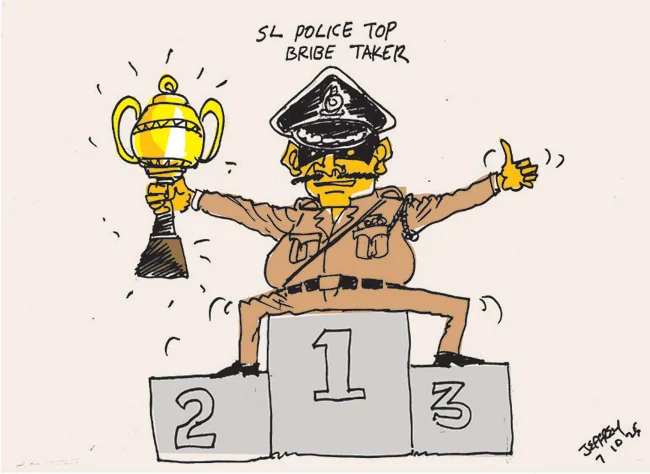

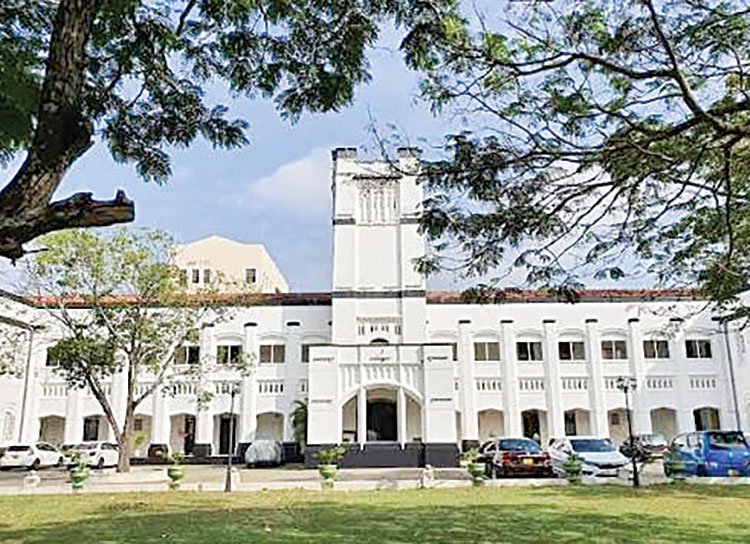
Little breathing space between papers at the final exam and my mind goes blank answering Sinhala paper
(Excerpted from The Art of Governance, autobiography of MDD Pieris)
Then came the final blow. When the time table for the final examination was out, I discovered that I would have to answer all my nine papers, of three hours each at one continuous stretch without even a half days break! I was due to answer the European history paper one afternoon; then go on next morning to British history; afternoon to Ceylon history; the next morning to English Poetry; afternoon to English drama; the following morning to English prose; and that same afternoon to suddenly switch from thinking and writing in English to thinking and writing in Sinhala, answering the first of the three papers in Sinhala, with the other two coming morning and afternoon the following day! Several of my friends urged me to go and speak to the university administration about a change, but at the same time, others who had had difficulties and sought recourse reported that they were rather rudely treated by the officers concerned.
This deterred me from going. I was a polite person by nature and just as in the case of Mr. Athulathmudali about whose insistence on politeness I have already written about, I too resented the prospect of being treated rudely. Therefore, I decided, quite foolishly no doubt, and come what may to go through and sit for the nine papers in four and half continuous days. Thus began the most difficult and harrowing period of my life, a period even worse than the experience at the university entrance examination.
In that instance, there was certainly disappointment and frustration but since I was attempting a near impossibility, there was less stress because mentally I was prepared for failure. This was reflected in a reasonably good appetite, and the ability to sleep. This time, at the final examinations, I lost both. Normal eating was impossible. My stomach was in knots. I just went through the motions and nibbled something and basically sustained myself with a combination of powdered milk and Ovaltine. Sleep became disturbed. After six hours of strenuous concentration a day answering question papers, there was little the mind could absorb by way of preparation for the next day.
During the day, nothing was possible since the morning’s paper was over at noon, and by the time you walked back from the Arts block to Marrs Hall just to look at the food and freshen up and then walk back to the examination hall to be there about 10 minutes before the 2 p.m. start of the next paper, there was neither time nor inclination to look at or absorb anything. I did try to look through whatever I could for the next days two papers during the night whilst keeping in mind the necessity to get some rest and sleep. Therefore, I did try to get six hours of sleep in the night. But it turned out to be an unhealthy and disturbed sleep leaving you not fresh, but jaded in the morning.
The mind was overactive. By this time, the numbers in the hall had dwindled due to the vacation. Only the few sitting for their final examination were in residence, and they were busy with their studies. There was therefore also a sense of loneliness and isolation prevailing. Added to all this was the horrible thought of failing and having to repeat all nine papers the following year. One had very much to try to find some degree of good cheer from within one’s own resources. Given my predicament I had precious little of that.
In these almost nightmarish conditions, I struggled through eight of the nine papers. The last paper during the final afternoon was the third paper in Sinhala literature, which was on prose. I still have a vivid memory of that afternoon. Rain clouds were building up and as we got down to answering the paper, it was getting quite dark. The lights shone brightly in the examination hall. There were five questions to be answered and I had just finished answering one, and had barely started on the next, when my mind went completely blank. I have never experienced such a thing before or since. The thinking processes suddenly stopped as if a plug had been pulled out from an electricity supply. I was in the middle of a sentence, I found impossible to complete. It was total disconnection.
There was just nothing I could do except to lay down my pen and gaze out of the window. There were two things in my favour at this critical moment. I possessed a temperament that didn’t panic easily or once embarked on a course, give up easily. I therefore calmly decided to stop trying to struggle, and relax. I was aware that precious minutes were ticking by. But I knew that what could not be cured must be endured, and that any attempt at force and struggle would only serve to aggravate the situation. That part of my mind was clear and rational. I spent almost 20 precious minutes doing nothing. Then gradually I found that I was able to focus once again.
I cautiously and with a degree of fear took up my pen and leaving room to complete the question I had begun to write on, started on a new question. The ideas flowed once again. I had however to be careful. There was no guarantee that everything would not come to a stop once again. I had already lost valuable time. Any further problem now would be the end of the paper and the end of perhaps the whole examination. I therefore deliberately slowed down my pace of writing and wrote slowly and steadily not pushing myself.
When the time came for the papers to be collected I had been able to answer only three out of the five questions in full. For the balance two, I was only just able to write down a few points. Answers in continuous prose were not possible. Up to this time, I had hope of at least passing the whole examination and obtaining my degree. Now, I was not so sure. There was a distinct possibility, I would fail the last Sinhala paper.
The next day I went home to Colombo, utterly drained. It appeared that my father’s prediction after reading my horoscope was not only accurate but frighteningly so. I too believed with him that there could not possibly be a worse period in the future. Starting from the stress of suddenly having to change schools in mid university entrance course to the end of my participation in school cricket through contracting measles, to the enormous trials and tribulations of the university entrance, to the disappointment of not being able to read for English “honours,” and now this situation at the final examination was almost too much for one person to take.
I was in a state which perhaps verged on a nervous breakdown, For a good two weeks at home, I was listless, unable to concentrate on anything. I could not read anything. Even the newspapers repelled me. The sound of music was irritating, and sleep desultory. I was taken to see the doctor, who advised complete rest. He did not give medicine. It was clear that I had severely overtaxed the system, and time would be the healer, as indeed was so gradually much to the great relief of my parents and myself. The newspaper once again began to interest me, and gradually books. Even then, I could not read for long periods for some time. I used to lose concentration and the mind began to wander.
In due course, I received a letter from the university, inviting me to teach an English course to the new batch of students about to enter the university. This was the vacation course in English for them. But I was just in no mood to teach. I was now back to normal, but did not wish to take upon myself the responsibilities of a teaching assignment. Therefore, I wrote back politely declining. But the letter from the university was a boost to my confidence. I knew that I would not have been called unless I had fared reasonably well, at least in my English papers, and got at a minimum a “B.” But what of the rest? I was still apprehensive. What came to mind was the unfinished Sinhala paper, and its possible impact on the whole examination.
Assistant Librarian Vidyodaya University
When the results came in due course, to my great relief I had passed. There was no question of a class. Nor was I expecting one. What I dreaded was sitting for the whole examination once again. I could now get this episode of my life out of the way and decide how to proceed. By this time the new Vidyodaya University had just begun to function. My father was a member of the Governing Council of the Vidyodaya Pirivena, the Vidyadhara Sabha and for long an associate and a friend of the renowned scholar Ven. Weliwitiye Soratha, the head of the Pirivena, who was the first Vice Chancellor of the new university.
Our family had many connections with Vidyodaya, including my maternal grandfather Mr. C. Don Bastian Jayaweera Bandara, himself a renowned scholar, writer, publisher and social worker, having had his higher education there. I for my part, for a period studied Sinhala under Ven. Soratha. Busy as he was, he found the time to teach me because of these family connections. I must have been a good student in his opinion, because he very graciously presented me a two volume set of his monumental work of the Sinhala dictionary, a task which he undertook and completed all by himself, a set which is one of my valued possessions even today.
When it became known that I had passed out, Vidyodaya was keen to have me and my father was equally keen that I should help out in whatever capacity. Finally, I was appointed as an Assistant Librarian and along with others, plunged into the task of setting up a proper library for the new university. At this time, the university functioned in the premises of the Vidyodaya Pirivena at Maligakande and it was rapidly becoming apparent that space was becoming a serious problem.
One of the most important tasks of a librarian is to classify knowledge accurately and correctly and this had to be carefully done. The system of classification adopted at the time was the Dewey Decimal System, and I spent much time at home poring over the volumes containing the system, so that during the working day classification and the typing of the card indexes, etc., could proceed with speed. Accuracy and speed were both necessary, accuracy, because a misclassified book is a lost book, speed because hundreds of books were lying on the floors, in cartons, in crates, on windowsills and all over the place.
I found the wide reading that I had done whilst at Peradeniya now of great assistance. With a quick perusal I was able to determine the classifications and sub-classifications. This was important. For instance, if one took up a book on European history, one had to determine whether it should be classified and appear on the shelves as general history; a history of a period; diplomatic history; economic history; social and cultural history; military history; a history of important treaties, and so on. This was so for all subjects and the wider your reading the easier it was.
But always at the end of the day was a general conference at which we took up for discussions amongst other matters, certain books which were exceedingly difficult to classify, partly because their contents approached the borders of many different subjects. Titles were frequently misleading. For instance, the book “Two eggs on my plate,” had nothing to do with cuisine. It was a tense memoir of certain military activities during World War II.

Sri Lanka’s total exports surpassed the US$12 billion mark during the first eight months of 2026, reaching an estimated US$12.01 billion, the Export Development Board (EDB) said.
The figure represents a 4.26% increase compared with the US$11.52 billion recorded during the corresponding period in 2025, with both merchandise and services exports recording positive growth.
According to the EDB, merchandise exports increased by 3.63% to US$9.41 billion, while services exports grew by 6.59% to US$2.60 billion.
The Board said the continued growth in services exports was strengthening the overall export base and contributing to the diversification of Sri Lanka’s export earnings.
In August 2026, total exports reached an estimated US$1.60 billion, recording a 1.77% year-on-year increase.
Services exports recorded particularly strong growth during the month, increasing by 13.97% to US$331.87 million, while merchandise exports amounted to US$1.27 billion.
According to provisional data released by Sri Lanka Customs, together with estimated export values for gems and jewellery and petroleum products, merchandise exports in August amounted to US$1.27 billion, representing a 1% decline compared with August 2025.
Meanwhile, services exports generated an estimated US$331.87 million during the month, reflecting a 13.97% increase compared with the corresponding period last year.
The EDB said the January-August performance demonstrated the continued resilience of Sri Lanka’s external sector, with total exports surpassing the US$12 billion milestone.
The Board said the positive performance of both merchandise and services exports reflected continued progress towards developing a more diversified, competitive and export-oriented economy, in line with Sri Lanka’s long-term economic development objectives.
News
Brewing new opportunities: Australia’s MDF and Kahawatte Plantations partner to grow Sri Lanka’s specialty coffee sector

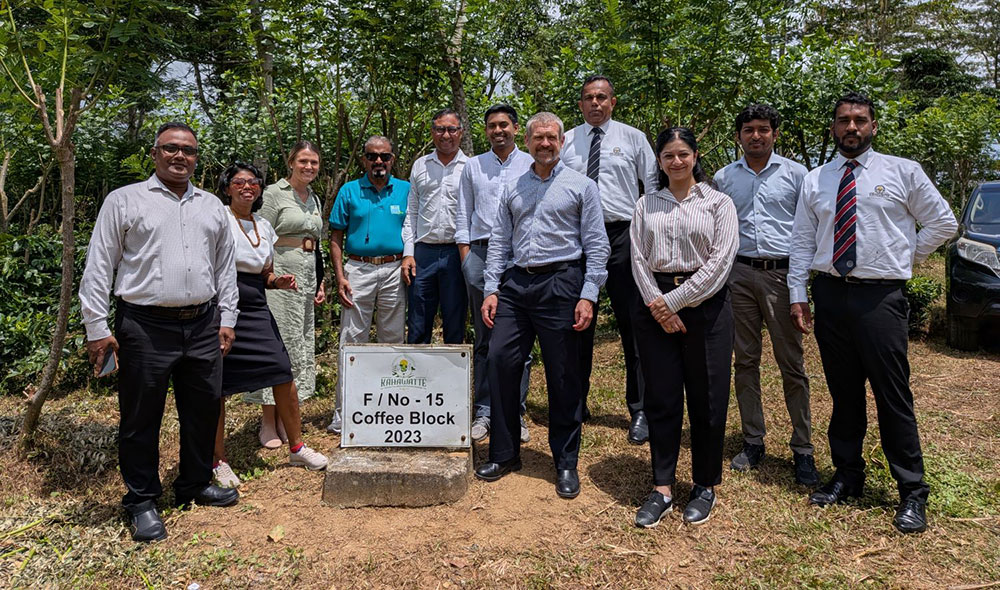
A partnership between Kahawatte Plantations PLC and Australia’s Market Development Facility to develop a modern coffee processing centre and a smallholder farmer network
NAWALAPITIYA, Sri Lanka – Kahawatte Plantations PLC (KWPL), a Regional Plantation Company operating across the landscapes of Nawalapitiya and Sabaragamuwa, together with the Market Development Facility (MDF), an Australian multi-country initiative, have completed a new Coffee Processing Centre and Smallholder Farmer Network, a joint investment aimed at lifting the quality, value and market reach of Sri Lankan coffee. Both the Coffee Processing Centre and Smallholder Farmer Network mark Kahawatte’s move into building a specialty coffee business alongside its established tea, rubber and cinnamon operations.
Kahawatte, which has diversified into cinnamon, already have 1,000 acres of this crop on its estates. Forty acres of coffee too has been established and produce of 169 neighbouring smallholder with 12.5 acres under coffee is purchased by the processing centre.
Strengthening coffee processing capacity is a vital step towards unlocking Sri Lanka’s growing potential in specialty coffee and expanding access to high-value international markets. Against this backdrop, Kahawatte Plantations PLC hosted a visit to its coffee operations at Craighead Estate, Nawalapitiya, bringing together the Australian High Commissioner to Sri Lanka, H.E. Matthew Duckworth, Australia’s Market Development Facility (MDF) Sri Lanka Country Director, Maryam Piracha, and the MDF team, to tour the company’s coffee processing centre and its Department of Export Agriculture award-winning coffee field.
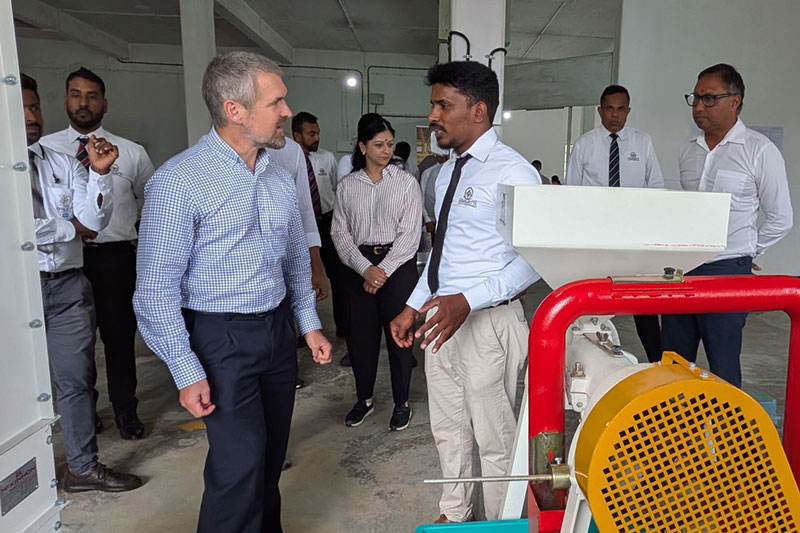
Launching of the new Coffee Processing Centre at Kahawatte Plantation, with Market Development Facility supporting efforts to strengthen Sri Lanka’s emerging coffee industry and boost value-added exports
Speaking during the visit, High Commissioner Duckworth emphasized how investments and initiatives of this kind support the local community, strengthen the industry, and contribute to the wider economy of the country.
The processing centre is now fully commissioned, equipped with a disk pulper and washer, an African huller, a flat-deck grader and a gravity separator, together with a newly built 1,000-square-foot drying house. During the visit, the delegation toured the award-winning coffee block and the processing centre, where KWPL representatives held an insightful discussion on the sustainable agronomic practices followed in the estate’s coffee cultivation, and on the company’s plans to further improve the quality of the coffee produced through the integration of new technology and a modern processing facility developed together with the support of smallholder farmers in the area.
The initiative reflects the partnership’s shared ambition of building sustainable livelihoods for coffee-growing communities while establishing Sri Lankan coffee in specialty markets worldwide – from the country’s highlands to premium cups, grown together with local farmers.
The network already supports 169 smallholder farming families, surpassing its initial target of over 100 growers. KWPL and MDF plan to expand the network to 500 smallholder farmers by 2030, while working toward exporting premium green beans to specialty markets, including Australia, and roasting coffee in-house for premium business and consumer markets in Sri Lanka.
A representative of the smallholder farmers shared how growers in the area have already benefited from the project, receiving quality planting materials provided through the support of the MJF Charitable Foundation, along with extension support through the project. He further expressed confidence that participating farmers will gain further in the future through improved quality and better prices for their coffee.
Looking ahead, the partners aim to export premium green beans to specialty markets, including Australia, and to roast coffee in-house for premium business and consumer markets in Sri Lanka. Together, this partnership aims to strengthen coffee quality and create a more reliable supply of high-quality beans, creating more opportunities for businesses and smallholder farmers alike. (Kahawatte Plantations news release)

Father’s horoscope reading on the worst time in my life seemed coming true

Lanka’s exports surpass US$12 Bn in first eight months of 2026

Brewing new opportunities: Australia’s MDF and Kahawatte Plantations partner to grow Sri Lanka’s specialty coffee sector

The Cinnamon Captain’s Circuit

Ceylinco Life agent among three global finalists for award

From labyrinth to economic liberty: Transforming Sri Lanka’s future through National Business Facilitation Centre

‘Dates have the highest sugar content to fight Coronavirus’

Sunday Island 27 December – Headlines

#SundayIsland 17th December – Headlines

Sunday Island – 28th March

Sunday Island Headlines – 21 March

Sunday Island – 21st February – Headlines
-

 News7 days ago
Namal Rajapaksa Buddhist gambit fails, bail denied
-

 News7 days ago
Vehicle prices drop by up to Rs. 1 mn, says importers’ body
-

 News7 days ago
Govt monitors reported Saudi death sentence – Foreign Ministry
-
 News6 days ago
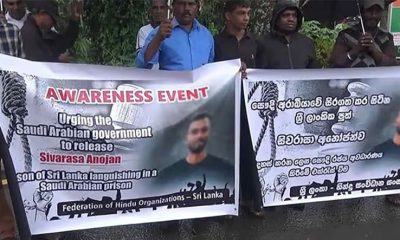
Hatton youth protest against reported death sentence for Lankan in Saudi Arabia
-

 News4 days ago
Mastermind Naufer Moulavi among 15 found guilty
-
 News5 days ago
Protest against setting up of cement factory in highly populated area near BIA
-
 News6 days ago
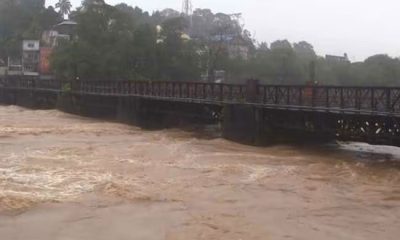
Mahaweli rises as heavy rain triggers flood, landslide fears
-

 Latest News7 days ago
Landslide Red Alerts issued to the districts of Kandy, Kegalle and Nuwara Eliya