
2025-09-08





Stew, a 35-year-old from Montana, has enjoyed dabbling in sports bets since he downloaded the Kalshi app about 18 months ago.
But just a few weeks ago, after spotting reports of elevated pizza deliveries around the Pentagon during some late-night scrolling, he made a different kind of bet – wagering $10 (£7.50) on the odds that Iran’s Ayatollah Ali Khamenei would be “out” by 1 March.
It was a trade that tested the limits of the kinds of bets Americans are allowed to make.
So-called predictions markets – overseen by firms such as Kalshi – have exploded in popularity over the last year, hosting more than $44bn in trades.
They are rapidly transforming the betting landscape in the US, where sports betting was largely illegal until 2018 and gambling on elections had been off-limits for years until 2024.
While much of the activity on the platforms revolves around sporting matches, users can speculate on any number of questions, including local elections, whether the US central bank will cut interest rates and the year of Jesus Christ’s return.
The apps caught fire during America’s 2024 presidential campaign, after a legal victory cleared the way for them to accept election bets and they showed the odds tilting toward Donald Trump.
But it is more grisly wagers tied to military action involving Iran, Venezuela and Israel that have drawn attention lately.
In theory, such bets run afoul of US financial rules, which bar trading on contracts involving war, terrorism, assassination, gaming or other illegal activities.
But that hasn’t stopped firms from taking in millions of trades.
Critics have seized on the activity, calling for a crackdown on the apps, which they say are facilitating unseemly, and potentially illegal, war profiteering, generating national security risks and enabling opportunities for insider trading and corruption.
“You have now opened up gambling basically on almost anything and it has turned into this very, very gruesome type of thing on the death of a head of state,” said Craig Holman, government affairs lobbyist at the Public Citizen advocacy group, which recently filed a complaint this week over the bets.
Polymarket alone has hosted what Bloomberg estimated as more than $500m in bets related to the Iran war, at one point offering an opportunity to play the odds on the chance of nuclear detonation.
The company, which is headquartered in New York but operates on a limited basis in the US, eventually removed that market after it drew scrutiny on social media but users can still submit bets on questions like when US forces will enter Iran. It did not respond to the BBC’s request for comment.
Kalshi also ended up cancelling the Khamenei market, which had drawn $54m in trades, noting that US-regulated entities are barred from “having a market directly settling on someone’s death”.
The company, which did not respond to a request for comment for this article, has said the war bets are happening on unregulated exchanges outside the US.
Concerns about the war bets have collided with a bigger battle over how prediction market firms should be regulated.
Unlike traditional gaming firms, in which the odds are set by the company, prediction market companies function more like a stock exchange, allowing users to bet against each other on the outcome of future events using “event contracts”.
That design has allowed national financial regulators at the Commodities Futures Trading Commission (CFTC) to claim oversight.
But critics say they are sports betting and gambling operations trying to dress up as financial exchanges in a bid to avoid stricter rules and taxes faced by traditional gaming firms, which are regulated by the states.
Disagreement over who should be policing the apps has sparked dozens of legal battles across the US, as states start to assert their right to regulate the companies like other gaming firms, rather than leave oversight up to the CFTC.
Even some Republicans have voiced concerns, as traditional gaming firms have also stepped up their lobbying, enlisting a savvy former Trump official, Mick Mulvaney, to plead their case in Washington.
“Nobody is saying that gambling shouldn’t be allowed,” says Ben Schiffrin, director of securities policy at Better Markets, which advocates for financial reforms. “What the states are saying and other advocates are saying is things that are gambling should be regulated as gambling.”
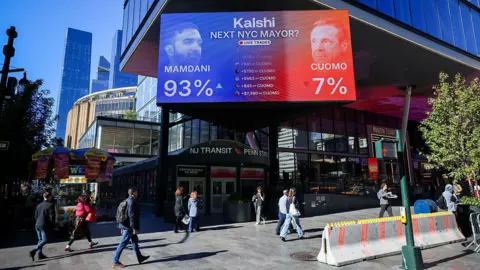
Suspiciously timed bets related to military operations involving Israel, Venezuela and Iran have added fodder to those calls.
In recent weeks, Democrats have introduced legislation to bar federal officials from trading event contracts, pointing to incidents such as when a gambler new to Polymarket made nearly half a million dollars on the capture of Venezuela’s president just before it was officially announced.
They have also issued alerts to consumers about the risks of insider trading and written to the administration urging it to more clearly enforce the rules against wagering on war.
But the odds of a crackdown remain long.
Though the Biden administration had taken a hard line on the sector, proposing to ban sports and politics-related event contracts, that regulatory drive stalled after a court defeat and the 2024 election of Donald Trump, who came to power promising a lighter hand.
Last month, the CFTC said it would withdraw the proposed ban on sports and election related contracts.
It has also taken the side of prediction market firms in the legal fights they are facing in the states, which Michael Selig, Trump’s chairman of the Commodity Futures Trading Commission, condemned in a recent opinion piece as “overzealous”.
He argued that event contracts served “legitimate economic functions”, allowing businesses to hedge against risks triggered by events.
“It’s clear that Americans like the product and want to participate,” he said, while also emphasising that platforms must still follow rules.
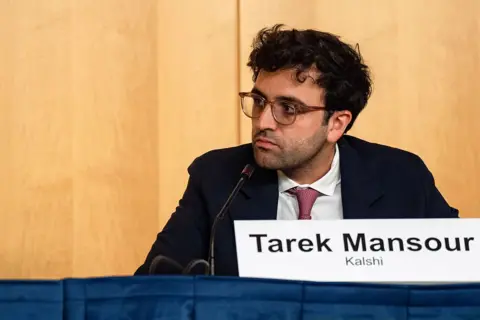
As the pressure mounts, Polymarket has announced steps to more formally police suspicious activity, while Kalshi, which advertises its status as a “regulated exchange”, has become more vocal about what it is doing to combat insider trading.
It recently announced punishments in two cases of insider trading and disclosed that it had opened up 200 investigations over the last year.
The company also ultimately cancelled the $54m market around Khamenei’s ouster.
In series of statements explaining the decision, the firm said it did not “list markets directly tied to death”, noting that its terms had included that carve-out.
It promised to make the terms more clear from the get-go, saying it had “learned a lot” from the incident.
But in an indication of growing pains, the decision still sparked outrage among users, including Stew, who said the firm had initially “buried” those rules and its explanation seemed disingenuous, given that there were “only a handful of realistic methods” for Khamenei to go.
Stew, who received a refund, said he wasn’t sure regulation was the answer, but he was sympathetic to the idea that the debate seemed to be stumbling around semantics.
“They call it contract trading, which I guess technically speaking, that’s what it is. But if we’re all being honest here, it’s still betting,” he said.
[BBC]
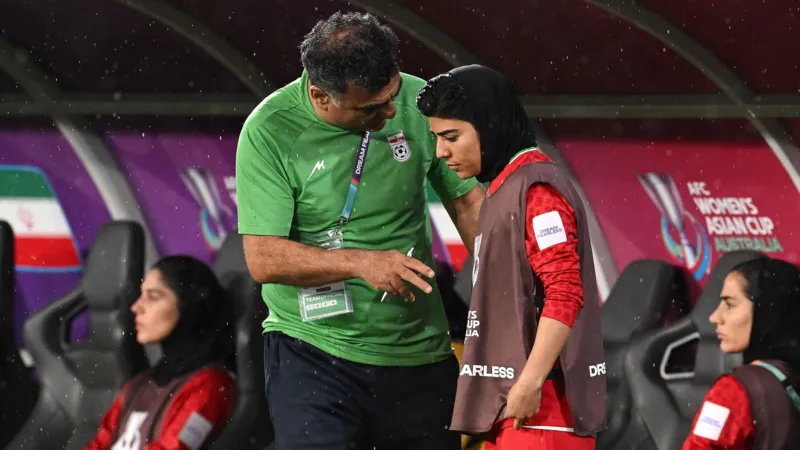
Three more members of the Iranian women’s football delegation – who were given humanitarian visas to stay in Australia – have changed their mind and will return home.
The trio have been named by human rights activists in the Iranian diaspora as Zahra Soltan Meshkehkar, Mona Hamoudi, and Zahra Sarbali.
Concerns grew for the Iranian team after they were silent for the country’s anthem in their opening Asian Cup match against South Korea on 2 March – which led to them being branded “war traitors” in Iran.
Confirming the decisions, Australia’s home affairs minister said his government had done everything it could to ensure the women were given the chance to have a safe future in the country.
“Australians should be proud that it was in our country that these women experienced a nation presenting them with genuine choices and interacted with authorities seeking to help them,” Tony Burke said in a statement.
“While the Australian government can ensure that opportunities are provided and communicated, we cannot remove the context in which the players are making these incredibly difficult decisions.”
Iran’s sports ministry also earlier confirmed the news, first reported by the Islamic Revolutionary Guard Corps-linked Tasnim News Agency, in a statement.
“The national spirit and patriotism of the Iranian women’s national football team defeated the enemy’s plans against this team,” the statement says, also accusing Australia’s government of “playing in Trump’s field”.
Tasnim said the three were on their way to Kuala Lumpur in Malaysia to join the rest of the squad and were “returning to the warm embrace of their families and homeland after withdrawing their asylum application in Australia”.
It said they had resisted “psychological warfare, extensive propaganda and seductive offers”.
It means that, of the seven who initially said they wanted to stay in Australia, only three now remain as defectors. One of the players made the same decision to return to Iran on Wednesday.
Hamoudi and Sarbali were among the original five who refused, after giving minders the slip at the team’s hotel on the Gold Coast, south of Brisbane, last Monday and being taken to a safe house by Australian Federal Police.
Zahra Soltan Meshkehkar, a member of the team’s technical staff, was one of two more women from the group to seek asylum the next day. The other – Mohaddeseh Zolfi – changed her mind hours after being given the right to stay. She is understood to have already rejoined the team.
There was concern in Australia that members of the team and their families might face repercussions in Iran after the players refused to sing the national anthem.
One conservative commentator on Iranian state media accused them of being “wartime traitors” and called for a harsh punishment.
The team did sing the anthem in their last two games before they were eliminated on Sunday, leading critics to believe they had been told to sing by government officials accompanying them during the tournament.
The remaining Iranian players left Australia on Tuesday night local time – two days after they were knocked out of the Asian Cup.
[BBC]
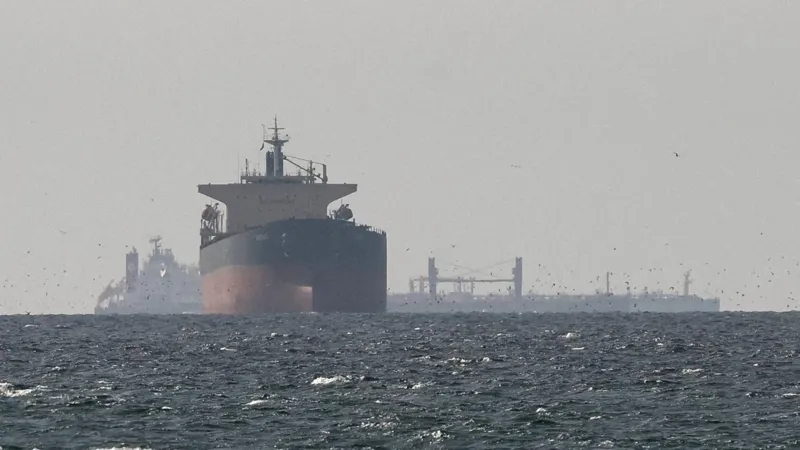
Donald Trump has urged the UK and other nations to send warships to the Strait of Hormuz to help secure the key shipping route out of the Middle East.
The US president said he hoped China, France, Japan and South Korea would also send ships to the passage, where a number of tankers are said to have been attacked since the US and Israel mounted their war against Iran a fortnight ago.
Responding to Trump’s comments, the UK Ministry of Defence said it was discussing “a range of options to ensure the security of shipping in the region” with allies.
Tehran has said it will keep blocking the strait – the world’s busiest oil shipping channel through which about 20% of world oil supplies usually pass.
Its effective closure, as well as strikes on shipping and energy infrastructure since the war started, has led to huge rise in global oil prices.
Trump wrote on his Truth Social platform on Saturday that “many countries” would be sending warships in conjunction with the US to help keep the strait “open and safe”.
He claimed “100% of Iran’s military capability” had already been destroyed, but that Tehran could still “send a drone or two, drop a mine, or deliver a close-range missile somewhere along, or in, this waterway”.
“Hopefully China, France, Japan, South Korea, the UK, and others, that are affected by this artificial constraint will send ships to the area so that the Hormuz Strait will no longer be a threat by a nation that has been totally decapitated.”
He added: “In the meantime, the United States will be bombing the hell out of the shoreline, and continually shooting Iranian Boats and Ships out of the water. One way or the other, we will soon get the Hormuz Strait OPEN, SAFE, and FREE!”
Trump repeated his appeal in a post later on Saturday – extending it to all “the Countries of the World that receive Oil through the Hormuz Strait” – and said the US would provide “a lot” of support to those who participated.
The president has separately threatened to target Iran’s vital oil infrastructure on Kharg Island if its leadership were to “interfere” with ships seeking to pass through the Strait of Hormuz.
He said the US had ‘obliterated” military targets on the small island off Iran’s coast on Friday, calling it “one of the most powerful bombing raids in the history of the Middle East”.
Iran’s military said oil and energy infrastructure belonging to firms working with the US would “immediately be destroyed” should the island’s oil infrastructure be attacked.
Tehran has been stepping up such attacks on energy targets in the Gulf, which have become a key element of its response to US and Israeli strikes. It warned on Thursday that any tanker bound for the US, Israel or its partners was a legitimate target.
The UK Maritime Trade Operations (UKMTO) said in its latest update on 12 March that 16 ships were reported to have been attacked in and around the strait since the war began on 28 February.
Currently, not even the US Navy is escorting tankers through the narrow shipping lane.
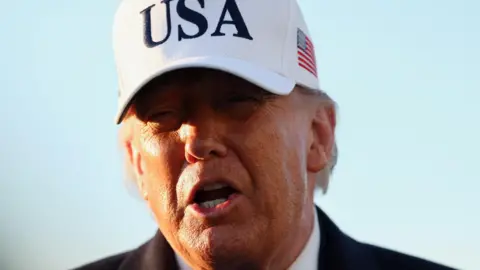
Trump’s message came a week after he said the US did not need the UK to send aircraft carriers to the region and accused Prime Minister Sir Keir Starmer of seeking to ‘join wars after we’ve already won”.
He also told the BBC’s US partner CBS that he “couldn’t care less” whether allies could do more to assist with the war, adding: “It’s a little bit late to be sending ships, right? A little bit late.”
He had already criticised Sir Keir for not joining the initial strikes on Iran and refusing at first to allow the US to use UK bases for its joint offensive with Israel – calling him ‘no Winston Churchill”.
The prime minister later approved “defensive” US action on Iranian missile sites from RAF Fairford in Gloucestershire and Diego Garcia in the Indian Ocean, saying Iran’s response had become a threat to Britain.
The UK’s first and only warship set to be present in the region – the Type 45 destroyer HMS Dragon – departed for Cyprus on Tuesday, where it will bolster RAF Akrotiri after it was hit by drone strikes.
The Royal Navy used to keep minesweepers based in Bahrain, but no longer has that capability after it withdrew HMS Middleton.
Ministers have insisted the UK built up an RAF presence in the region before the conflict, with the aim of protecting British military personnel.
[BBC]

‘Gruesome’ war bets fuel calls for crackdown on prediction markets

Three more Iran football team members change minds over asylum

Trump urges UK and other nations to send warships to Strait of Hormuz

Addressing the drug issue in the country must be treated as a national priority – PM

QR code system will be implemented for fuel with effect from 06.00 a.m. today (15th)

Showers will occur at several places in the Western, Sabaragamuwa, Central, North-western and Uva provinces and in Galle, Matara, Mannar and Anuradhapura districts after 2.00 pm.

‘Dates have the highest sugar content to fight Coronavirus’

Sunday Island 27 December – Headlines

#SundayIsland 17th December – Headlines

Sunday Island – 28th March

Sunday Island Headlines – 21 March

Sunday Island – 21st February – Headlines
-

 News7 days ago
Repatriation of Iranian naval personnel Sri Lanka’s call: Washington
-
 Features7 days ago
Winds of Change:Geopolitics at the crossroads of South and Southeast Asia
-

 News6 days ago
Prof. Dunusinghe warns Lanka at serious risk due to ME war
-
 News4 days ago
Historic address by BASL President at the Supreme Court of India
-

 Sports5 days ago
Royal start favourites in historic Battle of the Blues
-

 Sports4 days ago
The 147th Royal–Thomian and 175 Years of the School by the Sea
-

 Business5 days ago
BOI launches ‘Invest in Sri Lanka’ forum
-

 News5 days ago
CEBEU warns of operational disruptions amid uncertainty over CEB restructuring