
2021-09-23





Political commentators have long been divided over the role of U.S. President Donald Trump, particularly following what critics describe as the first-ever sudden military aggression against a sovereign state by a legitimate military force involving direct attacks on security and civilian targets and the kidnapping a country’s legitimate ruler. This act stands in sharp contrast to conventional invasions that were previously justified through various false pretenses. Accordingly, there is little debate that the invasion of Venezuela and the kidnapping of President Nicolás Maduro represents a fundamentally different situation—a new beginning—when compared with the conventional invasion of Iraq and the capture of President Saddam Hussein, or the invasion of Libya and the killing of President Muammar Gaddafi.
It is also evident that this incident marks a clear departure from the long-standing strategies employed against Cuba for more than sixty years and against Venezuela for over a decade, which relied on sanctions, covert operations, and political pressure to subjugate governments and societies or engineer regime change. Although this new model constitutes a serious violation of the United Nations Charter, the UN has failed to take any meaningful action, thereby severely undermining its role and credibility. In the past, when sanctions were imposed on Cuba, leaders from a majority of countries mobilised to submit resolutions to the UN General Assembly and exert pressure on the United States. Under the present circumstances, however, there has been no significant intervention by member states to demand that the UN condemn the kidnapping of President Nicolás Maduro and secure his immediate release.
Such silence, particularly at a time when global public opinion increasingly portrays Donald Trump as operating like a leader of a underworld network, sets a deeply troubling precedent. Consequently, the public has begun to question whether Trump’s new approach has succeeded in imposing psychological barriers on other world leaders who openly challenge American imperialism. Beyond violating the UN Charter by acting as the head of what critics describe as a “terrorist state,” Trump has also imposed psychological pressure on the UN’s own bureaucratic structure by deliberately weakening its institutional foundations.
This strategy is further confirmed by Trump’s announcement that the United States would withdraw from thirty-one United Nations bodies and thirty-five other international conventions and organisations, while also terminating financial contributions. These decisions effectively signal that U.S. solidarity with the international community on climate change, world peace, and democratic governance is no longer a priority.
Earlier funding cuts to the World Health Organization have already forced it to rely heavily on corporate financing. Given the WHO’s significant authority over global food and pharmaceutical markets—and its power to shape the world economy during pandemics—this dependency has created conditions in which global health governance can be heavily influenced by the commercial interests of multinational corporations and billionaires. Research presented by Dr. David Bell indicates that global health regulations during the COVID-19 pandemic contributed to the closure of approximately 200,000 small businesses worldwide while simultaneously creating 40 new billionaires. There is little doubt that the United Nations will face a similar fate under sustained financial pressure.
This trajectory suggests that the United Nations, too, may be compelled to operate increasingly in accordance with the interests of global billionaires. The Public–Private Partnership Agreement signed between the UN and the World Economic Forum in 2019 further reinforces this concern. Following this agreement, the World Economic Forum, meeting in Davos in 2020, advanced the concept of the “Great Reset,” arguing that the world must be re-established through global multilateral institutional systems.
Implicit in this vision is the notion that before the world can be “reset,” it must first be disrupted, Jammed or effectively dismantled.
The World Economic Forum has also promoted the idea of establishing a new form of global governance system through such disruption. Critics argue that the ultimate objective of this strategy is the creation of a “Global Government” controlled by the world’s billionaires. This structure is widely viewed as an extension of the existing global level decision-making system often referred to as the “Deep State,” which operates above sovereign governments. This so-called parastate is understood to consist of entrenched senior officials, intelligence agencies, military leadership, and some corporate actors functioning beyond the authority of democratically elected leaders.
As such a strong global perception has emerged that this parastate is dominated by a small group of roughly one hundred billionaires and reinforced by a network of global media institutions under their influence. At times, President Trump has strategically accused certain U.S. officials of representing this parastate in an effort to distance himself from similar accusations. However, the electoral process that brought him to power, along with the major policy decisions he implemented thereafter, have revealed a close alignment between his administration and the interests of this new global power structure. Increasingly, independent critics argue that Trump himself has functioned as the shadow executive of this global parastate. His rise to power is seen as a critical precondition for advancing the final phase of a broader global roadmap aimed at dismantling and reconstructing the world order. In this interpretation, Trump’s role was to elevate the operational capacity of this system—previously managed more discreetly by other U.S. presidents—to an unprecedented level of intensity.
This transformation of American imperialism was vividly reflected in Trump’s military actions against Venezuela. Initially, familiar tactics were deployed, including economic sanctions, drug-trafficking accusations, naval provocations and arrest of vessels by Coast Guard and unilateral legal actions against President Maduro under the pretext of internal security. Such measures are consistent with long-standing U.S. practices toward states perceived as geopolitical or economic challengers.
However, in the cases of Venezuela and Cuba, political defiance, and close relations with China and Russia have also played decisive roles. The anti-imperialist political identity of leaders in these countries has inspired resistance movements worldwide, which is also explaining the deep hostility directed toward them by U.S. policymakers. Through the kidnapping of President Maduro, Trump sent a stark warning to other anti-imperialist leaders—an unmistakable act of psychological warfare carried out with unprecedented openness.
However, for the parastate to dismantle and rebuild the world as envisioned, a crucial condition must be met which is the restoration of a unipolar world order similar to that which emerged after the collapse of the Soviet Union in 1992. This requires weakening or geopolitically constraining the economic and military power of China and Russia. To achieve this, pro-Chinese and pro-Russian states—particularly those rich in natural resources or located in strategic regions—must be destabilised, subjected to crises, and subjected to regime change. The culmination of this process would involve widespread military tension and a severe global economic crisis, making destruction a prerequisite for reconstruction.
When viewed within this broader framework, Trump’s global strategy becomes more coherent. Russia has been drawn into a prolonged conflict in Ukraine, while China faces escalating military pressure around Taiwan and the South China Sea created through U.S. alliances with Japan and the Philippines.
Simultaneously, renewed efforts are underway to reassert U.S. dominance over Latin America and the Caribbean by disrupting their economic and military relations with China, Russia, and even the European Union—reviving a modernised version of the Monroe Doctrine. At present in those counties US is having highest foreign investment, but China is the largest trading Partners. However, Trump’s use of tariffs as political weapons, often in violation of World Trade Organization principles, further exaggerates this situation.
Trumps interest in acquiring Greenland must also be understood within this strategic context. Greenland’s geographic position between the U.S. and Russia, its growing importance in Arctic shipping routes, and its vast natural resources make it a key geopolitical asset. The expansion of Russian military infrastructure in the Arctic and increased Chinese economic engagement have further heightened strategic value of Greenland. Under the 1951 U.S.–Greenland defense agreement, American military installations and missile- monitoring systems already operate on the island. Beyond military considerations, Greenland’s estimated US$4 trillion worth of oil, gas, and rare-earth resources are critical in light of China’s restrictions on rare- earth exports when have intensified U.S. interest, particularly following the escalation of the trade war in May 2025.
Meanwhile, Trump’s proposal to financially incentivise Greenland’s population to sever ties with Denmark to be annexed to US underscores how sovereign states may be divided and annexed under future strategies driven by global economic elites. Such actions also threaten the stability of NATO, an alliance in which the U.S. bears approximately 70% of defence costs, placing Europe at significant risk of severe conflicts between member countries. Ultimately, these developments highlight the growing role of parastate actors in dismantling existing political, economic, and security systems in to the world to facilitate a billionaire- controlled global order. In that process through funding cuts, public–private partnerships, political manipulation, intelligence operations, and engineered crises, sovereign states are weakened and destabilised. Examples from geopolitically sensitive regions, including Sri Lanka, illustrate how economic collapse and political fragmentation can be externally induced.
The invasion of Venezuela and the kidnapping of its legitimate leader signal a dangerous escalation in this process. Ongoing destabilisation efforts in Iran, coupled with rising tensions in the Middle East and volatility in global energy markets, further increase the risk of worldwide economic and military catastrophe which could be the ultimate precondition for the so called Great-Reset of the world. In this context, sovereign states and the global community must align in the Pretext of Preventing a third world war and recognising the urgent need for an alternative, genuinely independent multilateral institutional system to undermine the ultimate grand strategy of the deep state. In that process the bottom line must be to reverse the unprecedented approach of the President Donald Trump by condemning military aggression in Venezuela and demanding the release of the President Nicolas Maduro immediately.
by Dr. K. M. Wasantha Bandara
Secretary
Patriotic National Movement
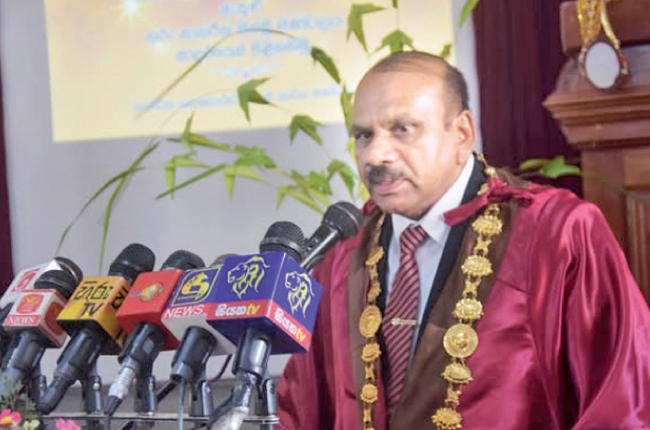
The Kandy Municipal Council (KMC) has decided to suspend its proposed 7% rate reduction until the year 2027. This decision was made during a meeting held yesterday.
Kandy Mayor Chandrasiri Wijenayake said that although the rate relief was included in the 2026 budget, its implementation had become problematic. He noted that approximately 60% of the residents had already paid rates for the year. “If we provide this relief now, we would be legally obligated to refund the excess payments to those who have already settled their dues. This would result in a staggering loss of Rs. 150 million to the Municipal Council’s revenue,” the Mayor said, adding that the decision to suspend the rate reduction after consultations with the Commissioner of Local Government and the Governor of the Central Province.
However, the move has drawn sharp criticism from the opposition. Senior Opposition Member (SJB) Vipula Ranasinghe condemned the decision, accusing the administration of placing an undue burden on the public. “The Mayor and the ruling party should have realised the difficulty in refunding rates before passing the budget. They bragged that they could run the council without the opposition’s help, but now they are trapped in their own mismanagement,” Ranasinghe remarked.
He took a swipe at the government’s previous claims: “The NPP government once claimed it had enough funds to support local authorities under its control. This about-turn proves that those were mere lies.”
By S.K. Samaranayake

Dr. B.J.C. Perera (Dr. BJCP) in his article ‘The Education cross roads: Liberating Sri Lankan classroom and moving ahead’ asks the critical question that should be the bedrock of any attempt at education reform – ‘Do we truly and clearly understand how a human being learns? (The Island, 16.02.2026)
Dr. BJCP describes the foundation of a cognitive architecture taking place with over a million neural connections occurring in a second. This in fact is the result of language learning and not the process. How do we ‘actually’ learn and communicate with one another? Is a question that was originally asked by Galileo Galilei (1564 -1642) to which scientists have still not found a definitive answer. Naom Chomsky (1928-) one of the foremost intellectuals of our time, known as the father of modern linguistics; when once asked in an interview, if there was any ‘burning question’ in his life that he would have liked to find an answer for; commented that this was one of the questions to which he would have liked to find the answer. Apart from knowing that this communication takes place through language, little else is known about the subject. In this process of learning we learn in our mother tongue and it is estimated that almost 80% of our learning is completed by the time we are 5 years old. It is critical to grasp that this is the actual process of learning and not ‘knowledge’ which tends to get confused as ‘learning’. i.e. what have you learnt?
The term mother tongue is used here as many of us later on in life do learn other languages. However, there is a fundamental difference between these languages and one’s mother tongue; in that one learns the mother tongue- and how that happens is the ‘burning question’ as opposed to a second language which is taught. The fact that the mother tongue is also formally taught later on, does not distract from this thesis.
Almost all of us take the learning of a mother tongue for granted, as much as one would take standing and walking for granted. However, learning the mother tongue is a much more complex process. Every infant learns to stand and walk the same way, but every infant depending on where they are born (and brought up) will learn a different mother tongue. The words that are learnt are concepts that would be influenced by the prevalent culture, religion, beliefs, etc. in that environment of the child. Take for example the term father. In our culture (Sinhala/Buddhist) the father is an entity that belongs to himself as well as to us -the rest of the family. We refer to him as ape thaththa. In the English speaking (Judaeo-Christian) culture he is ‘my father’. ‘Our father’ is a very different concept. ‘Our father who art in heaven….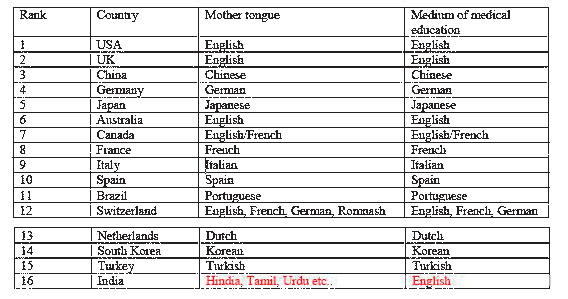
All over the world education is done in one’s mother tongue. The only exception to this, as far as I know, are the countries that have been colonised by the British. There is a vast amount of research that re-validates education /learning in the mother tongue. And more to the point, when it comes to the comparability of learning in one’s own mother tongue as opposed to learning in English, English fails miserably.
Education /learning is best done in one’s mother tongue.
This is a fact. not an opinion. Elegantly stated in the words of Prof. Tove Skutnabb-Kangas-“Mother tongue medium education is controversial, but ‘only’ politically. Research evidence about it is not controversial.”
The tragedy is that we are discussing this fundamental principle that is taken for granted in the rest of the world. It would not be not even considered worthy of a school debate in any other country. The irony of course is, that it is being done in English!
At school we learnt all of our subjects in Sinhala (or Tamil) right up to University entrance. Across the three streams of Maths, Bio and Commerce, be it applied or pure mathematics, physics, chemistry, zoology, botany economics, business, etc. Everything from the simplest to the most complicated concept was learnt in our mother tongue. An uninterrupted process of learning that started from infancy.
All of this changed at university. We had to learn something new that had a greater depth and width than anything we had encountered before in a language -except for a very select minority – we were not at all familiar with. There were students in my university intake that had put aside reading and writing, not even spoken English outside a classroom context. This I have been reliably informed is the prevalent situation in most of the SAARC countries.
The SAARC nations that comprise eight countries (Sri Lanka, Maldives, India, Pakistan Afghanistan, Bangladesh, Nepal and Bhutan) have 21% of the world population confined to just 3% of the earth’s land mass making it probably one of the most densely populated areas in the world. One would assume that this degree of ‘clinical density’ would lead to a plethora of research publications. However, the reality is that for 25 years from 1996 to 2021 the contribution by the SAARC nations to peer reviewed research in the field of Orthopaedics and Sports medicine- my profession – was only 1.45%! Regardless of each country having different mother tongues and vastly differing socio-economic structures, the common denominator to all these countries is that medical education in each country is done in a foreign language (English).
The impact of not learning in one’s mother tongue can be illustrated at a global level. This can be easily seen when observing the research output of different countries. For example, if one looks at orthopaedics and sports medicine (once again my given profession for simplicity); Table 1. shows the cumulative research that has been published in peer review journals. Despite now having the highest population in the world, India comes in at number 16! It has been outranked by countries that have a population less than one of their states. Pundits might argue giving various reasons for this phenomenon. But the inconvertible fact remains that all other countries, other than India, learn medicine in their mother tongue.
(See Table 1) Mother tongue, medium of education in country rank order according to the volume of publications of orthopaedics and sports medicine in peer reviewed journals 1996 to 2024. Source: Scimago SCImago journal (https://www.scimagojr.com/) has collated peer review journal publications of the world. The publications are categorized into 27 categories. According to the available data from 1996 to 2024, China is ranked the second across all categories with India at the 6th position. China is first in chemical engineering, chemistry, computer science, decision sciences, energy, engineering, environmental science, material sciences, mathematics, physics and astronomy. There is no subject category that India is the first in the world. China ranks higher than India in all categories except dentistry.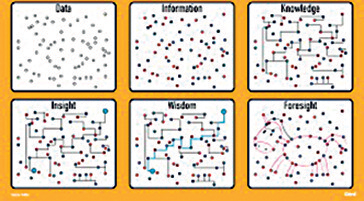
The reason for this difference is obvious when one looks at how learning is done in China and India.
The Chinese learn in their mother tongue. From primary to undergraduate and postgraduate levels, it is all done in Chinese. Therefore, they have an enormous capacity to understand their subject matter just not itself, but also as to how it relates to all other subjects/ themes that surround it. It is a continuous process of learning that evolves from infancy onwards, that seamlessly passes through, primary, secondary, undergraduate and post graduate education, research, innovation, application etc. Their social language is their official language. The language they use at home is the language they use at their workplaces, clubs, research facilities and so on.
In India higher education/learning is done in a foreign language. Each state of India has its own mother tongue. Be it Hindi, Tamil, Urdu, Telagu, etc. Infancy, childhood and school education to varying degrees is carried out in each state according to their mother tongue. Then, when it comes to university education and especially the ‘science subjects’ it takes place in a foreign tongue- (English). English remains only as their ‘research’ language. All other social interactions are done in their mother tongue.
India and China have been used as examples to illustrate the point between learning in the mother tongue and a foreign tongue, as they are in population terms comparable countries. The unpalatable truth is that – though individuals might have a different grasp of English- as countries, the ability of SAARC countries to learn and understand a subject in a foreign language is inferior to the rest of the world that is learning the same subject in its mother tongue. Imagine the disadvantage we face at a global level, when our entire learning process across almost all disciplines has been in a foreign tongue with comparison to the rest of the world that has learnt all these disciplines in their mother tongue. And one by-product of this is the subsequent research, innovation that flows from this learning will also be inferior to the rest of the world.
All this only confirms what we already know. Learning is best done in one’s mother tongue! .
What needs to be realised is that there is a critical difference between ‘learning English’ and ‘learning in English’. The primary-or some may argue secondary- purpose of a university education is to learn a particular discipline, be it medicine, engineering, etc. The students- have been learning everything up to that point in Sinhala or Tamil. Learning their discipline in their mother tongue will be the easiest thing for them. The solution to this is to teach in Sinhala or Tamil, so it can be learnt in the most efficient manner. Not to lament that the university entrant’s English is poor and therefore we need to start teaching English earlier on.
We are surviving because at least up to the university level we are learning in the best possible way i.e. in our mother tongue. Can our methods be changed to be more efficient? definitely. If, however, one thinks that the answer to this efficient change in the learning process is to substitute English for the mother tongue, it will defeat the very purpose it is trying to overcome. According to Dr. BJCP as he states in his article; the current reforms of 2026 for the learning process for the primary years, centre on the ‘ABCDE’ framework: Attendance, Belongingness, Cleanliness, Discipline and English. Very briefly, as can be seen from the above discussion, if this is the framework that is to be instituted, we should modify it to ABCDEF by adding a F for Failure, for completeness!
(See Figure 1) The components and evolution of learning: Data, information, knowledge, insight, wisdom, foresight As can be seen from figure 1. data and information remain as discrete points. They do not have interconnections between them. It is these subsequent interconnections that constitute learning. And these happen best through the mother tongue. Once again, this is a fact. Not an opinion. We -all countries- need to learn a second language (foreign tongue) in order to gather information and data from the rest of the world. However, once this data/ information is gathered, the learning needs to happen in our own mother tongue.
Without a doubt English is the most universally spoken language. It is estimated that almost a quarter of the world speaks English as its mother tongue or as a second language. I am not advocating to stop teaching English. Please, teach English as a second language to give a window to the rest of the world. Just do not use it as the mode of learning. Learn English but do not learn in English. All that we will be achieving by learning in English, is to create a nation of professionals that neither know English well nor their subject matter well.
If we are to have any worthwhile educational reforms this should be the starting pivotal point. An education that takes place in one’s mother tongue. Not instituting this and discussing theories of education and learning and proposing reforms, is akin to ‘rearranging the deck chairs on the Titanic’. Sadly, this is not some stupendous, revolutionary insight into education /learning. It is what the rest of the world has been doing and what we did till we came under British rule.
Those who were with me in the medical faculty may remember that I asked this question then: Why can’t we be taught in Sinhala? Today, with AI, this should be much easier than what it was 40 years ago.
The editorial of this newspaper has many a time criticised the present government for its lackadaisical attitude towards bringing in the promised ‘system change’. Do this––make mother tongue the medium of education /learning––and the entire system will change.
by Dr. Sumedha S. Amarasekara

Jamming and re-setting the world: What is the role of Donald Trump?

NPP-controlled Kandy MC reneges on its 7% rate reduction pledge

Educational reforms: A perspective

Masi Magam Festival

Champika urges govt. to have coal racket probed and culprits punished

USJP Commerce graduates’s AGM

‘Dates have the highest sugar content to fight Coronavirus’

Sunday Island 27 December – Headlines

#SundayIsland 17th December – Headlines

Sunday Island – 28th March

Sunday Island Headlines – 21 March

Sunday Island – 21st February – Headlines
-
 Features5 days ago
Why does the state threaten Its people with yet another anti-terror law?
-
 Features5 days ago
Reconciliation, Mood of the Nation and the NPP Government
-

 Features5 days ago
Victor Melder turns 90: Railwayman and bibliophile extraordinary
-

 Features4 days ago
LOVEABLE BUT LETHAL: When four-legged stars remind us of a silent killer
-
 Features5 days ago
Victor, the Friend of the Foreign Press
-
 Latest News6 days ago
New Zealand meet familiar opponents Pakistan at spin-friendly Premadasa
-

 Latest News6 days ago
ECB push back at Pakistan ‘shadow-ban’ reports ahead of Hundred auction
-
 Latest News6 days ago
Tariffs ruling is major blow to Trump’s second-term agenda