
News
Cardinal’s counsel questions Sirisena on numerous calls with SIS head

by Rathindra Kuruwita
A 159-second telephone conversation took place between former President Maithripala Sirisena and former Director of the State Intelligence Service (SIS) SDIG Nilantha Jayawardena from 7.59 a.m. on April 21, 2019, prior to the Easter Sunday bombings, the Presidential Commission of Inquiry (PCoI) investigating the Easter Sunday attacks was informed on Saturday.
It was also revealed that another telephone conversation on April 20, 2019 at 6.16 pm had also taken place between the two. Earlier it was revealed that around 20 telephone conversations had taken place between Sirisena and Jayawardena from April 4 to 21, 2019.
April 04, 2019 was the day when Jayawardena received a warning of a possible terror attack from a foreign counterpart.
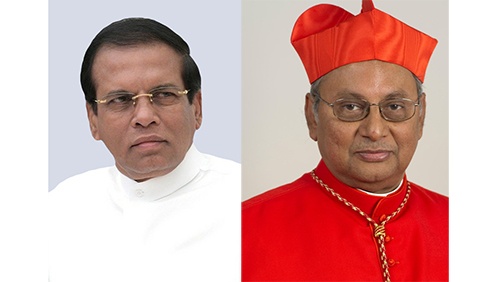
The details of the calls were revealed when the former President was cross-examined by President’s Counsel Shamil Perera, appearing for the Archbishop of Colombo, Malcolm Cardinal Ranjith.
Perera asked the witness whether he had been in constant contact with Jayawardena over the phone. In response Sirisena said that he would not agree that there had been frequent telephone conversations between him and Jayawardena.
Perera then showed the former president a list of calls that had been place between Jayewardena and the former President from January 01 to March 31, 2019. The list contained over 200 calls. Sirisena, after referring to the document, said he did not remember such a large number of conversations with the former SIS Director.
“I do not even use a mobile phone. So, this document should be examined further,” Sirisena said.
When asked if the document contained details of calls from six telephone numbers at the former President’s official residence on Paget Road, Sirisena answered in the affirmative.
The document showed that a total of 221 telephone calls had taken place between Sirisena and Jayawardena from January to April 2019. Sirisena said he probably had not received all those phone calls.
“These are records of calls to and from my official residence or to the Presidential Secretariat. But I don’t think I answered all these calls. I would not have answered these calls if I had been at Cabinet meetings and other events and I was attending such meetings,” Sirisena said.
“Do you, as a practice, consult the former SIS Director on your security and the threats you had to face?” the counsel asked. Sirisena said that there were occasions when such consultations were made.
Perera then asked Sirisena whether Jayewardena had given him a call around 6.16pm on 20 April. Sirisena said he had been receiving treatment in a Singaporean hospital at that time and not even his personal security officers had access to him on that day.
Perera then said that the telephone records clearly stated that Sirisena had called the former SIS Director around 7.59am on 21 April, 2019 before the Easter Sunday attacks. Sirisena had earlier said that he first contacted Jayewardena only after the bombings.
The President’s Counsel told the Commission that despite Sirisena’s statement the phone records showed that Sirisena had made a large number of telephone calls on April 21 morning.
“I don’t know what is mentioned in this report but I was in hospital on the morning of April 21. It was not possible for me to make phone calls while undergoing treatment. I came back to the hotel and then heard about the attacks.”
Perera also said about seven telephone calls had been exchanged between Sirisena and the SIS Director after the bombings. The counsel said that a 133- second telephone call had taken place between Sirisena and Jayawardena on 21 April at 8.58 am, a 184-second telephone call at 9.13 a.m., and a 688-second telephone call at 1.10 p.m.
Perera also asked Sirisena how he had made these calls if he was feeling extremely sick.
“I was still weak but this was a serious development. I made a series of calls and advised all including the Prime Minister, the Inspector General of Police and the Tri- forces Commanders, to take necessary action,” Sirisena said.
Perera also asked how Sirisena had returned to Sri Lanka on the same night if his medical condition had been so serious. In response, the former President said that the relevant medical reports could be submitted to the Commission.
Perera also questioned Sirisena on a statement made by the former Director of the SIS, before the Commission, that between 10,000 and 15,000 people knew about the foreign report that the State Intelligence Service (SIS) had received on April 04, 2019 about a possible terrorist attack. Jayawardena said that by April 09, former IGP Pujith Jayasundara had informed the STF and the STF had about 5,000 personnel. The officers that provide security to VIPs too were informed. There were about 800 such officers.
The police in the Western Province too had been informed and there were about 8,000 such personnel, he said. Jayawardena said he had conveyed information about the possible attack to a number of senior officials, including former Defence Secretary, Hemasiri Fernando and CNI Sisira Mendis. Jayasundara had also forwarded the report to SDIG of Western Province, Nandana Munasinghe, SDIG crimes and STF M.R. Latif, DIG special protection range Priyalal Dassanayake and Director of the Terrorism Investigation Division, Waruna Jayasundara.
Sirisena said that although it might be true, his Chief Security Officer, DIG Rohan Silva had been unaware of it.
President’s Counsel: You were the President and Minister of Defence, none of the 15, 000 security personnel and other senior officials told you about the attack?”
Witness- “No one informed me.”
When Sirisena took over as President and Defence Minister he had been entrusted with the responsibility for protecting the people of the country by providing them security. However the attack showed that he had clearly failed in his duties, Counsel Perera said.
“I do not accept that. Terrorist attacks took place when other Presidents were running the country. No one asked this question from them,” Sirisena said.
Perera then asked Sirisena if he accepted that he had endangered the Catholic people by neglecting his responsibilities and that he had been trying to evade responsibility by blaming others.
Earlier former IGP Pujith Jayasundara told the PCoI that President Maithripala Sirisena on April, 24, 2019, had told him that if he took the blame for the Easter Sunday bombings, Jayasundara would be given a pension and an ambassador’s post to a country of his choice.
“I am deeply shocked about what happened but I am not finding any scapegoats,” Sirisena said, adding that he not believe that the report of the Parliamentary Select Committee which investigated the bombings on Easter Sunday was independent or accurate. “When I was asked to appear before the PSC, I did not go and instead, I informed them to come to the Presidential Secretariat and asked them to meet me if necessary. They came and recorded a statement from me. Former Army Commander, Field Marshal Sarath Fonseka a member of the PSC harbours animosity towards me. The same can be said about some other members of the PSC. I, therefore, did not accept the proceedings of that PSC,” Sirisena added.


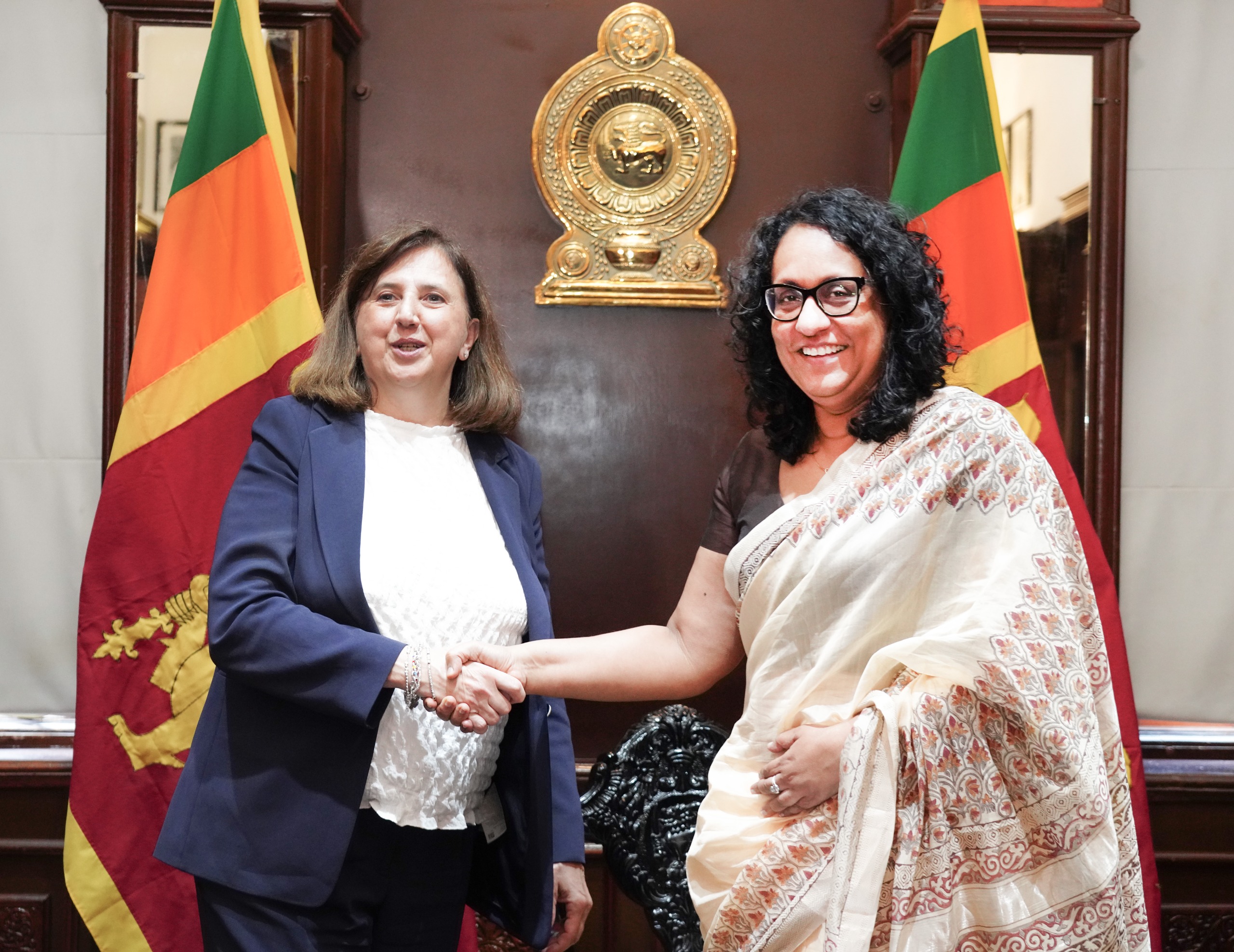
Prime Minister Dr. Harini Amarasuriya met with the representatives of the European External Action Service [EEAS] on Tuesdqy [10 th February] at the Prime Minister’s office.
Welcoming the delegation from the European External Action Service (EEAS), the Prime Minister emphasized the importance of further strengthening and deepening the long-standing partnership between Sri Lanka and the European Union, noting the role of the European Union as a key development and economic partner.
The Prime Minister also expressed appreciation for the timely assistance extended by the European Union to Sri Lanka in response to the recent cyclone, highlighting the EU’s continued solidarity and support during times of need.
Attention was drawn to the need to expand economic cooperation between Sri Lanka and the European Union. The Prime Minister underscored the importance of undertaking necessary legislative and policy reforms to facilitate enhanced economic engagement, trade, and investment.
The delegation was briefed on the ongoing initiatives and reforms being implemented by the new Government aimed at strengthening economic stability, governance, and creating a conducive environment for sustainable growth and international cooperation.
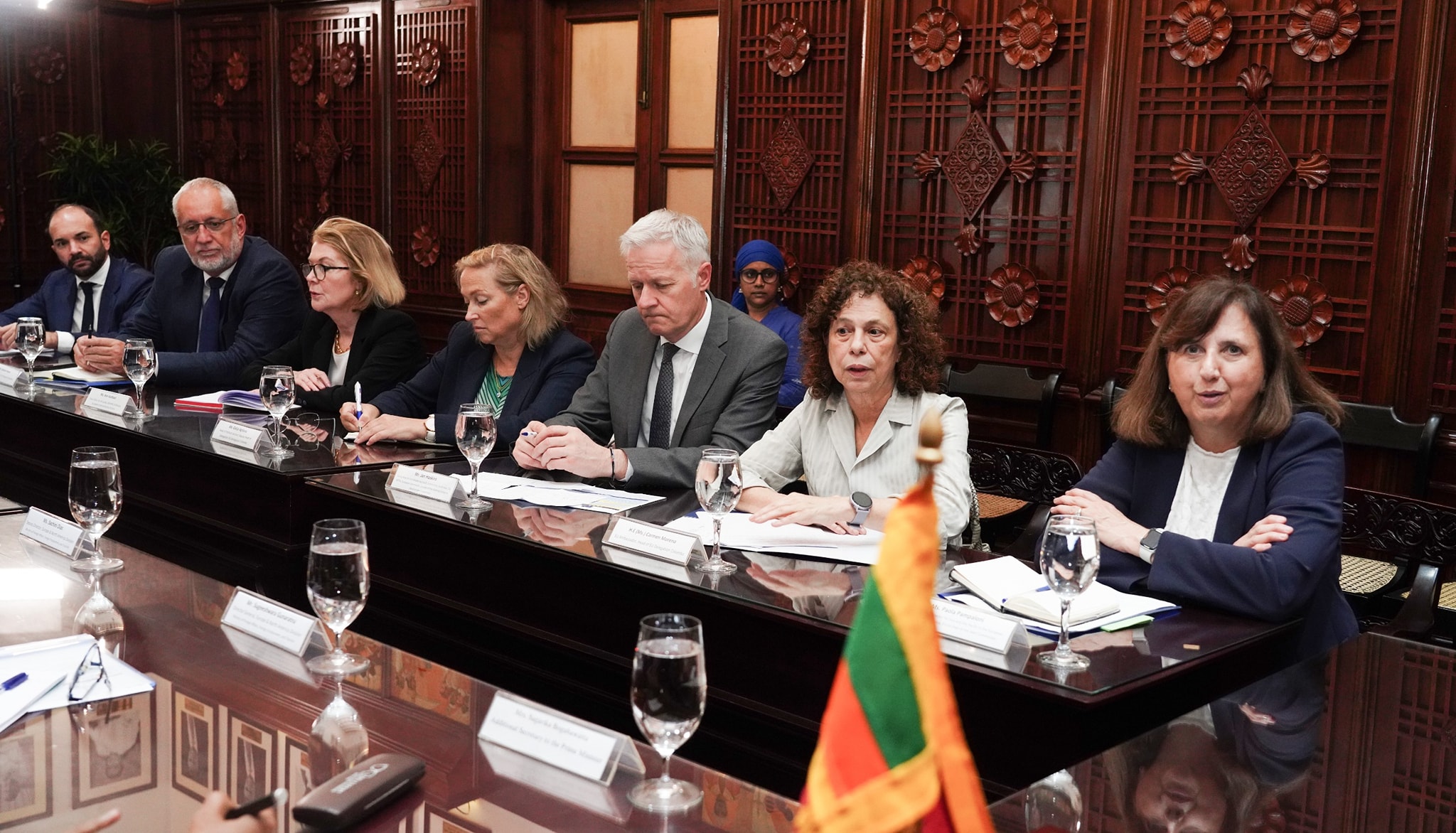
The meeting was attended by the Acting Managing Director for Asia and the Pacific in the European External Action Service, EU co-chair of the Joint Commission, Ms. Paola Pampaloni; EU Ambassador, Head of EU Delegation Ms. Carmen Moreno and the representatives of European External Action Services and Delegation of the European Union, and Additional Secretary to the Prime Minister, Ms. Sagarika Bogahawatta and the officials from the Ministry of Foreign Affairs, Foreign Employment, Tourism Sri Lanka.
[Prime Minister’s Media Division]
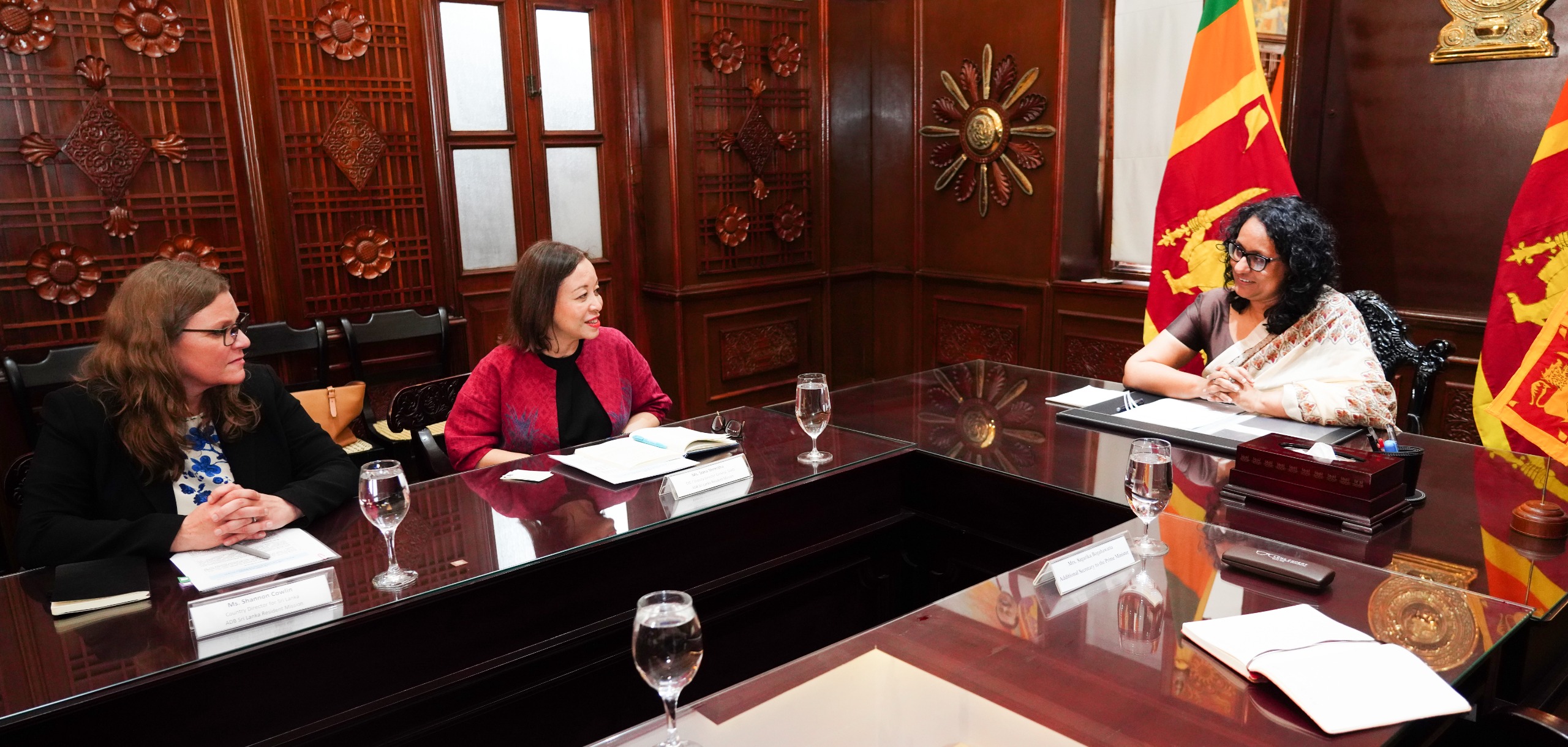
The newly appointed Country Director of the Asian Development Bank for Sri Lanka Ms Shannon Cowlin and the accompanying delegation met with Prime Minister Dr. Harini Amarasuriya on Tuesday [0th of February] at the Prime Minister’s office.
Welcoming the delegation, the Prime Minister extended congratulations to the newly appointed Country Director and acknowledged the long-standing partnership with the Asian Development Bank. The Prime Minister also expressed appreciation for ADB Bank’s continued engagement and support aligned with Sri Lanka’s national development priorities.
The Prime Minister also conveyed gratitude for the timely assistance extended by the ADB in response to Cyclone Ditwah, noting the importance of such support in mitigating the immediate impacts of natural disasters.
The ADB delegation reiterated its readiness to further assist Sri Lanka during the post-cyclone recovery phase, including rebuilding and reconstruction efforts, and emphasized its commitment to the supporting the education sector.
The meeting was attended by OIC / Deputy Director General, SARD Ms. Sona Shrestha, Ms. Cholpon Mambetova Country Operations Head of ADB Sri Lanka Mission Resident, Additional Secretary to the Prime Minister Ms. Sagarika Bogahawatta, Director General of the External Resource Department, Ministry of Finance Samantha Bandara, Director for ADB Division in External Resource Department, Ministry of Finance Ranjith Gurusinghe.
[Prime Minister’s Media Division]
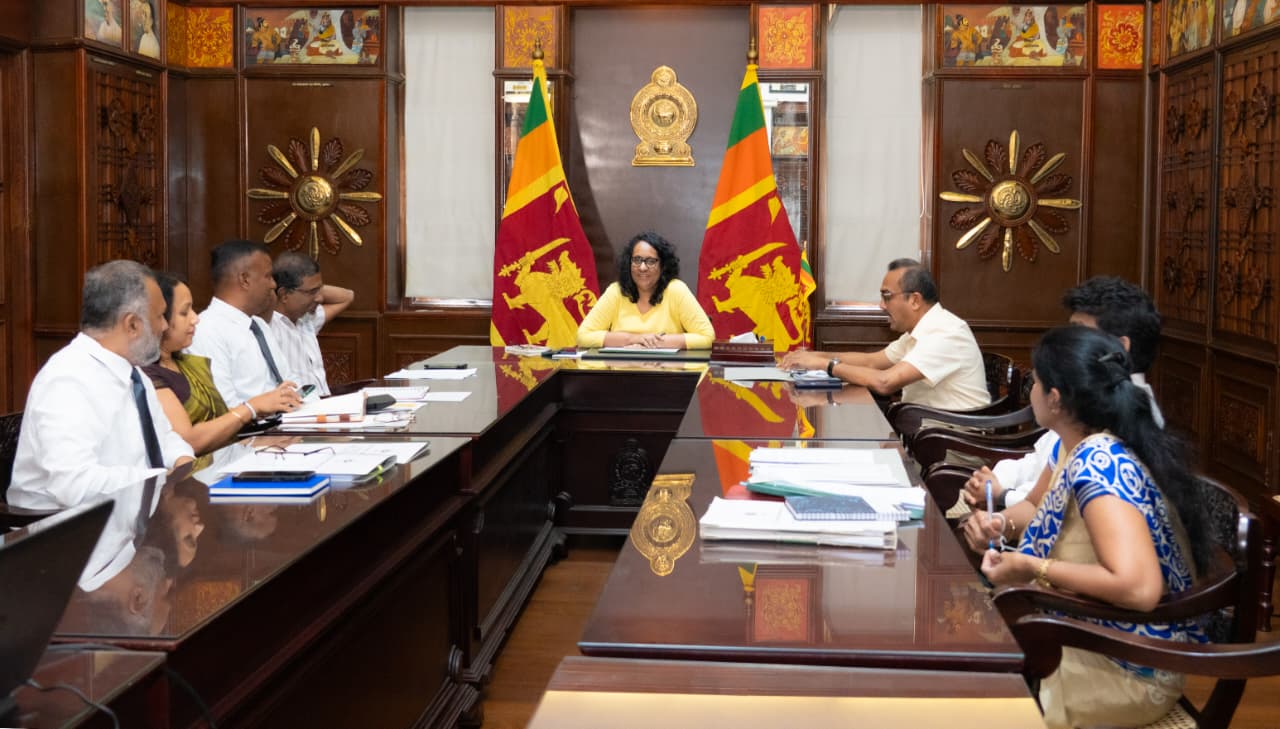
A discussion on regulating school student transport services was held on the 09th of February at the Prime Minister’s Office under the patronage of Prime Minister Dr. Harini Amarasuriya, with the participation of officials from the National Transport Commission and the Ministry of Education.
The authority for regulating school student transport has been vested with the National Transport Commission, and as the relevant draft of regulations have already been prepared, discussions were held on the provisions contained in these drafts as well as on new proposals that should be incorporated.
During the discussion, the attention was focused on meeting the emerging needs of transportation arising from the schools, minimizing issues encountered in the transportation of school students by establishing an organized transport mechanism, and deploying the “Sisu Sariya” school transport service in a more efficient and effective manner followed by the new educational reforms process.
Discussions were also held on introducing laws and regulations to systematize the transportation of schoolchildren, prioritizing child protection by preventing reported incidents of abuse and harassment during student transport, and enhancing professionalism among school transport service providers to ensure a responsible and accountable service.
The focus was also emphasized on the need for coordinated action among the Ministry of Transport, Highways and Urban Development, the National Transport Commission, the Ministry of Education, Higher Education and Vocational Education, and the National Child Protection Authority.
The discussion was attended by the Minister of Transport, Highways and Urban Development Bimal Rathnayake, Chairman of the National Transport Commission P. A. Chandrapala, officials of the National Transport Commission, and the officials from the Ministry of Education, Higher Education and Vocational Education.
[Prime Minister’s Media Division]

Prime Minister meets delegation from the European External Action Service

Moscas star as Italy dismantle Nepal for first World Cup win

Kim Jong Un chooses teen daughter as heir, says Seoul

Newly appointed ADB Country Director to Sri Lanka and delegation meet PM

School student transport services are being regulated

Shanaka and Rathnayake blow Oman away with frenetic half-centuries

‘Dates have the highest sugar content to fight Coronavirus’

Sunday Island 27 December – Headlines

#SundayIsland 17th December – Headlines

Sunday Island – 28th March

Sunday Island Headlines – 21 March

Sunday Island – 21st February – Headlines
-
 Features5 days ago
My experience in turning around the Merchant Bank of Sri Lanka (MBSL) – Episode 3
-

 Business6 days ago
Zone24x7 enters 2026 with strong momentum, reinforcing its role as an enterprise AI and automation partner
-
 Business5 days ago
Remotely conducted Business Forum in Paris attracts reputed French companies
-
 Business5 days ago
Four runs, a thousand dreams: How a small-town school bowled its way into the record books
-
 Business5 days ago
ComBank and Hayleys Mobility redefine sustainable mobility with flexible leasing solutions
-
 Business2 days ago
Autodoc 360 relocates to reinforce commitment to premium auto care
-
 Business6 days ago
HNB recognized among Top 10 Best Employers of 2025 at the EFC National Best Employer Awards
-
 Midweek Review2 days ago
A question of national pride