
News
Cancellation of Japanese projects to be probed

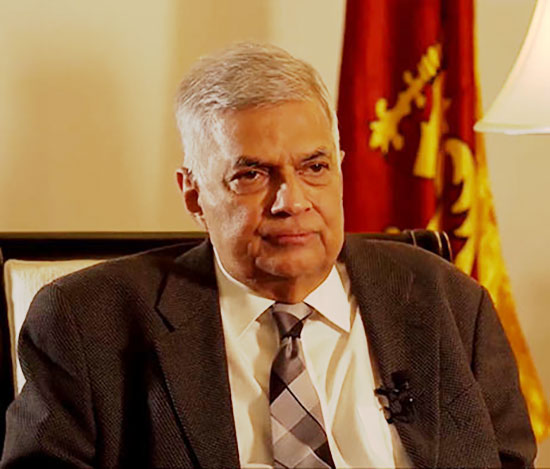
FR petition says govt. deprived itself of USD 8 bn
By Shamindra Ferdinando
Chairperson of the Committee on Public Finance (COPF) Anura Priyadarshana Yapa yesterday (08) said that he would initiate an inquiry into the cancellation of several foreign-funded projects, following the last presidential election, in Nov 2019.
Yapa said so responding to The Island query whether he would act on Prime Minister Ranil Wickremesinghe’s request for a parliamentary probe into the cancellation of such projects.
Alleging that the unjustifiable government action deprived the country of much needed foreign investment, therefore contributed to the economic meltdown, Premier Wickremesinghe declared that Tokyo was unhappy. The Prime Minister’s Office quoted the UNP leader as having told Parliament on Tuesday: “Japan is our longtime friend. A nation that has helped our country greatly. But they are now unhappy with us due to the unfortunate events of the past. Our country had failed to formally notify Japan of the suspension of certain projects. Sometimes the reasons for these suspensions were not even stated.”
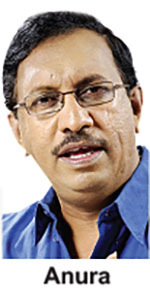
Lawmaker Yapa said that he, too, felt an inquiry was required into the matter.
On the basis of certain reports received from an unidentified person, Premier Wickremesinghe told the House that some of the projects that had been undertaken and partly implemented by Japan were halted midway.
Premier Wickremesinghe wants COPF to investigate cancellation of the Liquid Natural Gas (LNG) projects, undertaken by India and Japan. The Premier has alleged that the CEB halted both projects without at least giving justifiable reasons.
Lawmaker Yapa said that the allegation pertaining to putting on hold, projects funded by Japan, to the tune of USD 3 bn, by 2019, was quite serious.
MEP leader Dinesh Gunawardena served as the Foreign Affairs Minister. Prof. G.L. Peiris succeeded Gunawardena, in August 2021.Former Commander of the Navy Admiral Jayanath Colombage served as Secretary to the Ministry of Foreign Affairs till recently.
Legal sources said that cancellation of several high profile foreign funded projects, including the Millennium Challenge Corporation (MCC) project had been cited in a fundamental rights petition, recently filed against the former Finance Ministers, Mahinda Rajapaksa, Basil Rajapaksa and Ali Sabry, other members of the Cabinet, the Monetary Board of the CBSL, former Governors of the CBSL, Prof. W.D. Lakshaman and Ajith Nivard Cabraal, former Finance Secretary S.R. Attygalle, Monetary Board member S.S.W. Kumarasinghe, former Presidential Secretary Dr. P.B. Jayasundera and three Commissioners of the Commission to Investigate Allegations of Bribery or Corruption (CIABOC). Premier Wickremesinghe has been made the first respondent as he is the incumbent Premier.
The petition, filed by Dr. Athulasiri Kumara Samarakoon of the Open University of Sri Lanka, Soosaiappu Neavis Morais and Dr. Mahim Mendis, in terms of Articles 17 and 126 of the Constitution, alleged that after the last presidential election several projects, that had been finalized and would have generated substantial revenue in foreign exchange, were stopped. The petition named the cancelled projects as the Light Rail Project, East Container Terminal (ECT) involving India, and Japan, the Central Highway Phase 3 and 4 with Japan and India, and the MCC Agreement with the US.
The MCC had been among three other agreements sought by the US. The yahapalana government entered into the Access and Cross Servicing Agreement (ACSA) in August 2017. Talks on Status of Forces Agreement (SOFA) were stalled.
The petitioners stated that the projects had been done away with on the directives of President Gotabaya Rajapaksa. Asserting had those agreements were implemented the country wouldn’t have been in the current predicament, the petitioners brought to the notice of the Supreme Court that the first respondent before being appointed as the Premier on May 12 declared the country was deprived of USD 4,000,000,000 due to the cancellation of those projects.
The petitioners further stated that the incumbent dispensation caused the current calamity by turning down of USD 400,000,000 IMF facility.
Authoritative sources said that the government antagonized Japan by not even giving prior notice of the utterly reprehensible decision. Sri Lanka violated diplomatic protocol, sources said, Japan’s unenthusiastic response to President Gotabaya Rajapaksa’s request for USD 3 bn loan should be examined against the backdrop of our irresponsible conduct, sources said. Japan has advised Sri Lanka that they would consider lending after the government reached agreement with the IMF or get close to the finalization of the required facility.
Meanwhile, Sri Lanka’s Ambassador in Tokyo Sanjiv Gunasekera would leave office on June 15. Gunasekera, a close associate of President Gotabaya Rajapaksa, informed the President, on May 09, of his decision to quit on June 09. However, he would continue for a week in view of some official commitments.

Latest News
Flood warning issued to the Divisional Secretariat Divisions of Ganga Ihala Korale, Udapalatha, Doluwa, Udunuwara, Yatinuwara, Gangawata Korale, Harispattuwa, and Pathadumbara


Due to heavy rainfall received in the upper catchment areas of the Mahaweli River over the past few hours, there is a risk of minor flooding in the low-lying areas surrounding the Mahaweli River within the Divisional Secretariat Divisions of Ganga Ihala Korale, Udapalatha, Doluwa, Udunuwara, Yatinuwara, Gangawata Korale, Harispattuwa, and Pathadumbara.Residents living in the above mentioned areas and motorists using roads passing through these areas are urged to exercise extreme caution and remain highly vigilant regarding the prevailing situation.
Furthermore, residents living in close proximity to the Mahaweli River in these areas are advised to remain highly alert to the situation and take all necessary precautions to protect themselves from any potential flooding.The relevant disaster management authorities are requested to take all necessary measures in response to this situation.
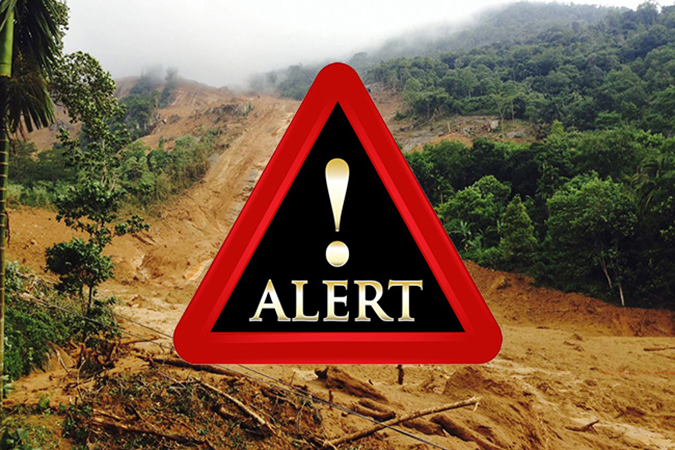
The National Building Research Organisation [NBRO] has issued landslide Red Alerts to the districts of Kandy, Kegalle and Nuwara Eliya effective from 14:00 hrs on 20.09.2026 To 14:00 hrs on 21.09.2026
Accordingly,
LEVEL III [RED] Land Slide early warnings have been issued to the Divisional Secretaries Divisions and surrounding areas of Pasbage Korale in the Kandy district, Dehiowita, Aranayake, Deraniyagala, Mawanella and Yatiyanthota in the Kegalle district and Kothmale West, Kotmale East, Ambagamuwa and Norwood in the Nuwara Eliya district
LEVEL II [AMBER] Land Slide early warnings have been issued to the Divisional Secretaries Divisions and surrounding areas of Padukka in the Colombo district, Nagoda, Thawalama and Neluwa in the Galle district, Bulathsinhala, Palindanuwara, Walallawita and Agalawatta in the Kalutara district, Ganga Ihala Korale in the Kandy district, Bulathkohupitiya and Kegalle in the Kegalle district, Akuressa and Pitabeddara in the Matara district, Thalawakele in the Nuwara Eliya district and Pelmadulla, Ratnapura, Ayagama, Kuruwita and Ratnapura in the Ratnapura district.
LEVEL I [YELLOW] Land Slide early warnings have been issued to the Divisional Secretaries Divisions and surrounding areas of Seethawaka in the Colombo district, Niyagama and Baddegama in the Galle district, Mirigama in the Gampaha district, Ingiriya in the Kalutara district, Udapalatha and Yatinuwara in the Kandy district, Galigamuwa, Warakapola and Ruwanwella in the Kegalle district, Kotapola, Pasgoda and Athuraliya in the Matara district, and Eheliyagoda, Kalawana and Elapatha in the Ratnapura district.
News
Development projects can deliver results to the people more quickly when the political authority and the public service work together towards a common goal – PM
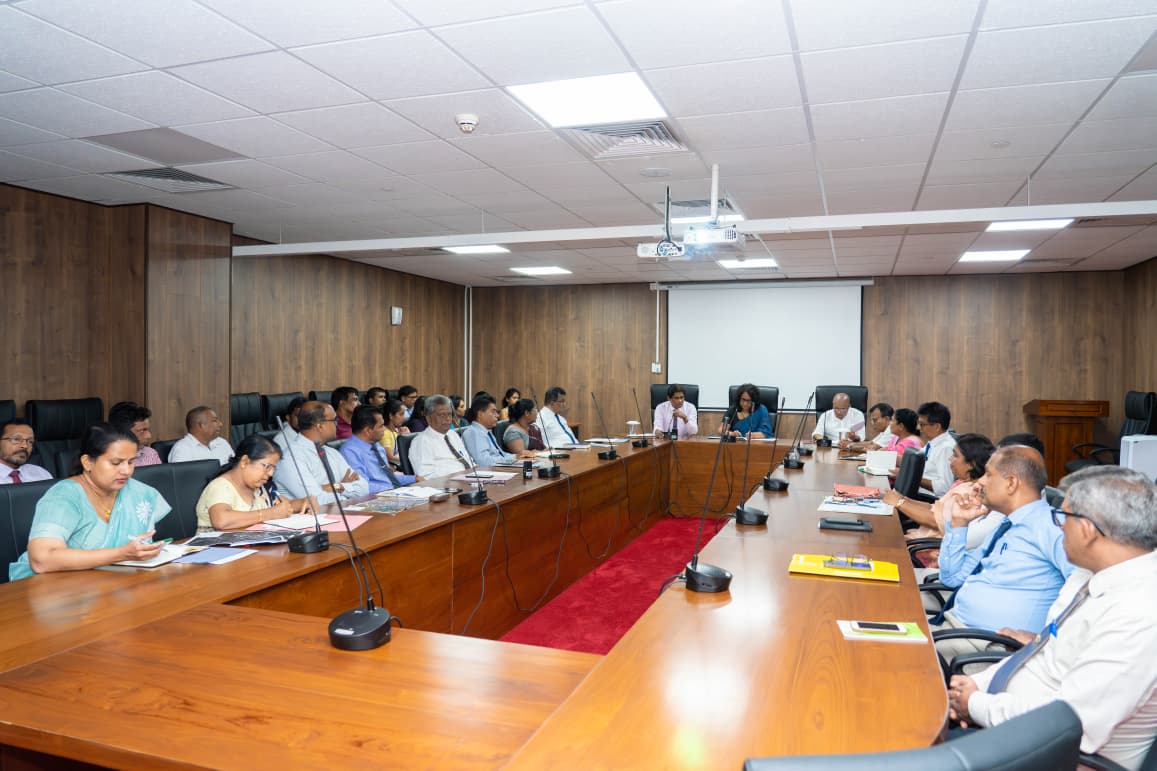
Prime Minister Dr. Harini Amarasuriya stated that development projects can deliver results to the people more quickly when the political authority and the public service work together towards a common, people-oriented objective.
The Prime Minister made these remarks while participating in a discussion held on Friday [September 18] at the Western Province Council Auditorium to review the progress of the development project to rehabilitate Rathmalana Kandawala Road and the drainage system on either side of the road, within the Dehiwala–Mount Lavinia Municipal Council limits in the Colombo District.
The project, which commenced on September 10, 2026, is scheduled to be completed before June 30, 2027. Implemented by the Provincial Road Development Authority (PRDA), the project includes the construction of a bridge at a cost of Rs. 64 million, the rehabilitation of the drainage system at a cost of Rs. 930 million, and the rehabilitation of the road at a cost of Rs. 115 million.
The Prime Minister also paid special attention to the progress of the responsibilities assigned to the Western Province Council, the Irrigation Department and the Ratmalana Divisional Secretariat in accordance with decisions taken at the previous committee meeting. Attention was also given to the current status of the plans being carried out by the Sri Lanka Land Development Corporation (SLLRDC), as well as the construction and maintenance activities being undertaken by the Provincial Road Development Authority (PRDA).
Commending the expedite and commendable progress of the project, the Prime Minister particularly appreciated the commitment demonstrated by officials of the relevant government institutions to work in close coordination with one another and in collaboration with the political authority.
The Prime Minister also emphasised the importance of taking measures well in advance to control flooding and minimise its impact on Colombo and several other districts in view of the rainy weather that may affect the Western Province during the latter part of this year.
The meeting was attended by the Chairman of the Colombo District Coordinating Committee and Member of Parliament Lakshman Nipuna Arachchi, Chairperson of the Ratmalana Divisional Coordinating Committee and Member of Parliament Samanmalee Gunasinghe, Chairman of the Roads Sub-Committee of the Colombo District Coordinating Committee Dewananda Suraweera, Mayor of the Dehiwala–Mount Lavinia Municipal Council Parakum Shantha, Chief Secretary of the Western Province K.G. Pradeep Pushpakumara, along with a number of government officials.
[Prime Minister’s Media Division]

Flood warning issued to the Divisional Secretariat Divisions of Ganga Ihala Korale, Udapalatha, Doluwa, Udunuwara, Yatinuwara, Gangawata Korale, Harispattuwa, and Pathadumbara

Landslide Red Alerts issued to the districts of Kandy, Kegalle and Nuwara Eliya

Shafali dazzles with 49-ball unbeaten 100 and India march into Asian Games final

Development projects can deliver results to the people more quickly when the political authority and the public service work together towards a common goal – PM

Landslide Early Warnings issued to the Districts of Colombo, Galle, Kalutara, Kandy, Kegalle, Matara, Nuwara Eliya and Ratnapura

Chamari Athapaththu’s unbeaten 83 leads Sri Lanka into final

‘Dates have the highest sugar content to fight Coronavirus’

Sunday Island 27 December – Headlines

#SundayIsland 17th December – Headlines

Sunday Island – 28th March

Sunday Island Headlines – 21 March

Sunday Island – 21st February – Headlines
-

 Opinion6 days ago
From Galkissa (Mount Lavinia) to Tambuttegama
-

 News3 days ago
US embassy won’t comment on IGP’s probe into joint drug raid
-

 Features5 days ago
The emptying university: why are academics leaving?
-

 Features6 days ago
Sri Lanka’s university crisis: Brain drain and union action demand urgent reform
-

 Business3 days ago
All-new Bolero MaXX unveiled in Sri Lanka
-

 News2 days ago
Bid for Basil’s extradition nears final stage: Police
-

 Opinion6 days ago
Ashraff: From the SLMC towards the National Unity Alliance
-

 Editorial6 days ago
Muscle flexing, astroturfing and dog-and-pony shows