
Features
Cambridge, bar exams and return to Ceylon


by Nimal Wikramanayake
I went up to Cambridge early in October 1955 full of confidence and hope, but unfortunately my hopes were dashed to the ground shortly thereafter. In my first tutorial I was required in my Legal History class to write a tutorial on clause 39 of the Magna Carta -the clause which required “that no man shall be tried except by his peers” This reference, of course, was to the Barons and to no one else. I wrote a forty-page tutorial of which I was enormously proud. The result: I received an “A” while two other students received “A+” In my next tutorial in Roman Law, the same thing happened. The same two students bested me. I was devastated.
I lost all interest in my studies. Why, you may ask. You might find my reaction strange. I desperately needed my father’s approval, which I had never received. According to my father, who had been a first-class student, one was required to come first in everything one did. Nothing else was sufficient. (Many, many years later I learned that Kerry Packer and Tony Greig, the famous English cricketer, desperately sought their fathers’ approval, which they never received. I suffered the same fate.)
The upshot of this was that I stopped going to lectures and spent the next two and a half years playing poker and partying. These poker games were a spectacle to behold; it was a game of no-limit draw poker. I will give you an example of this game. On one occasion we started playing poker on a Friday evening and continued right through the night until Saturday afternoon. At this stage I was down 200 pounds. How was I to pay this when my allowance was only 50 pounds with which, in addition, I had to pay my college bills? We decided to take a short break from the game and went to the cinema.
The film was Love in the Afternoon with Gary Cooper and Audrey Hepburn. After watching the film, we returned to the game and finished playing on Sunday morning. I was finally up two pounds.I returned to my rooms in college and fell asleep. When my girlfriend, whom I later married, woke me up in the evening, I told her that I had four aces.
Prejudice in action
It was now March 1958 and I suddenly realised that I was in serious trouble. I had intended to go down to London and sit for the English barristers’ exams (the Bar exams) when I finished up at Cambridge in order to practise later on in Ceylon as an advocate.
The Bar exams came in two parts. I had to get a Second-Class in my law degree to be exempted from part I of the Bar exams. I went and saw Michael “Mickey” Dias, the greatest Ceylonese academic who was then the editor of Clerk and Lindsell on Torts. Mickey had taken six starred first classes at Cambridge; two in classics, three in the Law Tripos and one in the LLB, and had come first in his six years of study at Cambridge. In order to get a starred first one had to obtain an aggregate mark of over 80 per cent in every subject.
Mickey had initially studied classics and after that changed to Law. He got his LLB and LLM, as he came from one of the great legal families in Ceylon. Michael’s father R F Dias was a Supreme Court judge in Ceylon. Unfortunately, racism reared its ugly head at Cambridge; Mickey could not get a post there and ended up as a lecturer at Nottingham University. However, he later obtained a lectureship at Magdalene College (pronounced “Maudlane”) Cambridge. He was a lecturer in torts for over 40 years, but he never got a professorship.
I went to see Mickey and he said, “It’s quite simple. Take your six textbooks and read each subject for half an hour in the morning, half an hour in the evening and half an hour at night” I followed his advice for two and a half months and got a Second-Class.When I returned to Ceylon in 1959, my master, Kingsley Herat, used to read textbooks like novels. He taught me how to read legal textbooks. All you had to do was pick the book up and read it.
The Bar examination
My next task was to pass the barristers’ final examination which was being held two months later in September 1958. This exam had eleven subjects, eight of which were new to me, but I decided to sit for it. I came a cropper in “Equity”, the subject in which I was to become an expert many years later. I received a Conditional Pass in Equity which meant I had to sit for this subject again at the end of November. I sat for this subject and, cocky little bastard that I was, I left for Ceylon with my Italian wife, Anna Maria, shortly afterwards. I passed and was called to the Bar in absentia in England on February 12, 1959 – 63 years ago. This meant that I was not present when the young men and women were admitted to the English Bar.
When we got to Ceylon, Anna Maria was “horrified” at the indolent life we lived. She would find toothpaste on her toothbrush in the bathroom when she awoke in the morning. Whenever I had a drink at my father’s home, the drinks trolley would be rolled out on the front verandah for me. I did not need to pour my drinks out for I would ring the bell and the servant would come and do this little job for me which I could quite easily have done for myself. Was there some racism in my own attitude towards our coloured servants, I wonder?
My wife, the white woman
Anna Maria, who is Italian, came from a little town called Asolo in the district of Veneto in the north of Italy. During our time in Ceylon, she occasionally had to endure slights and insults, which she did with considerable dignity. In Ceylon in the 1950s, racial prejudice worked against white women who had married Sinhalese and Tamil men. Before I went to England my father had told me that I should not marry a white woman as she would meet with hostility and prejudice in Ceylon. He told me that a friend of his called Rajasingham had married a French girl and brought her back to Ceylon As a young lawyer he had to live with his parents because he had no work and no money. His mother detested his wife and used to make blistering hot curries for her and treat her badly. The wife finally went back to Paris after few years. This was not an isolated case.
It also happened to a very dear friend of mine who grew up with me – the late Vernon de Silva. Vernon went off to England in the 1960s and qualified as a medical specialist – a physician. He married a delightful English girl but his mother refused to acknowledge her and Vernon could not take her back to Sri Lanka. He had to settle in Australia.Fortunately, the people in Sri Lanka are more civilised today and many Sri Lankan-born men and women have married Europeans and Australians.
I remember one occasion in 1959 when we were invited to the wedding of a friend of mine, Chandra Seneviratne. His parents were extremely wealthy, and the wedding was held in their luxurious home in Rosemead Place, Colombo 7. It was customary at Sinhalese weddings for the women to congregate together inside the houses whilst the men regaled themselves in the large expansive gardens outside. I took Anna Maria into the house so that she could mingle with the women.
The wives of several friends of mine were gathered in one of the ante rooms so I took her in and introduced her to the ladies who were present. I asked one of the ladies to look after Anna Maria. I then went out onto the spacious lawn and joined my friends. Fifteen minutes later, Anna Maria came hurrying out and joined me. She was quite distraught. I asked her what had happened; and she told me that the ladies had kept conversing in Sinhalese and had deliberately gone out of their way to snub her. That was the last time I associated with these friends.
The early days
I was called to the Bar in Ceylon on October 12, 1959. It was a glorious day – I received numerous briefs from Dad’s proctors because Dad was at the height of his powers. I thought, what a wonderful profession. But unfortunately this was not to last.
The prime minister SWRD Bandaranaike had been shot a few weeks before I was admitted to practice. Shortly afterwards, the Chief Priest of the Kelaniya Temple, Buddharakkita Thero, and several others were charged with his murder. Earlier in the year, Dad had appeared for Dr Lenora, a physician and politician, in a defamation case against Mrs Vimala Wijewardene, then Minister of Local Government and a friend of the Chief Priest. Dad was successful and Dr Lenora was awarded Rs 100,000 ($20,000), which was a princely sum in 1959. The Chief Priest was so impressed that he wanted Dad to appear for him. Dad refused, as he had not done a criminal case since the early days.
Truth and justice
When a law student goes to law school, young and enthusiastic and full of hope, all he or she is interested in is truth and justice. My readers will probably think me a nasty old cynic when I say that it is not an absolute rule that truth and justice exist in legal proceedings. Many strange and unusual events can occur in a case which have nothing to do with truth and justice. I will give you a classic example to back up my statement, although one could argue that this case is an aberration.
Shortly after I was admitted to the Ceylon Bar, I was retained as junior counsel in a seduction case. In Ceylon, in the late 1950s – if I might put it rather indelicately – the goods were returned if they were spoiled. In the villages, the sheets were required to be hung out after the wedding night, just as in villages in Italy. The action for seduction comes from Roman law and from there it was introduced into Roman-Dutch law. The action is brought for “defloration of a virgo intacta” or the deflowering of a virgin. It was introduced into Roman Law by Justinian over 1,500 years ago when virginity was seen as a precious commodity. The Dutch ruled a small portion of the country from Colombo to Galle, including the town of Colombo, and introduced Roman-Dutch law into the country. Seduction, however, has a completely different meaning today. Our client was being sued not only for seduction, but for paternity, for giving the poor woman a baby.
The client turned up at my leader’s chambers for a conference and brought the record keeper of the army with him. The record keeper brought along the attendance register of the army which disclosed that our client was 200 miles away in an army camp in Jaffna for well over a year when the alleged incident took place, and could not have been in Colombo as alleged by the woman.
Months later, the lady attended court with her little son on the day judgment was to be delivered. He was the spitting image of our client. The result, however, was a foregone conclusion as the record keeper’s evidence was accepted and the lady’s action was dismissed.When we came out of court after judgment had been delivered, my leader Neville Samarakoon turned to the client and said to him, “That’s your child.’
The client replied, “Yes, it is, you see the record keeper is my best friend. He signed me up as being present in the barracks in Jaffna when I was having intercourse with the woman in Colombo 200 miles away. And this happened on most weekends for quite some time”
I was devastated. This was dreadful! I felt shattered. There was no such thing as truth and justice. I returned home mortified. I decided to leave the legal profession. I told Anna Maria that I was leaving the Bar immediately. After a few days, however, I calmed down and decided to carry on regardless. I became a cynical old man eventually.
The lean years
When I went to the Bar, my father was chairman of one of the big industrial companies in the country, the Associated Motorways Group, and in addition, chairman of the Free Lanka Insurance Company, the second largest Ceylonese insurance company in Ceylon. He sent a directive to the various officers of these companies that under no circumstances was I to be briefed by them in court proceedings. Dad wanted me to make my name without any help from him. Further, when proctors briefed him in a case, they would ask him whether he wanted me to be briefed as his junior. He would tell them that it was up to them to decide whether I was good enough to be briefed in the matter. So I was never briefed as my father’s junior in my early years at the Ceylon Bar as I was completely inexperienced as a barrister/advocate.
At that point in time there were three Queen’s Counsel who were pushing their sons extremely hard.In addition, I had married outside not only my caste but outside my race, which was frowned on at the time. I was shattered by his attitude, which was inexplicable to me. I now realise that his behaviour conditioned me for the extremely hard times I was to endure later on in Australia.
Although my early years at the Bar in Ceylon were extremely difficult, it was having to endure the buffets of fate with equanimity later in an extremely prosperous environment that was soul-destroying.
Anna Maria, my heroine
My dear wife was extremely supportive in those early years between 1959 and 1965 as briefs were few and far between. Life was a tremendous struggle without any help from my parents. An advocate or barrister who goes to the Bar without private means or legal contacts faces a perilous existence in his early years.
In 1963, as I was struggling to exist, I applied for a job with the Legal Department of the Employers Federation. This was a large organization which acted in disputes between commercial companies and their employees. I heard nothing from the company about my job application. Several months later, I met the chief legal officer, Lyn Wirasekera, who was a friend of Dad’s and enquired from him why I had not been called for an interview. He looked at me strangely and remarked that he had sent me a telegram calling me for an interview but I had not turned up.
It transpired that Anna Maria had destroyed the telegram. When I asked her why she had done that, she said she knew I had set my heart on being an advocate of the Supreme Court, that that was my destiny and I did not need to work for the Employers Federation.
As things did not improve during the following year, I applied for employment at the Estate Employers Federation as a legal officer. This was an organization formed by the plantation companies to act for them in legal disputes they had with their employees. The same thing happened again. I received a telegram calling me for an interview for a job. My wife again destroyed the telegram without my knowledge, so thanks to my dear wife I was destined to reach the top of the Junior Bar in Ceylon by 1968.
Humour the bastards
While I was reading in 19601 would go into court with my master, Neville Samarakoon. Whenever a judge said something remotely funny and looked about for approval, my master would fall into paroxysms of laughter. I later asked him why he was laughing when there was nothing funny in what the judge had said. His reply was, “Nimal, you must always kowtow to those stupid bastards. Humour the bastards and they will think you are a great bloke.”
Many years later at the Ceylon Bar there was a judge, S S Kulatileke, who fancied himself to be a comedian. He would often declaim what he considered to be a humorous remark and then turn from side to side looking for approval. I remember on one occasion he was doing a criminal case, and when the case was for hearing he shouted, “Call the robbers!” and started laughing, looking around. I decided that here was my opportunity to test my master’s theory. I burst out into raucous laughter. I positioned myself at a point where he would turn his face and each time I would burst into paroxysms of laughter at his witticisms. As a result, Kulatileke thought I was what the Italians call simpatico. Judge Kulatileke was very fond of me and, surprisingly, I never lost a case before him. Although my advocacy may have contributed in some measure to my success, I would advise all junior barristers to “Humour the bastards!”
In 1968,1 won an interesting case before Judge Kulatileke which also reinforced my belief that it is doubtful whether truth and justice exist in law courts. This was a landlord and tenant case. It was a most unusual case, for most of the properties in Colombo came under the Rent Control Act. The tenant could only lose his or her tenancy if the premises were reasonably required for the landlord’s use and occupation, or if the tenant surrendered the premises to the landlord. The likelihood of the tenant surrendering possession of the property was not only extremely rare but well-nigh impossible. In this case, it appeared that the tenant had delivered a written notice of surrender to my client, the landlord.
I opened my case and called the client. He gave his evidence about the surrender then Mr AK Premadasa got up to cross-examine my client. Premadasa was the leader in the Landlord and Tenant Jurisdiction. He subpoenaed my client to produce all the rent receipts over a period of some 36 months. The client was only able to produce 35; one rent receipt was missing. A peculiar feature of the rent receipts was disclosed – some of them were signed by the tenant at the bottom of the page. They were on A4 foolscap paper, not in a normal receipt book. Premadasa suggested to my client that he had torn off the thirty-sixth receipt and typed in this surrender letter above the tenant’s signature.
I reminded Judge Kulatileke that Premadasa was the acknowledged leader of the Landlord and Tenant Jurisdiction and that he was noted for his guile. It was an interesting theory that he had formulated, and because he was the leader of the Tenancy Bar he expected the judge to accept this ridiculous theory of his. I asked why anyone would resort to such a subterfuge. I argued that the defendant had decided to surrender his premises and then had had a change of heart. The receipt was ample proof of his behaviour. The judge accepted my submissions and I was successful.
Some members of the general public are under the misapprehension that lawyers are liars. Most of us certainly are not. We have to put our client’s story across. Occasionally my client comes with a story which would put Baron Munchausen to shame, but I have to put it across. That is what I am paid to do, although occasionally I have some doubts about its authenticity.When we came out of court I told my client that maybe Premadasa was right. My client then admitted he had indeed torn off the receipt and typed in the surrender in place of the receipt.
So much for truth and justice.
(To be continued)
(Excerpted from A Life In The Law – A Memoir)

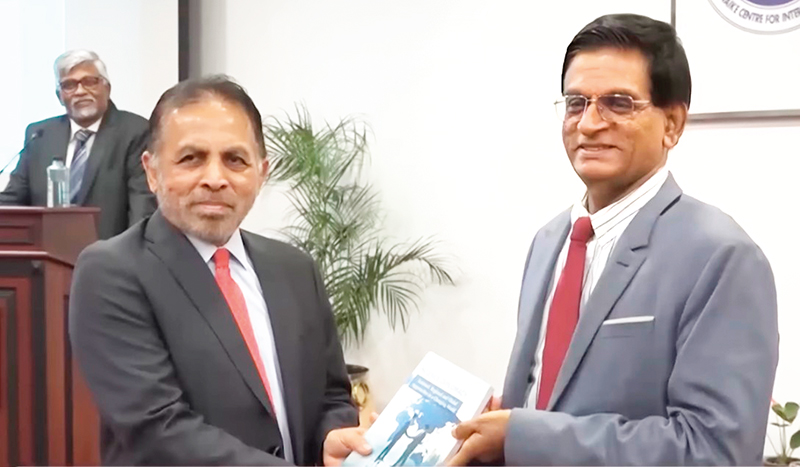
Today marks a truly historic and momentous occasion in the realm of transdisciplinary diplomacy in our country. We gather here with a twofold purpose of profound national and global significance: the establishment of the Science Diplomacy Forum, and the launch of the volume Science Diplomacy: National, Regional and Global Approaches in a Changing World.
This volume brings together valuable and timely contributions from internationally renowned experts representing all key regions of the world — North America, Latin America, Europe, Africa, West Asia, South Asia, and Oceania. It reflects a rich diversity of perspectives, experiences, and insights that speak to the increasingly interconnected nature of science, policy, and diplomacy in our rapidly transforming world.
I am deeply heartened — and indeed humbled — by the presence of such a distinguished constellation of leaders, professionals, intellectuals, scholars, and luminaries from diverse domains, including international relations, science and technology, higher education, and governance. It is rare to witness such an extraordinary and diverse assembly of intellectual, professional, and academic excellence under one roof. Your presence affirms the importance of the cause we serve and the promise of the path we are charting together. Your support, encouragement, and engagement give life, purpose, and direction to this vital endeavour.
As Chief Editor of this volume, it is both a great honour and a profound responsibility to extend a warm and heartfelt welcome to all our distinguished guests and invitees. I am conscious that this august gathering is not assembled to listen to a lengthy welcome address, but rather to engage with the substantive proceedings of this event, enriched by five eminent personalities, four distinguished speakers, and an able and competent moderator — all of whom possess exceptional mastery of the subject. I shall therefore be brief.
Among us today are former and current Ministers and people’s representatives, members of the diplomatic corps, Secretaries to Ministries, distinguished panelists, valued contributors to the volume, Vice-Chancellors, Members of the Board of Management and Academic Affairs Board of the BCIS, Heads of institutions, professors, senior government officials, professionals, journalists, and many others — too numerous to acknowledge individually, yet each of you is most warmly welcomed. I receive you all, whether present in person or online, with the utmost warmth, respect, and appreciation.
The panel discussion constitutes the pièce de résistance of this event. We are deeply honoured to be joined by four eminent personalities:
Her Excellency Siri Walt, Ambassador of Switzerland to Sri Lanka;
Professor Pierre-Bruno Ruffini, former Chair of the EU Science Diplomacy Alliance; and former Ambassadors Mr. Bernard Goonatilleke and Dr. Palitha Kohona — all of whom bring exceptional depth of experience and insight to this important subject.
Their discussion will be guided by our distinguished moderator, Mr. Naushard Cader, a truly cosmopolitan personality, widely respected for his breadth of knowledge and his keen understanding of global affairs and science diplomacy. I extend to all our speakers and our moderator a very warm welcome and my sincere appreciation for their willingness to share their wisdom with us this evening.
Allow me, however, to place this event in perspective.
We gather this evening not merely to introduce a book, nor solely to inaugurate a forum, but to reflect together on an idea whose time has unquestionably arrived.
We meet at a moment of profound global transition and conflict. The international landscape is marked by turbulence, uncertainty, and rapid transformation. The world is shifting from a relatively stable post–Cold War configuration toward an increasingly multipolar order. While multipolarity carries the promise of greater balance and strategic autonomy, it also brings intensified competition among major powers, fluid alliances, and growing unpredictability.
At the same time, the rules-based international order — which for decades provided smaller nations with a measure of predictability and protection — is under visible strain and threat. Institutions are contested. Norms are challenged. Economic interdependence deepens even as geopolitical fragmentation intensifies. Supply and value chains now account for nearly seventy percent of global trade, binding nations in complex webs of mutual dependence. Yet such interdependence has not prevented trade wars, sanctions regimes, technological decoupling, and regional conflicts.
For small and economically vulnerable states, this evolving environment is especially daunting. When global rules weaken, asymmetries of power become more pronounced. Bilateral negotiations between unequal partners can leave smaller nations disadvantaged. Without adequate legal, geological, scientific, technological, and diplomatic expertise, such states may struggle to safeguard their long-term national interests and sovereignty. Vulnerability, in the absence of knowledge and capacity, risks translating into marginalisation.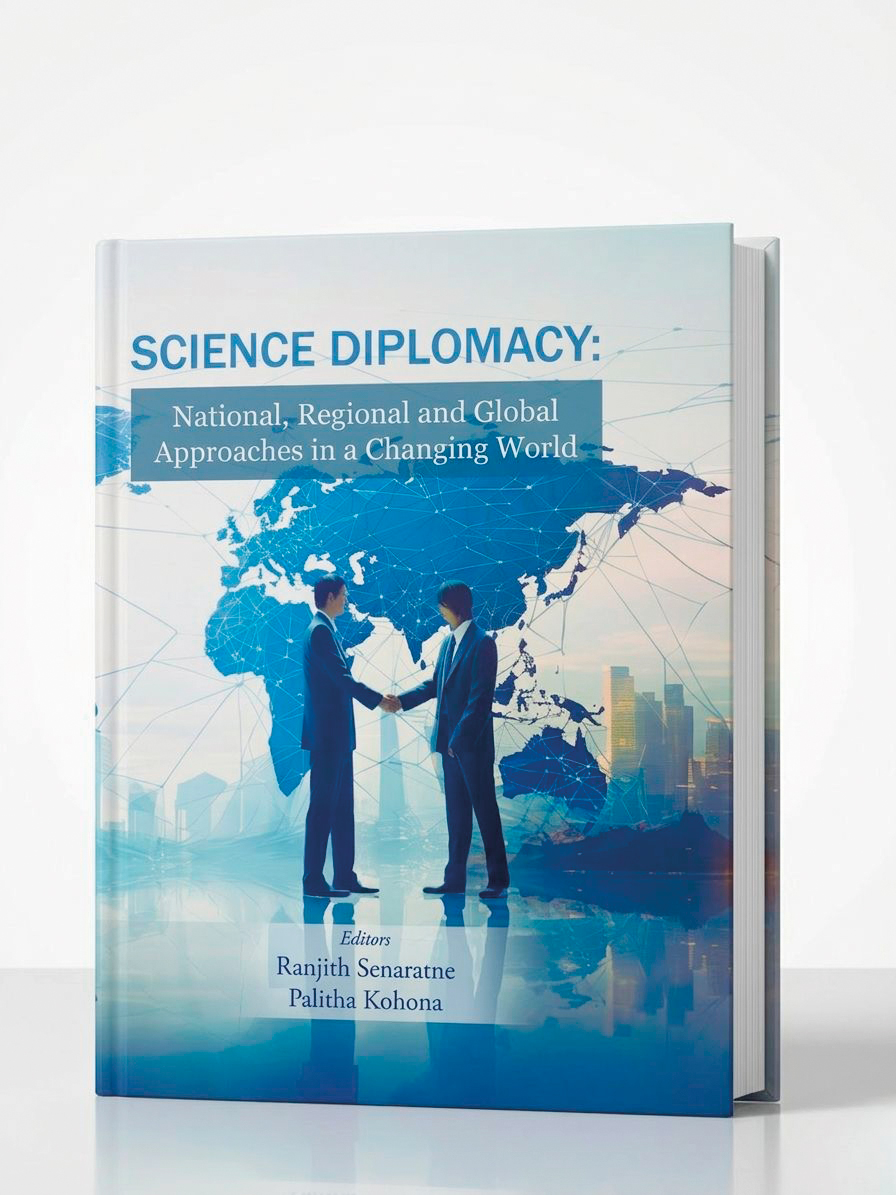
Overlaying this geopolitical transformation is a constellation of interconnected global challenges. Climate change is no longer a distant projection; it is a lived reality. Sea levels are rising. Extreme weather events are intensifying. Food, water, and energy security remain fragile. Pandemics have exposed vulnerabilities in global health systems. Cyber threats transcend borders. Environmental degradation, biodiversity loss, and marine pollution threaten livelihoods and ecosystems alike.
These challenges are systemic and transboundary. Almost every major issue — whether global, regional, or national in scale — involves science and technology, either in understanding root causes or in devising effective solutions.
Traditional diplomacy, while indispensable, is no longer sufficient on its own. The defining issues of our time are not purely political or military; they are scientific, technological, environmental, and societal. They demand evidence-based policymaking, interdisciplinary collaboration, and sustained transnational cooperation.
It is within this context that science diplomacy emerges — not as an academic abstraction, but as a strategic necessity.
Nowhere are these realities more visible than in the Indian Ocean.
Unlike the Atlantic or Pacific Oceans, which possess longstanding institutional architectures and extensive scientific mapping, the Indian Ocean remains comparatively underexplored and under-institutionalised. Covering roughly one-fifth of the world’s oceanic expanse, it carries a substantial share of global energy shipments and maritime trade. Its seabed resources — including critical and rare-earth minerals — remain only partially surveyed. Many of its coastal and island nations are developing economies with limited scientific and technological capacity to explore, monitor, and sustainably manage these resources.
The Indian Ocean is unique. It is bordered predominantly by developing and emerging states. It hosts remarkable cultural, religious, and political diversity. It is home to some of the world’s most climate-vulnerable communities. Increasingly, it has become a central theatre of global strategic competition, viewed by some nations through distinct geostrategic lenses.
This maritime space is simultaneously a lifeline and a fault line. It sustains global commerce and local livelihoods. Yet it is also a theatre where geopolitical interests intersect — sometimes converge, sometimes collide.
At the heart of this ocean lies Sri Lanka.
Geographically, our island sits astride one of the busiest East–West shipping routes in the world. Historically, Sri Lanka has been a hub of commercial, cultural, and intellectual exchange. Today, that strategic location presents both opportunity and responsibility.
Sri Lanka’s history, enriched by iconic figures such as Dr. Gamini Corea, Hon.
Lakshman Kadirgamar, Judge Christopher Weeramantry, Dr. Neville Kanakaratne and Dr. Jayantha Dhanapala, stands as a powerful testament to our long-standing contributions to global diplomacy and international governance. Our nation provided leadership within the Non-Aligned Movement, positioning itself as a bridge between civilizations at a time of deep ideological division. We also made history by producing the world’s first woman Prime Minister, affirming our commitment to political progress and inclusive governance.
Today, we are called upon once again to build upon this distinguished legacy — by championing regional unity, promoting sustainable development, and addressing critical contemporary challenges such as climate change, maritime security, and environmental sustainability.
We must navigate complex geopolitical currents while safeguarding sovereignty and strengthening economic resilience. We face vulnerabilities common to island and littoral states: climate change, coastal erosion, marine pollution, and supply chain disruptions. Our development aspirations must be balanced with environmental stewardship and maritime security considerations.
Yet within these challenges lies profound opportunity.
Sri Lanka can position itself as a regional convener — a hub for ocean science, climate research, marine biodiversity studies, disaster risk reduction, and blue economy innovation. Through platforms such as BIMSTEC, the Indian Ocean Rim Association, and SAARC, we can advance cooperative marine research, harmonise environmental standards, strengthen early warning systems, and promote sustainable maritime governance grounded in international law.
But to do so effectively, we must invest in knowledge — and in the diplomacy of knowledge.
Science diplomacy operates along three mutually reinforcing dimensions:
First, science in diplomacy — where scientific evidence informs foreign policy decisions.
Second, diplomacy for science — where diplomatic engagement enables international research collaboration and shared infrastructure.
Third, science for diplomacy — where scientific cooperation itself becomes a bridge for confidence-building, even when political relations are strained.
Importantly, science diplomacy extends beyond the natural sciences. The humanities and social sciences are equally vital. Technology must be guided by ethics. Data must be interpreted within cultural contexts. Policy must consider equity and justice. Diplomats of the future must be fluent not only in international law and negotiation, but also in scientific literacy and interdisciplinary thinking.
In a fragmented world, science offers a neutral vocabulary. It encourages transparency, peer review, and open data. It shifts discourse from rhetoric to evidence. It fosters long-term thinking in political environments often dominated by short-term calculations.
For small and vulnerable nations, science diplomacy is empowerment. It strengthens capacity. It enhances credibility. It enables engagement with larger powers on firmer ground — armed not merely with moral argument, but with data, research, and technical expertise.
The book we launch today reflects a diversity of experience and insight. It is intentionally transdisciplinary because the problems we face are transdisciplinary. It is intentionally global because no region can address these challenges in isolation.
In Sri Lanka, science diplomacy remains at a formative stage. The establishment of the Science Diplomacy Forum signals our determination to move beyond dialogue toward sustained institutional engagement. It envisions training programmes for diplomats and scientists, embedding scientific advisory mechanisms within governance structures, and building networks among universities, research institutes, industry, and policymakers. It seeks to cultivate a new generation equipped to navigate the interface between knowledge and negotiation.
We aspire for the Science Diplomacy Forum to be transformative — a true game changer.
Excellences, Ladies and Gentlemen,
We live in an era of mounting uncertainty — but also of extraordinary human ingenuity. The same interconnectedness that transmits crises also enables collaboration. The same technologies that disrupt can also heal and transform.
Change is inevitable. The deeper question is whether we will shape that change cooperatively, constructively, and inclusively.
For Sri Lanka, for the Indian Ocean region, and for the broader global community, science diplomacy offers a pathway beyond zero-sum thinking. It channels competition into collaboration around shared public goods. It aligns national interest with regional stability. It transforms vulnerability into resilience through knowledge.
Let this book be not merely a publication, but a platform for sustained reflection and action.
Let the Science Diplomacy Forum be not merely an institution, but a living bridge between evidence and policy, between research and responsibility, between nations and neighbours.
Let Sri Lanka reaffirm its role as a bridge — not a battleground — in the Indian Ocean.
In a world where rules may falter, let evidence guide us.
In a world where tensions may rise, let dialogue endure.
In a world of turbulence, let science diplomacy be our compass — guiding us toward peace, stability, dignity, and shared prosperity.
Welcome Address and Opening Remarks made by Emeritus Prof. Ranjith Senaratne
Former General President,
Sri Lanka Association for the Advancement of Science recently on the occasion of the Founding of the Science Diplomacy Forum and the Launch of the Book Science Diplomacy:
National, Regional and Global Approaches in a Changing World

From one day of celebration to 364 days of transformation
The international women’s day was just celebrated all over the world. I saw many organiations share their slogans, and organize panel discussions, presentations, and exhibitions to support women empowerment. Slogans, themes, colors play vivid and vociferous role across the world, commemorating the international women’s day.
Alas, the colors are faded, slogans are weaned, themes are forgotten, over the next 364 days, pushing UN Chapter on Women’s Rights come up with more illustrious themes and slogans.
From Bread and Peace to Rights and Action
According to the recorded history, the Women’s day first introduced on 28th February 1909 in America, raising a voice of women against poor working conditions and poor pay in garment factories. This took a more revolutionary form in 1917 in Russia against World War I, where a mass of women protested under the theme of “Bread and Peace”.
Starting from basic needs such as bread and peace, the International Women’s Day theme has evolved towards freedom and independence, justice and inclusion.
Over the years, the rise of feminism brought cultural refinements and highlighted women’s rights. Looking back the historical evolution of women’s role, we see that matrimony has faded and patriarchy evolved with religious and geopolitical forces intertwined with the social expectation. The importance and respect for women, given in the ancient civilisations, diminished with medieval civilization, and subsequent colonisation. The rise of patriarchy domesticated women as homemakers, at the same time prompting their voices to rise for dignity and equitable treatment.
Rise of Feminism
In a typical Western-household of 20th century, husband was the bread winner of the family and the wife managed household affairs. In this era, women’s affairs were restricted to daily chores, creating a boundary wall restricting their access to corporate jobs, free voices. Betty Friedman was a remarkable lady who observed the domestic suffering of women and challenged ‘feminine mystique’ through her 1963 book. She disclosed the feminine mystique, which celebrated women as good housewives, and the belief that women could find satisfaction from domestic chores, home making, marriage, raising children, cooking, washing and taking care of husband’s needs. Betty disclosed that the unhappiness and boredom experienced by the domesticized women, and their inability to live up to the feminist mystique defined by the male dominant society had no name and difficult to express in words. Betty’s claim was supported by the theories of Abraham Maslow, who introduced motivation to grow along the hierarchy of needs. Betty, declared that feminine mystique denies basic growth needs of women, where their desires limited to shelter, food, safety and love only.
In this era women’s jobs were confined preeminently to teaching, and caregiving. STEM fields: science, technology, engineering and medicine were dominated by males, leaving less space for women. As you may have heard in the medieval era women who practiced medicine were branded as ‘witches’ and many were burned alive rooting out the knowledge and courage of women. Women who practiced and taught science and astronomy, were also branded for witch craft and condemned to death. The social pressure suppressed women confining them to domestic chores. In the industrial era women were hired for factory work under low wages and less facilities. In this period Women’s organisations were gathered demanding freedom and justice for women, calling for equal opportunities and rights enjoy their male counterparts. The evolution of women’s movements culminated in 1975, where the first International Women’s Day was commemorated on 8th March 1975.
Celebration and Contradiction
Since 1975, women were celebrated for a day in every year across the globe, with various themes and color codes to showcase the world that all women have rights and demanding fair treatment. The theme colors of International Women’s day are Purple, Green and White.
Purple stands for justice, dignity, and loyalty to the cause.
Green for hope and growth.
White for purity and unity.
In 1996, the International Women’s Day declared a theme to embrace, which is; “Celebrating the Past, Planning for the Future.” In the year 2023, the theme was ‘Embrace Equity’, which evolved to ‘Inspire inclusion’ in 2024, and the year 2025 theme was ‘Accelerate Action’. In 2026, there are three themes; 1. Give to Gain, 2. Balance the Scales, 3. Rights. Justice. Action.
Fragmented Focus Diminishes Values
Multiple themes and competing messages can unintentionally dilute momentum. Unity is not uniformity, but coherence matters; shared direction makes shared progress possible. Emerging three themes to celebrate international women’s day in 2026, implicate lack of solidarity, and unity among women’s organizations to share a common theme. Inclusion, equity and accelerated action have not yet achieved by the women globally, neither locally, nor in small communities. We are bound to question whether the women stay true to the meanings of theme colors that represent womanhood.
Thus, isn’t it vital to explore what goes wrong with our themes and slogans on this Women’s day, before setting foot without solid foundation for what we claim for? Or is it only a day that dawn women’s organisations to gather women in elite society, or identified group of women to enjoy a cup of tea over futuristic speeches of identical society, which treat women with high respect and equity?
One thing we must understand is the world is evolving, so does the roles, rights, and actions of women. Although, women shouted and pleaded for opportunities to enter male dominate world of work, today in many countries including Sri Lanka, women occupies majority of administrative positions and clerical level jobs. Even, the labour positions, dominated by males, are now occupied by the females in many sectors. However, women still bear the traditional homemaker role as well, while juggling with work, and studies to sustain jobs and promotions. This modern day scenario has made women more prone to chronic stress related deceases. The break of rest, too rigid demands coming from work and family, their own desires to move up the corporate ladder, outsmart neighbourers, and craving to make their children better than the others have made women’s lives miserable and breaching the themes and slogans that cater to the women’s prosperity.
Today’s environment has resulted many women to abandon dignity, purity, and hope, overlook unity and justice. If you see social media contents shared by women, you may not be surprised by my statements. The dignity, purity and hope for betterment of women is vanishing on screen. Young girls’ addiction to drugs, liquor and tobacco, sexual misbehaviour, and rising school-aged pregnancies are critical concerns that women’s movements must pay attention today.
What We Must Demand Now: Right Education and Just Acts
Women’s day slogans need a shift. Rather than demanding equal rights as men, we must demand right education for women and girls. We shall not stop at demanding justice as given to the men, but shout and make women and girls aware of ‘Just Acts’, and encourage them to act justly, for themselves, without exposing them to be victims of social media, and ill temptations.
Digital lives of women and girls can amplify comparison, quick outrage, and performative ideals. For girls and women, this can mean unrealistic bodies, curated success, and unsafe online spaces. What we need isn’t more judgment; it’s digital literacy, psychological safety, reproductive health awareness, and robust support systems, so women can flourish on and off‑line. We must educate women and nourish and foster the moral values among women and girls to stay pure in thoughts and actions, we must empower women and girls to keep hope and grow continuously. We must share a culture of inclusion among women to enhance solidarity and stay true to unified action for the betterment of women, and the society.
Women as Creators and Modifiers of the World
The history of International Women’s Day is a call for rights and justice. Today, the next horizon is to build cultures at home, at work, and society. Women are the creators and modifiers of the world. They are to add color to lives of those around them. In fact, WOMEN, do not need to call for justice, rights and action. WOMEN, need to call the hidden power, strength and courage within them and create a world that assures every being in it receives justice, and enjoys rights.
Thus, whether themes multiply or fade, the test is not in the rally or the ribbon, it is in the 364 days after. The colours may be vivid on stage, yet the colors are faded in practice if we do not live them. Let us re‑design life with dignity, unity, courage, and continuous growth. Let us educate, include, and act justly. Let us awaken strength within, so that every woman, every girl, and every community can thrive by being a Woman Who Re‑designs Life!
(The author is a senior education administrator, researcher,
management consultant and a lecturer.)
By Dr. Chani Imbulgoda
cv5imbulgoda@gmail.com)
Features
Illegal solar push ravages Hambantota elephant habitat: Environmentalist warns of deepening crisis

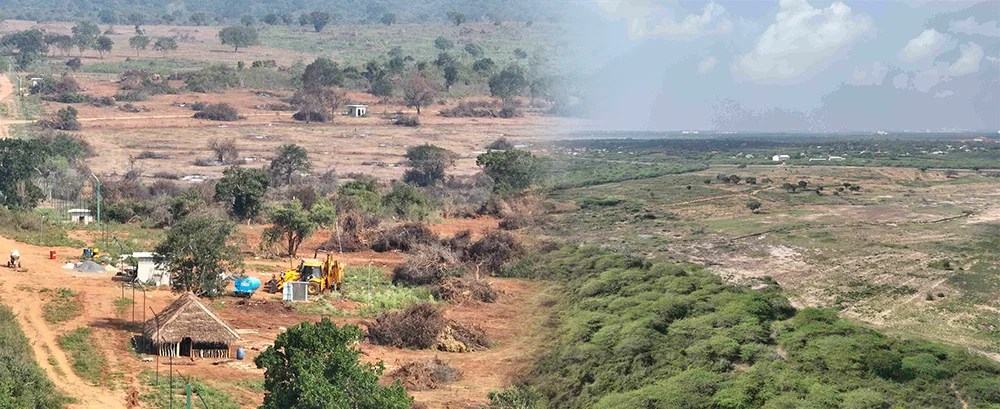
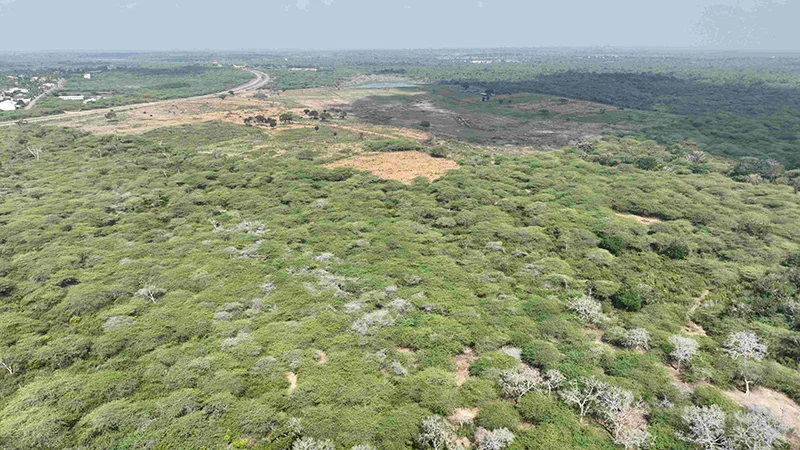
A large-scale move to establish solar power plants in Hambantota has triggered a major environmental and social crisis, with more than 1,000 acres of forest—identified as critical elephant habitat—cleared in violation of the law, environmental activist Sajeewa Chamikara said.
Chamikara, speaking on behalf of the Movement for Land and Agricultural Reform, said that 17 companies have already begun clearing forest land along the boundaries of the Hambantota Elephant Management Reserve. The affected areas include Sanakku Gala, Orukemgala and Kapapu Wewa, which are known to be key elephant habitats and long-used movement corridors.
He said that what is taking place cannot be described as development, but rather as a large-scale destruction of natural ecosystems carried out under the cover of renewable energy expansion.
According to Chamikara, the clearing of forests has been carried out using heavy machinery, while large sections have also been deliberately set on fire to prepare the land for solar installations. He said that electric fences have been erected across wide stretches of land, effectively blocking elephant movement and fragmenting their natural habitat.
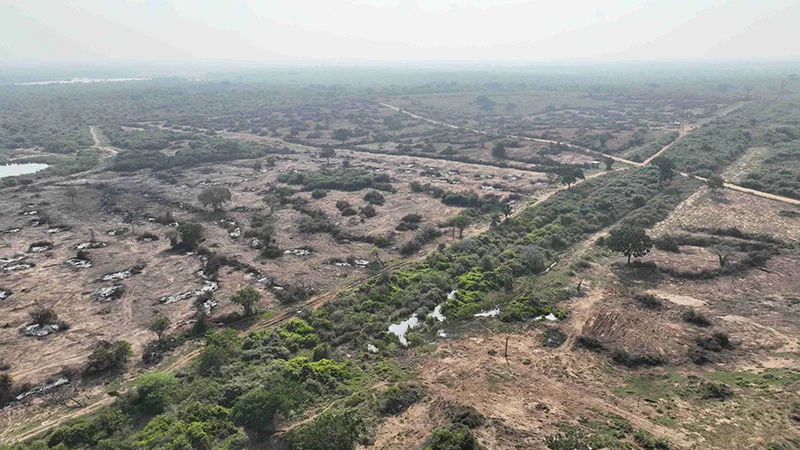
“These forests are not empty lands. They are part of a living system that supports wildlife and nearby communities. Once destroyed, they cannot be easily restored,” he said.
The projects in question include a 50 megawatt solar development undertaken by five companies and a larger 150 megawatt project implemented by 12 companies. The larger project is reported to be valued at around 150 million US dollars.
Chamikara stressed that these projects are being carried out in a coordinated manner and involve extensive land clearing on a scale that raises serious environmental concerns.
He further alleged that certain companies had paid about Rs. 14 million to secure support and move ahead with the projects. He said this points to a troubling failure of oversight by state institutions that are expected to protect forests and wildlife habitats.
“This is not only an environmental issue. It is also a serious governance issue. The institutions responsible for protecting these lands have failed in their duty,” he said.
Chamikara pointed out that under the National Environmental Act, any project of this scale must receive prior approval through a proper Environmental Impact Assessment process.
He said that clearing forest land before obtaining such approval is a direct violation of the law.
He added that legal requirements relating to archaeological assessments had also been ignored. Under existing regulations, large-scale land clearing requires prior evaluation to ensure that sites of historical or cultural value are not damaged.
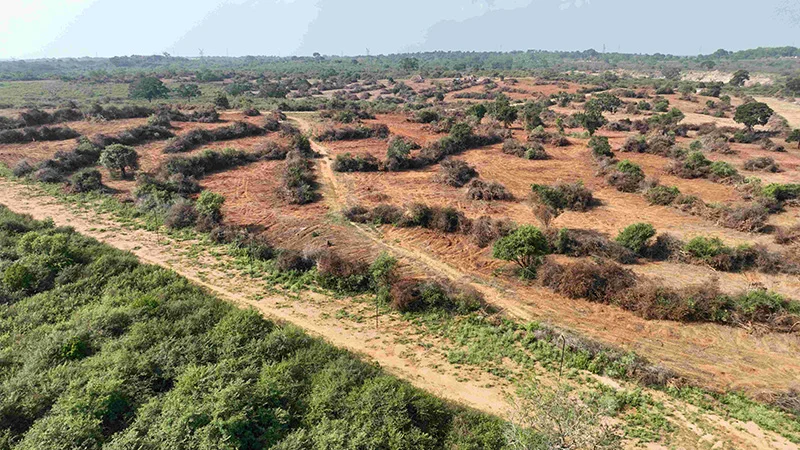
“The law is very clear. You cannot go ahead with projects of this nature without proper approval. What we are seeing is a complete disregard for legal procedure,” Chamikara said.
The environmental impact of these activities is already becoming visible. With their natural habitats destroyed, elephants are increasingly moving into nearby villages in search of food and shelter. This has led to a sharp rise in human-elephant conflict in several areas.
Areas such as Mayurapura, Gonnooruwa, Meegahajandura and Thanamalvila have reported increasing encounters between humans and elephants. According to Chamikara, more than 5,000 farming families in these areas are now facing growing threats to their safety and livelihoods.
He warned that farmers are being forced to abandon their lands due to repeated elephant intrusions, while incidents involving damage to crops and property are rising. There have also been increasing reports of injuries and deaths among both humans and elephants.
“This is turning into a serious social and economic problem. When farmers cannot cultivate their lands, it affects food production, income and rural stability,” he said.
Chamikara also raised concerns about the broader environmental consequences of clearing forests for solar power projects. While renewable energy is promoted as a solution to reduce carbon emissions, he said that destroying forests undermines that goal.
“Forests play a key role in absorbing carbon dioxide. When you clear and burn them, you are increasing emissions, not reducing them. That defeats the purpose of promoting solar energy,” he explained.
He added that large-scale deforestation in dry zone areas such as Hambantota could also affect local weather patterns and reduce rainfall, which would have further negative impacts on agriculture and water resources.
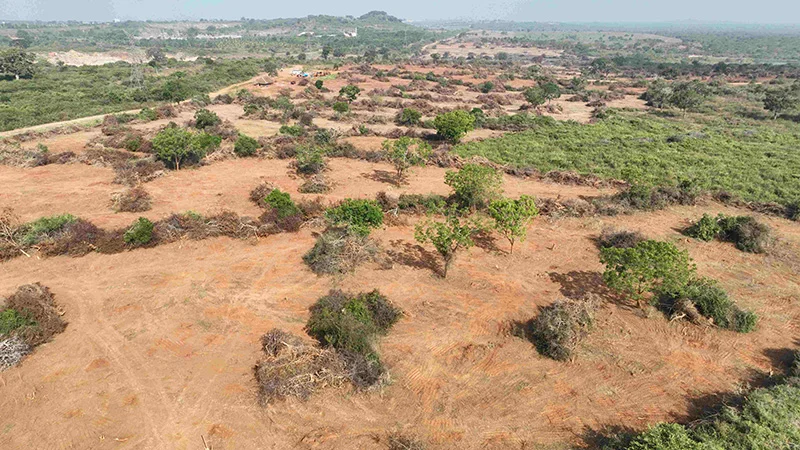
Chamikara called for a shift in policy, urging authorities to focus on more sustainable approaches to solar power development. He said that rooftop solar systems on homes, public buildings and commercial establishments should be given priority, as they do not require clearing large areas of land.
He also recommended that solar projects be located on degraded or abandoned lands, such as areas affected by past mining or other low-value lands, rather than forests or productive agricultural areas.
“Renewable energy development must be done in a way that does not destroy the environment. There are better options available if there is proper planning,” he said.
Chamikara urged the Central Environmental Authority and the Department of Wildlife Conservation to take immediate action to stop ongoing land clearing and investigate the projects. He stressed that all activities carried out without proper approval should be halted until legal requirements are met.
He warned that failure to act now would lead to long-term environmental damage that could not be reversed.
“If this continues, we will lose not only forests and wildlife, but also the balance between people and nature that supports rural life. The consequences will be felt for generations,” he said.
The situation in Hambantota is fast emerging as a critical test of whether development goals can be balanced with environmental protection. As pressure grows, the response of authorities in the coming weeks is likely to determine whether the damage can still be contained or whether it will continue to spread unchecked.
By Ifham Nizam

CEYPETCO Fuel prices increased from midnight today (21)

Advisory for Severe Lightning issued for Galle, Matara, Kaluthara and Rathnapura districts

Sri Lanka says it denied US request to land two aircraft at Mattala airport

Eid celebrations dimmed by war and displacement across Middle East

Showers may occur at several places in the Western, Sabaragamuwa, Northwestern and Uva provinces and in Galle, Matara, Kandy and Nuwara-Eliya districts after 1.00 pm.

Iranian strikes on bases used by US caused $800m in damage, new analysis shows

‘Dates have the highest sugar content to fight Coronavirus’

Sunday Island 27 December – Headlines

#SundayIsland 17th December – Headlines

Sunday Island – 28th March

Sunday Island Headlines – 21 March

Sunday Island – 21st February – Headlines
-

 Business6 days ago
Browns EV launches fast-charging BAW E7 Pro at Rs. 5.8 million
-

 Life style7 days ago
From culture to empowerment: Indonesia’s vision for Sri Lanka
-

 News4 days ago
CIABOC questions Ex-President GR on house for CJ’s maid
-

 Life style7 days ago
Ranjith Fernando celebrates cricketing journey with Hob Nails to Spikes
-

 News5 days ago
Sri Lankan marine scientist Asha de Vos honoured at UNGA opening
-

 Features6 days ago
Achievements of the Hunduwa!
-

 Latest News7 days ago
QR code system will be implemented for fuel with effect from 06.00 a.m. today (15th)
-

 News5 days ago
Australian HC debunks misleading travel risk claims for Sri Lanka