
Latest News
Cabinet grants policy approval to establish National Women’s Commission

The Cabinet of Ministers granted their policy approval to the draft bill submitted by the President in his capacity as the Minister of Women, Child Affairs and Social Empowerment to establish the National Women’s Commission.
The National Women’s Commission will be tasked with furnishing necessary recommendations to Parliament through the subject minister in order to mediate in issues related to providing leadership for women’s rights and the activities of equality of gender socialization.


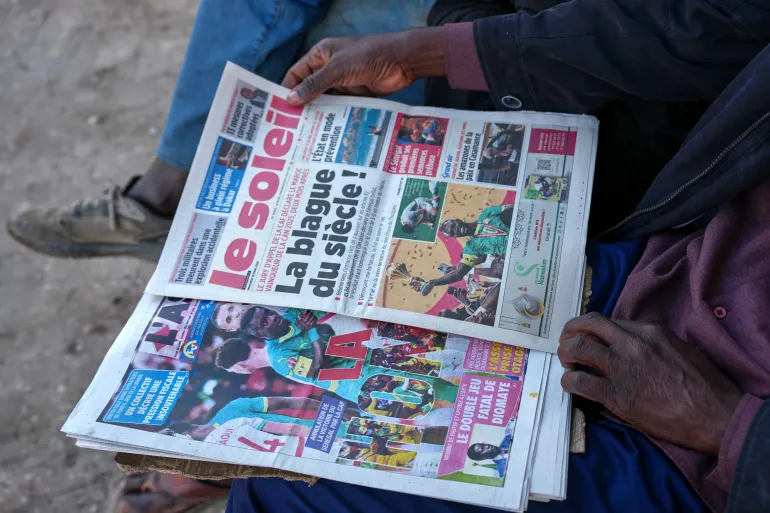
When governing body officials the Africa Cup of Nations title to Morocco, overturning Senegal’s victory two months after the chaotic final, football fans were stunned.
The impact of the decision could spread beyond sport and weaken the bond between the nations.
While Moroccan fans took to the streets to celebrate their team’s belated success, the decision by the Confederation of African Football (CAF) was met with disbelief in Senegal, with fans and authorities calling the decision “unjust”.
Senegal’s government on Wednesday said it will pursue “all appropriate legal avenues” to overturn the decision and called for an international investigation into “suspected corruption” within African football’s governing body.
The Senegal Football Federation (FSF) then announced on Thursday that it had instructed lawyers, aparently carrying through its threat to take the matter to the Court of Arbitration for Sport (CAS). Such a move could lead to a yearlong legal battle before a ruling.
CAF’s appeals board on Tuesday ruled that Senegal forfeited the final by leaving the field of play without the referee’s authorisation, and it awarded Morocco a default 3-0 win.
The game was delayed for 14 minutes as most of the Senegalese players and staff returned to their dressing room, while Senegal fans battled stewards behind one of the goals in protest against a controversial penalty call for Morocco after Senegal had a goal ruled out.
The players returned, Morocco missed the penalty, and Senegal won the match 1-0 in extra time.
Morocco and Senegal have long shared close ties built on religion, trade and culture. Tijaniyyah, a Sufi Muslim order, is widely followed in both countries. Moroccan banks and companies heavily invest in Senegal’s finance and agriculture sectors. Cultural exchanges include student programs, migration and joint festivals.
But the tensions surrounding the final and CAF’s appeals court decision to overturn Senegal’s victory have put a strain on the relationship between the two countries.
Last month, 18 Senegal fans who were arrested on charges of hooliganism at the final were given prison terms of up to a year by a Moroccan court. The Senegalese government has expressed solidarity with the Senegalese supporters.
Seydina Issa Laye Diop, president of the Senegalese national team’s fan group called “12th Gainde”, told The Associated Press on Thursday that the incidents should not damage the relationship between Senegal and Morocco.
“However, there are limits: if this continues, it could somewhat affect the pride of the Senegalese people,” Diop said. “If the goal is to preserve friendship, then it must be nurtured. Small gestures can have a big impact. These are things we can move past, especially since, during the trial, no solid argument has justified the continued detention of these supporters.”
Mariama Ndeye, a student in Senegal’s capital Dakar, said the decision has negatively affected her view of Moroccans.
“When everything goes well, they call us their brothers. But when things don’t go their way, they start being nasty,” Ndeye said.

Politics and sport are rarely separated as Senegal and Morocco find out
On Wednesday, Morocco’s embassy in Dakar called on Moroccans in Senegal to “demonstrate restraint, vigilance, and a sense of responsibility.”
“It is important to recall that, in all circumstances, it is only a match, the outcome of which should never justify any form of escalation or excessive remarks between brotherly peoples,” the embassy said.
While the dispute has remained centred around the football match, bad feelings have spread more generally.
In Casablanca, home appliances business owner Ismail Fnani said he felt like other African countries were rooting against Morocco during the final.
“Honestly, my views toward Senegalese and sub-Saharan Africans changed after this,” he said. “We used to feel sympathy and help them because they were migrants who had struggled to get here. Where there was once sympathy and compassion, now I will treat them as they have treated us.”
Mohamed el-Arabi, who works in a grocery shop in Casablanca, said he did not celebrate the decision awarding Morocco the title.
“We would have preferred it to stay with Senegal because it doesn’t feel right otherwise,” El Arabi said.
“People here have started hating Senegalese. They no longer provide them with help. We used to be like brothers, especially since they are Muslims like us, but that is no longer the case,” he added.
African football thrust into spotlight as CAF face accusations
The Senegalese government’s allegation of suspected corruption” at CAF followed anger at perceived favouritism towards Morocco, which is a 2030 World Cup co-host and has invested heavily to become a football superpower.
On Wednesday, CAF President Patrice Motsepe defended the body against perceptions of favouritism towards Morocco.
“Not a single country in Africa will be treated in a manner that is more preferential, or more advantageous, or more favourable than any other country on the African continent,” Motsepe said in a video published on the CAF website.
[Aljazeera]
Every team in Fifa’s women’s football tournaments must include at least one female head coach or assistant coach following the introduction of new regulations.
The requirements will come into effect during the under-17s and under-20s Women’s World Cup and Women’s Champions Cup competitions this year.
The decision was made at the Fifa Council on Thursday, and discussed the long-term strategy of female representation in coaching.
Under the new ruling, at least two staff members on the bench of every team at matches must be female, with one in an assistant coach or head coach role.
The rule applies to all youth and senior tournaments, including clubs and national teams.
At the 2023 Women’s World Cup, 12 of the 32 head coaches were female, including England manager Sarina Wiegman.
“There are simply not enough women in coaching today. We must do more to accelerate change by creating clearer pathways, expanding opportunities, and increasing the visibility for women on our sidelines,” said Fifa’s chief football officer Jill Ellis.
“The new Fifa regulations, combined with targeted development programmes, mark an important investment in the current and future generation of female coaches.”
Fifa hopes these new regulations will see a rapid increase in female representation, including at the 2027 Women’s World Cup in Brazil.
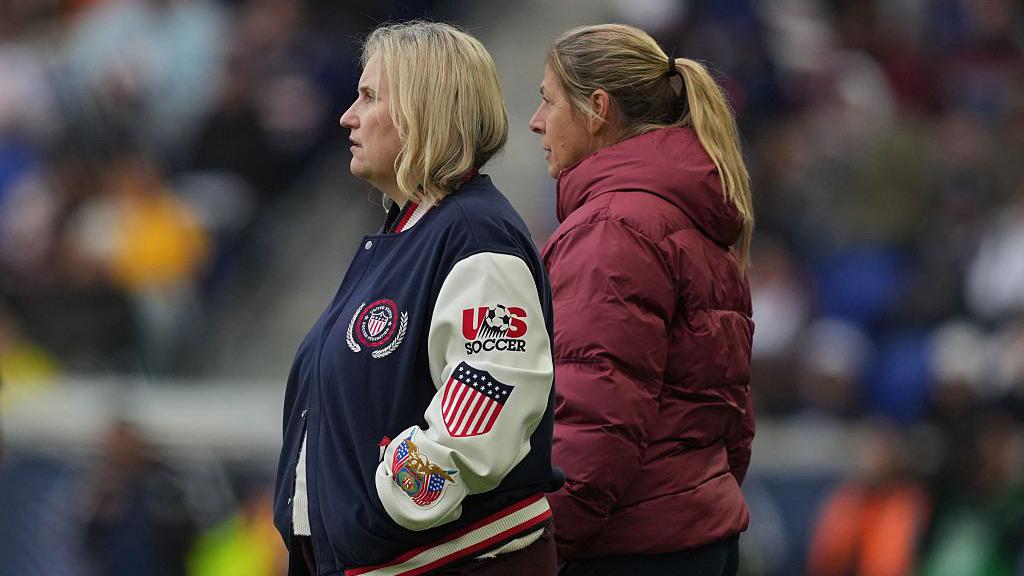
Among some of the most high-profile female coaches is London-born Emma Hayes, who is joined by assistant Denise Reddy at the United States.
In 2024, Hayes told BBC Sport that a lack of female coaches in English football is “a massive issue” and urged the game’s administrators to “come up with more creative ways” to address it.
Other female English coaches at international level include Gemma Grainger at Norway, Casey Stoney at Canada and Carla Ward at the Republic of Ireland.
Canadian Rhian Wilkinson led Wales to their first major tournament at Euro 2025 last summer, while Dutchwoman Wiegman has guided England to back-to-back European titles and has been named the Fifa best women’s coach of the year on four occasions.
Wiegman was the only female coach in the quarter-final stage of the 2023 Women’s World Cup.
(BBC)
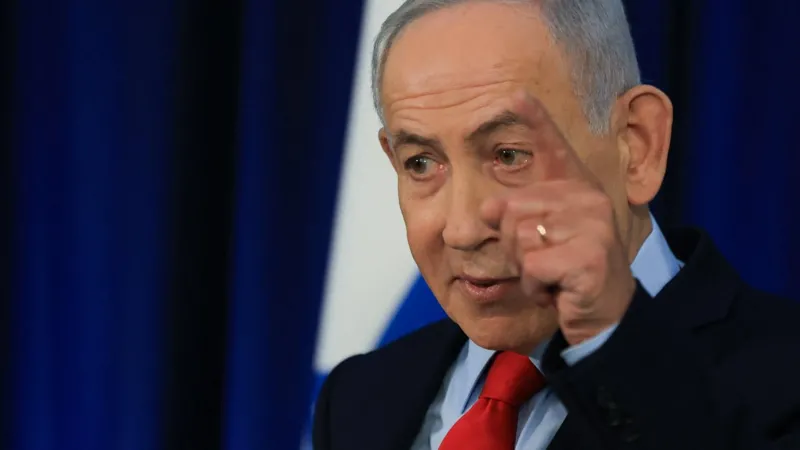
Israel’s Prime Minister Benjamin Netanyahu has said Israel “acted alone” in attacking an Iranian gas field, as tensions mount over strikes on energy infrastructure across the region.
Israel hit Iran’s South Pars – part of the world’s largest natural gas field – and Tehran retaliated by striking an energy complex in Qatar and attacking other energy targets in the Gulf.
The attacks led to a spike in energy prices and US President Donald Trump later posted he had not known about them in advance.
The fallout has raised questions over how united Israel and the US remain in their war aims.
Speaking at a news conference on Thursday, the Israeli leader said Trump had requested that there be no further such attacks on energy targets.
Earlier on Thursday Reuters news agency quoted three unnamed Israeli officials as saying that that attack on South Pars had been coordinated with the US in advance but that they were not surprised by Trump’s reaction.
Netanyahu also denied that his country had dragged the US into the war or “misled” Trump, saying that no one could tell the US leader what to do.
The attacks on energy infrastructure marked an escalation in the war launched by the US and Israel against Iran, which had already responded by restricting shipping through the Strait of Hormuz.
About a fifth of the 100m barrels of oil that the world consumes every day usually travels via the Strait of Hormuz, which runs along part of Iran’s coast.
Following the Iranian attack on Qatar’s Ras Laffan industrial area, which includes the world’s biggest liquefied natural gas (LNG) processing plant, QatarEnergy said about 17% of its export capacity would be affected.
Qatar’s prime minister, Mohammed bin Abdurrahman Al-Thani, warned the attack would have “significant repercussions for global energy supplies” and called it a “very dangerous escalation”.
Iran’s Foreign Minister Abbas Araghchi said that Iran would show “zero restraint” if its infrastructure was struck again.
Gas prices, which had already been rising since the start of the conflict, surged in response to the Iranian attack on Qatar. The UK benchmark peaked briefly at almost 183p per therm on Thursday before easing back to 154.8p, an 11.3% increase from Wednesday’s level. European prices also rose by more than 10%.
Meanwhile the US is weighing lifting sanctions on some Iranian oil, as it scrambles to contain the impact on energy markets.
At his news conference, Netanyahu insisted that Israel was inflicting massive damage on Iran’s military capacity and had attacked Iran’s navy in the Caspian Sea.
He said Israel was working to weaken the Iranian regime but said it was up to Iranians to act if they wanted to overthrow their government.
“We can create the conditions, but they have to exploit those conditions at a certain point,” he said.
“If [the regime] survives it will be a lot weaker, shorn of industries it built over decades.”
Also on Thursday verified footage showed fire and smoke at an oil refinery in Haifa in northern Israel after a reported Iranian missile attack. Israel’s energy minister Eli Cohen said damage to the country’s electricity grid in the north was “localised and not significant”.
(BBC)

Senegal and Morocco tied by religion and trade but divided by AFCON fallout

Showers expected in the Central, Sabaragamuwa and Uva provinces and in Galle, Matara, Mannar, Anuradhapura and Vavuniya districts after 2.00 pm.

CIABOC tells court Kapila gave Rs 60 mn to MR and Rs. 20 mn to Priyankara

Opposition moves no-faith motion against Energy Minister Kumara Jayakody

NJC takes up cudgels on behalf of Sallay, who played pivotal role in combating terrorism

Leopards haunt Pera Uni having already killed several cattle at Vet Faculty

‘Dates have the highest sugar content to fight Coronavirus’

Sunday Island 27 December – Headlines

#SundayIsland 17th December – Headlines

Sunday Island – 28th March

Sunday Island Headlines – 21 March

Sunday Island – 21st February – Headlines
-

 Business4 days ago
Browns EV launches fast-charging BAW E7 Pro at Rs. 5.8 million
-

 Life style5 days ago
From culture to empowerment: Indonesia’s vision for Sri Lanka
-

 News2 days ago
CIABOC questions Ex-President GR on house for CJ’s maid
-

 Business6 days ago
Sri Lanka Institute of Information Technology raises the bar for academic excellence
-

 Life style5 days ago
Ranjith Fernando celebrates cricketing journey with Hob Nails to Spikes
-

 Latest News5 days ago
QR code system will be implemented for fuel with effect from 06.00 a.m. today (15th)
-

 News3 days ago
Australian HC debunks misleading travel risk claims for Sri Lanka
-

 News3 days ago
Sri Lankan marine scientist Asha de Vos honoured at UNGA opening