
Latest News
Bumrah leads India’s fightback on 17-wicket opening day in Perth

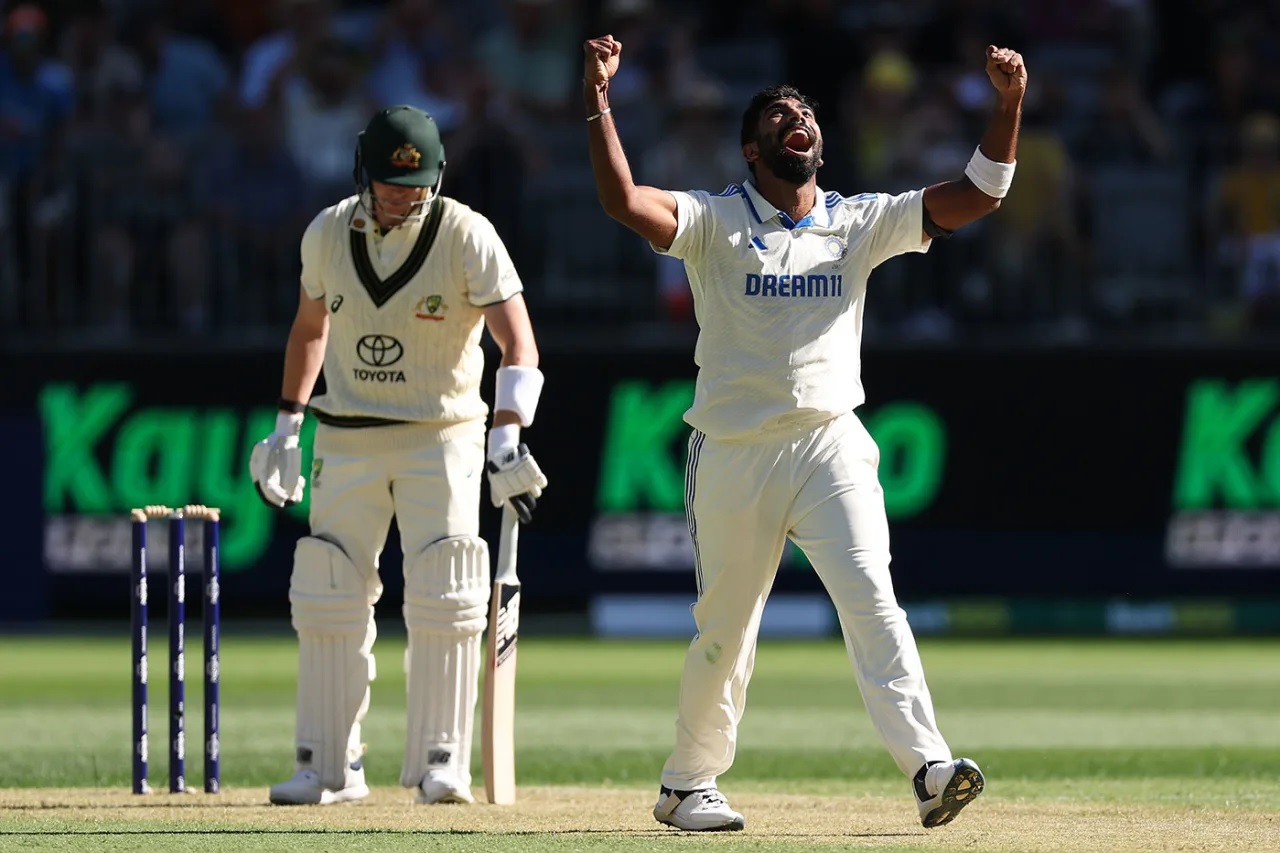
Befitting the rivalry between Australia and India, the latest tussle for the Border Gavaskar Trophy started in eventful fashion with wild momentum swings and a DRS controversy as pace bowlers from both attacks thoroughly dominated in favourable conditions at Optus Stadium.
By the end of a madcap first day’s play, India had remarkably finished on top after stand-in captain Jasprit Bumrah tore through Australia’s top-order with spectacular seam bowling. He finished with 4 for 17 from 10 overs.
He claimed debutant Nathan McSweeney for 10 in the third over before dismissing Usman Khawaja and Steven Smith with consecutive balls in the seventh over to turn a fast-moving first Test on its head.
In just his second red-ball match opening the batting, McSweeney faced a baptism of fire and initially judged the length well before Bumrah adjusted to a fuller length and trapped him on the pads. Smith’s shift back to his favoured No.4 did not start well after he shuffled across his stumps and was plumb lbw by a wicked Bumrah delivery that decked back a mile.
Australia nosedived further when Travis Head was bowled by a cracker of a delivery from debutant quick Haarshit Rana, while Mitchell Marsh and Marnus Labuschagne fell to Mohammed Siraj.
Having started the season slowly, Labuschagne had an excruciating time. He was dropped by Virat Kohli at second slip after edging Bumrah and didn’t score in his first 24 deliveries faced. He received mock applause from the terraces when he finally broke his drought, but Labuschagne could never get going and made a painstaking 2 off 52 balls.
Bumrah wasn’t quite done as he returned in the shadows to dismiss Pat Cummins as Australia limped to stumps at 67 for 7.
It was a remarkable turnaround after India were bowled out for 150 in just 49.4 overs. Nine of Indian batters were caught behind the wicket in a mode of dismissal that has been common in Perth over the years at Optus Stadium and at the nearby WACA ground.
After India sensationally left out veteran spinners R Ashwin and Ravindra Jadeja, Bumrah elected to bat after winning the toss. With overcast skies above a green-tinged surface, it was undoubtedly an agonising decision but batting first appeared the logical move given the pitch is expected to deteriorate amid warmer weather later in the match.
With unseasonal wet weather ahead of the match, there had been particular intrigue over how the pitch would behave. There was movement and bounce, but perhaps not the minefield the scoreboard indicates.
India’s top-order were all at sea against superb new ball bowling from Mitchell Starc and Josh Hazlewood, who claimed all four wickets in the first session. Starc, especially, was outstanding to set the tone for an Australian pace attack that strangled India.
Having pushed through injury issues last summer, Starc entered the season fit and firing. He continued his strong form with fast and probing bowling, especially troubling the left-handers with an immaculate line and away swing.
Seemingly attempting to start the series in the same fashion as the Ashes series in 2021-22, Starc’s first delivery was an anti-climax and missed the leg stump of opener Yashasvi Jaiswal and flew to the boundary.
He was on target after that and his accuracy overwhelmed Jaiswal, who on his eighth delivery, as he tried to score his first runs in Australia, drove on the up and edged to McSweeney in the gully.
With his bat well in front of his body, it was an errant stroke that had echoes of an ungainly dismissal for Pakistan captain Shan Masood in last year’s Perth Test.
With captain Rohit Sharma and Shubman Gill unavailable, Devdutt Padikkal received an unexpected opportunity at No.3 after impressing in the India A matches recently. But he was totally shackled by the quicks and did not score off his first 22 deliveries faced. The pressure proved too much with Padikkal on the next ball edging Hazlewood behind with an angled bat trying to defend to covers.
All eyes were on Kohli, who received healthy applause from the 31,302 crowd although Indian fans in the terraces were vastly outnumbered in a rare sight.
India desperately needed their long-time talisman to shrug off a form slump on a ground he scored a brilliant century in the 2018-19 series. Kohli batted well outside the crease in a well-worn strategy he had successfully implemented previously in Australia.
But Hazlewood, who has had great success against Kohli over the years, adjusted and bowled a back of length. Kohli on 5 could only fend a lifting Hazlewood delivery that landed straight to first slip.
Opener K L Rahul, who just a week ago had been struck on the elbow in an intra-squad match simulation, bravely batted through the carnage. He struck India’s first boundary off the bat in the 12th over in ungainly fashion when he tried to evade a Cummins short ball only for it to hit his bat and fly over the slips.
Rahul made it to 26 before being given not out by on-field umpire Richard Kettleborough after Starc appealed for caught behind. After Australia reviewed, Snicko showed a spike as the ball passed the bat and the decission was overturned. Having indicated that the bat hit his pad, Rahul trudged off the ground shaking his head as India slumped to 47 for 4.
After lunch, allrounder Marsh made a successful return to bowling with the wickets of Dhruv Jurel, who had been selected on the back of his performances for India, and Washington Sundar.
Marsh had only bowled four overs since tearing his hamstring at the IPL. But he ran in powerfully and finished with 2-12 from 5 overs in a boost for an attack without allrounder Cameron Green, who will miss the entire series due to a back injury.
India’s hopes rested with a counterattacking Rishabh Pant and debutant Nitish Kumar Reddy, who combined for 48 runs – the biggest partnership of the innings.
Pant was typically adventurous marked by an audacious scoop for six off a full delivery from Cummins, while Reddy mixed orthodox drives with paddle sweeps to thwart offspinner Nathan Lyon.
But both were unable to kick on as India were dismissed by tea. In his first red-ball match since the New Zealand Tests in March, Cummins looked a little underdone and was unable to find a consistent length as he finished with 2-67 from 15.4 overs.
He did dismiss Pant and Reddy and left the field mightily pleased with Australia’s performance. But Cummins’ mood soured quickly and just over two hours later he trudged off the field after being dismissed by his opposite number.
Brief scores:
Australia 67 for 7 in 27 overs (Alex Carey 19*; Jasprit Bumrah 4-17, Mohammed Siraj 2-17) trail India 150 in 49.4 overs (K L Rahul 26, Nitish Kumar Reddy Reddy 41, Rishabh Pant 37; Josh Hazlewood 4-29, Mitchell Marsh 2-12, Mitchell Starc 2-14, Pat Cummins 2-67) by 83 runs
[Cricinfo]


Approval has been granted at the cabinet meeting held on 01-03-2023 for the National Curriculum Framework and the methodology for implementing the aforementioned framework, which was initiated by the National Institute of Education in 2019 under the education reform process.
However, considering the modules relevant to Grades 1, 6, and 10 that have been prepared by the National Institute of Education for the implementation of the new education reforms by the time the new government comes into power in 2024, it was planned to implement the new National Curriculum Framework only for Grades 1 and 6 in 2026, ensuring appropriate adjustments to the new government’s policies.
Further, it has also been planned to introduce vocational subjects from grade 10 onwards.
Accordingly, the concept paper required for ‘Transformational Change in Sri Lanka’s General Education’, which has been prepared to inform and make relevant parties aware of the proposed adjustments, has also been submitted to the Parliamentary Subcommittee on Education Reforms on 22-10-2025.
Subsequently, as decided at the Cabinet Meeting held on 13-01-2026, steps have been taken to postpone the implementation of education reforms for grade 6, which had been planned under the first phase of the comprehensive reform agenda for general
education, up to the year 2027, and only to implement new curriculum reforms for grade 1 in the year 2026.
Subsequently, the Ministry of Education, Higher Education, and Vocational Education has followed these steps.
• preparing a new concept paper with policy recommendations after reviewing the concept paper prepared related to bringing about transformational change in Sri Lanka’s general education
by the National Education Commission.
• Having reviewed the revised concept paper by the National Steering Committee established as per the cabinet decision dated 23-03-2026 and subcommittees established under 5 pillars
relevant to the education reforms-namely Curriculum Reform, Human Resource Development, Education Administrative Reforms & Infrastructure Development, Evaluation & Assessment, and Public Awareness & Promotion-and obtaining further observations and recommendations.
• Based on those observations and recommendations, further revising the National Curriculum Framework prepared by the National Institute of Education in 2023 and obtaining approval
from the Academic Affairs Board of the National Institute of Education.
• Obtaining approval from the Council of the National Institute of Education for the National Curriculum Framework approved by its Academic Affairs Board.
• Obtaining concurrence from the National Steering Committee for New Education Reforms on 2026-08-13 for the National Curriculum Framework approved by the Council of the National Institute of Education.
• Printing and preparing activity books and teacher guides for all 3 terms of Grade 1 and Grade 2 for the year 2027, so as to continue carrying forward the primary education reforms
commenced in the year 2026.
• Preparing Grade 6 modules for Terms I, II, and III, as well as teacher guides for all 3 terms.
• Master trainers have been trained by the National Institute of Education for all primary and secondary subjects, and all plans related to teacher training at the provincial level have been
prepared.
• Formulating the policy guidelines on school-based evaluation and assessment—prepared for practical implementation while managing available resources within the school system by the
Evaluation and Assessment Sub-Committee and obtaining the approval of the National Steering Committee.
Accordingly, the Cabinet of Ministers has approved the resolution furnished by the Hon. Prime Minister in her capacity as the Minister of Education, Higher Education, and Vocational Education to further implement the education reform process for grade 1, which has been initiated in the year 2026,
and to further initiate the education reform process for grade 2 and grade 6 in the year 2027, based on the concept paper prepared by the National Education Commission, the National Curriculum Framework approved by the National Steering Committee for New Education Reforms, and the School-Based
Evaluation and Assessment Guideline.
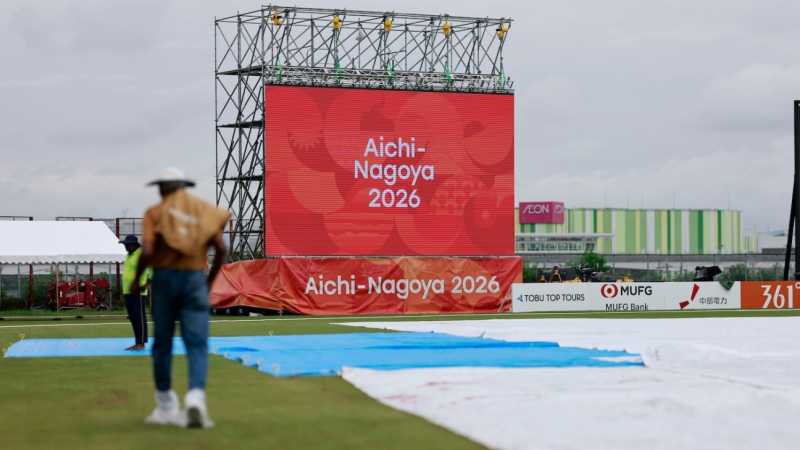
Sri Lanka will face India in the semi-finals of Asian Games men’s tournament after their quarter-final clash against Nepal was abandoned without a ball being bowled in Nisshin, Japan. The game was called off prior to the toss, with rain having begun hours prior to the scheduled 9am local start and not looking like abating.
Sri Lanka’s progression was assured by virtue of their higher seeding in terms of the ICC T20I rankings – Sri Lanka, alongside India, Pakistan and Bangladesh are the four seeded teams in the tournament. On Monday, India had qualified over Afghanistan after another washout, again by virtue of their higher. Similarly, Pakistan’s qualification was assured following a rain abandonment in their quarter-final against Hong Kong.
In the 2022 Asian Games, Sri Lanka had been eliminated at the quarter fial stages by Afghanistan. Another washout in the semis against, India though, will see the latter qualify for the final.
A few hours later, the fourth quarter-final between Bangladesh and Malaysia was also washed out. Bangladesh will now face Pakistan in the first semi-final on October 1, followed by India vs Sri Lanka later on the same day
(Cricinfo)
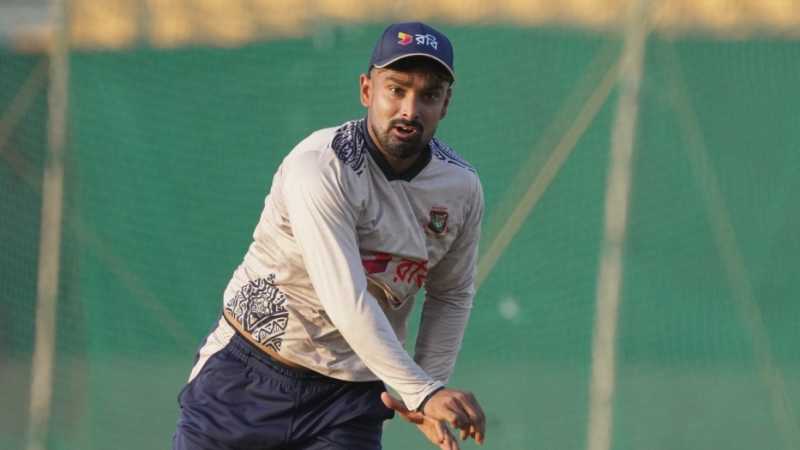
The Bangladesh vs Malaysia abandonment on Tuesday completed a quartet of rained off matches in the Asian Games men’s tournament. The match was called off two hours before the toss, with the teams told not to even turn up at the venue.
Bangladesh, by virtue of higher seeding, go through to the semi-finals where they will now face Pakistan on October 1. Earlier in the morning, the Sri Lanka vs Nepal fixture was also called off due to rain, with Sri Lanka advancing into the semi-finals where they will meet India.
There is, however, some good news, as the weather forecast in Nisshin is better for the semi-final and the medal match day, on October 1 and 3, respectively.
In the last edition (2023), Bangladesh had lost to India in the semi-final but won the third-place playoff against Pakistan to take home the bronze medal. They had won the bronze in 2014 as well and Bangladesh’s best finish was winning the gold medal in 2010, when they beat Afghanistan in the final.
(Cricinfo)

Cabinet nod to increase the number of new automated passenger clearance gates at the Bandaranayake International Airport to 12
Draft Bill for amending the Trust Ordinance
Implementing further relief programme to Public sffected by the Middle East conflict situation
Establishment of a Spectrum Management and Monitoring System and a Quality of Service and Quality of Experience System for the Telecommunications Regulatory Commission of Sri Lanka
Appointment of a Committee for the Restitution of Sri Lankan Cultural Heritage Held Abroad
Ten-Year National Action Plan on the Social Protection Sector (2026–2035)

‘Dates have the highest sugar content to fight Coronavirus’

Sunday Island 27 December – Headlines

#SundayIsland 17th December – Headlines

Sunday Island – 28th March

Sunday Island Headlines – 21 March

Sunday Island – 21st February – Headlines
-

 News7 days ago
Mastermind Naufer Moulavi among 15 found guilty
-
 Midweek Review7 days ago
Thileepan’s fast unto death: An authentic narrative that many missed
-

 Latest News6 days ago
Showers above 100 mm are likely at some places in the Western, Sabaragamuwa, Central and North-western provinces and in Galle and Matara Districts
-

 Editorial7 days ago
Big Bad Bills
-
Editorial6 days ago
Crimes punished and unpunished
-

 Features5 days ago
Beyond traditional jobs: Why Sri Lanka needs to facilitate the gig economy
-

 News7 days ago
No referendum needed for passage of 22 A: SC
-

 News7 days ago
One clause in Anti-Corruption (Amendment) Bill requires referendu: SC