
Editorial
Bullets beat virus to it


Tuesday 1st December 2020
The Mahara Prison riot has left eight inmates dead and more than 70 others injured. Some of them are in a very serious condition, we are told. Trouble started when about 183 inmates tested positive for COVID-19 and had to be taken to treatment centres, on Sunday. Others also wanted to be removed from the virus-ridden jail, and turned aggressive when their demand was not met. The STF was called in to restore order and prevent a mass breakout.
The knee-jerk reaction of the government was to blame the prison riot on an invisible hand. State Minister of Prison Reforms and Prisoners’ Rehabilitation, Sudarshini Fernandopulle, speaking in Parliament, yesterday, said a hidden hand had engineered Sunday’s clashes. Minister Wimal Weerawansa said a drug dealer, transferred to the Mahara Prison from Welikada, had distributed narcotics among inmates and instigated violence. Politicians are known to ‘see more devils than vast hell can hold’.
The incumbent government is dogged by a bad reputation anent prisons owing to the 2012 Welikade Prison riot, where 27 persons were killed under a previous Rajapaksa government. Now, the current administration has another huge problem to contend with on the human rights front. Sunday’s incidents are bound be taken up in Geneva, come the next UNHRC session.
However, there’s no gainsaying that some underworld elements are bent on inciting violence in prisons. Their sinister plans must be defeated to make the correctional facilities safe, but a perquisite for doing so is to deny the troublemakers among prisoners opportunities to instigate others to riot. The current surge in COVID-19 infections is fraught with the danger of causing panic in other prisons as well. A tense situation is said to be prevailing in the old Bogambara Prison, where prisoners are brought to undergo quarantine. Protests have been reported from there, and several inmates have already made abortive escape bids. Prisoners were protesting at the Negombo jail at the time of going to press.
Sunday’s prison riot could have been averted if precautions had been taken to prevent the spread of panic among prisoners and remandees. The Mahara Prison, packed to the rafters, with so many COVID-19 infections, was disaster waiting to happen. During the first wave of infections, which the government succeeded in tackling effectively, we argued in this space that prisoners were more vulnerable than others, given the appalling conditions of the Sri Lankan jails. We pointed out that even in the US with much better prisons than Sri Lanka’s there was a high incidence of COVID-19 among the prison population, and prisoners were protesting.
Everybody knew our prisons were ticking time bombs, but, unfortunately, nobody did anything about it. The number of infections among prisoners has crossed 1,100. Prisoners’ concerns about their safety should be appreciated, and urgent action taken to ensure that they are not exposed to the virus.
The Mahara Prison inmates, however, were not blameless; they resorted to violence, carried out arson attacks and attempted a mass breakout. The trail of destruction they have left behind alone is incriminating evidence against them. They cannot claim their fear of COVID-19 in extenuation of what they have done. But it is not yet known whether the force the Prison guards and the police used was proportional to the threat they faced, or whether there were excesses on their part. The government has appointed a committee to investigate Sunday’s riot. The Opposition has demanded that the incidents be probed by a group of independent investigators; one cannot but agree with it.
It is incumbent upon the government to ensure that the Mahara Prison clashes will be thoroughly investigated, the findings of the probe committee made public and justice served while aggressive testing is conducted in all prisons and infected inmates are removed for treatment forthwith. That is the only way to defuse tension in prisons and avert another disaster.



Monday 27th July, 2026
The JVP-NPP government has met its match in the Bar Association of Sri Lanka (BASL), which has vehemently rejected an allegation recently made by NPP MP Asitha Niroshana Egoda Vithana in Parliament that BASL President Rajeev Amarasuriya has struck a secret deal with Opposition Leader Sajith Premadasa to become the Chief Minister of the Western Province. The BASL has stated that the “utterly false and baseless” allegation has been made with malicious intent. It has expressed deep dismay over the abuse of parliamentary privileges to affront its chief. One cannot but endorse the BASL’s position on the issue.
The BASL has dared MP Vithana to repeat his allegation against Amarasuriya outside Parliament. The government, which obviously got him to say what he said in Parliament should ask him to take up the BASL’s challenge.
Time was when the JVP used its bloodthirsty sparrow units, armed with guns, bombs and swords to suppress dissent. Today, the JVP-led NPP government is using its online smear campaign operatives and other propaganda hitmen to silence its critics. The government’s argument that lawyers are opposing the move to raise the retirement ages of the superior court judges because the BASL chief has cut a deal with the Opposition is tainted by what logicians call the ad hominem fallacy, or carrying out personal attacks against a person rather than countering his or her arguments.
Why the JVP/NPP is so furious as to insult the BASL President is not difficult to understand. The BASL’s arguments against the government’s efforts to increase the retirement ages of the judges of the Court of Appeal and the Supreme Court are valid and backed by some well-known international legal organisations, like LAWASIA and the Commonwealth Lawyers’ Association, and pressure is mounting on the government to deep-six its politically motivated plan.
Those who have rightly taken exception to the aforesaid false allegation against the BASL Chief ought not to lose sight of the bigger picture—the vulnerability of the public vis-a-vis the MPs’ ability to use parliamentary privileges to make slanderous accusations with impunity. Parliamentary privileges are there for legislators to carry out their legislative duties and functions without let or hindrance and not for them to insult others.
The tension between parliamentary privileges and the right to reputation is seen the world over, but the situation has taken a turn for the worse in this country, where legislators are enjoying the freedom of the wild ass to insult others and get off scot-free. Some parliamentary systems have experimented with allowing privileges to be waived in defamation proceedings. For example, the UK introduced a limited waiver mechanism although parliamentary privilege remains a complex constitutional area and the principle that privilege belongs to Parliament rather than an individual member has limited such approaches. There is a need to study such experiments and initiate a public debate on the abuse of parliamentary privileges, with a view to putting in place a constitutional mechanism to prevent reputations from being dragged through the mud in Parliament.
Last week’s parliamentary proceedings got down and dirty, with members of both sides of the House trading insults. A government MP stooped so low as to call an Opposition counterpart a psychiatric patient. The Opposition criticised the Speaker for having used the word, ‘foolish”, to describe the behaviour of one of its members. It said such unparliamentary words must not be used. Sadly, it was not critical of its members’ unparliamentary conduct and personal attacks on the government MPs. One of the Opposition MPs went so far as to question the paternity of a minister, leaving a bad taste in many a mouth. It is unbecoming of legislators to descend to such a low level.
The government and the Opposition ought to hold their unruly, foul-mouthed members on a tight leash lest public confidence in Parliament should erode further. Let them be asked to do unto others as they would have others do unto them.

Youth-led protests are spreading across India. “Cockroaches” have emerged far too strong to be crushed under hobnailed boots. What began as a satirical cockroach hashtag campaign, following a judge’s disparaging remark about the Indian youth, has meteorically morphed into a youth-led mass protest movement. Young Indians, led by the online political initiative, Cockroach Janatha Party, have taken to the streets in defiance of the mighty BJP-led government.
The triggers behind the current protest campaign in India were the cancellation of NEET-UG, a nationwide entrance examination for admission to undergraduate medical and certain allied health science courses, following an alleged paper leak, and activist Sonam Wangchuk’s hunger strike. Fasts have a strong, historical resonance in India, as evident from the tectonic shifts in Indian politics, caused by the hunger strikes of famous freedom fighters like Mahatma Gandhi and Potti Sriramulu and anti-corruption campaigners like Anna Hazare. But the surge of youth anger in India cannot be reduced to those factors alone. Reflected in the aggressive protests in India are public concerns over governance issues. However, the ongoing protests are not without a ‘me-too’ dimension, coming in the wake of mass uprisings in South Asia that forced a President out of office in Sri Lanka and brought down governments in Bangladesh and Nepal.
The Congress Party, desperately looking for something to hold on to in a bid to make a comeback, is accused of trying to hijack the ongoing youth protests. It is not likely to succeed in its endeavour. The Indian youth cannot be unaware of how opportunistic political forces manipulated a genuine youth-led protest campaign in Sri Lanka to capture power.
The powerful Modi government has had to bite the bullet to negotiate with the Cockroach Party protesters, who are openly clashing with the police. Perhaps, having seen how counterproductive the use of brutal force to crush protests was in Bangladesh, the Modi government has chosen to act with restraint and is trying to throw some bureaucrats to the wolves. It has also vowed to build a secure future for the Indian youth. But it remains to be seen whether the BJP-led government will be able to deflect the blame and assuage public anger.
Mass uprisings aimed at engineering regime changes in democratic countries warrant a fresh look at the changing dynamics of the fundamental relationship between the citizenry and the state. In most parts of the world, people no longer live in a chaotic state of nature, which is believed to have led their ancestors to accept restrictions on their freedom in return for benefits such as social order, security and justice, as Locke, Hobbs, Rousseau and others have argued. These factors may still define people’s relationship with the state, but in some countries the line between the state and the government has blurred, with their rulers overstepping their limits, like King Louis XIV of France, who said, “I am the state”. In this day and age, people are conscious of their rights more than ever, and their needs and aspirations have undergone radical changes during the past several decades. It looks as if a need had arisen for a new social contract, as it were, in a highly interconnected, well-informed world.
The expansion of social media and the rise of web-based activism with unlimited potential have created a situation where people seek to influence, or even make direct interventions in the affairs of the state, a trend that suggests what could be considered a tendency of the modern society to move towards more openness and direct democracy through citizens’ initiatives, etc.
India is doing well on the economic front. According to World Bank data, India remains one of the fastest-growing, large economies. If Sri Lanka’s economy had been so vibrant, perhaps there would not have been a popular uprising in 2022. When mass protest campaigns, such as the Arab Spring, Aragalaya, and youth-led uprisings in Bangladesh and Nepal, are examined, it becomes evident that protesters were driven not only by prevailing politico-economic issues but also by a quest for value-based governance or the practice of governing according to ethical principles and shared social values, ensuring that public decisions promote justice, trust and the common good. Governments, especially in this part of the world, have to come to terms with this new reality and adapt to the changing role of the informed and active citizenry if they are to retain public confidence and remain relevant.
Saturday 25th July, 2026
The Opposition’s no-faith motion against Justice and National Integration Minister Harshana Nanayakkara was debated and defeated yesterday. Nobody expected its passage by any stretch of the imagination.
Notwithstanding the defeat of the no-faith motion, some of the points raised by the Opposition during yesterday’s debate are valid. The Negombo Prison riots which claimed 31 lives including those of 10 officers and caused extensive damage to state property could have been prevented if the warring inmates had been transferred to other prisons after their first clash. Why the two violent groups were kept together thereafter defies comprehension. As a prison officer told Minister Nanayakkara at the Prison Headquarters, the incident could have been nipped in the bud. There were serious lapses on the part of the prison authorities and the government, and they cannot absolve themselves of the blame for the loss of life.
However, it is not fair to hold the incumbent government responsible for all chronic prison ills. Overcrowding, which is one of the main causes of prison unrest and violence, is not of recent origin. It has been reported that Sri Lanka’s prison system, designed to accommodate around 11,000 inmates, is currently holding more than 42,000 prisoners, resulting in severe overcrowding and placing immense pressure on prison infrastructure and staff. Prisons are also characterised by a chronic shortage of officers. These issues would not have arisen if the previous governments had taken action to expand the prison system and recruit more personnel.
SJB MP Ajith P. Perera told Parliament during yesterday’s debate that there were about 42,000 inmates in the country’s prisons, and out of them more than 30,000 were drug offenders. In other words, the previous governments carried out anti-narcotics campaigns without increasing the prison capacity to hold more suspects and convicts. MP Perera revealed that more than 15,000 people were languishing behind bars as delays on the part of the Government Analyst’s Department (GAD) had prevented them from obtaining bail. This amounts to a blatant violation of their human rights. It is an indictment of all political parties that have been in power. As the old saying goes, when one finger is pointed at another, three fingers point back at the accuser; criticism of others should be accompanied by self-reflection.
GAD is reportedly experiencing a shortage of personnel and other resource constraints. Why didn’t the previous governments solve these problems? What action has the incumbent administration taken to resolve them? Are there reasons other than resource shortages for GAD’s failure to submit reports to courts expeditiously? It is hoped that the government and the Opposition will stop trading allegations and make a joint effort to ensure that suspects are not held on remand due to institutional delays and lapses.
Meanwhile, the defeat of a no-faith motion does not necessarily translate into the exoneration of the minister against whom it is moved. As for Minister Nanayakkara, the issue has now moved beyond Parliament into the court of public opinion. It will not go away, as evident from the fate that befell Minister Keheliya Rambukwella and those who circled their wagons around him and defeated the motion of no confidence moved against him for fraudulent procurement of drugs, etc., during the previous government. Rambukwella was arrested, remanded and prosecuted. He now has court cases to contend with. Most of those who defended Rambukwella either lost their seats at the last general election or did not have the courage to contest it. This is something the present-day rulers should bear in mind. Those who do not learn from history are said to be doomed to repeat it.

Sooryavanshi the star as India complete 3-0 sweep

US and Iran hit pause on strikes for second day

Showers will occur in the Western, Sabaragamuwa and North-western provinces and in Galle, Matara, Kandy and Nuwara-Eliya districts

Chamika, Colambage help Galle Gallants consolidate top spot

BASL challenges NPP MP to repeat false claims outside Parliament

Judges’ retirement age row: Govt.-BASL powwow on the cards

‘Dates have the highest sugar content to fight Coronavirus’

Sunday Island 27 December – Headlines

#SundayIsland 17th December – Headlines

Sunday Island – 28th March

Sunday Island Headlines – 21 March

Sunday Island – 21st February – Headlines
-

 Features1 day ago
MBS: The Man of the Last Laugh
-
 Features1 day ago
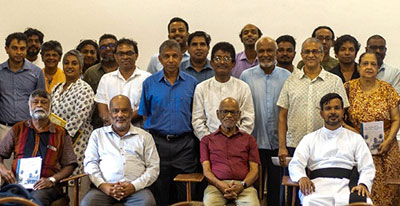
A Landmark Gathering of Minds: The Ceylon Journal Roundtable Revives the Spirit of Intellectual Dialogue
-
 Midweek Review5 days ago
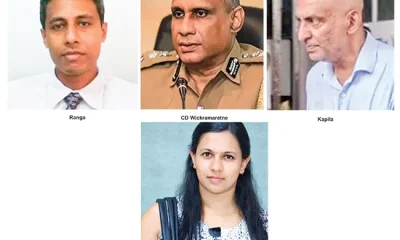
Three high-profile alleged suicides shaping key investigations
-
 Latest News1 day ago
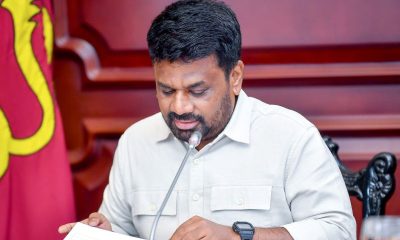
Develop a programme to allocate underutilised state land for investment by returning migrant workers – President
-

 Life style1 day ago
A proud Sri Lankan voice in Australian Parliament
-

 News2 days ago
Fort Magistrate orders arrest of MP Archchuna
-

 Editorial1 day ago
‘Cockroaches’ tame a mighty regime
-

 Editorial2 days ago
An indictment of all parties