
News
Building disaster-resilient infrastructure through enhanced knowledge


Strengthening Irrigation sector in Sri Lanka to ensure appropriate disaster-resilient measures
Recognizing the necessity for greater investment in the planning process for disaster-resilient infrastructure across Asia and the Pacific, UNDP through its Regional Hub in Bangkok with the financial support of the Asian Development Bank (ADB) has launched the Project, ‘Resilient Infrastructure through Enhanced Knowledge’. The Project will build the capacity of selected infrastructure sectors in four countries; namely Sri Lanka, Armenia, Cambodia and Fiji; to ensure that appropriate disaster-resilient measures are defined and applied into pre-disaster preparation for recovery and post-disaster recovery efforts.
Considering the importance of water and food security, Sri Lanka has selected the Irrigation sector to develop a comprehensive country-specific disaster recovery framework under this project. The activities will concentrate on supporting Post-Disaster Needs Assessment (PDNA) training to Government officials, utilizing contingency and recovery tools and plans, improve financial preparedness planning which will help to meet the resources required for disaster recovery and cover the additional costs of building forward better.
The Project is implemented in collaboration with the Disaster Management Center (DMC), the Department of National Planning, Department of National Budget and all stakeholder agencies in the Irrigation sector; including the Department of Irrigation, Department of Agrarian Development, 9 Provincial Departments of Irrigation and the Mahaweli Authority of Sri Lanka.
The first training on Post Disaster Needs Assessment and Disaster Recovery Planning took place in Colombo recently, with over 63 participants from across the above stakeholders including Engineers, Planners, and Accountants. Speaking on the importance of such training Anoja Seneviratne, Director, Mitigation Research & Development, Disaster Management Centre said: “The Irrigation sector is one of the most important sectors in the country. Irrigation resilience is not only for water management, but also provides inputs for agricultural expansion, facilitates technological change and helps increase sectoral productivity and the GDP of the country…Introducing a disaster recovery framework will benefit the sector as it ensures recovery to build back faster and better. This workshop will be the first of such to brainstorm, share knowledge in damage & loss, and recovery in the sector following a more scientific way.” She went onto note, “This initial step will be foundational towards the country’s disaster resilience. I appreciate all the stakeholders for their engagement and appreciate UNDP and ADB’s support for a cleaner, greener and resilient Sri Lanka.”
In 2016 and 2017, UNDP in Sri Lanka coordinated the PDNAs on behalf of the UN system, and supported the Government of Sri Lanka, together with the European Union and the World Bank, to conduct a comprehensive assessment of Post Disaster Needs after the 2016 and 2017 flood and landslide disasters. The total estimated cost of damages and losses for irrigation infrastructure was LKR 2708 Million.
One of the major challenges identified in this assessment was the lack of baseline data and insufficient capacities to conduct PDNAs, and the need to establish an institutional framework for recovery.
This project will build the capacity of Sri Lankan Government officials and relevant stakeholders in the irrigation sector institutions and related partner agencies for disaster recovery in the long run, by adapting the PDNA and Disaster Recovery Framework (DRF) methodology for the irrigation sector including sector templates, developing SOPs by bringing together all relevant stakeholders to create a pool of experts in the sector.
Eng. V. Premakumar, Provincial Director Irrigation, Northern Province as a participant of the workshop stated, “This is a great opportunity for us, particularly for the young engineers that work on the ground in the Northern Province. There are 24 engineers in the Province, and it is essential that we continuously enhance their capacities to ensure that the key infrastructure upon which the communities depend on are disaster resilient. This has provided us with the opportunity to engage with and learn from esteemed sectoral experts, as well, and will surely contribute to the growth of our engineers and their knowledge on disaster-resilience.”
M A F Mubarak, Deputy Director, National Budget Department said: “As a part of the development of the Disaster Recovery Framework, we’re received technical support on financial preparedness planning and post disaster budget execution capabilities. Hence, this enables Sri Lanka to be ready to face any upcoming disaster events, which in turn will be helpful for the economy of the country.”
Speaking on UNDPs role of supporting disaster preparedness efforts, Vajira Hettige, Technical Coordinator- Climate and Environment Team, UNDP in Sri Lanka said: “This pre-disaster recovery planning in the irrigation sector is a unique opportunity, since post disaster recovery planning is usually ad-hoc in nature. Involvement of national planning and budget departments from the inception will support financial preparedness and identify new sources of risk financing, which will ultimately contribute towards expediting resilient recovery in the irrigation sector.”



The Minister of Education, Higher Education and Vocational Education Prime Minister Dr. Harini Amarasuriya stated that aligning with the development activities carried out under the new education reforms, decisions at the rural level will not be taken from Colombo and plans should be sent based on the requirements of the rural level through the District Coordination Committees by structural committees. She further noted that all officials, from the Ministry of Education down to the school level, must commit to working efficiently and with a human-centered approach.
The Prime Minister made these remarks while addressing a discussion held with education authorities of the Hambantota District on Thursday [February 12] at the auditorium of the Hambantota District Secretariat regarding the new education reforms and prevailing issues in the education sector.
During the meeting, the Prime Minister provided an opportunity for education authorities including chief prelates of pirivenas, zonal education directors, teacher advisors, and principals to present the challenges they face and officials raised concerns including salary disparities among principals, developing school infrastructure, issues arising from the division between national and provincial schools, and uplifting pirivena education.
Further elaborating, Prime Minister stated:
“The new education reforms were initiated from 2025 through dialogue, consultations, and the collection of necessary data. As officials, you have extended your support to us during this process. We have embarked on a difficult and long journey, and we look forward to your continued cooperation.
We initiated these reforms in response to a strong social demand. Many have attempted such reforms at different times. Within our political vision, we understood clearly that if this country is to be rebuilt, an educational transformation is essential. The human resource is the most valuable resource of this country and it should be nurtured properly.
Solutions to many of the crises our country faces lie within the education system. Addressing the issues in economic challenges, social issues, drug abuse, violence, the breakdown of political culture, corruption, waste, and even the deterioration of human relationships all lie within the education.
In order to achieve the transformation we envision as a government, that an education transformation is necessary.
This education system should focus on reducing the pressures within the system, minimize school dropouts, increase employability, and instill confidence in children about their future.
There are disparities within the school system, between rural and urban schools, national and provincial schools, and difficult schools. This should not happen. All children must have equal opportunities.
Decisions regarding the establishment of schools or expansion of classes should not be political decisions. They must be decisions taken through Structural Committees. Those representatives understand their divisions, village economies, and population dynamics. Based on your decisions and assessments of needs, prepare the plans, discuss them with the District Coordination Committees, and submit them to us. We will then take steps to provide the necessary allocations and other support. We will not make decisions for the rural level while sitting in Colombo.
We are taking steps to minimize salary disparities. A Cabinet paper regarding the salary anomalies of principals has already been prepared for submission. Steps are also being taken to introduce new reforms in pirivena education through the Pirivena Committee of the Ministry of Education. We require the support of the chief prelates in this regard.
A significant number of teachers turn to human rights due to delays caused by inefficiency. Therefore, all officials from the Ministry of Education down to the schools must commit to working efficiently and in a humane manner”
The discussion was attended by Chief prelates of pirivenas, deputy ministers, Members of Parliament, zonal directors, principals, and other education sector officials.


[Prime Minister’s Media Division]
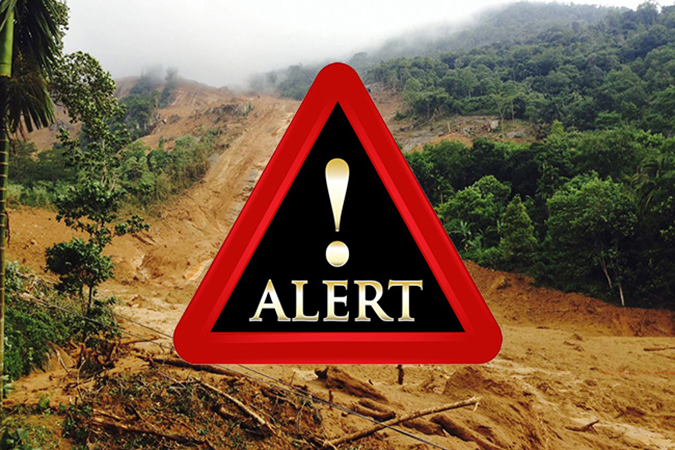
The Landslide Early Warning Center of the National Building Research Organisation [NBRO] has issued landslide early warnings to the districts of Kandy and Nuwara Eliya valid from 06:00 hrs on 13.02.2026 to 06:00 hrs on 14.02.2026
Accordingly,
Level II [AMBER] landslide early warnings have been issued to the Divisional Secretaries Divisions and surrounding areas of Walapane and Nildandahinna in the Nuwara Eliya district.
Level I [YELLOW] landslide early warnings have been issued to the Divisional Secretaries Divisions and surrounding areas of Pathahewheta in the Kandy district.
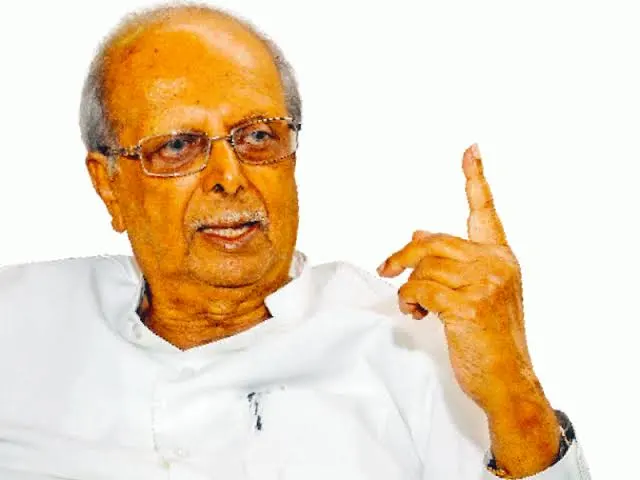
Former Minister Professor Tissa Vitharana has passed away at the age of 91, according to family sources

“We will not make decisions for rural level schools while sitting in Colombo” – PM

USA need to overturn history to beat Netherlands and stay alive

Paul Stirling ruled out of World Cup with knee injury

The silent pace revolution in Sri Lanka

Canada, UAE face each other for only the second time in T20Is

Landslide Early Warnings issued to the Districts of Kandy and Nuwara Eliya

‘Dates have the highest sugar content to fight Coronavirus’

Sunday Island 27 December – Headlines

#SundayIsland 17th December – Headlines

Sunday Island – 28th March

Sunday Island Headlines – 21 March

Sunday Island – 21st February – Headlines
-

 Features5 days ago
My experience in turning around the Merchant Bank of Sri Lanka (MBSL) – Episode 3
-

 Business6 days ago
Zone24x7 enters 2026 with strong momentum, reinforcing its role as an enterprise AI and automation partner
-

 Business5 days ago
Remotely conducted Business Forum in Paris attracts reputed French companies
-

 Business5 days ago
Four runs, a thousand dreams: How a small-town school bowled its way into the record books
-

 Business5 days ago
ComBank and Hayleys Mobility redefine sustainable mobility with flexible leasing solutions
-

 Business2 days ago
Autodoc 360 relocates to reinforce commitment to premium auto care
-

 Midweek Review2 days ago
A question of national pride
-

 Business6 days ago
HNB recognized among Top 10 Best Employers of 2025 at the EFC National Best Employer Awards