
Features
Budget 2021 – Playing Ostrich or Parading in the Emperor’s New Clothes?

by Anila Dias Bandaranaike, Ph. D.
The national budget is a financial plan, not a policy statement. Specific budget proposals become nonsense, unless they form part of a consistent whole. Unfortunately, Budget 2021 parts did not add up to a consistent whole. Yet, Sri Lanka’s leadership in both public and private domains did not seem to care.
Parliament and Corporate Response to the 2021 Budget
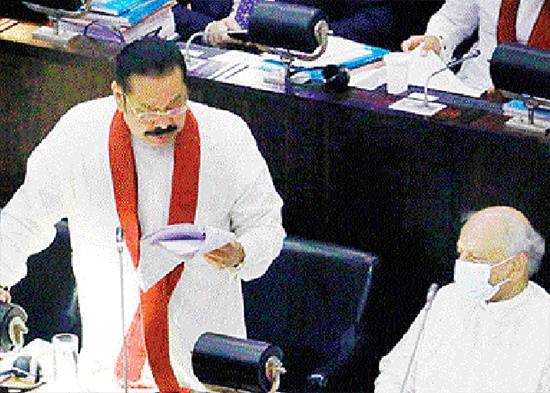
Budget 2021 was presented in parliament on 17 November 2020. Several analysts with knowledge, experience, and integrity reported that this budget 1) provided no numeric estimates of the revenue impact of the budget proposals (e.g. revenue lost or gained under each tax revision or concession); 2) had key estimates differing between the budget speech and the statistical tables by Rs. 50 – 70 billion, (e.g. Rs.1,961 billion vs. 2,019 billion for revenue, Rs. 3,525 billion vs. 3,594 billion for expenditure); and 3) had glaring inconsistencies between the budget proposals and associated numeric targets (highlighted below). However, on 10 December 2020, Budget 2021 was approved by parliament with a two thirds majority.
I have evaluated national budgets at post-budget seminars for over 15 years and been invited by the Parliamentary Committee on Public Finance (COPF), previously and this year, to help them analyse the budget. Never have I felt such despair for the management of this country’s finances.
Yet, observations in public by members of the corporate sector conveyed that they were either nervous of the adverse consequences of a thoughtful opinion or totally self-absorbed. Their observations only referred to tax breaks and concessions given to their own businesses. One panelist even contradicted his own words. He began by saying how happy he was that Budget 2021 gave his sector incentives instead of handouts, but in the next breath, asked the Government for a handout to pay employees in that sector during COVID-19! The newspapers quoted this. Sadly, corporate sector comments were uniformly superficial. Not one made any reference to the bigger picture – that the numbers did not match with statements in the budget speech and that the strategies presented could not deliver what they said they would, given the extremely difficult financial situation Sri Lanka is facing.
A New Government with Sri Lanka at a Crossroads
This was the maiden budget of a strong new government, elected with the people’s blessings, with greater powers under the 20th Amendment to the Constitution and a two thirds majority in parliament. Budget 2021 was a unique opportunity for a strong, capable government to implement difficult reforms to address Sri Lanka’s priorities. Alas, they lost this opportunity.
Sri Lanka is at a crossroads in a new global reality created by COVID-19. This reality underlines the fragility of global connectivity and uncertainty of Pre-COVID-19 economic activities as we knew them. International and domestic movement of people, goods, and services can no more be taken for granted. Sri Lanka’s priorities must adjust to this new reality.
As I see it, Sri Lanka’s immediate priorities should be to address:
= a pandemic-related health and welfare crisis; and
= a looming economic and debt crisis
Sri Lanka’s long-term priorities should be to reverse:
= People/skills drain of 200-300,000 per year, searching for greener pastures abroad;
= Environmental drain, with rainforests, sanctuaries, mangroves, coasts destroyed for short-term monetary gains; and
= Investment drain, with investment below 30% of GDP and declining.
Budget 2021, oblivious to reality, ignored both pandemic and priorities.
Irrelevant Budget
The government’s policy statement, ‘Vistas of Prosperity and Splendour’ is embodied in their 10 key principles. As I see it, those principles can be divided into three categories, People, Environment, and International Relations.
People:
People centric economic development (6) in a technology based society (7) with a productive citizenry and a vibrant human resource (5) in a disciplined, law abiding and values-based society (10) under a new constitution that fulfills the people’s wishes (4) and an administration free from corruption (3), giving priority to national security (1).
Environment:
Development of physical resources (8) with sustainable environmental management (9).
International Relations:
A friendly, non-aligned, foreign policy (2).
The budget speech hit some good buttons, consistent with their vision and Sri Lanka’s current reality —support the rural heartland, agriculture and small entrepreneurs; protect the environment; promote technology and vocational training; raise investment; curtail non-essential imports and expand exports; etc. However, budgetary allocations in the Appropriation Bill told a different story, as follows:
People:
The ministries of Defence (Rs.355bn) and Highways (Rs.330bn) were allocated 26% of total expenditure (Rs. 2,678 bn), while Health (Rs. 220bn), during a COVID-19 crisis, Education and related ministries, including pharmaceuticals, distance learning, technical and vocational skills and education reforms, (Rs.177bn) together, were allocated only 15% in total.
Most people live in rural communities. Yet, 15 ministries responsible for their key needs—agriculture, fisheries and livestock, irrigation and water supply—together only received an allocation of 10% (Rs. 262bn) of the total. The major share of Sri Lanka’s employment and output (GDP) is with her informal sector, not corporates. In Sri Lanka’s labour force, 53% work in the informal sector. They have no social security. 18% work in the public sector and only 29% work in the formal private sector. Yet, significant tax concessions and incentives in the budget prioritised listed or large corporates. The vast majority will continue to pay indirect taxes on their basic consumption, inconsistent with principle 6.
Critical structural reforms to address the mismatch between products of the education system and needs of the labour market, particularly English, mathematical, analytical and technological skills, identified in the policy statement, need funds. Yet, education reforms, vocational training and research and innovation received a paltry Rs.15 bn (0.5% of total expenditure), despite principles 5 and 7.
Critical structural reforms in the wage structure and labour laws to address employee dissatisfaction and reverse the exodus of professional, skilled and unskilled persons from Sri Lanka need funds. Without budgetary allocations for such reforms, brain and skills drain will continue, contrary to principle (5).
Environment:
The entire allocation for the environment (Rs. 9 bn) is below 3% of the Defence or Highways allocations. The environment is facing serious problems due to ill-conceived construction, encroachment, poaching, illicit logging and destruction of national parks, dry zone forest cover, rainforests, mangroves and wetlands. Yala, Wilpattu, Sinharaja, Anawilundawa, Mannar, Moneragala are examples highlighted in mainstream and social media recently. This budget only pays lip service to principles 8 and 9. Soon, we will have nothing to attract tourists in the short term nor for future generations in the long term.
International Relations
: This budget has been unable to build confidence with long-term foreign investors (highlighted below) to raise foreign investment, despite principle 2.
In summary, monetary allocations in Budget 2021 were neither relevant to the government’s vision nor Sri Lanka’s short-term and long-term priorities.
Unrealistic Budget
Budget 2021 estimates and strategies were unrealistic. For example,
1) The Budget’s GDP growth estimates were -1.6% for 2020 and +5.5 for 2021. Official GDP statistics released on 15 December recorded a contraction of -5.3% for the first three quarters of 2020. With the COVID-19 second wave, 2020 GDP will obviously contract by more than -5.3 %, highlighting the unrealistic optimism of GDP estimates.
2) The investment estimate was also optimistic. The official release of 2020 2nd Quarter GDP contraction of -15.3% was delayed by three months. Loss of confidence among potential local and foreign investors, by the deliberate withholding of official statistics, cannot be overcome by tax breaks and incentives. Two rating agencies, Fitch and Moody’s, downgraded Sri Lanka recently, criticizing economic management. Subsequently, the Citi Group went further, actually stating that the government is “in denial”. Serious long-haul investors will want positive signals from rating agencies. Who will invest here now?
3) The estimates for inflation and private sector credit expansion were inconsistent. The State Minister stated that there will be no IMF bailout, while the budget speech stated that bilateral loans and domestic borrowing would meet the deficit. This conveys that government will borrow from captive sources like state banks, EPF and ETF. Till now, with low private credit demand, interest rates have remained low. The estimated optimistic rise in private sector credit by 14.7% (6% in 2020), together with high govt borrowing and low interest rates cannot all three be reconciled. Alternatively, printing money will raise inflation to well over the 5% estimate.
4) Revenue was overestimated in relation to actual data up to October. With the tax breaks and tax holidays given, from where will this huge revenue appear in this current climate?
5) Budget 2021 made no effort to trim public sector expenditure, contradicting the policy statement. The deficit will likely be higher than estimated due to higher recurrent expenditure and debt repayments, unless investment is cut below budget, as has been done in the past.
6) The unrealistic economic strategies proposed for import substitution and export and investment promotion, respectively, were tried and failed in the Bandaranaike Government of ’70-77 and the Jayawardena Government of ’77-’90. Can old rhetoric promoting failed ideas succeed 30-50 years later?
In summary, Budget 2021 numbers were both unrealistic and inconsistent with Sri Lanka’s current economic and financial situation.
In conclusion, this budget is a farce set in an alternate reality. I cannot understand whether those who prepared it and who supported it are entirely devoid of thinking capacity or callously devoid of any regard for our people and our environment. Are they playing ostrich to fool themselves or making the emperor parade in his new clothes to fool himself and others? Either way, during 2021 and beyond, Sri Lanka will remain a country of vast potential and lost opportunities.
(The author is a former Assistant Governor and Director of Statistics of the Central Bank of Sri Lanka)

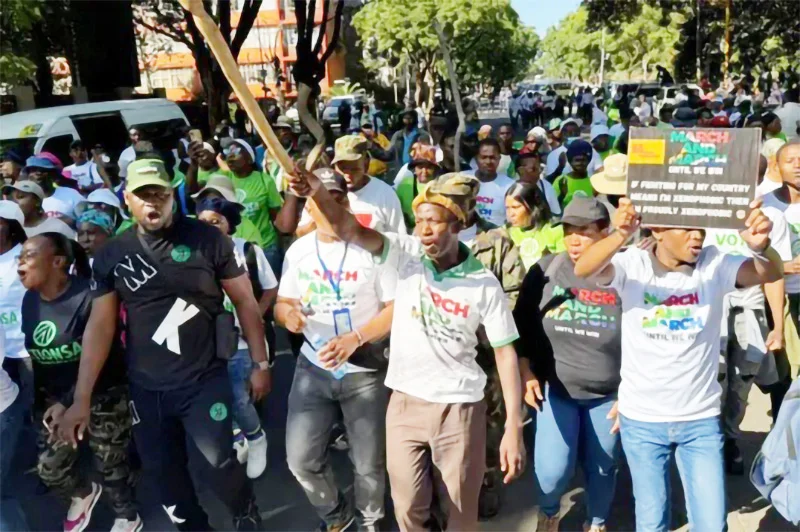
 The current outbreak of anti-immigrant protests in Durban, South Africa is bound to have taken many a subscriber to value-based politics or political idealism quite by surprise. After all, this is evidence that despite the historic accomplishments of nation-builders of the stature of the late President Nelson Mandela it cannot be taken for granted that identity politics, including racism in its worst forms, is no more in South Africa.
At the time of this writing details are scarce on the substantive root causes of the protests but it could very well be that economic grievances, particularly on the part of the majority community in South Africa, are contributing considerably to the disaffection. Shrinking employment and material prospects are likely to figure majorly among the factors igniting the unrest.
Fortunately, the local authorities in Durban are losing no time in calling for peaceful co-existence among the relevant communities and are pointing to the vital importance of stepping-up national integration processes. Apparently, immigrants in sizable numbers from neighbouring countries are present in Durban. However, international TV footage of the protests quoted some local authorities as saying that the majority of the immigrants in some centres that housed them were not illegal migrants and had the documents that entitle them to be in Durban.
In the Durban protests the world has fresh proof of the socially divisive consequences of the gathering globe-wide economic disaffection, touched off particularly by the continuing crisis in West Asia. Going ahead, the world would need to brace for increasing identity-based unrest of the kind it is just witnessing in South Africa.
Considering that the material lot of ordinary people everywhere could only aggravate progressively, with the US and Iran showing no signs of negotiating an end to their confrontation any time soon, it will be left to the more democratic and progressive sections of the world community to initiate positive measures collectively to bring a measure of relief to the discontented.
The swiftness with which such relief will be provided would depend crucially on the importance those sections taking up these undertakings attach to value-based politics as opposed to Realpolitik of power politics.
Going by these yardsticks, Italy could be considered to be moving in the right direction. Recently Italy came to the fore in initiating the collective named, ‘Rome Coalition for Food Security and Access to Fertilizer’, which has as one of its aims the swift provision of fertilizer to economically weak African countries.
In a recent statement Italian Minister of Foreign Affairs and International Cooperation, Antonio Tajani, said that a principal aim of the project was to ensure that the farmers of Africa gained easy access to fertilizer, considering that food security is a growing concern among some of Africa’s economically vulnerable countries.
The statement went on to mention that some 30 countries hailing from the Mediterranean region, the Middle East, the Balkans as well as the FAO had been invited to join the coalition. The venture is far-seeing in that food security is main among the reasons for social discontent which in turn could degenerate into endemic political turmoil and bloodshed. Separatist violence and geographical fragmentation of countries wouldn’t be too far behind these developments, as Africa itself has often proved.
It is hoped that more G7 countries would take the cue from Italy and do what they could to ease the hardships of economically distressed countries, particularly of the global South. In these efforts they would need to break rank with the US, which is today brutally indifferent to the consequences of its policy of making ‘America First’, come what may.
Going by current developments, the Trump administration seems to be blithely oblivious to the wider, deleterious effects of its policy course in West Asia. Besides rendering Iran militarily and otherwise impotent nothing else seems to matter to Washington, as regards West Asia. This is policy short-sightedness of an extreme kind. After all, right now West Asia could be said to be sitting on the proverbial powder keg.
On the other hand, Iran is not giving the world the impression that it is doing anything constructive to get out of the policy straitjacket that it wove for itself decades ago. Rather than enter into a policy of ‘live and let live’ in relation to Israel in particular and initiate a process of reconciliation with the latter, it has chosen to operate within policy parameters that continue to damn Israel. This has put Israel always on the ‘defensive’ so to speak and prevented the opening up of space for meaningful dialogue.
That said, Israel is obliged to explore the possibilities of entering into a negotiatory process with the Arab-Islamic world that could lead to a de-escalation of tensions and bloodshed. It cannot continue to look at its neighbours through lenses that distort them as archetypal enemies who should be ‘wiped off completely from the face of the earth.’
In other words, the need is urgent for Realpolitik to give way to value-based politicks. Italy is beginning to prove that the latter approach could be pursued with some success. May be the EU and the UK could throw their weight behind these initiatives as well and establish that international politics could be refashioned on the basis of humane, civilized norms. The UN would need to be fully supportive of these moves and prove an organizational nucleus of the operations that follow.
In fact the time is ripe for people of conscience to collectively stand up on the side of peace and say ‘No’ to war and violence. Organizations such as the ICRC, the WHO and Medicines Sans Frontiers have already taken up this call. Referring to the widespread destruction of health facilities and their dehumanizing results these organizations have said, among other things, that ‘This is not a failure of the law. It is a failure of political will.’
True, ‘failure of political will’ among those powers that matter accounts for the runaway, uncontrollable nature of war and destruction in contemporary times, but more fundamentally it is a failure of the human conscience. It could very well be that the phenomenal levels to which violence and war have been unleashed today have had the effect of deadening consciences. This is a matter for urgent study and wide discussion.

 I would describe Indunil Kaushalya Dissanayaka as innovative and creative, and she operates under the name of Cuteefly.
Indunil always comes up with something novel to celebrate special occasions, and she does it with candles … and that’s her profession.
She was in the spotlight when she created a happening scene, with candles, for Christmas, Sinhala and Tamil New Year, and Valentine’s Day.
As lanterns light up Sri Lanka for Vesak, the Colombo-based candle maker is quietly turning wax and wick into little pieces of the festival.

Candles reflecting Vesak themes
Her candles reflect Vesak themes – light, peace, remembrance, giving, etc., to enable you to fill your Vesak celebration with devotion and beauty.
Among her Vesak creations is a lotus-shaped soy candle, scented with sandalwood, lavender, etc., meant to burn during this Vesak Poya Day.

Indunil Kaushalya Dissanayaka: Customers
praise her for her creativity
These handcrafted Vesak candles are perfect for offering at the temple, she says.
What makes her creations so novel is that they come in different shapes, scents, themes, and all are handmade.
What’s more, her customers have heaped praise on her for her creativity.
According to Indunil, her creations are perfect as a thoughtful gift … to bring beauty, unity, and light into every moment.
Says Indunil: “Our beautifully handcrafted Unity candles are designed with premium detail and love, making them perfect for celebrations, gifts, and meaningful occasions.”
Cuteefly, says Indunil, is available online.
Readers could contact Indunil on 0778506066 for more details.
He Facebook Page is: Cuteefly.

Handmade with love

 Yes, dark spots do crop up on the skin, especially with sun exposure and, of course, as the skin ages.
However, these tips should be of immense benefit to those who are faced with dark spots.
* Lemon and Honey Glow Mask:
You will need 01 teaspoon lemon juice and 01 teaspoon honey.
Mix the lemon juice and honey well and then apply this mixture, only on the dark spots.
Leave for 10–15 minutes and then rinse with cool water.
Benefits:
Lemon helps brighten pigmentation.
Honey moisturises and heals skin.
Gives a natural glow.
* Aloe Vera Gel Treatment:
All you need is fresh aloe vera gel.
Apply the gel apply on dark spots, before going to bed.
Leave overnight and wash in the morning.
Benefits:
Reduces acne marks and pigmentation.
Soothes irritated skin.
Helps skin repair naturally.
* Turmeric and Yoghurt Paste:
You will need 01 teaspoon yoghurt and a pinch of turmeric
Mix the yoghurt and turmeric into a smooth paste and apply on affected areas.
Leave for 15 minutes and then wash gently with lukewarm water.
Benefits:
Turmeric brightens skin naturally.
Yoghurt removes dead skin cells.
Helps fade dark spots gradually.
Use these packs 02-03 times a week as results are generally seen over time.
You can also try this out: Mix a ripe papaya into a smooth paste and apply to the face, or directly on to the dark spots. Leave for 15-20 minutes and then wash with lukewarm water.

Hacking claims, mismatched answer-sheets: Controversies rock school exam in India

Iran says it targeted American base after fresh US strikes

Farmers Affected by the Nilwala Salinity Barrier paid Rs. 1.2 Billion in Compensation

State Vesak Festival held with the participation of the President

Let us all build a society valued with peace and harmony, guided by unity and solidarity beyond all differences – PM

Showers will occur at times in the Western, Sabaragamuwa and North-western provinces and in Galle, Matara, Kandy and Nuwara-Eliya districts

‘Dates have the highest sugar content to fight Coronavirus’

Sunday Island 27 December – Headlines

#SundayIsland 17th December – Headlines

Sunday Island – 28th March

Sunday Island Headlines – 21 March

Sunday Island – 21st February – Headlines
-

 Business7 days ago
Historic launch of CCWE Fashion Week & International Summit 2026
-

 News5 days ago
All-New GRAVITE launches at LKR 6.99 Mn
-
 Features5 days ago
The NPP’s pivot to the past
-
 News4 days ago
Police probe underway to ascertain links between criminals deported from UAE and local politicians
-
 News3 days ago
Easter Sunday carnage: Court told Maulana’s statement cannot be accepted without cross-examination
-

 Opinion7 days ago
The need to reform Buddhist ecclesiastical order
-
 Features5 days ago
End of Peacekeeping
-
 Opinion3 days ago
Undermining the democratic political framework