
Foreign News
Buddhism’s holiest site erupts in protests over Hindu ‘control’ of shrine

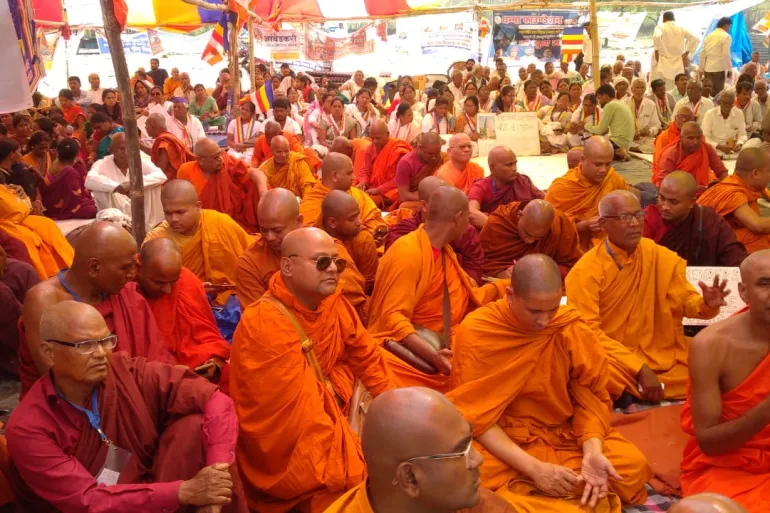
As he stood in a queue outside a makeshift tent kitchen for breakfast, 30-year-old Abhishek Bauddh could not help but reflect on the throngs of people around him in Bodh Gaya, Buddhism’s holiest site.
Bauddh has been visiting the town in eastern India’s Bihar state, where the Buddha gained enlightenment, since he was 15. “But I have never seen such an atmosphere. Buddhists from all over the country are gathering here,” he said.
For once, they are not in Bodh Gaya only for a pilgrimage. They are part of a protest by Buddhists that has erupted across India in recent weeks over a demand that control of Bodh Gaya’s Mahabodhi Temple, one of the faith’s most sacred shrines, be handed over exclusively to the community.
Several Buddhist organisations have held rallies, from Ladakh bordering China in the north to the cities of Mumbai in the west and Mysuru in the south. Now, people are increasingly trooping to Bodh Gaya to join the main protest, said Akash Lama, general secretary of the All India Buddhist Forum (AIBF), the collective leading the campaign. India has an estimated 8.4 million Buddhist citizens, according to the country’s last census in 2011.
For the last 76 years, the temple has been managed by an eight-member committee — four Hindus and four Buddhists — under the Bodh Gaya Temple Act, 1949, a Bihar state law.
But the protesters, including monks clad in saffron with loudspeakers and banners in their hands, are demanding a repeal of that Act and a complete handover of the temple to the Buddhists. They argue that in recent years, Hindu monks, enabled by the fact that the influence the community wields under the law, have increasingly been performing rituals that defy the spirit of Buddhism — and that other, more subtle forms of protest have failed.
The Bodh Gaya Math, the Hindu monastery that performs the rituals inside the complex, insists that it has played a central role in the upkeep of the shrine for centuries and that it has the law on its side.
The protesters point out that the Buddha was opposed to Vedic rituals. All religions in India “take care and manage their own religious sites”, said Bauddh, who travelled 540km (335 miles) from his home in the central state of Chhattisgarh to Bodh Gaya. “So why are Hindus involved in the committee of a Buddhist religious place?”
Sitting down with his plate of hot rice with dal, he said, “Buddhists have not received justice [so far], what should we do if we do not protest peacefully?”
Barely 2km (1.2 miles) away from the sacred fig tree in the Mahabodhi Temple complex where the Buddha is believed to have meditated, minibuses arrive on a dusty road from Patna, the capital of Bihar, carrying protesters from different parts of the country.
For some, who have regularly visited the shrine, the concern over Hindu rituals being performed at the temple complex is not new.
“From the very beginning, when we used to come here, we felt very disheartened to see rituals that Lord Buddha had forbidden being performed by people of other religions in this courtyard,” said 58-year-old Amogdarshini, who travelled from Vadodara in the western state of Gujarat to join the protests in Bodh Gaya.
In recent years, Buddhists have complained to local, state and national authorities about the Hindu rituals. In 2012, two monks filed a petition before the Supreme Court seeking a repeal of the 1949 law that gives Hindus a say in the running of the shrine. That case has not even been listed for a hearing, 13 years later. In recent months, the monks have again submitted memorandums to the state and central governments and have taken out rallies on the streets.
But things came to a head last month. On February 27, more than two dozen Buddhist monks sitting on a hunger strike for 14 days on the temple premises were removed at midnight by the state police, who forced them to relocate outside the temple.
“Are we terrorists? Why cannot we protest in the courtyard that belongs to us?” said Pragya Mitra Bodh, secretary of the National Confederation of Buddhists of India, who came from Jaipur in the western state of Rajasthan with 15 other protesters. “This temple management act and committee setup taints our Buddhist identity and the Mahabodhi temple can never completely belong to us unless the act is repealed.”
Since then, the protests have intensified — some, like Amogdarshini, who had already spent a couple of weeks in Bodh Gaya in January, have now returned to join the protest.
Stanzin Suddho, a travel agent from Ladakh who is currently in Bodh Gaya, said the protests are being funded by devotees’ contributions. “We do not stay for long,” he said, adding that he came with 40 others. “Once we go back, more people will join here.”
At the heart of the battle for the Mahabodhi Temple — a UNESCO World Heritage Site — is its long-contested legacy.
The temple was built by Emperor Ashoka, who visited Bodh Gaya in 260 BCE after embracing Buddhism, roughly 200 years after the Buddha’s enlightenment.
It remained under Buddhist management for years until major political changes in the region in the 13th century, said Imtiaz Ahmed, professor of medieval history at Patna University. The invasion of India by Turko-Afghan general Bakhtiyar Khilji “led to the eventual decline of Buddhism in the region”, Ahmed said.
According to UNESCO, the shrine was largely abandoned between the 13th and 18th centuries, before the British began renovations.
But according to the shrine’s website, a Hindu monk, Ghamandi Giri, turned up at the temple in 1590 and began living there. He started conducting rituals and established the Bodh Gaya Math, a Hindu monastery. Since then, the temple has been controlled by descendants of Giri.
In the late 19th century, visiting Sri Lankan and Japanese Buddhist monks founded the Maha Bodhi Society to lead a movement to reclaim the site.
In 1903, these efforts led the then-viceroy of India, Lord Curzon, to try to negotiate a deal between the Hindu and Buddhist sides, but he failed. Later on, both sides started mobilising political support and eventually, two years after India gained independence from British rule in 1947, Bihar’s government pushed through the Bodh Gaya Temple Act. The law transferred the temple’s management from the head of the Bodh Gaya Math to the eight-member committee, which is now headed by a ninth member, the district magistrate — the top bureaucrat in charge of the district.
But Buddhists allege that the Bodh Gaya Math — as the most influential institution on the ground — effectively controls the day-to-day functioning of the complex.
Swami Vivekananda Giri, the Hindu priest who currently looks after the Bodh Gaya Math, is unfazed by the protests, describing the agitations as “politically motivated” — with an eye on Bihar’s state legislature elections later this year.
“Our Math’s teachings treat Lord Buddha as the ninth reincarnation of [Hindu] Lord Vishnu and we consider Buddhists our brothers,” Giri told Al Jazeera. “For years, we have hosted Buddhist devotees, from other countries as well, and never disallowed them from praying on the premises.”
Giri says the Hindu side has been “generous in allowing four seats to Buddhists in the management committee”.
“If you repeal the Act, then the temple will solely belong to the Hindu side because we owned it before the Act and the independence [of India],” Giri said, taking a dig at the protesters. “When the Buddhists abandoned it after the invasion of Muslim rulers, we preserved and took care of the temple. Yet we never treated Buddhist visitors as ‘others’.”
Back at the protest site, Akash Lama, who leads the demonstrations, suggested that the protesters have little hope that the federal government of the Hindu majoritarian Bharatiya Janata Party (BJP), and the state government — in which the BJP is an alliance partner — will listen to their grievances.
“The rights of Buddhists are being gradually violated by using the Act. Buddhists have the right over the temple, so it should be handed over to the Buddhists,” he said. “We have been disappointed in the government and the Supreme Court [for failing to hear the case].”
But Bauddh, the protester from Chhattisgarh, still has hope — not in the government, but in the people he sees around him. “This unity makes our protest strong,” he said.
[Aljazeera]

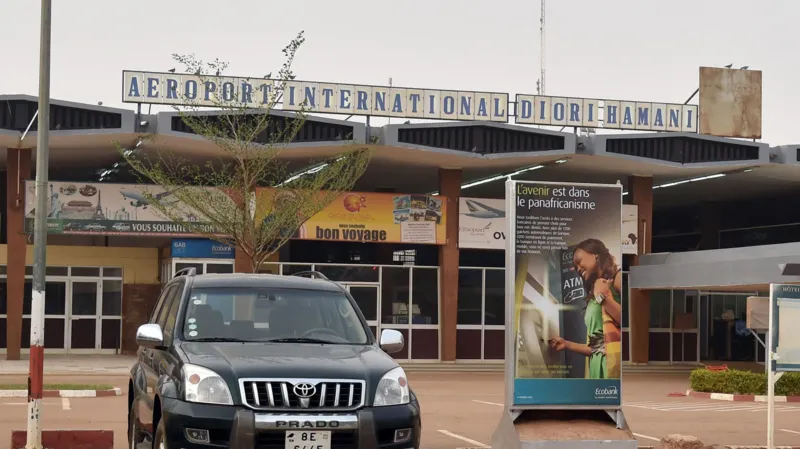
Sustained heavy gunfire and loud explosions have been heard in Niger near the international airport outside the capital, Niamey.
Multiple eyewitness accounts and videos showed air defence systems apparently engaging unidentified projectiles in the early hours of Thursday.
The situation later calmed down, reports say, with an official reportedly saying the situation was now under control, without elaborating.
It is not clear what caused the blasts, or if there were any casualties. There has been no official statement from the military government.
The gunfire and blasts began shortly after midnight, according to residents of a neighbourhood near the Diori Hamani International Airport, the AFP news agency reports. They said calm returned after two hours.
The airport houses an air force base and is located about 10km (six miles) from the presidential palace.
Niger is led by Abdourahamane Tiani who seized power in a 2023 coup that ousted the country’s elected civilian president.
Like its neighbours Burkina Faso and Mali, the country has been fighting jihadist groups who have carried out deadly attacks across the region.
It is also a major producer of uranium.
A huge uranium shipment destined for export has been stuck at the airport amid unresolved legal and diplomatic complications with France after the military government nationalised the country’s uranium mines.
“The situation is under control. There is no need to worry,” the Anadolu news agency quoted a Foreign Affairs ministry official as saying, without elaborating.
The official told the agency they were trying to determine whether the gunfire was linked to the uranium shipment.
[BBC]

A South Korean court has sentenced former First Lady Kim Keon Hee to one year and eight months in prison after finding her guilty of accepting bribes from the Unification Church, according to South Korea’s official Yonhap news agency.
The Seoul Central District Court on Wednesday cleared Kim, the wife of disgraced ex-President Yoon Suk Yeol, of additional charges of stock price manipulation and violating the political funds act.
Kim was accused of receiving bribes and lavish gifts from businesses and politicians, as well as the Unification Church, totaling at least $200,000.
The prosecution team had also indicted Unification Church leader Han Hak-ja, now on trial, after the religious group was suspected of giving Kim valuables, including two Chanel handbags and a diamond necklace, as part of its efforts to win influence with the president’s wife.
Prosecutors in December said Kim had “stood above the law” and colluded with the religious sect to undermine “the constitutionally mandated separation of religion and state”.

Prosecutor Min Joong-ki also said South Korea’s institutions were “severely undermined by abuses of power” committed by Kim.
The former first lady had denied all the charges, claiming the allegations against her were “deeply unjust” in her final testimony last month.
But she has also apologised for “causing trouble despite being a person of no importance”.
[Aljazeera]
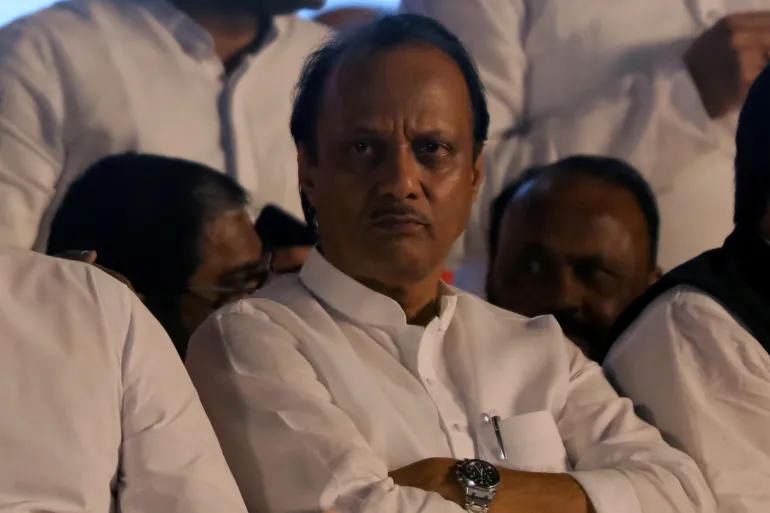
A plane crash has killed the deputy chief minister of India’s Maharashtra state, Ajit Pawar, the country’s aviation regulator has said.
The plane, which took off from the state capital, Mumbai, on Wednesday, crash-landed at the airport in Pawar’s constituency of Baramati, according to the Directorate General of Civil Aviation (DGCA).
Two members of the prominent politician’s staff and two crew members were also reported to have been killed.
The cause of the crash has not yet been officially confirmed.
Flightradar24, an online flight tracking service, said the aircraft was attempting a second approach to Baramati airport when it crashed.
The Times of India newspaper quoted DGCA officials as saying the aircraft, a Learjet 45 operated by a company called VSR, crashed at about 8:45am local time (03:15 GMT).
The daily said Pawar, the nephew of veteran politician Sharad Pawar, who founded the Nationalist Congress Party (NCP), was on his way to attend a public rally for the district council elections.
A witness quoted by the newspaper said the aircraft exploded moments after hitting the ground.
“When we rushed to the spot, the aircraft was on fire. There were four to five more explosions. People tried to pull the passengers out, but the fire was too intense,” said the witness.

Pawar, 66, built his political base through the grassroots cooperative movement. He was a key figure in state politics and served as the second-highest elected official in Maharashtra, as part of the larger federal governing coalition led by Prime Minister Narendra Modi.
He wielded considerable influence in the state’s vibrant sugar belt and was known for his ability to mobilise rural voters.
[Aljazeera]

Showers will occur at times in the Eastern, Northern, North-Central and Uva provinces and in Matale and Nuwara-Eliya districts

Tobacco and alcohol claim 22,000 lives annually

Development Officers hunger strike drags on for fourth day

IMF urges Lanka to diversify trade amidst global tariff risks

Shocking 10,455 complaints of Children’s rights violations lodged with NCPA last year

Sea Street gold prices gallop

‘Dates have the highest sugar content to fight Coronavirus’

Sunday Island 27 December – Headlines

#SundayIsland 17th December – Headlines

Sunday Island – 28th March

Sunday Island Headlines – 21 March

Sunday Island – 21st February – Headlines
-
 Business4 days ago
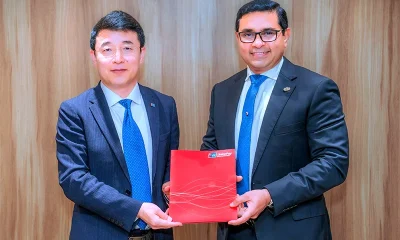
ComBank, UnionPay launch SplendorPlus Card for travelers to China
-

 Business5 days ago
ComBank advances ForwardTogether agenda with event on sustainable business transformation
-
 Opinion5 days ago
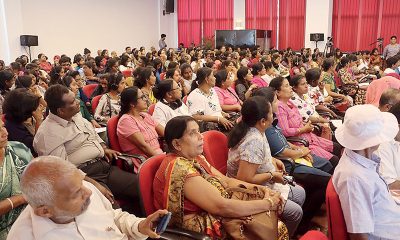
Conference “Microfinance and Credit Regulatory Authority Bill: Neither Here, Nor There”
-
 Business1 day ago
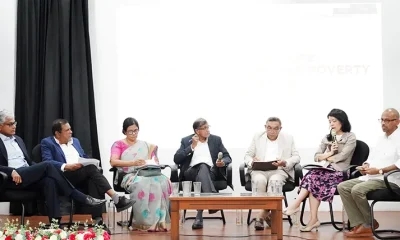
Climate risks, poverty, and recovery financing in focus at CEPA policy panel
-
 Opinion4 days ago
Luck knocks at your door every day
-

 Business6 days ago
Dialog Brings the ICC Men’s T20 Cricket World Cup 2026 Closer to Sri Lankans
-
 News5 days ago
Rising climate risks and poverty in focus at CEPA policy panel tomorrow at Open University
-

 Business1 day ago
Bourse positively impacted by CBSL policy rate stance