
Opinion
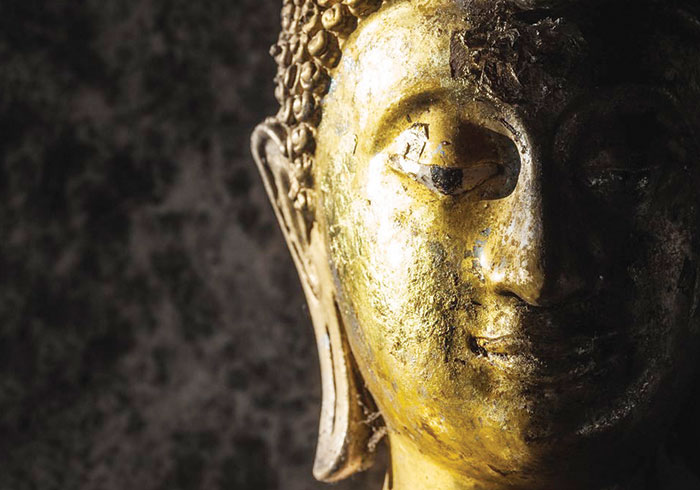
Buddhism: Science vs religion and politics

by Dr Upul Wijayawardhana
Buddhism seems to be the last resort of greedy politicians desirous of capturing power or maintaining unexpectedly gained power as stated in a thought-provoking editorial, “When House oozes with religiosity” (The Island, 1 December). Our politicians seem totally oblivious to the continuing suffering of the masses; instead of discussing how to solve the economic mess they got us into, they seem keen on debating Buddhist scriptures, often with misinterpretations like confusing Devadatta with Angulimala!
Whilst totally agreeing with the editor on his comments, I hasten to add that the public reaction to all this was perhaps even better encapsulated in Jeffrey’s cartoon by the side of the editorial, showing the Sadhu Nada of the masses whilst Parabhava Sutra pervades the Palace of Diyawanna! Perhaps, if our elected representatives chant the Parabhava Sutta before the House commences daily proceedings, we may have better governance. But the majority of them will not understand the meaning of it because they are so conceited or daft!
Their behaviour is an insult to Buddhism, and all Buddhists will agree totally with the editorial comment: “The holier-than-thou frontbenchers of both sides of Parliament have been displaying their knowledge of Buddhism, of late, by quoting extensively from the Sutta Pitaka, the way drunkards use lamp-posts—for support rather than illumination. A discussion on Dhamma in Parliament is like a conference on animal rights at an abattoir, or a talk on chastity in a bordello.” (The holy and the unholy: The Island, 5 December)
“Science vs religion”, a two-part article which was printed on 26th and 28th November, reproduced from this newspaper’s Asia News Network partner in India, The Statesman, concluded as follows: “It is therefore for us citizens to shield our children from the corrupting influences of religion. It has no place in the fabric of the mind of civilised men and women, just as God has no place in the fabric of the space-time that science tries to untangle. We don’t need the ancient wisdom of the spirit to guide us, because religion which was supposed to imbibe it has lost its divinity. It is now for science to redeem religion.”
Whilst being very thought-provoking, I would have agreed with the author more had he stated instead “shield our children from the corrupting influences of religious extremism” as what seems spreading fast today are distorted versions of religion, often bordering on extremism. Many of the problems referred to are created by the massive organisations built around different religions and resultant extremism rather than actual religious teachings themselves.
Although I agree with most of what Govind Bhattacharjee stated, I am rather surprised that he has failed to give any credit to religion. More so, because he has overlooked giving any recognition to the leading role played in scientific thinking by the greatest son of his country; the Buddha who laid the foundation for scientific thinking in the Kalama Sutta.
Perhaps, Govind does not consider Buddhism to be a religion and if it so, I too am in agreement. As I have written in the past, the greatest disservice done to Buddhism is to categorise it as a religion. After all, the dictionary definition of religion is: “The belief in and worship of a superhuman controlling power, especially a personal God or gods.” Buddhism being the only major religion that does not recognise a superhuman controlling power, defining it as a religion is paradoxical indeed! However, as it is referred to as a religion in common parlance; it is the fourth largest religion in the world, and in any discussion on religion Buddhism has to be considered, even in exception.
At a time when scientific thought and method were virtually non-existent, Buddha expounded the need for verification before acceptance. In Kalama Sutta, he went to the extent of stating that nothing should be accepted as a fact even though he said it! Faith, the foundation of many other religions, was thus replaced by fact. Therefore, Kalama Sutta can be considered the charter for free thought. What the Buddha elucidated in the Four Noble Truths is exactly the process we follow in scientific discovery; recognise there is a problem, identify the cause of the problem, find the solution to the problem and apply the solution.
The Buddha rebelled against the existing order for equality, decrying the caste system which was the great divider of the time by stating: “Not by birth is one an outcast; not by birth is one a brahman. By deed one becomes an outcast; by deed one becomes a brahman.” Paradoxically though, some Sangha in Sri Lanka go against this fundamental teaching of the Buddha and are keen to protect their castes in the guise of Niakya!
Buddhism was the first religion to offer equality to all including women. Those who question whether the Buddha showed ambivalence as regards the ordination of women overlook the fact that it was revolutionary, considering the social milieu of the day. The much-touted Athenian democracy was only for men. Most other religions do not offer equality even today.
There are other religions which deny equality to women justifying suppression as protection!!
The Buddha’s analysis of mind remains unsurpassed. Mindfulness, a concept of the Buddha arising out of Vipassana, is applied in many facets of everyday life though, unfortunately, commercialised by some. It is the concept of living in the moment, not for the moment. Vipassana is the type of meditation the Buddha introduced and according to Shri S N Goenka, who is responsible for its’ widespread: “Vipassana focuses on the deep interconnection between mind and body, which can be experienced directly by disciplined attention to the physical sensations that form the life of the body, and that continuously interconnect and condition the life of the mind. It is this observation-based, self-exploratory journey to the common root of mind and body that dissolves mental impurity, resulting in a balanced mind full of love and compassion.” This exactly is what the world needs today!
Whether one considers Buddhism to be a religion or philosophy, or whether the Buddha is considered a religious leader or philosopher, the role he played in scientific thinking must not allowed to be underestimated.



Walking through Pettah market in Colombo, I have noticed something both obvious and troubling. Shop after shop sells bags, shoes, electronics, even sarees, and yet all shops are owned and run by men. Even businesses catering exclusively to women, like jewelry stores and bridal boutiques, have men behind the counter. This is not just my observation but it’s a reality where most Sri Lankans have observed as normal. What makes this observation more important is when we examine the demographics where women population constitute approximately 52% of Sri Lanka’s population, but their representation as business owners remains significantly low. According to the Global Entrepreneurship Monitor 2023 report, Sri Lanka’s Total Early Stage Entrepreneurial Activity rate for women is just 8.2%, compared to 14.7% for men.
Despite of being the majority, women are clearly underrepresented in the entrepreneurial aspect. This mismatch between population size and economic participation create a question that why aren’t more women starting ventures? The answer is not about capability or intelligence. Rather, it’s deeply in social and cultural barriers that have been shaping women’s mindsets for generations. From childhood, many Sri Lankan girls are raised to believe that their primary role is as homemakers.
In families, schools, and even universities, the message has been same or slightly different, woman’s success is measured by how well she manages a household, not by her ability to generate income or lead a business. Financial independence is rarely taught as essential for women the way it has been for men. Over time, this messaging gets internalised. Many women grew up without ever being encouraged to think seriously about ownership, leadership, or earning their own money. These cultural influences eventually manifest as psychological barriers as well.
Years of conditioning have led many skilled women to develop what researchers call “imposter syndrome”, a persistent fear of failure and feel that they don’t deserve success kind of feeling. Even when they have the right skills and resources, self-doubt holds them back. They question whether they can run a business independently or not. Whether they will be taken seriously, whether they are making the right choice. This does not mean that women should leave their families or reject traditional roles. But lack of thinking in a confident way and make bold decisions has real consequences. Many talented women either never start a business or limit themselves to small, informal ventures that barely survive. This is not about men versus women. It’s about the economic cost of underutilising 52% of the population. If our country is genuinely serious about sustainable growth. we must build an inclusive entrepreneurial ecosystem through confidence building programs, better finance access to women, and a long term societal mindset shift. Until a young girl walking through Pettah can see herself as a future shop owner rather than just a customer, we will continue to waste our country’s greatest untapped resource.
Harinivasini Hariharasarma
Department of Entrepreneurship
University of Sri Jayewardenepura

Some essential points made to indicate its future in Power Generation
The hard facts are that:
1) Coal supplies cannot last for more than 70- 100 years more at most, with the price rising as demand exceeds supply.
2) Reactor grade Uranium is in short supply, also with the price rising. The cost is comparable to burning platinum as a fuel.
3) 440 standard Uranium reactors around the world are 25-30 years old – coming to the end of their working life and need to be replaced.
4) Climate Change is increasingly making itself felt and forecasts can only be for continuing deterioration due to existing levels of CO2 being continuously added to the atmosphere. It is important to mention the more serious problems associated with the release of methane gases – a more harmful gas than CO2 – arising from several sources.
5) Air pollution (ash, chemicals, etc.) of the atmosphere by coal-fired plants is highly dangerous for human health and should be eliminated for very good health reasons. Pollution created by India travels to Sri Lankans by the NE monsoon causing widespread lung irritations and Chinese pollution travels all around the world and affects everybody.
6) Many (thousands) of new sources of electric power generation need to be built to meet increasing demand. But the waste Plutonium 239 (the Satan Stuff) material has also to be moved around each country by lorry with police escort at each stage, as it is recovered, stored, processed and formed into blocks for long term storage. The problem of security of transport for Plutonium at each stage to prevent theft becomes an impossible nightmare.
The positive strengths to Thorium Power generation are:
1) Thorium is quite abundant on the planet – 100 times more than Uranium 238, therefore supplies will last thousands of years.
2) Cleaning or refining the Thorium is not a difficult process.
3) It is not highly radioactive having a very slow rate of isotope decay. There is little danger from radiation poisoning. It can be safely stored in the open, unaffected by rain. It is not harmful when ingested.
4) The processes involved with power generation are quite different and are a lot less complex.
5) Power units can be quite small, the size of a modern detached house. One of these can be located close to each town, thus eliminating high voltage cross-country transmission lines with their huge power losses (up to 20%).
6) Thorium is ‘fertile’ not fissile: therefore, the energy cycle has to be kick-started by a source of Neutrons, e.g., fissile material, to get it started. It is definitely not as dangerous as Uranium.
7) It is “Fail – Safe”. It has walk-away safety. If the reactor overheats, cooled drain plugs unfreeze and the liquid drains away to storage tanks below. There can be no “Chernobyl/ Fukoshima” type disasters.
8) It is not a pressurized system; it works at atmospheric pressure.
9) As long as reactor temperatures are kept around 600 oC there are little effects of corrosion in the Hastalloy metal tanks, vessels and pipe work. China, it appears, has overcome the corrosion problem at high temperatures.
10) At no stage in the whole chain of operations is there an opportunity for material to be stolen and converted and used as a weapon. The waste products have a half- life of 300 years, not the millions of years for Plutonium.
11) Production of MEDICAL ISOTOPE Bismuth 213 is available to be isolated and used to fight cancer. The nastiest cancers canbe cured with this Bismuth 213 as Targetted Alpha therapy.
12) A hydrogen generation unit can be added.
This information obtained from following YouTube film clips:
1) The Liquid Fluoride Thorium Reactor – what Fusion wanted to be…
2) An unbiased look at Molten Salt Reactors
3) LFTR Chemical Processing by Kirk Sorensen
Thorium! The Way Ahead!
Priyantha Hettige

There are three key issues regarding foreign degrees:
Recognition: Is the awarding university recognized by our UGC?
Authenticity: Is the degree genuine or bogus?
Quality: Is it a standard, credible qualification?
1. The Recognition Issue (UGC Role)
The UGC addresses the first issue. If a foreign university is listed in the Commonwealth Universities Yearbook or the International Handbook of Universities, the UGC issues a letter confirming that the university is recognized. However, it is crucial to understand that a recognized university does not automatically imply that every degree it issues is recognized.
2. The Authenticity Issue (Employer Role)
The second issue rests with the employer. It is the employer’s responsibility to send a copy of the foreign degree to the issuing university to get it authenticated. This is a straightforward verification process.
3. The Quality Assurance Gap
The third issue
—the standard and quality of the degree—has become a matter for no one. The UGC only certifies whether a foreign university is recognized; they do not assess the quality of the degree itself.
This creates a serious loophole. For example:
Does a one-year “top-up” degree meet standard criteria?
Is a degree obtained completely online considered equivalent?
Should we recognize institutions with weak invigilation, allowing students to cheat?
What about curricula that are heavy on “notional hours” but light on functional, practical knowledge?
What if the medium of instruction is English, but the graduates have no functional English proficiency?
Members of the UGC need to seriously rethink this approach. A rubber-stamp certification of a foreign university is insufficient. The current system ignores the need for strict quality assurance. When looking at the origins of some of these foreign institutions (Campuchia, Cambodia, Costa Rica, Sudan..) the intentions behind these “academic” offerings become very clear. Quality assurance is urgently needed. Foreign universities offering substandard degrees can be delisted.
M. A. Kaleel Mohammed
757@gmail.com
( Retired President of a National College of Education)

South Africa announce schedule for bumper men’s home summer

Briton among 19 killed in Nepal bus crash

Mexico sends thousands of soldiers to stop violence after death of drug lord

Viren and Sangeeth fastest at 30th edition of Southern Eliyakanda Hill Climb

Rampaging Hetmyer, spinners seal West Indies’ massive win over Zimbabwe

Spin in focus again as high-flying England eye Pakistan scalp

‘Dates have the highest sugar content to fight Coronavirus’

Sunday Island 27 December – Headlines

#SundayIsland 17th December – Headlines

Sunday Island – 28th March

Sunday Island Headlines – 21 March

Sunday Island – 21st February – Headlines
-
 Features2 days ago
Why does the state threaten Its people with yet another anti-terror law?
-

 Features2 days ago
Victor Melder turns 90: Railwayman and bibliophile extraordinary
-
 Features2 days ago
Reconciliation, Mood of the Nation and the NPP Government
-

 Features24 hours ago
LOVEABLE BUT LETHAL: When four-legged stars remind us of a silent killer
-
 Features2 days ago
Victor, the Friend of the Foreign Press
-

 Latest News3 days ago
New Zealand meet familiar opponents Pakistan at spin-friendly Premadasa
-

 Latest News3 days ago
Tariffs ruling is major blow to Trump’s second-term agenda
-

 Latest News3 days ago
ECB push back at Pakistan ‘shadow-ban’ reports ahead of Hundred auction