
Sports
Brydon Carse makes his mark on debut as England power to seven-wicket victory

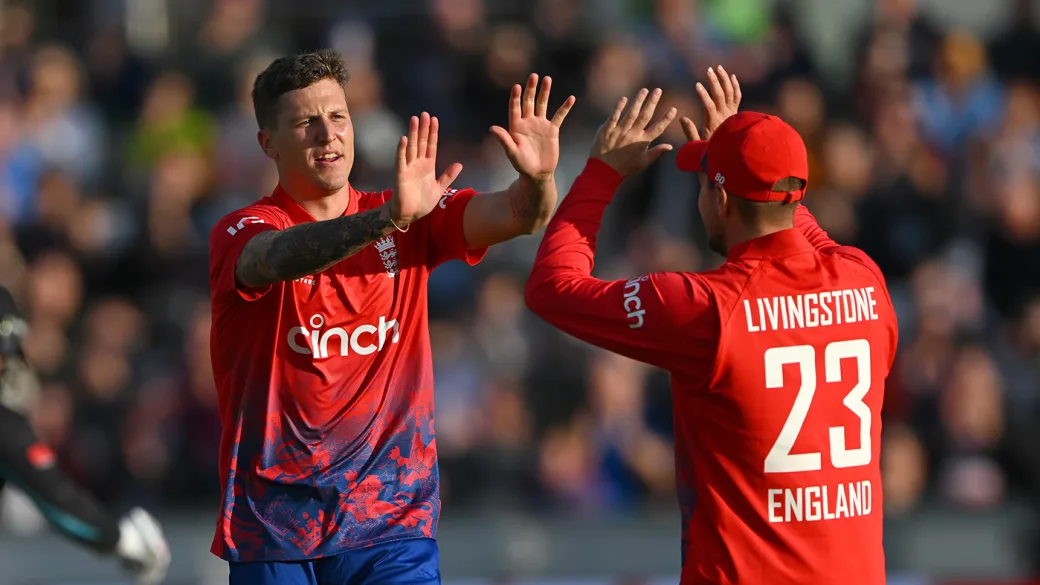
England’s rejigged T20I team powered out of their mothballs with a crushing seven-wicket victory under the floodlights at Chester-le-Street, as they hunted down a sub-par target of 140 with six full overs to spare.
A fine home-town debut from the seamer Brydon Carse denied New Zealand any momentum despite a misleadingly run-laden first over from Finn Allen, whereupon a brace of forceful knocks from Dawid Malan and the inevitable Harry Brook allowed Jos Buttler to sit back in the dressing-room with his feet up, resting up for more meaningful contests to come.
In their first white-ball outing since the tour of Bangladesh in March, England showed once again that their depth of options is second-to-none in the world game. Despite losing two prospective fast-bowling debutants, Josh Tongue and John Turner, to injury, and resting a third, Gus Atkinson, for later in the series, England’s line was led instead by Carse and the left-armer LukeWood, who claimed three wickets apiece.
In reply England never looked like letting their grip on the contest slip, despite the first-over loss of Jonny Bairstow, and once Malan had anchored the chase with his 17th fifty-plus score in 56 T20I innings, Brook and Liam Livingstone, with a huge blow for six over deep midwicket, closed out the chase in short order.
Allen’s most recent on-field act, in the green of Southern Brave, had been to slam 69 from 38 balls in a riotous (but unsuccessful) opening onslaught in last week’s Hundred Eliminator. And so the die seemed to have been cast when he climbed into a massive yahoo at Wood’s second delivery of the match. He didn’t connect on that occasion, but each of the next three flew out of the park – one down the ground, two high over midwicket – in an apparent signal of another powerplay charge.
What followed, however, was a near-complete lockdown from England’s new-look seam attack. Sam Curran applied the handbrake with a five-run second over before the debutant Carse conceded a solitary run off the bat with his relentless deck-thumping approach.
A switch of ends for Wood then paid early dividends as Devon Conway snicked a drive with no footwork to fall for 3 from 8, and after Carse had burst through Allen’s defence with an 87mph leg-stump-seeker, Wood made it two in three overs as Tim Seifert was suckered by the angle from round the wicket to lose his off stump for 9.
With the introduction of spin in the seventh over, New Zealand’s innings suffered a similar false dawn. Mark Chapman picked Adil Rashid’s first-ball legbreak and smoked him over midwicket for six… but his team managed just five more runs in the next nine before Moeen Ali, a scourge of left-handers, bowled Chapman with a beauty that held its line from round the wicket to take the top of off stump.
At 49 for 4, New Zealand were once again in need of a big performance from Daryl Mitchell, but on this occasion, even his long levers couldn’t turn the tide. Liam Livingstone entered the attack with a startlingly sharp legbreak that leapt past Mitchell’s edge, and – seemingly spooked – Mitchell climbed through the line of his very next ball, but could only pick out Brook on the long-off boundary. Rashid was then rewarded for an unremarkably excellent three-over spell with the soft dismissal of Mitchell Santner, who toe-ended a cut to point.
Thereafter, it was all about the scramble to the bottom of the innings. Glenn Phillips was New Zealand’s best hope of a competitive total, but his subdued 41 from 38 was ended by the sharpest take of the innings, as Curran in the covers read the fade on a sliced drive at a Wood slower ball, and leapt to his left to cling on in both hands.
Adam Milne and Ish Sodhi then landed a six apiece off consecutive balls to at least hoist England’s target past a run a ball, but Carse was on hand to shut down the innings in style. His first ball of the 20th over was an inch-perfect offcutter, on that hard in-between length that skidded past Milne’s wipe to leg; his fifth was fired into the toes, demanding that Sodhi took on the longest boundary, and he duly failed.
Carse had opened his account with 1 for 3 in his first two overs. Now he closed the innings down with 3 for 23 all told, his best in all T20s, and delivered with that familiar pitch-battering poise that Liam Plunkett once brought to England’s white-ball attack. For a man who wasn’t initially picked for this T20I squad, it was quite the way to celebrate becoming England’s 100th cap in the format.
Buttler will doubtless be back to the top of the order come England’s defence of their T20 title in the Caribbean and the USA next June, but his self-demotion to No. 6 was an acknowledgement that others have greater points to prove with the 50-over version looming.
There’s Bairstow for example – Buttler’s intended opening partner in Australia last winter until his horrific leg injury, and the man expected to front up alongside Jason Roy in India in five weeks’ time. His first England white-ball innings in 13 months at least came at a 200 strike-rate: a first-ball pump for four through midwicket, then a second-ball snick to slip off Tim Southee, after a leg-side wide for good measure.
There’s Will Jacks too, a potential travelling reserve in India, and a definite candidate for T20 opening honours, after his trophy-winning exploits (with bat and ball) for Oval Invincibles in the Hundred this month. His lacerating power was on full display once more as he greeted Lockie Ferguson’s first over with two fours and an inside-out carve for six, and having ignited a 61-run powerplay with 22 in 11 balls, he muffed a pull off Sodhi from his very next ball.
With his habitual faith in his own acceleration, Malan turned a doughty innings of 4 from 10 balls into a formidable 40-ball half-century, with five fours and two sixes – each of them mown with awesome power over the leg side off Sodhi and Santner respectively. He looked aghast to give it away at 54 from 42, but at 116 for 3 in the 13th over, he’d already drained the contest of any jeopardy.
And then, inevitably, there was Brook. The most notable absentee from England’s World Cup plans was clinically violent in belting them over the line with 43 not out from 27 balls, including back-to-back blats for six off Sodhi, over cover and midwicket respectively, and a third massive launch over the ropes as Southee served up a slower ball and was made to travel the distance. Whether it’s too late for him to change any minds that matter, only the selectors know for sure. But on this occasion, he barely broke sweat in looking a class apart.
Brief scores:
England 143 for 3 (Malan 54, Brook 43*) beat New Zealand 139 for 9 (Phillips 41, Carse 3-23, Wood 3-37) by seven wickets

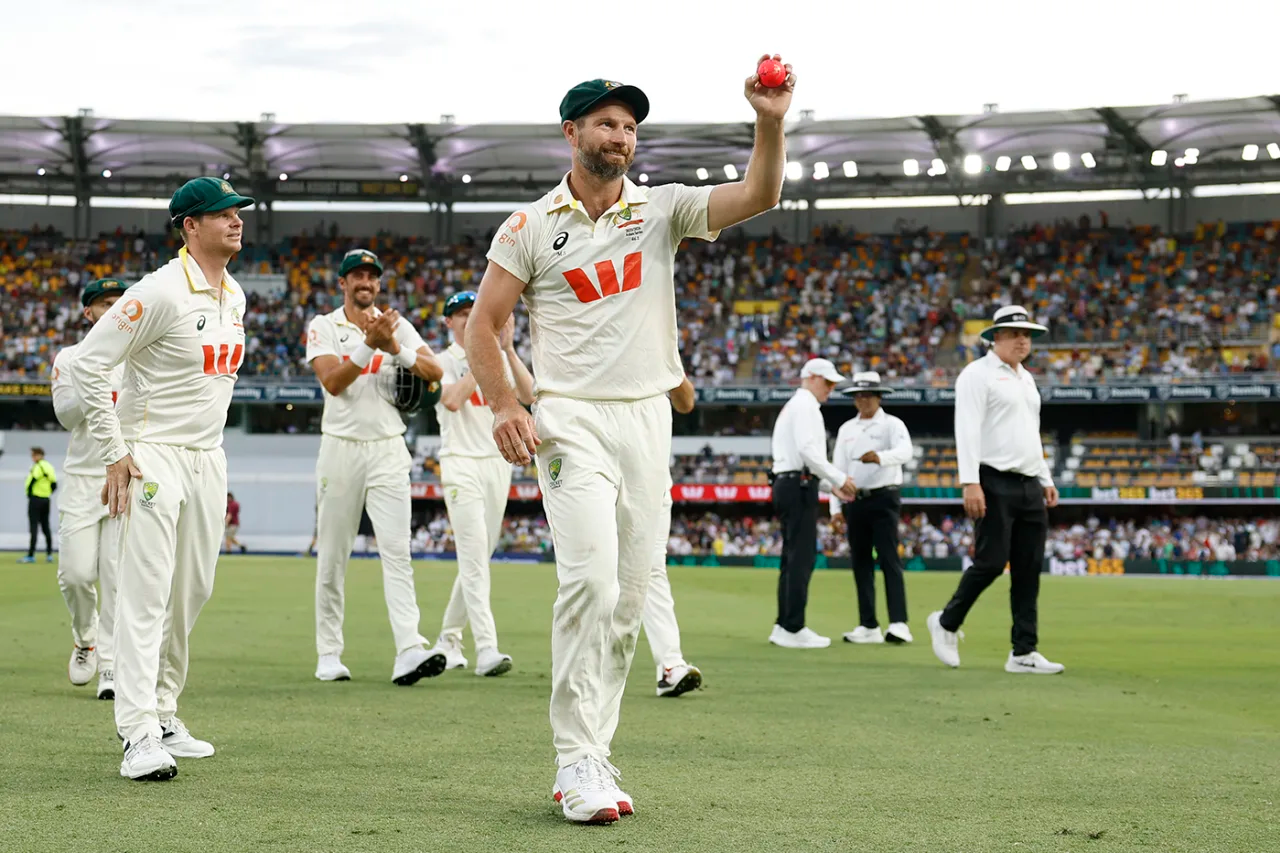
England batted against type and belatedly produced a rearguard, but it was in vain as seamer Michael Neser justified his contentious selection with a five-wicket haul to lead Australia to a crushing second Test victory.
Just six days in, Australia have a stranglehold of an Ashes series that is quickly becoming decidedly one-sided. But they were made to work on day four with England skipper Ben Stokesand Will Jacks stonewalling for almost half a day in a 96-run seventh-wicket partnership lasting almost 37 overs.
But Neser, surprisingly selected ahead of offspinner Nathan Lyon, dismissed both batters as England quickly fell away much like they have done numerous times in this series. Neser was sensational on the back of a deadly spell with the pink ball under lights on day three.
He was aided by outstanding fielding, a notable contrast between the teams after England dropped five catches in Australia’s first innings.
Skipper Steven Smith snatched a stunning one-hander low to his left to end Jacks’ 92-ball grind, while wicketkeeper Alex Carey completed a stellar effort with the gloves by holding on to a nick up at the stumps to dismiss Stokes.
Any hope of a miracle ended with the sight of a forlorn Stokes trudging off the Gabba having given his all with 50 off 152 balls.
Needing just 65 runs for victory, Travis Head came out blazing as Australia raced to 33 for 0 after five overs but dinner was still taken despite fears of stormy weather closing in on the Brisbane area.
Head could not carry over the momentum on resumption, chopping on to Gus Atkinson who also nicked off Marnus Labuschagne. There were unexpected late fireworks when Smith and Jofra Archer had a war of words.
But Smith, fittingly, came out on top with a hooked six off a 150 kph Archer bumper before sealing the victory in style with a huge blow over deep square off Atkinson. Smith finished 23 not out off just nine balls to ensure England left the field in need of plenty of soul searching ahead of the third Test in Adelaide.
England will rue several passages of brainless play earlier in the match as their hopes of regaining the Ashes appear shot. Had they batted with the application and grit that Stokes and Jacks exhibited earlier than the match might have taken a different course.
But Australia thoroughly deserved their victory after such an even team performance. They outclassed and outsmarted England in another impressive effort without quicks Pat Cummins and Josh Hazlewood.
Smith continues to provide an excellent stand-in for Cummins as Australia’s mastery and experience of day-night cricket overwhelmed a ragged England.
The main question at the start of the day was how long would play last with the result basically a formality. England resumed their second innings in dire trouble at 134 for 6 and still 43 runs from making Australia bat again. With the knives out, a beleaguered England’s only hope seemingly rested on Stokes replicating his Headingley-esque heroics.
Going against type, a backs-to-the-wall approach was needed. Unlike a slew of his team-mates, Stokes had been very watchful late on day three to survive Australia’s onslaught and finish unbeaten on 4 from 24 balls. Under the baking sun, Stokes encountered far easier conditions with minimal swing on offer in a sedate start to the day’s play.
He crawled to 12 off 50 balls before cracking a superb cover drive off Brendan Doggett in the highlight of a dour 28-run opening hour. There wasn’t much out of the ordinary apart from when Stokes backed away anticipating a bouncer and proceeded to forehand smash the ball, forcing Doggett to do his own fielding to the boundary at long-off.
Australia’s quicks bowled excellently without reward and they tried different tactics in search of a breakthrough. In what had seemed unlikely at the start of the day, England hauled in the deficit prompting a standing ovation from the Barmy Army.
The 50-run partnership between Stokes and Jacks was brought up a run later to a ripple of mostly ironic cheers from the terraces. They scored at 2.45 – the slowest scoring rate of the 164 partnerships of 50-plus in the Bazball era.
Stokes had a nervous moment just before the elongated tea break when a short delivery from Scott Boland hit the shoulder of his bat and flew over a leaping Cameron Green in the gully.
With a wicket proving elusive for the quicks, Smith might have wished he could throw the ball to Lyon but, instead, he gave Head’s part-time spin a go. Labuschagne also unfurled his seam bowling in the last over before tea as Stokes and Jacks defied the odds in the first wicketless session of the series.
It was much the same early in the second session with Stokes digging in while Jacks, playing just his third Test, looked composed and balanced at the crease. Jacks brought up his first boundary of the day when he clipped beautifully through midwicket as he passed his previous Test high score of 31.
Smith had started to look frustrated in the field, but his mood brightened considerably when he took it upon himself to produce a moment of magic to end Jacks’ resistance.
Stokes had barely acknowledged his hard-fought half-century, knowing there was so much work still to do. But he soon walked off disappointed after falling to Neser, throwing his head back in agony with the bitter realisation that the match was effectively over.
England lost their last 4 for 17 in their latest collapse as Neser claimed his first five-wicket innings haul of his brief Test career when he dismissed Brydon Carse.
Smith equalled Rahul Dravid to sit second all time in outfield catches and he celebrated with gusto knowing Australia were on the brink of another big win over their hapless opponent.
Brief scores:
Australia 511 (Mitchell Starc 77, Jake Weatherald 72, Marnus Labuschagne 65, Steven Smith 61, Alex Carey 63; Brydon Carse 4-152, Ben Stokes 3-113) and 69 for 2 beat England 334 (Joe Root 138*, Zak Crawley 76 Mitchell Starc 6-75) and 241 (Ben Stokes 50, Michael Neser 5-42) by eight wickets
[Cricinfo]


There’s a glut of riveting Test cricket going on around the world, the kind that warms most fans hearts. Joe Root has finally bagged his maiden hundred in Australia after a 12-year vigil – meaning Matthew Hayden no longer has to stroll around the MCG in nothing but his cowboy hat. The big man had vowed to walk naked in Melbourne if Root didn’t reach three figures this Ashes. Elsewhere, the West Indies are digging in to save a game against New Zealand, while Temba Bavuma’s South Africans have just handed India a 2-0 hiding in their own backyard.
Ordinarily, December is when cricket reporters hop from Wellington to Brisbane to Cape Town, chasing Tests like fielders patrolling the rope. Instead, this year we’re stuck at home, glued to the television, wondering why Sri Lanka are treating the longest format like a bouncer to the helmet — duck first, ask questions later.
The numbers make for grim reading. Sri Lanka have played just four Tests this year — one fewer than England and Australia will cram into seven frenetic weeks between November and December. And the plot thickens: the next Sri Lanka Test isn’t until June 2026. For specialists like Dhananjaya de Silva and Dinesh Chandimal, that’s not a gap between series — that’s an ice age. What motivation can you muster when your next red-ball assignment is two monsoons away?
Consider this: Joe Root debuted a year after Chandimal. Root has strutted out 160 times in Test cricket; Chandimal, just 90. Same era, different calendars — and Sri Lanka’s one looks very disappointing.
The World Test Championship was supposed to be a level playing field, but smaller nations often get the short end of the stick. Unless Sri Lanka are up against England, three-match series have become as rare as hat-tricks in Test cricket. With two-match rubbers becoming the norm, it’s almost impossible for teams like Sri Lanka to rack up ten Tests a year. A conscious push is needed to keep the red-ball flame alive.
To their credit, Sri Lanka Cricket have tried to plug the gaps by scheduling Tests outside the WTC — Afghanistan last year, Ireland the year before. Useful, yes, but still not nearly enough to prevent the longer format from slipping through to oblivion.
Let’s be blunt: there’s not much money in Test cricket. Unless the opposition is India or England, hosting a Test barely breaks even. But sport isn’t merely a cash register with stumps — not every moment of entertainment needs to pay for itself.
There are solutions. Each WTC cycle gives nine teams six series — three home, three away. Add just one series against a non-WTC Test nation and the tally improves. Make it mandatory that at least two of those six series must feature a minimum of three Tests, and suddenly the calendar looks healthier.
We often hear about shifting player priorities, how franchise leagues offer life-changing fortunes. Fair enough — but administrators can’t simply shrug and hope loyalty will magically return. If the suits don’t stage regular Test cricket, the players can hardly be blamed for choosing the shortest queue to a payday.
Test cricket is the game’s heartbeat. Ignore it long enough and the sport risks flatlining.
by Rex Clementine ✍️
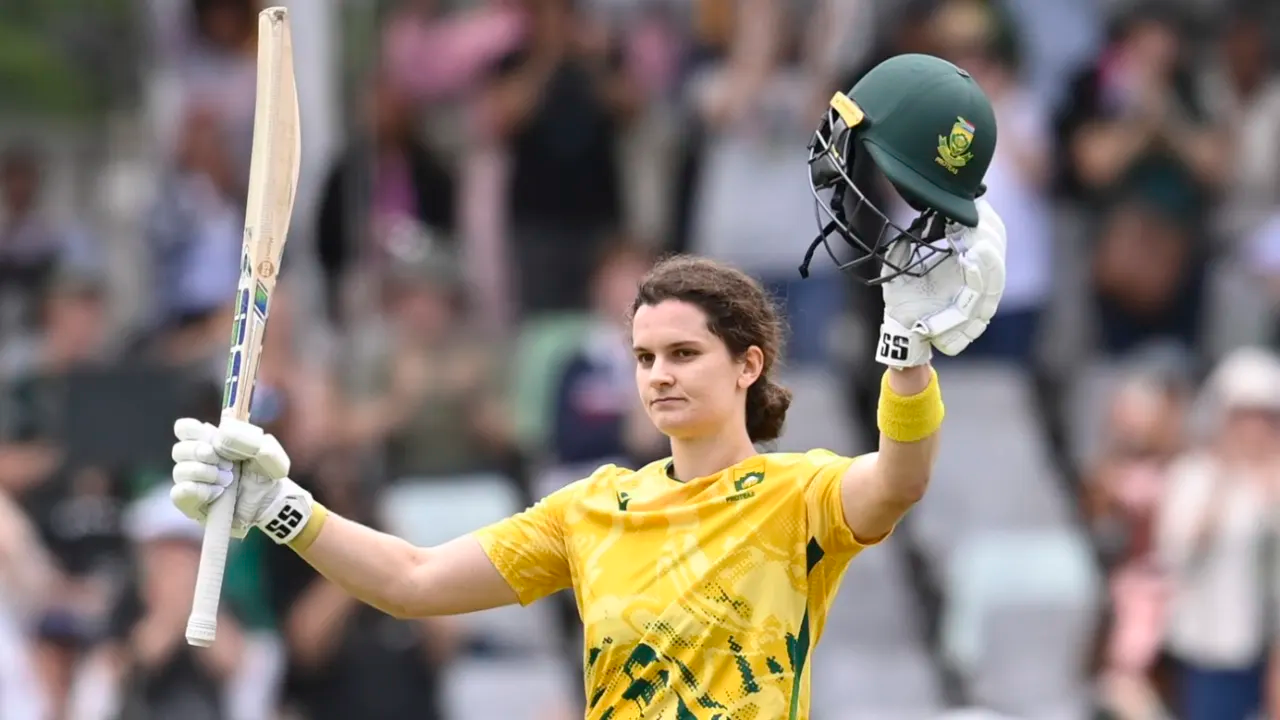
Laura Wolvaardt’s 56-ball 115 and an all-round show from Sune Luus helped South Africa beat Ireland in thefirst Women’s T20I by 105 runs, their joint third biggest win by runs, at Newlands.
Batting at No. 3, Wolvaardt scored a 52-ball century, the fastest for South Africa and the joint sixth quickest in T20Is, and was involved in a 176-run second-wicket partnership with Luus as the hosts posted their highest T20I total of 220 for 2. Having opened the batting, Luus also took the new ball and struck twice in the first over to dismiss Amy Hunter and allrounder Orla Prendergast. That effectively derailed Ireland early from what would have been an unlikely chase..
Luus and Wolvaardt got together after South Africa opted to bat and lost Faye Tunnicliffe in the second over. They started steadily before stepping on the pedal in the last two overs of the powerplay, taking 32 including a 20-run over from Lara McBride. Wolvaardt was the aggressor and she romped past fifty in just 24 balls, beating Lizelle Lee’s mark of 26 balls for the fastest T20I half century for South Africa.
Aided by plenty of misfields from Ireland, South Africa raced past 100 in the tenth over, thanks to another 20-run over, this time from Louise Little in which Wolvaardt went 6, 4, 4, 4. South Africa’s best second-wicket stand ended when Luus, on her career-best 81, tried an ungainly reverse hit against seamer Ava Canning, Ireland’s best bowler on the day, and was bowled.
That brought Dane van Niekerk, playing her first international since September 2021, to the middle. She saw Wolvaardt complete her second T20I hundred before unleashing an array of strokes to finish 21 not out of just eight balls, a strike rate of 262.50.
Only captain Gaby Lewis and Leah Paul offered a semblance of resistance for the tourists with a 42-run partnership off 39 balls. Once both of them fell in the space of 22 balls, Ireland folded quickly, losing nine wickets to spin. Luus returned as the pick of the bowlers with 4 for 22 while both left-arm spinners Nonkululeko Mlaba and Chloe Tryon took two apiece.
Brief scores:
South Africa Women 220 for 2 in 20 overs (Laura Wolvaardt 115*, Sune Luus 81, Dane van Niekerk 21*; Jane Maguire 1-52, Ava Canning 1-33) beat Ireland Women 115 in 18 overs (Leah Paul 34, Gaby Lewis 30, Laura Delany 13, Louis Little 13; Sune Luus 4-22, Nonkululeko Mlaba 2-09, Nadine de Klerk 1-13, Chloe Tryon 2-14, Nondumiso Shangase 1-13 ) by 105 runs
[Cricinfo]

President calls on Atamasthanadipathi Thero

US deploys two C-130J Super Hercules aircraft and personnel to assist in relief measures

Government prepares Anuradhapura farmers for Maha Season

Level III landslide warnings issued to the Districts of Kandy, Kegalle, Kurunegala and Matale extended till 1600 hrs on Monday [08]

A mechanism that goes beyond the normal state apparatus is needed to restore public life – President

President calls on the Mahanayake Thera of the Asgiri chapter

‘Dates have the highest sugar content to fight Coronavirus’

Sunday Island 27 December – Headlines

#SundayIsland 17th December – Headlines

Sunday Island – 28th March

Sunday Island Headlines – 21 March

Sunday Island – 21st February – Headlines
-
News5 days ago
Lunuwila tragedy not caused by those videoing Bell 212: SLAF
-
 News4 days ago
Level III landslide early warning continue to be in force in the districts of Kandy, Kegalle, Kurunegala and Matale
-
 Latest News6 days ago
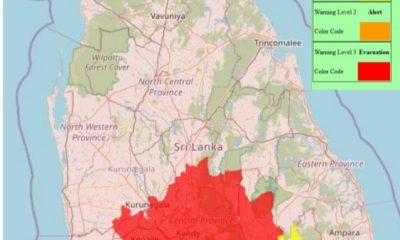
Level III landslide early warnings issued to the districts of Badulla, Kandy, Kegalle, Kurunegala, Matale and Nuwara-Eliya
-

 Features6 days ago
Ditwah: An unusual cyclone
-

 Latest News7 days ago
Updated Payment Instructions for Disaster Relief Contributions
-

 News2 days ago
CPC delegation meets JVP for talks on disaster response
-

 Business2 days ago
LOLC Finance Factoring powers business growth
-

 News2 days ago
A 6th Year Accolade: The Eternal Opulence of My Fair Lady