
News
Bring down price of medicines by using the Senaka Bibile Policy

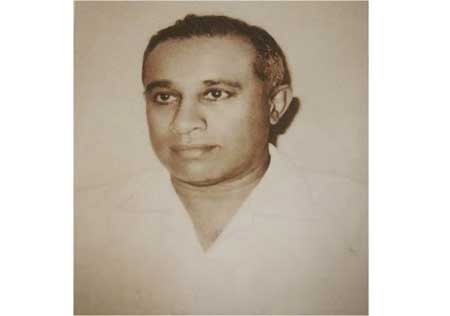
In the present context of rising prices of essentials, after food, the people are most hit by the high prices of medicines. With the fact that there is a severe shortage of medicines in the Government hospitals, patients are compelled to buy them from private pharmacies.
Though a few of them sell medicines at a reasonable price keeping an acceptable profit margin, unfortunately, a majority fleece the patients. Many poor patients can afford to buy only a portion of the prescribed medicine or not at all, and fail to recover from their illness.
Some patients with chronic illnesses like diabetes and high blood pressure suffer due to partial control of their illness, with long term consequences, which can also be life threatening.
This situation can be rectified if we return to the Senaka Bibile Medicinal Drug Policy that was in operation during the 1970 SLFP/LSSP/CP Coalition Government period. During that period, every Government hospital had practically every required medicine for every illness in adequate amounts to be given to patients free of charge. These were available in adequate amounts and the quality was assured. There were hardly any rejections.
The prices in the private pharmacies too were low and the quality good, so that the private health sector too benefited. This was because Senaka Bibile established the State Pharmaceutical Corporation (SPC) which purchased the entire requirement of both state and private sectors. Globally tenders were called for the bulk purchase of the entire requirement. He ensured that the quality was good by obtaining certificates of good manufacturing practice and by periodic checks for quality control, both internally and externally.
In calling for tenders, he only used the generic term (the proper scientific name) of each medicine. By avoiding the company trade names, all the bulk producers of expensive brands had to compete with all producers of the much cheaper generics of good quality. Most Brand producers were used to buying generics and after applying their brand name to jack up their prices considerably. The patients were fooled by intensive advertising of the particular brand, and claiming that it ensured quality. The doctors were given all sorts of perks and even big bribes to ensure that the doctor prescribe that particular drug. The pharmacists were also bribed to give that brand drug when the prescription carried only the generic name. By making the SPC the sole importer for the entire country requirement Prof. Senaka Bibile ensured that the price to the consumer remained as low as possible, specially because the same medicines were being given free in the Government sector. To reach the public, he not only opened many SPC sales outlets in the bigger cities, but he also promoted outsourcing to private pharmacies.
His policy enabled the consumer through the intervention of the government to get low price good quality medicine. By ensuring that the government hospitals had all the medicines for practically every disease free of charge, the poor greatly benefited. The WHO and UNCTAD acclaimed him for his wonderful policy.
The 35th World Health Assembly in Geneva in May 1982 made special mention of his achievement. They then proceeded to recommend the adoption of this policy by all Third World countries. It was when he went to Guyana at the request of UNCTAD to train people there on his method that his premature death at the age of 57 years took place under mysterious circumstances.
This was a great loss not only to the poor people of Sri Lanka but also to the poor people of the world. The Lanka Sama Samaja Party (LSSP) expected the State Pharmaceutical Corporation to mark the occasion by having the Annual Senaka Bibile Memorial Lecture. I am sorry to learn that this is not being held. The lack of time prevented the LSSP from having a commemorative meeting. I have to be content with sending this short article to the newspapers to mark the occasion.
I think it is my duty to mention that Prof. Bibile was born in Bibile on February 13, 1920. He had his secondary education at Trinity College Kandy and after completing his degree he received higher education in the University of Edinburgh, UK, specializing in Pharmacology. On his return to Sri Lanka he set up the first Department of Pharmacology at the University of Ceylon, Colombo. He was an excellent teacher and gave the students a clear understanding of the subject without the help of any notes.
With the establishment of the University at Peradeniya, he set up the Pharmacology Department. In addition, he developed a separate Education Unit for the academic staff to improve their teaching abilities. This was done when he became the first Dean of the Faculty of Medicine in Peradeniya.
He was a convinced socialist and joined the Lanka Sama Samaja Party at a very early age. He was an admirer of Dr. N. M. Perera and Dr. Colvin R. de Silva among other leaders of the LSSP. As students we visited his house once a week, where he explained the teachings of Marx, Engels, Lenin, Trotsky and other theoreticians in very clear and simple language. His ability as a teacher was a great help in acquiring this knowledge. In a way, we are indebted to him both for our knowledge of Medical Pharmacology as well as Marxism.
I had the good fortune to develop a lasting friendship with him. I still recall having dinner at his flat in Borella along with our wives Kamini and Leela the night before he left for Guyana. He mentioned that because of his policy which had greatly reduced the profits of the pharmaceutical drug industry that his life may be in in danger. He had received a warning not to go to Guyana.
He laughed this off and said that nothing would deter him from going ahead with spreading his ideas and helping the poor people in third world countries to benefit from his policy.
It was one of the saddest days of my life when I and Kamini went to Katunayake airport to receive Leela when she returned from Guyana with his ashes.
– Prof. Tissa Vitarana


The Cabinet of Ministers has approved the proposal presented by the President, in his capacity as the Minister of Finance,
Planning, and Economic Development to repeal Management Services Circular No. 01/2019 , dated 15-03-2019, issued regarding the implementation of development projects, and to issue a new management services circular including updated provisions instead.
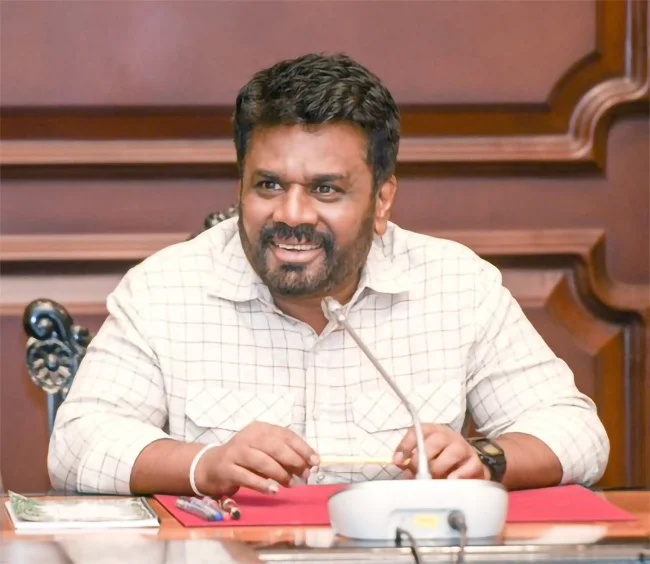
Chief Prelates of the Malwathu, Asgiriya, Amarapura and Ramanna Nikayas, in a joint letter addressed to President Anura Kumara Dissanayake, has expressed concern over the protracted delay in appointing a permanent Auditor General.
The Chief Prelates have said that the appointment of an outsider as the Head of the National Audit Office (NAO) responsible for ensuring transparency and accountability in public finances will be inappropriate.
The Chief Prelates have said that they are of the view that Dharmapala Gammanpila, a senior officer with extensive experience within the Auditor General’s Department, is the ideal candidate for the top post. They have also emphasised that his appointment will strengthen the government’s efforts to promote economic prosperity.
Chulantha Wickramaratne, who served as AG for a period of six years, retired in April 2025. Following his retirement, President Dissanayake nominated H.T.P. Chandana, an audit officer at the Ceylon Petroleum Corporation, as the AG. The CC rejected that nomination. Subsequently, President Dissanayake appointed the next senior-most official at the NAO Dharmapala Gammanpila as Acting Auditor General for a period of six months. Then, the President nominated Senior Deputy Auditor General L.S.I. Jayarathne to serve in an acting capacity, but her nomination, too, was also rejected. Many an eyebrow was raised when the President nominated O.R. Rajasinghe, the Internal Audit Director of the Sri Lanka Army for the top post. That nomination too was rejected. As a result, the vital position remains vacant since 07 December, 2025.
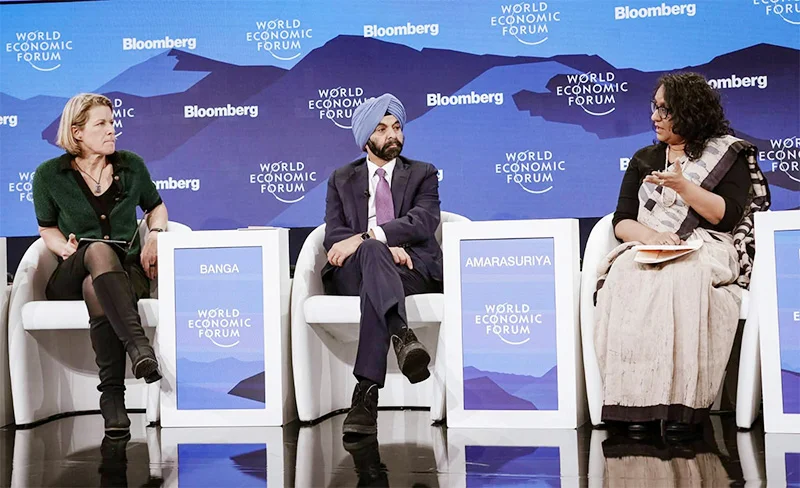
Prime Minister Dr. Harini Amarasuriya shared her views on how the emerging economies over the next decade should close the gap in employment models through expansion of skills and training. She was speaking at the “Stakeholder Dialogue – A Coming Jobs Crisis in Emerging Markets?” on the sidelines of the annual meeting of the World Economic Forum in Davos. She also highlighted the vital importance of recognising the contribution of different categories of workers to bring social stability and dignity of work.
The text of the statement issued by the Sri Lankan mission in Geneva: “The Prime Minister attended the 56th Annual Meeting of the World Economic Forum held in Davos, Switzerland, from 19 to 22 January 2026 at the invitation of the President and Chief Executive Officer of the World Economic Forum, Børge Brende. Over 60 world leaders from government, businesses, civil society and academia attended the Forum in 2026 held under the theme “A Spirit of Dialogue”.
The Prime Minister participated in a panel discussion and high-level dialogue at the Forum while also holding bilateral meetings, addressing high-level platforms on women leaders and tourism, and holding business engagements. She shared Sri Lanka’s experience of resilience and recovery, following Cyclone Ditwah and Government measures to establish economic stability, build investor confidence and commitment to removing inequalities.
Prime Minister Amarasuriya also joined a dialogue at the “Strategy Session – Reskilling Revolution: Shaping the Future of Global Talent” at the Forum, which discussed the challenges posed by technological advancements to the world of work.
On the sidelines of the WEF 2026, the Prime Minister delivered the keynote address at the “World Women Davos Agenda 2026,” organised by the World Woman Foundation, and highlighted the importance of creating a political culture where women can engage in decision-making, at policy level, with confidence and dignity.
Joining the high-level dialogue at the Global Tourism Forum in Euronews Hub, under the theme “Tourism as Soft Power and Diplomatic Capital”, Prime Minister Amarasuriya highlighted Sri Lanka as an example of hope, resilience and recovery in an increasingly unstable world with multiple conflicts. She also underscored the diversity of attractions making Sri Lanka a unique experience and a place to build connections and relationships.
The Prime Minister held a bilateral meeting with the President of Singapore Tharman Shanmugaratnam who shared Singapore’s experience in restructuring the country’ s education model giving greater focus to vocational education. Prime Minister Amarasuriya also met with the President of the Asian Development Bank (ADB); Masato Kanda and Managing Director of the International Monetary Fund (IMF); Kristalina Georgieva, and discussed Sri Lanka’s engagement with these two institutions particularly following the devastation and damage caused by cyclone Ditwah.
Discussions were also held with EU Commissioners for International Partnerships and for Preparedness and Crisis Management. During a meeting with the recently appointed Administrator of the United Nations Development Programme (UNDP) Alexander De Croo, Prime Minister Amarasuriya expressed gratitude for the continued support of UNDP in various social development activities in Sri Lanka.
The Prime Minister’s business engagements included Chairman of A.P. Moller Holding (MAERSK); Robert M. Uggala, Chairman of Menzies Aviation; Hassan El Houry, and separate meetings with the Swiss business community, convened by the Swiss Asian Chamber of Commerce and the Sri Lankan business community in Switzerland.
On the sidelines of the Forum, Prime Minister Amarasuriya was able to visit the Hamiltan Medical AG; a key medical production company specialising in ventilators, and Variosystems; a leading global partner for electronic solutions, with a presence in Sri Lanka. The visits focused on studying their business model that includes providing apprenticeships for vocational and technical education.
The Prime Minister was accompanied by the Minister of Labour and Deputy Minister of Finance and Planning, Dr. Anil Jayantha Fernando, and Ambassador and the Permanent Representative of Sri Lanka to the United Nations in Geneva, Himalee Arunatilaka.”

New circular to replace Management Services Circular No. 01/2019

The RAPP sheet: Steve Smith, Daryl Mitchell, Umesh Yadav among over 1300 players

U19 World Cup: Pakistan overcome New Zealand by 8 wickets

U19 World Cup: Vihaan Malhotra ton headlines India’s massive win

Dry weather will prevail in most parts of the island

Nigeria president ‘in great shape’ after falling at Turkey reception

‘Dates have the highest sugar content to fight Coronavirus’

Sunday Island 27 December – Headlines

#SundayIsland 17th December – Headlines

Sunday Island – 28th March

Sunday Island Headlines – 21 March

Sunday Island – 21st February – Headlines
-
 Business2 days ago
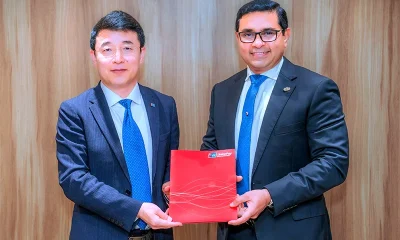
ComBank, UnionPay launch SplendorPlus Card for travelers to China
-
 Business3 days ago
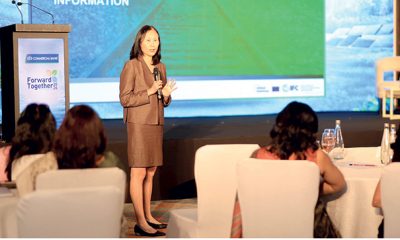
ComBank advances ForwardTogether agenda with event on sustainable business transformation
-
 Opinion6 days ago
Remembering Cedric, who helped neutralise LTTE terrorism
-
 Business6 days ago
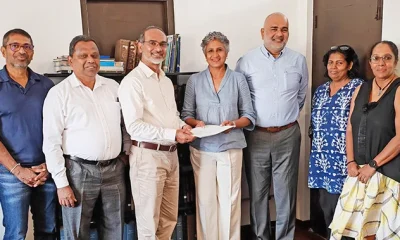
CORALL Conservation Trust Fund – a historic first for SL
-
 Opinion3 days ago
Conference “Microfinance and Credit Regulatory Authority Bill: Neither Here, Nor There”
-

 Opinion5 days ago
A puppet show?
-
 Opinion2 days ago
Luck knocks at your door every day
-
 Features5 days ago
‘Building Blocks’ of early childhood education: Some reflections