
News
Brace for fourth wave unless…


By Rathindra Kuruwita
If the Health Ministry did not expand PCR testing and gene sequencing, it was likely to lead to the emergence of a new wave of infections within four weeks, President of the College of Medical Laboratory Science (CMLS,) Ravi Kumudesh told The Island yesterday.
Kumudesh said that lab technologists had been asking the Ministry to expand testing capacity for two months and had presented a number of proposals on how to do it overnight. Kumudesh said that there was no immediate need for more PCR machines, and the ones already available could be used to conduct more tests if the Health Ministry so desired. “With the existing machines and the personnel handling them, we can easily increase PCR testing by 300% overnight”, he said.
“We have repeatedly told the government that we can address any issue in conducting PCR tests and releasing reports by deploying a few mobile PCR labs. This will help sort out many issues in regional towns especially those concerning PCR tests conducted on corpses. The government in fact had allocated money for this, but the Health Ministry is delaying the purchase of the required equipment,” Kumudesh said.
Kumudesh charged that it could only be seen as a deliberate attempt to sabotage the introduction of mobile PCR labs.
The collection of samples, even at hospitals had dropped significantly. There was no attempt to test potential hotspots and preempt any outbreaks, Kumudesh said, adding that the data issued by the Ministry did not reflect the ground realities.
“We saw similar developments in late March and early April. We will again end up making wrong decisions. It is highly likely that we will see a new outbreak in about four weeks. The only thing we have to tell people is that they should not let their guard down.”
The CMLS President said that none of the government labs had a gene sequencing machine and that only the University of Sri Jayewardenepura conducted those tests. The university only sequenced a very limited number of samples and the government had gagged academics, thus preventing the general public from knowing what the university had discovered. Kumudesh said that a gene sequencing test would cost only about Rs. 10,000.
“Again, this is not a financial problem. The University never studied samples collected countrywide. We have told the government from last year that, if the government labs are given facilities, we can do comprehensive gene sequencing within a month. We have also given a proposal on how we can increase daily PCR testing to 75,000. The government has allocated some funds, but again the Ministry is not doing the needful,” he said.
Sri Lankans had controlled three COVID-19 waves by making great sacrifices. However, those in charge dropped the ball at the tail end of each wave, Kumudesh said, flaying senior Health Ministry officials for making illogical claims that made people lose faith in the system.
“Earlier this week, a journalist asked a senior Health Ministry official whether policemen, who scuffled with protesters near Parliament, should also be placed under quarantine. The official said that policemen had been given both COVID-19 vaccines. This is ridiculous; you can get the virus even if you get both jabs. Even those who have taken both jabs have to adhere to health guidelines. If they are immune to the virus, the Health Ministry should mention this in their guidelines.”


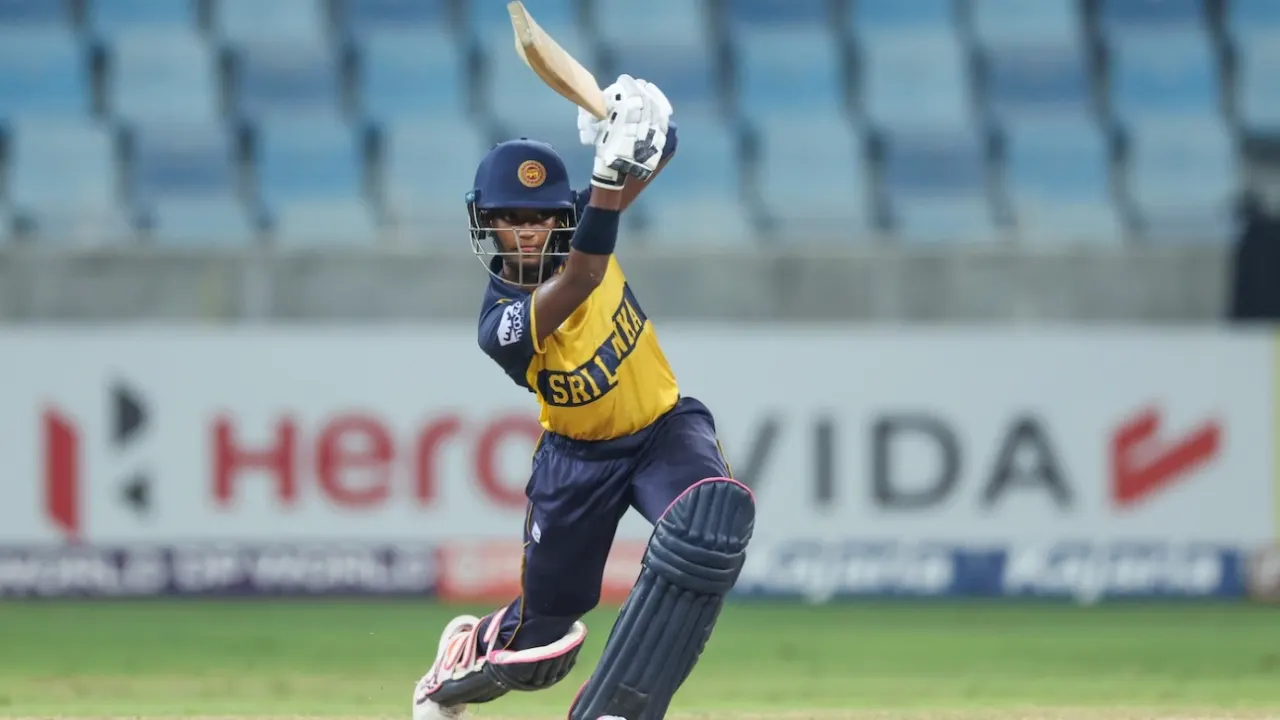
The quarter-finals of the Asian Games women’s competition, putting top-notch teams against teams without much experience of playing at the highest level, were expected to be mismatches. It took till the third game – Bangladesh vs China was washed out and Thailand gave Pakistan a fright for a proper one-side affair, though, as Sri Lanka bashed 160 after opting to bat, and their bowlers then stopped Malaysia 86 runs short.
Fresh off their appearance in the final of the Women’s T20 Asia Cup, Sri Lanka were always expected to dominate, but it didn’t quite start the way they wanted, with Imesha Dulani run out for another low score in the third over – she hasn’t topped 25 in eight innings since her century against Pakistan on July 31.
Chamari Athapaththu, however, stitched together an 80-run stand off just 53 balls with Hasini Perera for the second wicket, scoring 56 runs in 27 balls to Perera’s 23 in 26 in the collaboration. After the two batters fell, Kavisha Dilhari played a similar role to Athapaththu in the stand with Harshitha Samarawickrama, scoring 36 in 19 in a stand worth 62 in 37 balls.
Athapaththu top-scored with 63 in 37 balls, while Dilhari’s unbeaten 44 came off just 27 balls. For Malaysia, offspinner Nurin Imanina impressed with 3 for 29 from her four overs, picking up all the wickets to fall to bowlers.
In reply, Malaysia were three down inside the powerplay, with Dilhari picking up two of the wickets to fall on her way to returns of 2 for 4 from three overs. Athapaththu chipped in with two wickets of her own to finish with 2 for 3 from two overs, while Mithali Ayodhya got 2 for 15 from three.
It’s not like there was no resistance from Malaysia: Winifred Duraisingam scored 28, though it took her 47 balls to do it, while Mahirah Izzati Ismail scored 24, another slow effort, taking her 42 balls.
Scores:
Sri Lanka Women 160 for 4 in 20 overs (Athapaththu 63, HasinMithali Ayodhya 2-15i Perera 23, Kavisha Dilhari 44*, Harshitha Samarawickrema 25; Nurin Imanina 3-29) beat Malaysia Women 74 for 7 in 20 overs (Winifred Duraisingam 28, Mahirah Izzati Ismail 24; Mithali Ayodhya 2-15, Kavisha Dilhari 2-04, Chamari Athapaththu 2-03, ) by 86 runs
[Cricinfo]

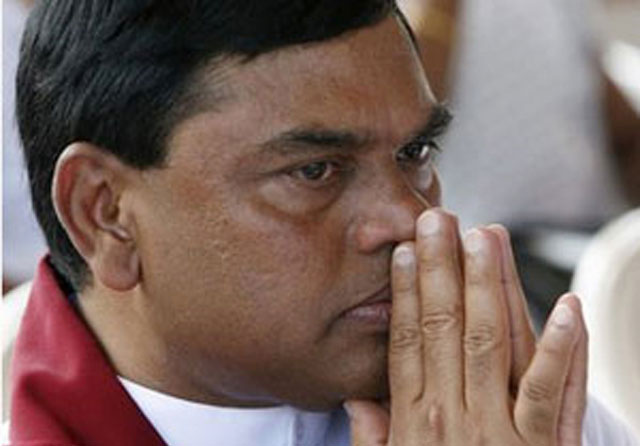
Govt. is finalising extradition proceedings against Basil to have him stand trial here in respect of several cases
By Norman Palihawadane
The process of having former Minister Basil Rajapaksa extradited from the US to Sri Lanka was being finalised, Police Headquarters sources disclosed yesterday.
The government has formally sought assistance from the United States government to extradite former Minister Basil Rajapaksa, as multiple courts have reissued arrest warrants over his failure to appear before them in connection with two separate criminal cases, a senior police officer told The Island.
The officer, speaking on condition of anonymity, said matters pertaining to obtaining US government authorities’ assistance to extradite Rajapaksa were now being finalised.
Police headquarters sources said law enforcement agencies were currently evaluating red notices, which request the location and provisional arrest of a person pending formal extradition.
The CID and Police Headquarters earlier initiated steps to seek INTERPOL assistance to secure Rajapaksa’s return to Sri Lanka to face court proceedings relating to the two cases in which arrest warrants have been issued against him.
Rajapaksa is believed to be residing in Los Angeles, United States.
The Matara Chief Magistrate’s Court on July 21, 2026, reissued an arrest warrant for Rajapaksa after he failed to appear before court for the second time in connection with a case involving the alleged purchase of a 1.5-acre coconut estate on Eliyakanda Road in the Brown’s Hill area of Matara.
The case relates to the purchase of the property for Rs. 60 million.
The case was filed by the Police Financial Crimes Investigation Division and names Basil Rajapaksa and several other accused, including Ayoma Galappaththi, identified in court reports as the sister of Rajapaksa’s wife, Tissa Galappaththi, and Muditha Jayakody.
However, officials acknowledged that seeking US assistance would only begin a formal international process and would not automatically result in Rajapaksa’s arrest or return to Sri Lanka. Sri Lankan authorities would need to submit court orders, details of the alleged offences, and other supporting documents through the appropriate diplomatic and judicial channels. Any request would then be considered by the relevant US authorities under American law and applicable legal arrangements.
Sources at the Foreign Ministry said sealed correspondence had been exchanged between Sri Lanka’s Ministry of Foreign Affairs and the Legal Department of the US State Department relating to corruption allegations against members of the Rajapaksa family residing in the United States.
The legal foundation for any extradition is the bilateral treaty between Sri Lanka and the United States signed in Washington on September 30, 1999. The treaty applies the principle of dual criminality, meaning authorities must show that the underlying conduct amounts to a crime in both countries. Rajapaksa’s status as a United States citizen would not, on its own, make him immune from a valid request under the treaty’s provisions.

Non-communicable diseases (NCDs) account for 80% of all deaths in Sri Lanka, with high blood pressure and diabetes among the leading causes, Secretary to the Ministry of Health and Mass Media, Dr. Anil Jasinghe, said early this week.
Dr. Jasinghe pointed out that the two conditions were interrelated and could lead to a range of serious health complications, with heart attacks being among the most severe consequences.
Dr. Jasinghe made these remarks while attending the commencement of construction of a modern Cardiac Care Complex at the Anuradhapura Teaching Hospital on Wednesday (16).
The Health and Mass Media Ministry Secretary said:
“The main issue is that these two diseases are interconnected and cause a range of complications in a person’s health. Looking at the current situation in Sri Lanka, only around 50% of those suffering from high blood pressure are under effective control. Similarly, only around 25% of diabetic patients are under proper control. As a result, this has now become a major problem in society.
“The most serious complication associated with both these diseases is Myocardial Infarction (MI), or a heart attack. This has also become the
leading complication. So, how do we control this modern epidemic? This is the biggest challenge before us.
“While establishing modern facilities across the country, our health system must also recognize the changes that have taken place in the demographic structure of our population and disease patterns. Accordingly, our health system must be adapted to suit these changing circumstances.
“Under the policies of the government led by the President and the guidance of the Minister of Health, the Ministry of Health and Mass Media is currently implementing a major programme in this regard. Its three main components are Arogya, Cluster Systems and High-End Care Institutions, which need to be developed to suit the requirements of our health system.”

Charani, Shafali power India past Japan and into Asian Games semi-finals

Athapaththu and Dilhari muscle Sri Lanka past Malaysia in mismatch

Abhishek Sharma hits record T20 ton as India beat Afghanistan by 127 runs

Trump administration approves sale of F-35 jets to Saudi Arabia

Banton steers England into unassailable 2-0 series lead

Showers expected in the Western, Norrh-western and Sabaragamuwa provinces and in Galle, Matara, Kandy and Nuwara-Eliya Districts.

‘Dates have the highest sugar content to fight Coronavirus’

Sunday Island 27 December – Headlines

#SundayIsland 17th December – Headlines

Sunday Island – 28th March

Sunday Island Headlines – 21 March

Sunday Island – 21st February – Headlines
-

 Latest News7 days ago
Sri Lanka thwart Fatima Sana challenge to secure Asia Cup final spot
-

 News5 days ago
Gnanasara Thero absconding after SC ruling
-

 News6 days ago
Ammunition cache found in old Kandy bungalow
-

 News6 days ago
Prof. Pieris says Buddha Dhamma recognised as source of law under Constitution
-

 News6 days ago
Green Climate Fund (GCF) Regional Dialogue for East and South Asia will be held from 14 to 17 September 2026 at Cinnamon Life at City of Dreams Hotel, Colombo
-

 Opinion4 days ago
From Galkissa (Mount Lavinia) to Tambuttegama
-

 News7 days ago
Bambalapitiya Railway Station renovated under the “Dream Destination” project opened to the public
-

 Latest News6 days ago
ITS Giuseppe Garibaldi’ departs Colombo