
Business
Book launch commemorates 125th birth anniversary of Professor Gunapala Malalasekera

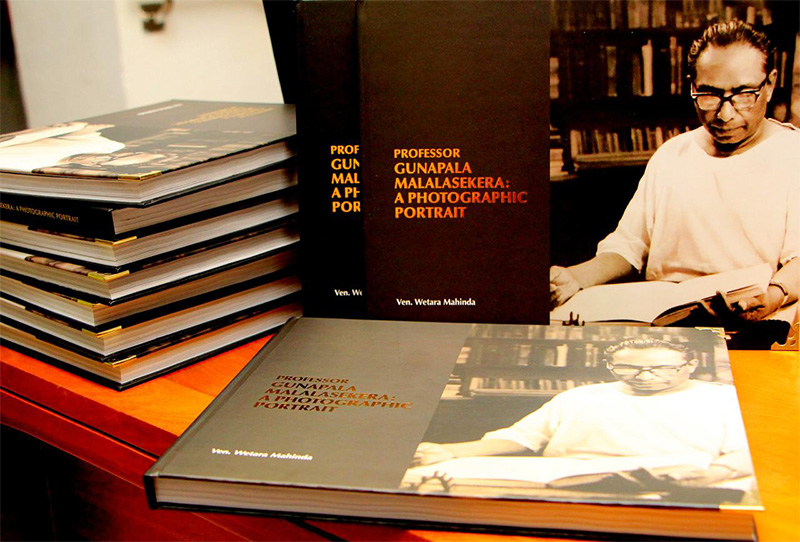
The Malalasekera Foundation proudly launched “Professor Gunapala Malalasekera: A Photographic Portrait”, commemorating the 125th birth anniversary of the legendary scholar and cultural advocate, Professor Gunapala Piyasena Malalasekera. Authored by the Venerable Wetara Mahinda Thero after eight years of meticulous research, the book is a heartfelt tribute to Professor Malalasekera’s unparalleled contributions to education, Buddhism, and the cultural heritage of Sri Lanka.
Professor Malalasekera, often referred to as “GPM,” was a visionary who dedicated his life to educational reform and national pride amidst the challenges of colonial rule. Inspired by influential figures within the Buddhist educational movement, he played a significant role in shaping Sri Lanka’s national education system and instilling cultural values that resonated across generations.
At the launch event, held at the National Archives auditorium in Colombo and attended by family, foundation members, scholars, and civil activists, the book’s author, Venerable Wetara Mahinda Thero, shared his motivation for undertaking this significant project:
“The primary objective of launching this book stemmed from my readings of previous books published about Professor Gunapala Malalasekera. In studying these, I realized that some of his most impactful contributions to Buddhism and to our country had not been fully captured. I felt a strong need to create a comprehensive portrayal of Professor Malalasekera’s life, including a rich collection of portraits to bring to life the real moments and experiences that defined him.
“With this goal in mind, I embarked on an extensive research journey, traveling across the country to ensure this book accurately represents Professor Malalasekera’s legacy and makes it accessible to readers. I hope this book not only honors his remarkable life but also brings readers closer to his invaluable contributions.”
Ashan Malalasekera, Professor Malalasekera’s grandson and founder of the Malalasekera Foundation, expressed his appreciation for Venerable Mahinda’s dedication to the project:
“On behalf of the Malalasekera Foundation and our family, I am honored to share this message in recognition of Venerable Wetara Mahinda’s thoughtfully compiled work. A devoted scholar of my grandfather’s life, Venerable Mahinda has shed light on GPM’s enduring contributions to academia, Buddhist scholarship, and nation-building. This book reflects his significant influence in areas beyond his academic pursuits, including his humanitarian work and profound contributions to the arts. We extend our deepest gratitude to Venerable Mahinda for his relentless dedication to preserving GPM’s legacy.”

Business
A sustained wave of Indian assistance to Sri Lanka showcases defining shift in developmental diplomacy
By Sanath Nanayakkare
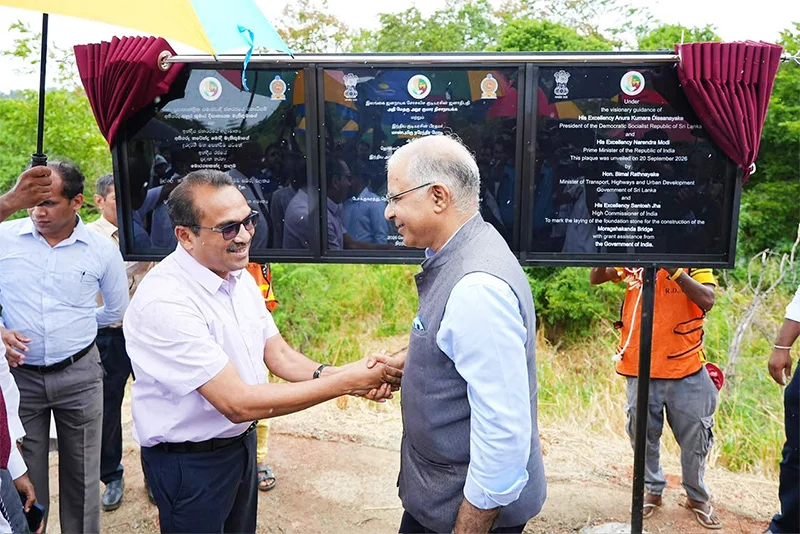
An evolving approach to regional diplomacy was brought into sharp focus with the recent foundation-laying ceremony for the Moragahakanda Bridge in Matale.
Jointly launched by Indian High Commissioner Santosh Jha and Minister of Transport, Highways and Urban Development Bimal Rathnayake, this 175-metre span is far more than a routine civil engineering project. It serves as the physical manifestation of a broader USD 450 million reconstruction package deployed by India in the wake of Cyclone Ditwah, which severely fractured the island’s transport arteries.
Foreign aid is too often discussed in cold, macroeconomic abstractions. Yet, every so often, a consistent pattern of targeted assistance alters the landscape of bilateral relations, offering a clear window into how regional partnerships evolve out of necessity and goodwill.
Across the country today, a remarkable narrative of multi-layered cooperation is unfolding.
From critical post-disaster infrastructure and maritime routes to grassroots agricultural uplift and institutional capacity-building, India’s developmental footprint is shifting unmistakably toward an organic, people-centric model of shared resilience.
What distinguishes this latest wave of assistance is its deliberate pivot from emergency support to permanent, climate-resilient transformation. When Cyclone Ditwah initially paralysed regional connectivity, India’s immediate response was marked by the rapid deployment of temporary Bailey bridges.
Today, that swift humanitarian intervention has matured into a structural blueprint: the Moragahakanda project stands as the vanguard of 13 permanent bridges being built across Sri Lanka’s provinces by IRCON International Limited, complemented by upcoming railway upgrades and modern signaling systems backed by a USD 250 million Line of Credit.
The true signature of this diplomatic shift lies in its breadth, operating simultaneously across multiple tiers of society:
Institutional Governance: Delegations of Sri Lankan parliamentarians and senior administrative officers regularly travel to India to study public policy frameworks, legislative systems, and administrative practices.
Economic Lifelines: Financial mechanisms, such as viability gap funding for the Nagapattinam-to-Kankesanthurai passenger ferry service, continue to shrink geographical distances, reviving coastal commerce and tourism.
Grassroots Empowerment: Specialised capacity-building programmes tailored for local stakeholders – ranging from state officials to rural dairy farmers -ensure that development reaches deep into the island’s hinterlands.
By aligning immediate disaster relief with long-term infrastructure, institutional capacity, and human capital, India and Sri Lanka are demonstrating how neighbours can build safer, more connected futures together, grounded firmly in mutual respect and tangible progress.

By Ifham Nizam
The Central Environmental Authority (CEA) yesterday urged visitors to the Colombo International Book Fair to bring reusable bags to carry their purchases, as part of a drive to reduce single-use plastic waste at the event.
CEA Director General R. S. P. Kapila Rajapaksha said large quantities of plastic, particularly “sili sili” bags, had been used to carry books at previous book fairs.
“We urge visitors to bring an environmentally friendly, reusable bag when they come to buy books. This simple step can help reduce the use of single-use plastic and protect the environment,” Rajapaksha said.
The book fair opens on September 25, with the CEA and the Sri Lanka Book Publishers’ Association launching an awareness programme targeting book sellers, food vendors and visitors.
The programme will be conducted under the theme “Read Smart, Carry Smart”, focusing on reducing polythene and plastic use throughout the exhibition.
The CEA said the use of plastic bags is also subject to regulations issued under the Consumer Affairs Authority Act. Gazette Extraordinary No. 2456/41, dated October 1, 2025, prohibits the free distribution of handled “sili sili” bags to consumers. Where such bags are sold, the charge must be included in the customer’s bill.
The CEA said food outlets at the book fair would also be required to comply with regulations prohibiting a range of single-use plastic products.
These include plastic straws and stirrers, disposable plastic plates, cups, spoons, forks and knives, as well as polythene-based food wrappers commonly known as lunch sheets.
The CEA said it had discussed the requirements with relevant stakeholders and reached agreement to ensure that prohibited products are not used at food outlets within the exhibition premises.
The authority urged both traders and visitors to cooperate with the initiative and help make this year’s book fair a more environmentally responsible event.

Partnership signals renewed foreign investor confidence in Sri Lanka as a destination and in the long-term growth of its hospitality sector
Japanese investor Yoshimichi Watanabe has entered into a partnership with Colombo Stock Exchange-listed Hunas Holdings PLC, in a move that comes as the diversified conglomerate prepares a significant expansion of its hospitality and real estate interests in Sri Lanka.
The partnership brings foreign capital and international market experience into one of Sri Lanka’s fastest-diversifying listed groups at a point when the Group is actively building out its pipeline across both sectors. Hunas Holdings is currently evaluating a series of hospitality and real estate developments in Sri Lanka, with further announcements expected in the coming months.
Hunas Holdings PLC operates across hospitality and leisure, real estate, renewable energy and agriculture, with a hotel portfolio that includes Hunas Falls in Elkaduwa
For Sri Lanka, the significance of the partnership extends beyond the two parties. Inbound investment of this nature, from an investor with direct and sustained experience of the market, is a measure of returning confidence in the country as a destination and in the underlying fundamentals of its hospitality sector, at a time when the industry is repositioning towards higher-value, experience-led travel.
Watanabe brings investment experience across e-commerce, hospitality and real estate in Japan and in international markets including Bali, Indonesia. He has also maintained a relationship with Sri Lanka over many years, having made multiple investments in the country, giving him first-hand insight into its business environment, regulatory landscape and long-term potential.

A Joint Regional Initiative to Ensure the Digital Safety of Children

PM meets with IMF delegation

Ms. P. M. Jayadeera (Engineer) appointed Director General of Irrigation
Sri Lanka Cricket Draft Bill to be gazetted
Cabinet approves purchase of machinery for the Sri Lanka Land Development Corporation
Cabinet approval for Project to Build Secure, Skilled, and Empowered Community for families resettled at the at Kalinga Mawatha, housing scheme

‘Dates have the highest sugar content to fight Coronavirus’

Sunday Island 27 December – Headlines

#SundayIsland 17th December – Headlines

Sunday Island – 28th March

Sunday Island Headlines – 21 March

Sunday Island – 21st February – Headlines
-

 News6 days ago
US embassy won’t comment on IGP’s probe into joint drug raid
-

 News4 days ago
Shanakiyan urges urgent action over reported death sentence for Lankan in Saudi Arabia
-

 News5 days ago
Bid for Basil’s extradition nears final stage: Police
-

 News3 days ago
Namal Rajapaksa Buddhist gambit fails, bail denied
-

 Business6 days ago
All-new Bolero MaXX unveiled in Sri Lanka
-

 Opinion6 days ago
A journalist who wrote across the divide
-

 Features3 days ago
Why the spelling Sri Lankan names in English vary
-

 Features3 days ago
Three bands, a new identity: Sri Lankan wolf snake recognised as distinct species