
Features
Boi Kollo – An almost forgotten tragedy

By Capt Elmo Jayawardena
Elmojay1@gmail.com
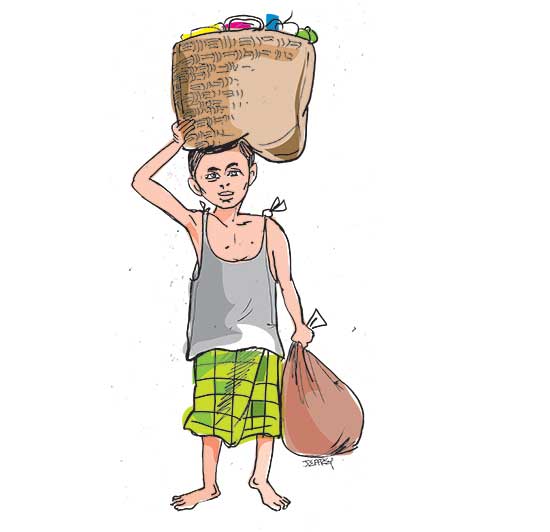
He first went to work at the very tender age of six, just a little kid, that much Yoga recalled. He had attended a village school for two days and quit. He said he could not understand anything the teacher taught. That was good enough a reason for Yoga to obliterate any form of education from his entire life and become illiterate. They lived on the Southerland Estate, a remnant of the British Colonial system. Estate labourers’ ‘line-shacks’ had limited room for the family. The little boy was an inconvenience that needed to be sorted out. Of course, he was an ill-affordable extra mouth to feed in the already overcrowded one-roomed hovel they called home. That was how Yoga left his Southerland Mansion to commence his lifetime career of servitude as a Boi Kolla (BK) to run and fetch at the beck and call of whoever gave him a meal and shelter.
How he got on in life is no different to what others of his kind has gone through in the Boi Kolla business. Mundane and monotonous were the days from sunrise to sunset with hardly any change in the script. Yet, Yoga has got through what fate dealt him and done his bit to run through the years as best as he could. It was simply a matter of survival through the wearisome days that dawned on him with an obscure future. This was unfortunately the cast iron inheritance of a so-called Boi Kolla.
If you have anyone in your family, maybe a son or a grandson, just think what it would have been to send him away to work as a Boi Kolla, at age six. But then, it was a norm of the era when talking of Ceylon post-independence. Often one would see a little kid sweeping a yard with an ekel broom taller than he, wearing a standard uniform – an oversized hand-me-down shirt or a ‘bullet holed’ sleeveless banian. The sheer unfairness of it all was pretty evident, but no one took any notice of it or, maybe they did not want to notice. After all, nobody knew anything about child-labour, and so, nobody cared much about a Boi Kolla.
Things have changed now – free education made the hallmark difference by breaking open the affluent locks that corralled the poor. It was free education that enabled all and sundry to get into reasonable schools, which taught them free even at tertiary level. Thank God for this system that opened the doors of education for the poverty-stricken pedestrian. The Boi Kolla gradually went out of the system, by gaining a long-denied foothold to stand on a somewhat level playing field by going to school.
That is how the ‘would have been’ BK of Ceylon came out of the woodwork and merged into society vying for lucrative employment. Today, this tragedy is almost over. The Boi Kollo brigade is slowly disappearing from our society – what remains are only remnants of that forgotten travesty.
I write these lines for us to walk back in years and recall those Boi Kollo who served us in our homes. I am sure most of you will have remembrances that will bring back faces and names to mind. The ones who came with nothing and left with nothing and who worked 24/7 for three square meals and a paltry payment that was called a salary. Such things did happen and most definitely they were not fair by any imaginable standard. Let us spare a thought for these BKs and be grateful they were there to make our lives easy. The treatment they received depended on whom they worked for and I would rather leave that part out, as in most cases, it was a rags-to-rags story with very few exceptions.
Let’s look at a prototype Boi Kolla to muscle the story. They usually came from far off villages and barely had any education. Whatever tasks they had to do were accomplished with ‘on-the-job training’ given by the household or a senior domestic. They were much depended on the bosses they served—drawing water from a well, sweeping the house, opening and closing gates when the master tooted the horn, bathing and feeding the dogs and looking after and playing with the children, the BKs sure were great all-rounders. It was the Boi Kollo who invented the kade yana business. Go buy bread; bring vegetables; we need meat, maybe a bottle of Orange Barley, a horde of other items including newspapers and cigarettes – anything missing in the kitchen down to a box of matches – it was the BK who sprinted to the shop to fulfil the need. The same ‘Kade Yana Business’ has now expanded and magnified to such an extent that sadly, it has even reached Diyawanna Oya!
So, what became of the Boi Kollo when they grew older? As long as they stayed in their semi-slave status, they got food to eat and a roof to shelter and a mat to rest their weary heads. The remunerations received were never enough to save except to send home a few rupees to help the ageing parents. The silver lining of their lives was the annual pilgrimage to their villages in April. This was to celebrate the Sinhala/Tamil New Year – perhaps, the only time-off permitted for the whole year. The BKs collected whatever monies they had accumulated and negotiated advances from future salaries and hightailed with excitement to their distant homes. There among the poor relatives, they enjoyed the Rockefeller status busting the little hard-earned money they had so gallantly saved. The journey back was with empty pockets, penniless to be exact, and dragging feet to slog and slave again till the next New Year came around for their annual visit home.
As for the big picture, the Boi Kolla business was a sad answer to poverty. Working in a house as a BK taught them nothing other than how to be at the beck and call of their masters. No education gained, hardly any skills learned, and youthful years wasted with nothing really achieved. There were a few lucky ones who became drivers and others who advanced to work in shops while most of them went back to their villages to work the paddy fields till the next election came to ‘star gaze’ in the hope of getting a better job. A few remained on the job under kind masters and grew old as a valued member of the family.
The one rainbow in this Boi Kolla’s dark cloud of life was finding love. Of course, there were the roaming Romeos among the BKs. Why not? Romance may have been the privilege of the rich, as Oscar Wilde described, but a little ‘hide and seek’ was good for the soul and was always a satisfying adventure for the willing BKs.
“Nonage aalay, gei mada salay – api dennage aalay, kussiya mulle”.
(the lady’s love is in the living room and our love is in the kitchen corner)
So ran a popular Baila heralding the domestic amorousness between a BK and his ‘Kussi Amma’ girlfriend. Such Cupid interactions were not common but off and on they did make the headlines as if there was a law against it. Some even formalized the relationship by getting married, but to most it was a bit of ‘one day cricket’ or could be even a T20 that coloured the drabness of their day-to-day existence. All in all, they did have fun times even though few and far between. Yes, there were the Romeos and the Juliets playing ‘Hora Police’ whilst the bosses slept.
I was four years old when I started schooling and every morning a demon carried me to school. I mean that was his name – Demon, our ‘Boi Kolla.’ I can still picture his face – a vague memory of a curly head with a huge grin, but sadly, I have no other recollection. But I do remember the Demon who carried me to school. Similarly, the renowned international cricketer Duleep Mendis did his batting at home as a kid, tennis ball stuff. The Boi Kolla was the ‘shy-ball pacee’ who was only known as Andy Roberts. (Log in to Google for a fairy tale episode – “Andy Roberts by Elmo Jayawardena”). Old Andy is still around – I see him off and on, married with kids and doing reasonably well in life. I am sure Duleep would remember him and his bowling, the local Andy Roberts who played cricket with him.
I guess all of us who came from that generation can think of a Boi Kolla who lived in our homes and played some part in our lives. There was Hong Kong Banda whose Master took him to serve in Hong Kong. Sumanadasa who became Sam and veteran actor Jagath Chamila received the Best Actor award in New York for portraying him. Andrew Machang lived down our lane and Weera who still makes excellent seeni-sambal goes to church every Sunday to keep the Sabbath holy and Pandithaya, the ardent UNPer who thrashed his radio on the ground when his Party lost the election. There are many more such colourful BKs in our lives – yours and mine – it is worthwhile taking a walk down memory lane to find them. They are all gone now, and we can only hope that life has been kind to them.
Do we remember our BKs? Mostly ‘no’ but, off and on their names pop up with an anecdote from the past at family gatherings when seniors recall incredible BKs who served them. Names and deeds are recollected and old stories are repeated – some of great hilarity – events surrounding an old BK. The newer generations listen in disbelief having no clue what the older folks are talking about. This is 2021 and one seldom comes across a Boi Kolla in a middle-class home now as it was in the days gone by. That in itself is a great victory for our society, a giant step towards equality that would be the catalyst to make Lanka the Paradise it ought to be.
How I wish we had a Remembrance Day or at least a stamp in honour of all the domestics who served us and made our lives easy. Their sweat and tear contributions were never measured, seldom recognized nor are they recorded anywhere. It was sheer poverty that sent six-year-old children the likes of Yoga to work as Boi Kollo in unknown homes. Hobson’s choice I would say that led to a lifetime occupation pawning their tomorrows for their daily bread.
That is the truth, whether we remember or not.
That is the tragedy we all saw and pretended not to see.


Features
Combining local resources,traditional knowledge and science to build a food-secure Sri Lanka


World Food Day 2026: Innovating today for a better food future
by Dr. Kaushalya Wijayasekara
What will be on the Sri Lankan dinner table ten years from now? Will our children be able to get nutritious food at a price their families can afford? Will farmers be able to grow enough despite changing weather and rising costs? And how much of the food we produce will actually reach the consumer, instead of being lost or wasted along the way?
These questions can’t wait. A farmer faces unpredictable weather. A family faces rising food costs. Fruit goes unsold after a good harvest. Some children do not get enough nutrition. The future of food is tied to the future of Sri Lanka itself.
World Food Day 2026 is a chance to look beyond the immediate problems and ask whether we can build a food system that feeds our people well, gives farmers better opportunities, protects the environment and makes better use of what we already have. The answer can be yes, but we will have to think differently.
We are not starting from zero. Sri Lanka has diverse crops, fisheries, traditional food knowledge, indigenous varieties, research institutions, universities and a young generation able to create new solutions. What we need is to bring these together and act. Producing more will not secure our food future on its own. It will depend on how intelligently we produce, process, preserve, distribute and consume food.
Making more of what we already have
Innovation does not always mean inventing something new. Often it means finding better uses for the resources we have.
Sri Lanka grows traditional rice varieties, kurakkan, green gram, cowpea, jackfruit, breadfruit, cassava, sweet potato, coconut and palmyrah. All of them have great potential for modern, nutritious, value-added foods. Jackfruit and breadfruit can be made into flour and other convenient products. Traditional rice varieties can go into new foods that suit changing consumer needs. Palmyrah, with its strong cultural heritage, can create new income through better processing, packaging, quality assurance and market development.
The aim is to connect our traditional food knowledge with modern consumer needs and technology, while keeping our food heritage.
Stop wasting the food we produce
Reducing food loss and waste should be a major priority. Seasonal fruits such as mango, banana, papaya and pineapple can be lost in large quantities when production exceeds demand or when storage, transport and processing facilities are inadequate. With suitable technology, these fruits can become dried products, pulps, powders, beverages and other shelf-stable foods.
Agricultural and fisheries by-products are resources too. They could be turned into food ingredients, animal feed, bio-based products and other useful materials, which would move us toward a more circular food economy.
Technology alone is not enough. We need stronger local processing facilities, cold storage, efficient transport, collection centres and market information systems, especially close to where food is produced. Cutting food loss raises the value of what our farmers and fishers already produce.
Nutrition and food safety come first
Food security means more than having enough food. People also need food that is safe and nutritious.
Sri Lanka can develop affordable, nutritious foods from local pulses, grains, vegetables, fruits and fish. Children and other vulnerable groups should get particular attention. Schoolchildren in particular deserve a focus: safe, nutritious, locally sourced products for school feeding programs would support child nutrition, local farmers and domestic food industries at the same time.
Food safety must stay at the centre of food innovation. Good hygiene, quality control, laboratory testing, traceability and appropriate food safety systems are what make new products safe as well as attractive and nutritious.
A food system that can cope with climate change
Climate change is already affecting agricultural production, water availability, crop yields and food prices. We need food systems that can handle changing conditions. That means climate-resilient crops, efficient water use, soil and water conservation, better storage and resource-efficient food processing.
Traditional knowledge matters here. Generations of Sri Lankan farmers have developed practices suited to local climates and ecosystems. Combining that experience with modern science can give us solutions that fit local conditions and are sustainable. Technology alone will not build the future of food. Science, experience and local knowledge together can.
Give young people a bigger role
Sri Lanka’s universities have an important part to play in shaping our food future. Young people should be encouraged to identify real problems in the food system and work on practical solutions in areas such as food waste, sustainable packaging, nutrition, food safety, modernising traditional foods and digital technologies.
A good research project should not always end as a research paper. Where appropriate, research should be supported to move on to products, technologies, enterprises and community solutions. That needs stronger partnerships between universities and industry, along with mentoring, research funding, business support and market connections. If young researchers and entrepreneurs can turn their ideas into viable food innovations, both consumers and producers will benefit.
A pathway designed for Sri Lanka
We do not need to copy food-system models from other countries. We can build a pathway that suits our own resources, culture and needs. It would bring together local resources, traditional knowledge, scientific research, appropriate technology and entrepreneurship, with farmers, fishers, universities, research institutions, food industries, entrepreneurs and policymakers working side by side.
The goal goes beyond selling raw materials. We need to create more value, reduce waste, improve nutrition, generate jobs and strengthen rural livelihoods. This matters especially for small and medium-scale food enterprises, which can drive local economic development when they get the right technical, financial and market support.
The choices we make today
The food future will not create itself. It will be shaped by what we grow, what we research, what we process, what we consume and what we choose not to waste.
So, the question for World Food Day 2026 is this: what can we do today so that every Sri Lankan has safe, nutritious, affordable and sustainable food tomorrow?
The answers are already around us, in our farms, fisheries, food businesses, universities, laboratories and communities. We have the resources, the traditional knowledge, the scientific expertise and talented young people. What we need now is to connect them and act.
A better food future begins with the choices we make today.
Dr. Kaushalya Wijayasekara
Senior Lecturer, Department of Biosystems Technology, Faculty of Technology, University of Ruhuna

By Admiral Ravindra C Wijegunaratne
WV, RWP and Bar, RSP, VSV, USP, NI (M) (Pakistan), ndc, psn, Bsc
(Hons) (War Studies) (Karachi) MPhil (Madras)
Former Navy Commander and Former Chief of Defence Staff
Former Chairman, Trincomalee Petroleum Terminals Ltd
Former Managing Director Ceylon Petroleum Corporation
Former High Commissioner to Pakistan
The Digampathana suicide truck attack on 16th October 2006 remains the deadliest single strike in Sri Lanka Navy history, leaving scars that time cannot erase.
It was a seemingly ordinary Monday morning on 16 October 2006, but the calm of that day would soon be shattered in a way none of us could have imagined. As the Commandant of the Naval and Maritime Academy and Flag Officer Commanding Naval Fleet at Trincomalee, I was aware that a number of my cadets were travelling that morning, part of a convoy of fifteen buses carrying naval personnel from Trincomalee, Colombo, and other bases, heading toward Dambulla to rendezvous with another group. The convoy also included trucks and escort vehicles, a routine movement planned and coordinated with the army to ensure the roads were clear. The morning started quietly. Some personnel greeted friends, handed over their weapons, or strolled to a nearby tea shop. It all seemed so ordinary—too ordinary for what would come next.

Sri Lanka Navy sunk LTTE Ships carrying arms, ammunition and warlike materials thousand miles away from Sri Lanka in Indian Ocean in September and October 2007.
By late morning, both convoys had reached the small ground at Digampathana, near the Sigiriya junction, and personnel mingled briefly, unaware that a carefully orchestrated act of terror was waiting. Then, suddenly, an empty half-truck veered directly into the convoy. It exploded with a ferocity I can still recall as if it were yesterday. Nuts, bolts, and high explosives tore through the air. Pandemonium erupted instantly. I later learned that 107 of our naval personnel were killed on the spot and another 153 critically injured. The scene was indescribable—bodies scattered, vehicles mangled, personal effects strewn across the ground. I remember later hearing that the head of the suicide bomber was recovered more than 100 meters away from the blast, a grim testament to the sheer force of the explosion.
I was in my office at the Naval and Maritime Academy when my mobile phone rang. A young midshipman from the 21st intake called, his voice trembling: “Sir, there was a huge explosion at the convoy point! Many are dead … my batch mate Wijesundara is among them.” I immediately jumped into my jeep with my escort Chief Petty Officer and driver and rushed to Digampathana, relying on every ounce of my driving skill to reach the scene. The journey, which usually took little more than an hour, felt endless that day, each passing mile weighed down by dread.
When I arrived, I was confronted with a sight that no training can prepare you for. The injured were being rushed to Dambulla Hospital, where doctors and nurses worked tirelessly, improvising in ways that saved lives despite the overwhelming chaos. I went back to the site after visiting the hospital. The remains of our naval personnel were scattered across the ground, and someone had begun collecting weapons and protective gear. I immediately contacted Surgeon Rear Admiral Nico Jayasekara and received his instructions: collect all body parts in separate bags and transport them to the Trincomalee Naval Hospital mortuary. This gruesome work had to be done with care and dignity, and it filled the icebox in my vehicle. Through DNA testing initiated by Rear Admiral Nico, we were able to identify every naval personnel lost that day, bringing some closure to grieving families.
The Navy Commander at the time, Vice Admiral Wasantha Karannagoda, was devastated. I had worked closely with him and knew how deeply he cared for his men. He ensured that the fallen were honoured with full ceremonial naval funerals at Welisara Naval Base, attended by families and comrades. Sixty-seven funerals were conducted in a single day—a number that still haunts me.
The Digampathana attack remains the largest single loss of naval life in our history. It was a day of sorrow, but also a day that reinforced our resolve. The tragedy galvanized the Navy to target the LTTE Sea Tiger wing with renewed determination and reshaped our maritime operations forever. Every time I think of that day, I remember not just the lives lost, but the courage, professionalism, and dedication of those who survived, those who treated the injured, and those who ensured the fallen were honored properly. May the souls of our naval hero’s rest in peace, their sacrifice guiding us and inspiring generations of naval personnel to come.
Tales of Mystery and Suspense – 24
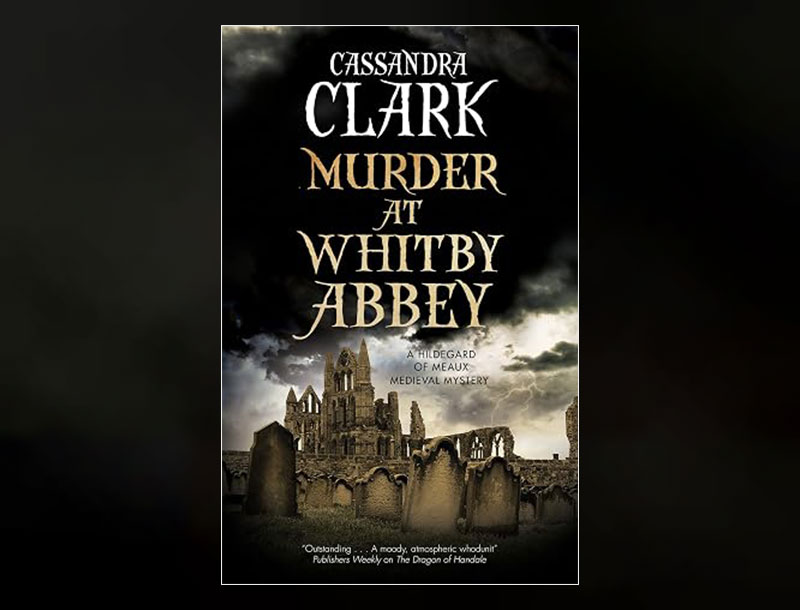
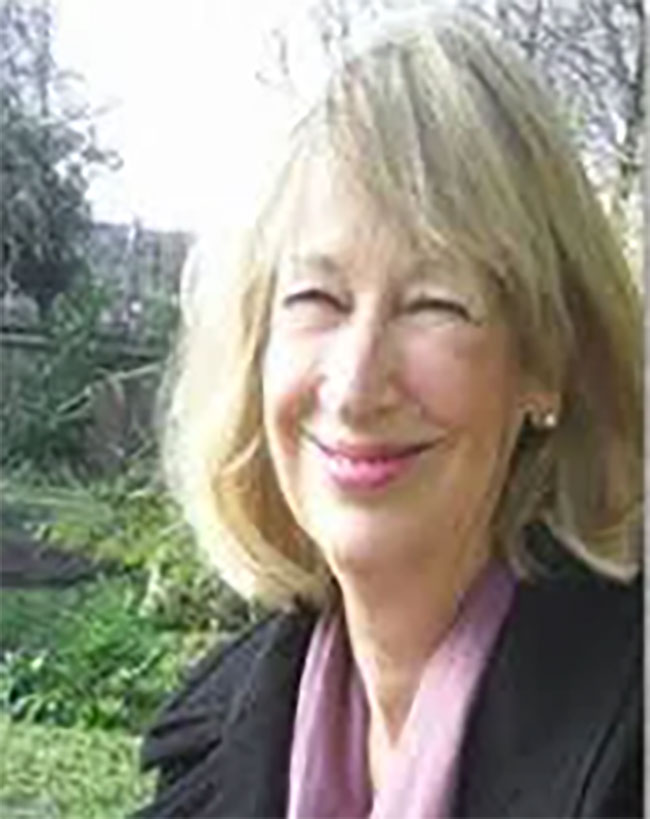
I was intrigued by the title of a book I found in a book drop at the condominium of a friend, Murder at Whitby Abbey, and I brought it home with me though I will not be able to return it in the near future. It was described on the cover page as ‘a standout in the crowded medieval mystery field’, though I fear I do not know of other books in this field, apart from the Cadfael series, which I have dealt with earlier.
The book, by Cassandra Clark, is set during the reign of Richard II and has as a backdrop his precarious position, which led to his being replaced, and murdered, by his cousin Henry, who reigned as Henry IV. It is a gloomy book, the action taking place in the twelve days of Christmas leading up to the Epiphany. And the gloom is pervasive, even though this is supposed to be a time of festivity, with mummers performing, and many of those in the guest house where the heroine stays going to town to enjoy themselves, with much drinking and much music, which also fills the guesthouse.
The heroine Hildegarde is a nun, sent to try to acquire a relic being sold by Whitby Abbey, though this was also a penance set by the Abbot of the monastery that governed her abbess because she had had sex with a man. Soon after she and her companions reach the Abbey set high on a cliff, she finds that there are other bidders, and soon suspects that the hierarchy, not perhaps the Abbot who seems a weakling, but his rapacious bursar, is determined to make money, and not above creating false relics to sell to several aspirants.
After Hildegarde and her Cistercian companions – Whitby is a Benedictine Foundation – two monks, Gregory and Egbert, and a young priest Mark, reach the abbey, they find that Aelwyn, a monk they had met on their way to the guesthouse had died. This was in the apple store, and they realize, when they find the surplices of novices stuffed into the air vents, that he had been left to suffocate in the overwhelming scent of apples.
Clark
The Cistercians are asked to look into the death, perhaps because they are likely to get no cooperation from the Abbey folk, but perhaps because those in charge are keen to know what happened. And the infirmarer, an old monk, suggests Hildegarde talk to a man called Edred who worked for the bursar, and had been a friend of Aelwyn’s. But Edred too is killed, before he can keep an appointment he had made with Hildegarde, drowned in a pool near the farmhouse of the Abbey.
Meanwhile tensions arise between the fisherfolk and the abbey for the bursar wants to charge them for using the beach that technically belongs to the abbey to dry their fish and their nets. This leads to physical battles, when the guards used by the abbey, under the command it seems of the bursar whose determination to make money is not resisted by the abbot and the prior, try to storm the area where the fishermen live.
Hildegard finds out more about what had happened through two youngsters, one of whom Torold is the son of Aelwyn by a woman who worked as a prostitute for a cartel, and with whom Mark fell in love. The other works on the farm and had seen Edred meet someone near the pool, after which that someone left the place by himself. And the boy had also found in the pool a sort of dagger with the seal of the abbey.
He and his dog, and Torold who follows her, rescue Hildegarde from a man at arms who has waylaid her and tries to rape her earlier. Escaping into the abbey she was nearly been raped then by the bursar, but she managed to escape, in the process setting fire to him and the muniments room, which led, when he was rescued, to the discovery of a box with the money he said had been stolen, blame being cast on both Aelwyn and Edred.
Matters come to a head when the fisherfolk try to storm the abbey, being resisted by the men at arms stationed on the towers. But then Hildegarde realizes that behind the murders was the bursar’s clerk, whom she pursued to the cathedral. There is great drama then as she escapes from him when he tries to kill her, and then from the man at arms who had tried to both rape and kill her, but they both fall from the scaffolding she had climbed, the latter coming from a tower where he had been stationed.
Both of them think they run the rapacity of the abbey, the latter claiming to work for the nobles opposed to Richard, who is presented throughout the book as devoted to his subjects, not to power or money. But though the villains die, the bursar continues, having got over the hysteria the fire had caused and his acknowledgment then of guilt – and though the abbot and the prior seem less vicious, whether they will be able to assert themselves is questionable.
Before the climax, when the others in the guesthouse were leaving, Hildegarde found that two of them were in possession of the relic, for which they seem to have paid well. Hildegarde herself had made a derisory offer, but before she leaves the abbot gives her the relic, perhaps in gratitude for what she and her fellow Cistercians had discovered, the abbey having made as much money as it needed and more from the gullible other buyers.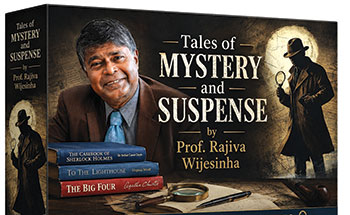
Mark’s inamorata is saved from the stews because she moves in with Edred’s widow whom the bursar had thrown out of the rooms he occupied when her husband was found dead. Hildegarde had paid for lodgings, in a house run by the man who ran the brothels, but he had a kindly side and was going to finance them to make nets for the fishermen.
So, the Cistercians set off for their home as swiftly as they can to get there on the day of the Epiphany, having stopped en route to pray for King Richard whose birthday it was.

Houthi missile attack on Yemeni presidential palace kills five, minister says

Physical development must be matched by the enrichment of people’s inner lives through aesthetics and culture – PM

Review of the operations of the 1818 Hotline introduced to report drug-related information

Showers in the Western, Southern, Central, Sabaragamuwa, North-Western and Northern provinces and in the Anuradhapura District

SJB: Govt. trying to reappoint Jayakody, who resigned from Cabinet amidst coal scam

India busts Pakistani salt smuggling via Sri Lanka

‘Dates have the highest sugar content to fight Coronavirus’

Sunday Island 27 December – Headlines

#SundayIsland 17th December – Headlines

Sunday Island – 28th March

Sunday Island Headlines – 21 March

Sunday Island – 21st February – Headlines
-

 News5 days ago
Sri Lanka escalates anti-graft drive with Shiranthi’s jailing
-

 News6 days ago
NPP govt. reminded of its responsibilities as US warship leaves Colombo
-
 Latest News7 days ago
Farhan, Sadaqat help Pakistan ace 183 chase to go 1-0 up
-

 Latest News4 days ago
Farhan and Sadaqat help Pakistan seal series in style
-
 News5 days ago
Iranian ships stranded, Lanka fears US sanctions
-

 Latest News3 days ago
Nissanka’s return headlines Sri Lanka’s Test squad against Pakistan
-
 News6 days ago
Interdicted top House official Kularatne receives special recognition in Mexican Parliament
-
 Features4 days ago
Intake 16: 45 years of duty and honour