
Business
BOC chair optimistic about notable economic growth in 2022

by Sanath Nanayakkare
Bank of Ceylon Chairman Kanchana Ratwatte expects that growth will rebound in 2022 with three primary elements as drivers of the economy, moving forward.
According to his predictions, Sri Lanka should see notable rebound in earnings from tourism, SME sector businesses and foreign remittances.
Speaking at an event held at its Head Office In Colombo yesterday with a multi-religious ceremony to invoke blessings on the staff of the bank, all its customers and all Sri Lankans in general, Ratwatte said, “I see a rainbow on the horizon. Sri Lanka should see a significant rebound in the tourism sector, small and medium enterprises (SME) sector and the country’s foreign remittances base in the first half of the year. The Bank of Ceylon stood as a tower of strength during the Covid-19 pandemic for nearly two years supporting to hold the national economy in place, and will unwaveringly continue to do so until the country gets back to normalcy,” he said.
The following are some excerpts from his speech.
“Today signifies a momentous day in my life. Two years ago, I assumed duties as chairman of this giant organisation which comprises a family strongly bonded with one another. I regard being able to serve for BOC as a great fortune in my life.”
“In the past two years despite challenges caused by the Covid-19 pandemic, BOC was able to give promotions to its employees in compliance with the due process. Also, we absorbed the trainees who had successfully concluded their training into our permanent carder. We were able to give promotions from junior executive ranks up to the echelon of general manager amid the pandemic chaos as a recognition for their dedication and loyalty towards the bank.”
“Most notably, we were able to successfully complete the official process in signing the collective agreement with the trade unions of the bank providing the basis for sound relations between the management and employees.”
“With that said, our happy workforce is not solely because of those motivations but also because of the positive work environment which encourages collaboration and communication; which is a unique feature of the BOC family.”
“BOC’s improved strategies to counter the pandemic saw significant resilience in its foreign remittances base. In 2019, remittances stood at USD 2.5 billion for BOC. In 2020, we managed to reach USD 2.8 billion. Despite the ongoing external challenges, this year we have crossed the USD 3.5 billion benchmark of remittances.”
“We thought the pandemic’s vulnerable conditions would be an opportune moment to launch and implement the BOC Export Circle to support the SME sector to revive the battered businesses and help take the surviving ones to the next level. Last year, BOC placed special emphasis on the revival of businesses through Export Circle.. Thus a revival unit was established to rekindle the businesses hit by the pandemic. I am proud to say that many of these companies have stayed afloat and the BOC has been able to turn around almost Rs. 35 billion worth of assets through this exercise. I see a few smiling faces here who have been served by the Revival Unit of the BOC.”
“BOC managed to overcome most of the issues the pandemic introduced to us out of the blue by ensuring seamless online banking services for our customers. However, most employees reported to work upon ensuring minimised impact of the pandemic on them.”
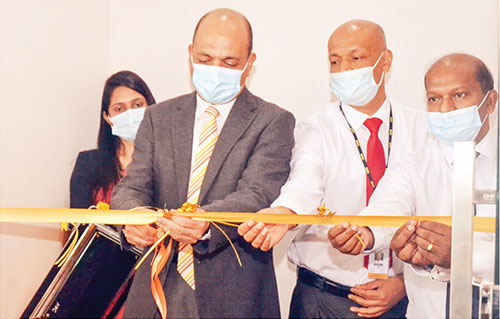 BOC Chairman Kanchana Ratwatte, General Manager/CEO K.E.D Sumanasiri and CFO Russel Fonseka inaugurate the BOC SME Circle at the BOC Head Office in Colombo yesterday.
Talking about external sector challenges, he said,””A 20-foot container of a particular item that came from Shanghai via Singapore for USD 900 in 2019, costs USD 8000 today. The prices of wheat and petroleum have surged among other commodities. Today a litre of petroleum in India is 104 Indian rupees. It is about LKR 270. The State is still subsidising petroleum products. Has the consumption gone down at current prices? No, it hasn’t. Despite the lockdowns, usage of petroleum increased. Letters of Credit (LCs) opened by the BOC for petroleum imports grew by 20% despite Coronavirus lockdowns. These should be factored into the current situation.”
Talking about revenue from Tourism, he said,” Up to 2019 prior to Easter Sunday attacks, Tourism generated a minimum of USD 4.5 billion. As a result of the pandemic, Tourism sector had to be looked after by other sectors. It was a double whammy on the economy. In contrast, now I see a bright side emerging as more than 200,000 tourists arrived in the country last year.”
“The livelihoods of Sri Lankan migrant workers came to a complete standstill for two years due to travel restrictions imposed globally. Now we see the encouraging trend of them going back to their overseas jobs as well as students going abroad for higher education. On a daily basis, the BOC gets requests from customers to remit amounts ranging from USD 2500 – 20,000 for their children’s higher education requirements. We oblige with that segment of customers regardless of which bank they initially banked with.”
“BOC reached rupees one trillion in its asset base in 2012 – the equivalent of a USD 5 billion worth company when converting the currency at LKR 200 per US dollar. In 2018, it reached two trillion making it a USD 10 billion worth company. In March 2021, we reached the 3 trillion mark which made it a USD 15 billion company. I am proud to say that every year we will be adding USD 5 billion to the asset base of BOC. By next year, we should be a USD 20 billion company. This is the strength on which we continue to serve our customers and the nation at large. Dear customers, let me tell you that BOC is resilient and strong enough to hold the economy until the country gets back to normalcy,” he said.
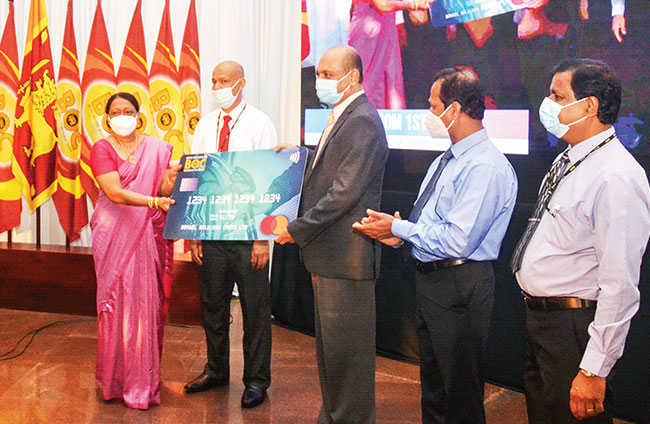
Emphasising the importance of encouraging Sri Lankan SME and Micro entrepreneurs, the Bank also launched BOC SME Circle yesterday.
In addition to that the Bank launched the BOC Fuel Card. The BOC fuel top-up card is designed to be beneficial to customers who face the hassle in managing their fuel expenses. The card is offered to corporate entities, fleet operators and individuals to add convenience to their daily operations.




Parliament yesterday took up for debate and vote a sweeping overhaul of Sri Lanka’s main environmental law, in what the Central Environmental Authority (CEA) hopes will become the country’s first major legal reset on environmental protection in 38 years.
The National Environmental (Amendment) Bill, taken up for its final reading in the House, is being seen by environmental officials as a critical attempt to modernise an outdated legal framework that has struggled to keep pace with mounting pollution, hazardous waste, ecological degradation and the environmental fallout of unplanned development.
In a sign of the importance attached to the Bill, senior CEA officials remained in parliament throughout the day as the debate unfolded, amid growing expectations within the environmental sector that the revised law would strengthen the Authority’s hand in regulation, enforcement and environmental planning.
CEA chairman Prof. Tilak Hewawasam described yesterday as a “very special day” for the Authority and said the proposed amendments were long overdue.
“Yesterday was a very special day for the Central Environmental Authority. The Bill to amend the National Environmental Act was read in parliament for the final time, debated and voted on. This was the third revision of the Act and came 26 years after the previous amendment. While the 2000 revision was only a minor one, the 1988 amendment was a comprehensive reform that provided the legal framework and tools such as the EPL and EIA for environmental protection and environmental management in Sri Lanka. After 38 years, another comprehensive revision has now been proposed to Parliament, Hewawasam told The Island Finacial Review.
He said the CEA leadership and senior staff had closely followed the proceedings, hopeful that parliament would clear the Bill and pave the way for a stronger legal framework for sustainable development.
“We were very eager to see this revised Act passed and enacted by parliament, as it will provide the legal framework needed to drive and accelerate the country’s sustainable development, he said.
The push for reform comes at a time when the country’s environmental governance framework is under increasing strain from industrial pollution, mounting solid waste, chemical hazards, encroachment into environmentally sensitive zones and the widening conflict between economic activity and ecological safeguards.
Environmental officials say the revised law is intended to close long-standing legal and institutional gaps that have weakened environmental enforcement and slowed regulatory action.
Among the major changes proposed are provisions to legally recognise Strategic Environmental Assessments (SEA), strengthen the CEA’s authority to issue binding orders instead of merely recommendations, tighten controls on hazardous waste and chemicals, expand producer responsibility in waste management, and empower authorities to act more decisively against unauthorised constructions and environmentally harmful activities in protected and ecologically sensitive areas.
By Ifham Nizam

Residents of La Serena recently came together in a spirit of quiet reflection and shared devotion for a Vesak Bhakthi Gee recital, transforming the serene beachfront setting into an evening of song, mindfulness and gentle celebration.
The programme, organised for residents and invited guests, featured a collection of Buddhist devotional songs that captured the essence of Vesak, fostering a sense of inner peace and spiritual fulfilment. Voices joined in harmony, creating a deeply moving atmosphere rich in meaning and memory.
With around 60 per cent of La Serena residents being expatriate Sri Lankans, the event was particularly evocative. One resident observed that having lived overseas for many years, they had missed Sri Lankan cultural and religious celebrations, making the celebration especially meaningful.
Beyond the music, the gathering strengthened the bonds of community that define life at La Serena, encouraging connection, conversation and companionship among residents. Rooted in Sri Lankan cultural and religious tradition, the event reflected the resort’s commitment to enriching emotional and spiritual well-being through thoughtfully curated experiences.
La Serena is a purpose-built beachfront retirement resort in Uswetakeiyawa, offering a secure and dignified environment for assisted living. Combining the privacy of independent living with access to personalised care and shared amenities, it fosters a vibrant, connected lifestyle where residents can enjoy comfort, companionship and peace of mind.

Sarvodaya Development Finance PLC (SDF) delivered a strong financial performance for the year ended 31 March 2026, recording significant growth in income, profitability, portfolio expansion, and asset quality while continuing its commitment to responsible and inclusive finance.
For the financial year under review, SDF reported total income of LKR 6.42 billion, a year-on year increase of 46.8%. Interest income rose by 43.8% to LKR 5.85 billion, driven by business expansion and growth in earning assets. Net Interest Income increased by 35.4% to LKR 3.58 billion, while Total Operating Income grew by 40.8% to LKR 4.15 billion, reflecting the Company’s ability to generate strong and sustainable earnings.
Profitability improved substantially during the year. Operating Profit before Tax on Financial Services increased by 59.9% to LKR 1.82 billion, while Profit Before Tax rose by 63.8% to LKR 1.36 billion. Profit for the Year increased by 73.1% to LKR 820.1 million compared with LKR 473.8 million in the previous year. Earnings per share improved to LKR 5.48, demonstrating enhanced value creation for shareholders.
The Company’s balance sheet expanded significantly, with total assets increasing by 65.8% to LKR 37.37 billion as at 31 March 2026. Financial assets at amortized cost, including loans and receivables, grew by 67.2% to LKR 20.60 billion, while lease rental receivables increased by 34.0% to LKR 9.19 billion. SDF also strengthened its funding profile through debt securities, including Sustainable Bonds, amounting to LKR 2.09 billion.
Commenting on the performance, Chief Executive Officer, Nilantha Jayanetti stated, “The results achieved during FY2025/26 reflect the strength of our business model, disciplined growth strategy, and commitment to delivering responsible financial solutions. We remain focused on creating sustainable value while supporting communities and enterprises across Sri Lanka.”
SDF maintained a strong capital position, with a Tier 1 Capital Adequacy Ratio of 15.48% and a Total Capital Adequacy Ratio of 22.13%, both comfortably above regulatory requirements. Asset quality also improved, with the Gross Stage 3 Loans Ratio declining to 4.93% from 7.88% and the Net Stage 3 Loans Ratio improving to 2.94% from 5.70%. The Stage 3 Impairment Coverage Ratio strengthened to 42.60%.
Operational efficiency improved as the Cost-to-Income Ratio reduced to 42.99%, while Return on Equity increased to 19.60%. Reflecting its stronger financial position, SDF’s external credit rating was upgraded to Lanka Ratings (SL) BBB- Stable.
With a network of 56 branches, SDF remains committed to advancing financial inclusion, supporting sustainable enterprise growth, and contributing to Sri Lanka’s long-term socio-economic development.

Representatives from the Ceylon Chamber of Commerce meet PM

Progress of Housing Project for Malayagam Community families funded by India reviewed

South Africa stun South Korea to reach World Cup knockouts for the first time

Tremors of 7.5, 7.2 kill 32, injure hundreds in Venezuela

Former Minister Wijeyadasa Rajapakshe’s son arrested by CIABOC

Morocco come back after historic Haiti goals to reach World Cup last 32

‘Dates have the highest sugar content to fight Coronavirus’

Sunday Island 27 December – Headlines

#SundayIsland 17th December – Headlines

Sunday Island – 28th March

Sunday Island Headlines – 21 March

Sunday Island – 21st February – Headlines
-

 News6 days ago
Creditor receives USD 2.5 mn as Lankan public bears loss from theft of Treasury funds
-

 News5 days ago
Creditor not yet paid
-
 News5 days ago
Consumers bearing 22% tax burden despite 18% VAT claim: Dr. Harsha de Silva
-

 Features4 days ago
Nanda Pethiyagoda Wanasundara as three generations of family saw her
-

 Features3 days ago
Sri Lanka developing independent hydrographic capabilities
-

 Opinion6 days ago
SriLankan Airbus struck by lightning
-

 Editorial4 days ago
Fuel crisis: Beyond price debate
-

 Latest News4 days ago
Sooryavanshi thumps fastest List A fifty as India A win tri-series