
Sports
Bobby Knight of Sri Lanka Francis D’ Almeida turns 75 today

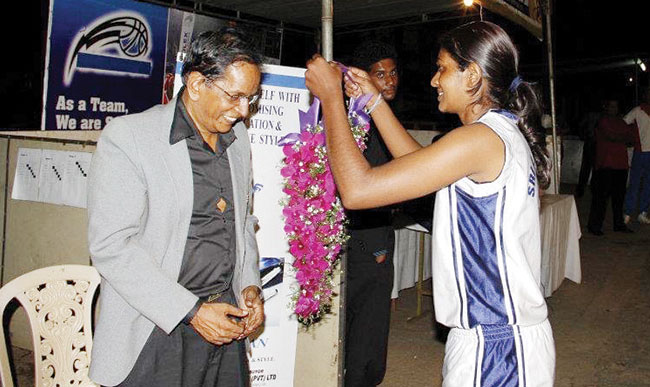
by Rex Clementine
Legendary US basketball coach Bobby Knight has been an inspiration for those who play the game of basketball having invented new tactics and brought success to many of his teams. Similarly, Francis D’ Almeida changed the way how the game of basketball was played in Sri Lanka with innovative methods. He turns 75 today.
For decades, local basketball coaches had used the zone defence, but it was Francis who introduced the man to man strategy first and his teams were unstoppable having employed this method. With full court trap defences, Francis changed the coaching philosophy in Sri Lanka and today most successful coaches in the island use the man to man strategy.
Francis had tremendous successes coaching Good Shepherd Convent, Kotahena, St. Joseph’s College, Colombo, St. Benedict’s College and Ananda College.
Like Bobby Knight, there were occasions when Francis lost his cool on the court at the erring referees but one does not quite recall throwing of chairs. But expletives, yes there were plenty and you picked up new words too from him.
Francis’ highest achievement as a coach was when he guided the Sri Lanka under-18 team to finish sixth in the FIBA Asia Youth Championship held in Korea. He also coached Sri Lanka Youth Women’s team and was the Head Coach of the senior men’s and women’s teams. While Bobby Knight excelled on the court, Francis’ contributions to the game went beyond the court as he was a successful administrator having served as Secretary and Vice-President of SLBF for several years.
The modern generation may know him for his music, but his efforts to promote the game of basketball are unparalleled.
Francis was a pioneer in forming three key associations of Sri Lanka Basketball Federation, namely Coaches’ Association, Referee’s Association and Mercantile Association. The three bodies are vital parts of local basketball having offered jobs for so many who are involved with the game and more importantly lifting the standards of the game. He has been also instrumental in forming several district associations in far off places. His association with the game goes beyond half a century.
Francis is known for his generosity spending his earnings from basketball coaching on his players in looking after their needs.
The Island
wishes him all the very best.
Ad multos annos.


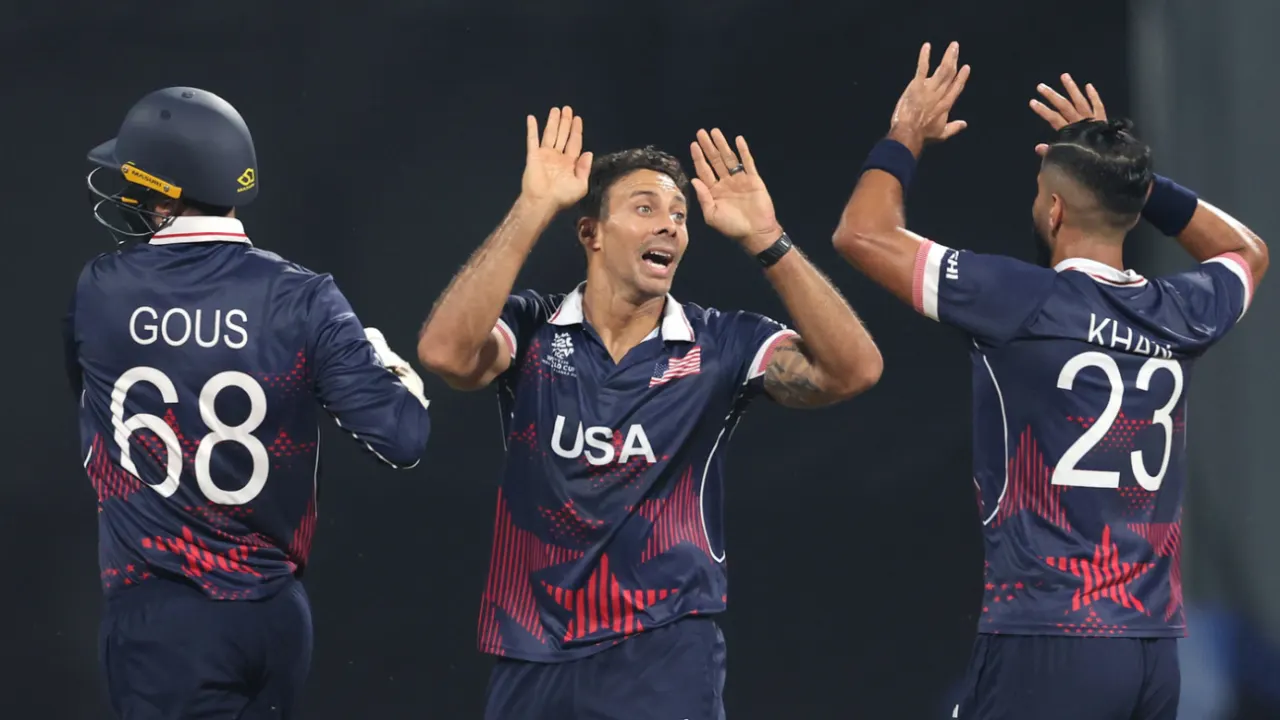
After running India close in their opening game in Mumbai, USA were outplayed by Pakistan in Colombo in their second. A third successive defeat, against Netherlands on Friday, will knock them out of contention for the Super Eight stage. History is also against USA: they have not beaten Netherlands in three attempts in men’s T20Is.
USA had earlier given New Zealand a scare during the warm-up fixture in Navi Mumbai, but injuries have weakened them since. Fast bowler Ali Khan is nursing a groin injury while Jasdeep Singh (shoulder injury) has been ruled out of the rest of the 2026 T20 World Cup, with former Pakistan fast bowler Ehsan Adil replacing him in the side. Adil was thrown into the XI straightaway in the second game, but ended up conceding 39 runs in three overs against the country of his birth at the Premadasa. It remains to be seen if Shubham Ranjane, who had hurt his knee, is back to full fitness.
USA are yet to nail down their opening combination: Saiteja Mukkamalla was left out after just one failure, against India. He was their most prolific batter in the lead-up to this World Cup and hit 50 off 31 balls in the warm-up match against New Zealand.
Netherlands will be high on confidence after easing past Namibia on the back of Bas de Leede’s all-round effort in Delhi. They bat deep, with Roelof van der Merwe listed at No. 9, and also have a surfeit of bowling options. That depth was central to giving Pakistan a scare in the tournament opener. Netherlands are also familiar with Chennai conditions – their entire squad trained at the Chennai Super Kings Academy in the city for around a week last month.
Picked as the only frontline left-arm spinner in the Netherlands side, ahead of Daniel Doram and Tim Pringle, Roleof van der Merwe followed up his 1 for 13 in three overs against Pakistan with 0 for 22 in two overs against Namibia. The 41-year-old could play a big role against a right-hand-batter heavy USA line-up.
Saurabh Netravalkar’s Mumbai homecoming was far from sweet: he ended up leaking 65 runs in his four overs for no wickets – the most by a bowler in an innings in the T20 World Cup. The left-arm seamer fared much better in USA’s next game against Pakistan, and will look to return to his best against Netherlands.
There’s no reason for Netherlands to tweak their winning combination unless there are any injuries or illnesses in their camp, though veteran Max O’Dowd has been below par.
Netherlands (probable): Max O’Dowd, Michael Levitt, Bas de Leede, Colin Ackermann, Scott Edwards (capt, wk), Zach Lion-Cachet, Logan van Beek, Aryan Dutt, Roelof van der Merwe, Timm van der Gugten, Fred Klaasen
If Ali Khan is fit, he could potentially come back in place of Adil. There might be a toss-up between Mukkamalla and Shayan Jahangir for the opening slot.
USA (probable): Andries Gous (wk), Shayan Jahangir/Saiteja Mukkamalla, Monank Patel (capt), Milind Kumar, Sanjay Krishnamurthi , Shubham Ranjane, Harmeet Singh , Mohammad Mohsin, Shadley van Schalkwyk, Saurabh Netravalkar, Ali Khan/Ehsan Adil
[Cricbuzz]

“We will not make decisions for rural level schools while sitting in Colombo” – PM

USA need to overturn history to beat Netherlands and stay alive

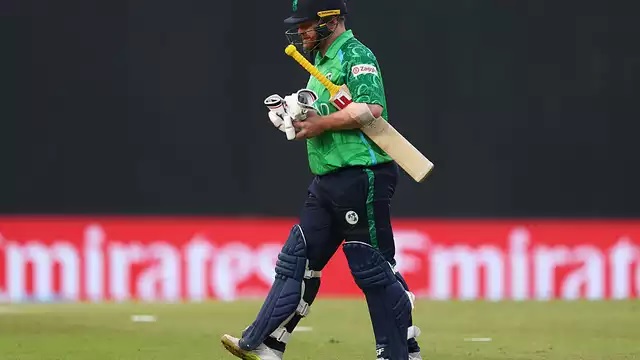
Paul Stirling ruled out of World Cup with knee injury

The silent pace revolution in Sri Lanka

Canada, UAE face each other for only the second time in T20Is

Landslide Early Warnings issued to the Districts of Kandy and Nuwara Eliya

‘Dates have the highest sugar content to fight Coronavirus’

Sunday Island 27 December – Headlines

#SundayIsland 17th December – Headlines

Sunday Island – 28th March

Sunday Island Headlines – 21 March

Sunday Island – 21st February – Headlines
-

 Features5 days ago
My experience in turning around the Merchant Bank of Sri Lanka (MBSL) – Episode 3
-

 Business6 days ago
Zone24x7 enters 2026 with strong momentum, reinforcing its role as an enterprise AI and automation partner
-

 Business5 days ago
Remotely conducted Business Forum in Paris attracts reputed French companies
-
 Business5 days ago
Four runs, a thousand dreams: How a small-town school bowled its way into the record books
-

 Business5 days ago
ComBank and Hayleys Mobility redefine sustainable mobility with flexible leasing solutions
-

 Business2 days ago
Autodoc 360 relocates to reinforce commitment to premium auto care
-
 Business6 days ago
HNB recognized among Top 10 Best Employers of 2025 at the EFC National Best Employer Awards
-

 Midweek Review2 days ago
A question of national pride