
Opinion
Black, white, or shades of grey on fertiliser?

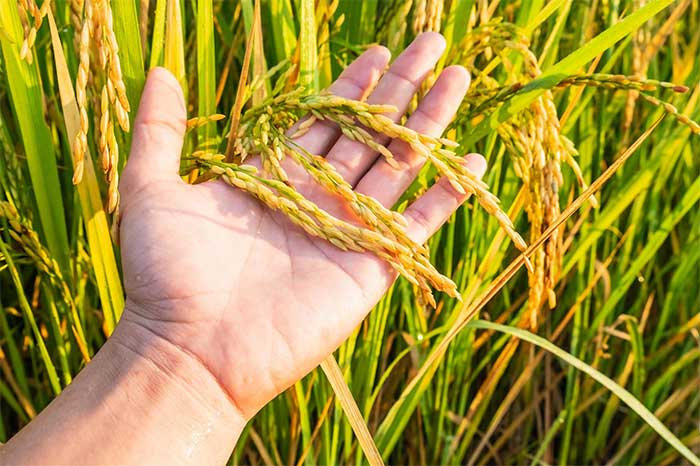
The issue of ‘Organic or Inorganic’ is lingering on, the latest complication arising from the arrival in the harbour of a load of “Prilled Urea” – not the most inexpensive form of nitrogenous fertiliser. Rumour has it that it was an authorised import, which had left the shores of Indonesia, well before the issue of the Gazette banning entry. If this implies that “organic” is permissible, and worse still, that some of it has already arrived, this would be attempted “agro-suicide” (econo-suicide as well). I have drawn attention to the need to thwart such a colossal error – the consequences of which will be beyond our imagination. The circumstances surrounding such a colossal breach of Quarantine Laws must be probed, and those even remotely responsible, must invite the most severe punishment possible under the Law and any legal gaps firmly sealed.
Most issues in life (and natural processes, decidedly), are not “Black or White”, but varying shades of Grey. This is apparent even in our vocabulary. Frequent appearances of words like “moderate, balanced, mean, average, appropriate, holistic, blend, mix, optimum, fair, alternative, compromise” and many such words, are indicative of the availability and attendant power of choice. One of the best instances of economic unleashing of power is perhaps the computer, whose magical versatility is achieved through a binary code (just 0 & 1). Our entire genetic design is through the potential of a “four-base Code”, namely Adenine, Guanine, Cytosine and Thymine. These code for a “Language” expressing millions of genetic traits. The entire wealth of expression of English Literature and stored information, uses an Alphabet of just 26 letters! The thousands of structural proteins and enzymes that comprise our body chemistry, are spelt out by some 23 or so amino-acids. A few units can still provide a wealth of options.
Working out the ideal fertiliser mix, depending on crop and circumstance is relatively simpler. Therefore, a mixture of organic and inorganic components has to be the ideal, because the “Strengths” of the two forms supplement each other very well. What the “organic” lacks in nutrients, it makes up for in its capacity to “ameliorate” soil in desirable physical characteristics. What the “inorganic” lacks in textural improvement, it makes up for in “nutrient density”. Exclusive use of one or the other, is impractical, unnecessary, economically unsound and could be environmentally damaging. They are not and should not be mutually exclusive.
Since the advent of farming, (said to have happened about 10,000 years ago, when humans ceased to be mere ‘hunter-gatherers, and domesticated their crops), participants were probably well aware of nutrient needs of their crops. Early farming practices must have relied entirely on Wood Ash (rich in potassium), Animal Bones (for Calcium and Phosphorus), Animal Dung and Human Excrement and Urine (for Nitrogen, phosphorus and potassium). Progress in industrial production of Superphosphate and Ammonium derivatives, (at the beginning of the last century) provided a great fillip. Further improvements ushered in by mining of Muriate of Potash and Sulphur as welcome changes, which heralded great improvements of productivity.
Population growth and increased food demands, impelled the developments (such as the Green Revolution), which relied on heavy input practices, including inorganic fertilizer and chemical pesticides. Abuse of such conveniences have led to their own slew of problems.
Our paddy farmers, up until the mid-nineteen- thirties, relied heavily on organics – not least because it was logistically and economically more sensible. All around paddy farming developed a culture that was essentially conservationist and pastoral. With a strong undercurrent of Buddhist tradition. Hence the ‘production-line practices of deep- litter, battery farming methods perhaps had low appeal to the traditional village paddy-farmer. Paddy straw (excess over thatching needs), weeds scraped off the ‘niyaras’, crop residues from the bunds, loppings including those from roadside shrubs, mainly from Wild Sunflower, Suriya Kantha, (Tithonia diversifolia), Weta hira (Glyricidia maculata), Andana hiriya-( Crotalaria sp.), Weta Endaru (Jatropha sp), Eramudu (Erythrina sp) and casual weeds, maintained as roadside shrubs etc. Their loppings were generally laid in the muddy field and worked in with the first ploughings. The droppings of the ploughing and threshing Buffaloes, were an appreciated bonus.
East Asian farmers (Chinese and Japanese) used raw human excrement extensively on rice and Farm Garden crops. The material was delicately referred to as “night soil”. This made very good sense, in that the sole legitimate removals from the field, should ideally be limited to only the crop component desired – all else (including indigestible parts), should return to the field. Processing of sewer waste has since progressed very far, even in Municipal settings. The product is now an odorless, inoffensive material of an agreeable crumbly texture. This is clearly a technology of very high merit, and worthy of wider application.
There is a great need to adapt from the traditional tendency for fertiliser trials, to focus solely on the ‘return to investment’, when evolving a “best fertiliser practice”. This is virtually to the exclusion of the equally revealing concern with the pathway and efficiency of utilisation. Of the applied quantity, how much is actually used by the crop, how much is immovably fixed in soil minerals, how much is lost in erosion, how much is leached beyond root accessibility etc? As an indicator of the usefulness of such an approach, I could mention that in preliminary analyses of silt drawn from surface drains in a tea plantation, the silt had virtually the same nitrogen content as of pure urea (circa 46%)! Incidentally, a “rule of thumb” computation of replacement of nitrogen by a tea crop (Replacement Ratio), employed by planters was 8 or 10 kilos “N” for every 100 kg of made tea harvested. This should mean that the tea should analyse at 8 to 10% N. It is nearer 2%!. What does that and the silt analysis say? Tea fields are notoriously low in organic matter, the soil acidity is close to being inhospitably low. Earthworms do not inhabit many tea soils.
If the sudden change from inorganic to organic fertilisers is intended to signal a desirable shift towards systems that are less violent to the environment and less wasteful, it is commendable. Yet undue haste might be self-defeating. A desire to act ‘with’, rather than ‘against’ nature, should be admirable. Such an objective should not generate reasoned objection. But a set of practices, methods and attitudes developed over centuries, are not likely to be amenable to useful change in one or two paddy-growing seasons. Change towards an optimal, stable set of practices, even under the most enthusiastic promotion, will take time. As a well planned programme continues, there will be steady progress towards stability. Thus it is to be expected, that as the system (particularly the soil organisms, biosphere), stabilizes progressively, and adapts to the changed conditions, one can hope that the results would be so self-evident, that compulsion certainly, or even coercion perhaps, may not be necessary.
The livelihoods of millions of our citizens are at stake. Petty biases, prejudices, expediencies and ‘intelligence or information deficits’, simply cannot be unleashed. There are several ways in which an element of sensitivity towards Nature, and evolving more sensitive /merciful/ compassionate methods with less recourse to rough and extractive demands will emerge. Such will have ready appeal for our essentially conservative farming community. They will, by nature, be more responsive to traditions that conserve, rather than waste, guide rather than force, harvest rather than grab.
To me, progress of movements like “Gammedda” are of immense significance. They have much to teach – the value and power of self-reliance, the strength of community co-operation and the validity of prioritisation at local level. Above all, a realisation that true poverty is largely an inability to use the resources you have (including knowledge, tradition and skills). If Sri Lanka can position itself in the vanguard of a move towards a “Compassionate Agriculture”, harmonsing and integrating Nature’s gifts and mankind’s ingenuity, we will have bestowed a priceless gift. Even Nature would be happier to respond to gentle handling than to brutish exploitation.
In the present instance, priorities might include the following:
(i) The establishment of collectively-owned “Green Manure Lots’ ‘ of low input requiring shrubs, like Tithonia, Crotalaria, Glyricidia and Jatropha.
(ii) “The Dry Pit Latrine”, for Dry Zone colonists. Biogas generators, Compost heaps, Domestic Waste Composters.
(iii) Coconut waste water as a source of potassium (rich source with hundreds of ppm of elemental potassium).
(iv) Water Weeds, Salvinia, Eichchornia, Pistia, Azolla and Aroids. Silt from tank desilting. Composted Municipal Waste. (Mattakkuliya?).
(v) Blue Green Algae and N-fixing bacteria (Nitrosomonas, Nitrobacter). Nodule forming Rhizobia.
(vi) Crop Rotation as an organised practice.
(vii) Use of Biotechnology (including emphasis on such as the use of Bacillus thuringiensis against caterpillar pests).
Attractive (Self-recommending) options are infinitely more enticing and palatable than compulsions. There should be enthusiastic cooperation rather than sullen compliance.
Dr. UPATISSA PETHIYAGODA



Walking through Pettah market in Colombo, I have noticed something both obvious and troubling. Shop after shop sells bags, shoes, electronics, even sarees, and yet all shops are owned and run by men. Even businesses catering exclusively to women, like jewelry stores and bridal boutiques, have men behind the counter. This is not just my observation but it’s a reality where most Sri Lankans have observed as normal. What makes this observation more important is when we examine the demographics where women population constitute approximately 52% of Sri Lanka’s population, but their representation as business owners remains significantly low. According to the Global Entrepreneurship Monitor 2023 report, Sri Lanka’s Total Early Stage Entrepreneurial Activity rate for women is just 8.2%, compared to 14.7% for men.
Despite of being the majority, women are clearly underrepresented in the entrepreneurial aspect. This mismatch between population size and economic participation create a question that why aren’t more women starting ventures? The answer is not about capability or intelligence. Rather, it’s deeply in social and cultural barriers that have been shaping women’s mindsets for generations. From childhood, many Sri Lankan girls are raised to believe that their primary role is as homemakers.
In families, schools, and even universities, the message has been same or slightly different, woman’s success is measured by how well she manages a household, not by her ability to generate income or lead a business. Financial independence is rarely taught as essential for women the way it has been for men. Over time, this messaging gets internalised. Many women grew up without ever being encouraged to think seriously about ownership, leadership, or earning their own money. These cultural influences eventually manifest as psychological barriers as well.
Years of conditioning have led many skilled women to develop what researchers call “imposter syndrome”, a persistent fear of failure and feel that they don’t deserve success kind of feeling. Even when they have the right skills and resources, self-doubt holds them back. They question whether they can run a business independently or not. Whether they will be taken seriously, whether they are making the right choice. This does not mean that women should leave their families or reject traditional roles. But lack of thinking in a confident way and make bold decisions has real consequences. Many talented women either never start a business or limit themselves to small, informal ventures that barely survive. This is not about men versus women. It’s about the economic cost of underutilising 52% of the population. If our country is genuinely serious about sustainable growth. we must build an inclusive entrepreneurial ecosystem through confidence building programs, better finance access to women, and a long term societal mindset shift. Until a young girl walking through Pettah can see herself as a future shop owner rather than just a customer, we will continue to waste our country’s greatest untapped resource.
Harinivasini Hariharasarma
Department of Entrepreneurship
University of Sri Jayewardenepura

Some essential points made to indicate its future in Power Generation
The hard facts are that:
1) Coal supplies cannot last for more than 70- 100 years more at most, with the price rising as demand exceeds supply.
2) Reactor grade Uranium is in short supply, also with the price rising. The cost is comparable to burning platinum as a fuel.
3) 440 standard Uranium reactors around the world are 25-30 years old – coming to the end of their working life and need to be replaced.
4) Climate Change is increasingly making itself felt and forecasts can only be for continuing deterioration due to existing levels of CO2 being continuously added to the atmosphere. It is important to mention the more serious problems associated with the release of methane gases – a more harmful gas than CO2 – arising from several sources.
5) Air pollution (ash, chemicals, etc.) of the atmosphere by coal-fired plants is highly dangerous for human health and should be eliminated for very good health reasons. Pollution created by India travels to Sri Lankans by the NE monsoon causing widespread lung irritations and Chinese pollution travels all around the world and affects everybody.
6) Many (thousands) of new sources of electric power generation need to be built to meet increasing demand. But the waste Plutonium 239 (the Satan Stuff) material has also to be moved around each country by lorry with police escort at each stage, as it is recovered, stored, processed and formed into blocks for long term storage. The problem of security of transport for Plutonium at each stage to prevent theft becomes an impossible nightmare.
The positive strengths to Thorium Power generation are:
1) Thorium is quite abundant on the planet – 100 times more than Uranium 238, therefore supplies will last thousands of years.
2) Cleaning or refining the Thorium is not a difficult process.
3) It is not highly radioactive having a very slow rate of isotope decay. There is little danger from radiation poisoning. It can be safely stored in the open, unaffected by rain. It is not harmful when ingested.
4) The processes involved with power generation are quite different and are a lot less complex.
5) Power units can be quite small, the size of a modern detached house. One of these can be located close to each town, thus eliminating high voltage cross-country transmission lines with their huge power losses (up to 20%).
6) Thorium is ‘fertile’ not fissile: therefore, the energy cycle has to be kick-started by a source of Neutrons, e.g., fissile material, to get it started. It is definitely not as dangerous as Uranium.
7) It is “Fail – Safe”. It has walk-away safety. If the reactor overheats, cooled drain plugs unfreeze and the liquid drains away to storage tanks below. There can be no “Chernobyl/ Fukoshima” type disasters.
8) It is not a pressurized system; it works at atmospheric pressure.
9) As long as reactor temperatures are kept around 600 oC there are little effects of corrosion in the Hastalloy metal tanks, vessels and pipe work. China, it appears, has overcome the corrosion problem at high temperatures.
10) At no stage in the whole chain of operations is there an opportunity for material to be stolen and converted and used as a weapon. The waste products have a half- life of 300 years, not the millions of years for Plutonium.
11) Production of MEDICAL ISOTOPE Bismuth 213 is available to be isolated and used to fight cancer. The nastiest cancers canbe cured with this Bismuth 213 as Targetted Alpha therapy.
12) A hydrogen generation unit can be added.
This information obtained from following YouTube film clips:
1) The Liquid Fluoride Thorium Reactor – what Fusion wanted to be…
2) An unbiased look at Molten Salt Reactors
3) LFTR Chemical Processing by Kirk Sorensen
Thorium! The Way Ahead!
Priyantha Hettige

There are three key issues regarding foreign degrees:
Recognition: Is the awarding university recognized by our UGC?
Authenticity: Is the degree genuine or bogus?
Quality: Is it a standard, credible qualification?
1. The Recognition Issue (UGC Role)
The UGC addresses the first issue. If a foreign university is listed in the Commonwealth Universities Yearbook or the International Handbook of Universities, the UGC issues a letter confirming that the university is recognized. However, it is crucial to understand that a recognized university does not automatically imply that every degree it issues is recognized.
2. The Authenticity Issue (Employer Role)
The second issue rests with the employer. It is the employer’s responsibility to send a copy of the foreign degree to the issuing university to get it authenticated. This is a straightforward verification process.
3. The Quality Assurance Gap
The third issue
—the standard and quality of the degree—has become a matter for no one. The UGC only certifies whether a foreign university is recognized; they do not assess the quality of the degree itself.
This creates a serious loophole. For example:
Does a one-year “top-up” degree meet standard criteria?
Is a degree obtained completely online considered equivalent?
Should we recognize institutions with weak invigilation, allowing students to cheat?
What about curricula that are heavy on “notional hours” but light on functional, practical knowledge?
What if the medium of instruction is English, but the graduates have no functional English proficiency?
Members of the UGC need to seriously rethink this approach. A rubber-stamp certification of a foreign university is insufficient. The current system ignores the need for strict quality assurance. When looking at the origins of some of these foreign institutions (Campuchia, Cambodia, Costa Rica, Sudan..) the intentions behind these “academic” offerings become very clear. Quality assurance is urgently needed. Foreign universities offering substandard degrees can be delisted.
M. A. Kaleel Mohammed
757@gmail.com
( Retired President of a National College of Education)

Coal ash surge at N’cholai power plant raises fresh environmental concerns

Akuregoda double murder: Suspected gunman in custody a duly discharged ex-soldier

Those who hid under beds fearing Gotabaya, now talking big: Justice Minister

Demand for accommodating Thimphu principles in promised Constitution: ITAK says it was not party to that move

Tamil politicians tell the UK NPP govt. not fulfilling its promises

Protection of Occupants Bill: Good, Bad and Ugly

‘Dates have the highest sugar content to fight Coronavirus’

Sunday Island 27 December – Headlines

#SundayIsland 17th December – Headlines

Sunday Island – 28th March

Sunday Island Headlines – 21 March

Sunday Island – 21st February – Headlines
-
 Features1 day ago
Why does the state threaten Its people with yet another anti-terror law?
-

 Features1 day ago
Victor Melder turns 90: Railwayman and bibliophile extraordinary
-

 Features1 day ago
Reconciliation, Mood of the Nation and the NPP Government
-
 Features1 day ago
Victor, the Friend of the Foreign Press
-

 Latest News2 days ago
New Zealand meet familiar opponents Pakistan at spin-friendly Premadasa
-

 Latest News2 days ago
Tariffs ruling is major blow to Trump’s second-term agenda
-

 Latest News3 days ago
ECB push back at Pakistan ‘shadow-ban’ reports ahead of Hundred auction
-

 Features1 day ago
Barking up the wrong tree