
Features
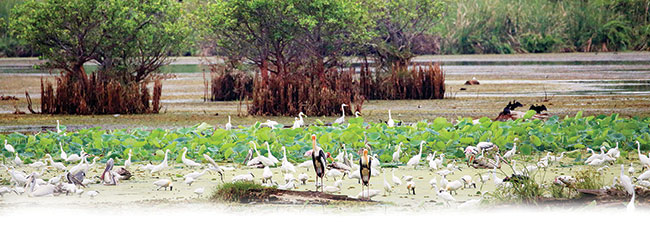
Bird watching at a tank

by Athula Dissanayake
Way back in the mid 1970’s, I was still a schoolboy and had just started a new hobby, namely bird watching. Schooling in Colombo did not provide much opportunity for bird watching and therefore it was with much delight that I accepted the invitation of my aunt and uncle to spend the school holidays at their home in Kurunegala.
Their house, situated at Kaudawatte in a rural setting amidst paddy fields, coconut plantations and scrubland, was a haven for me as it provided ample opportunity to pursue my new hobby. Most of the birds I came across there were new to me. Eventually it became a habit with me to spend one or two weeks at their home during school holidays, and they always welcomed me with open arms.
My bird list grew rapidly and soon I was able to register my hundredth bird very proudly. It happened to be the Ceylon lorikeet, which was calling loudly on a coconut frond in my aunt’s garden. I hurriedly took notes in my field book for subsequent identification from a bird guide. This is a habit I would recommend to every raw bird watcher; for otherwise memory would play tricks when one attempts to write the details later, making identification difficult or inaccurate.
My two cousins at Kurunegala knew of every nook and corner of the neighborhood and took me roaming into the paddy fields, coconut estates and scrubland as well as along streams and into the jungle in the famous Elephant Rock at Kurunegla. The present day road along which a car would now take passengers right up to the summit was not in existence in those days, and we three boys joyously trekked along footpaths through the forest up to the summit, which I still remember with nostalgia.
One day they suggested that we should visit a small tank at Thittawella and so we set off, walking all the way. At the end of the long walk I set my eyes for the first time on this tank and immediately fell in love with it as it proved to be a refuge for water birds, which were at that time all new to me. Thereafter we made frequent forays to this small tank in the mornings or afternoons and spent hours at a stretch at the site.
We had all the time in the world and were not hampered in anyway by tuition classes as the present day kids are! I used to sit there and observe the abundant bird life, taking notes with meticulous care and attention to detail, while my two cousins who lacked such patience wandered off on their own frolics until I had finished my work. Later, back at the house, I used to copy these field notes and sketches of birds neatly on to a permanent record book.
Thittawella tank is situated along the Kurunegala-Puttalam road. It is small and is in a picturesque setting. Towards its southern end are some boulders of varying size standing in the water, which break up the monotony of an otherwise plain sheet of water. The largest of these is covered with scrub vegetation, offering refuge to many water birds, including herons and cormorants.
Varieties of water plants grow in different sections of the tank and offer varying shades of green. These plants consist of water lilies, reeds and many kinds of floating vegetation. The centre of the tank is mostly overgrown with lotuses with their beautiful pure white blossoms, while in the shallow periphery are the olu (Nymphaea lotus) plants with their equally beautiful, pale pink and white flowers.
These patches of vegetation are interspersed with stretches of unobstructed water glimmering in the sunlight. In the south-eastern horizon, rising out of the plains like giant sentinels, stand large boulders and mountains so characteristic of Sri Lankan scenery. On a poya day the rising full moon casts a magic spell over this peaceful scene and many an enchanting evening have I had while seated on the bund of this tank to enjoy its varied bird life and tranquillity.
To the casual observer Thittawella tank would, at first glance, appear to be devoid of any bird life. The bigger and more glamorous avifauna in the form of painted storks, pelicans, open-bills, white-necked storks and spoonbills would be prominent by their absence. It would be to the keen and patient student of nature that it would gradually unravel the mysteries that are hidden deep in the beds of reeds, clumps of water lilies, and tangles of floating weeds. I would sit on the banks, take out my binoculars and notebook, and wait patiently for things to happen, and they did happen gradually and unobtrusively.
Jacana
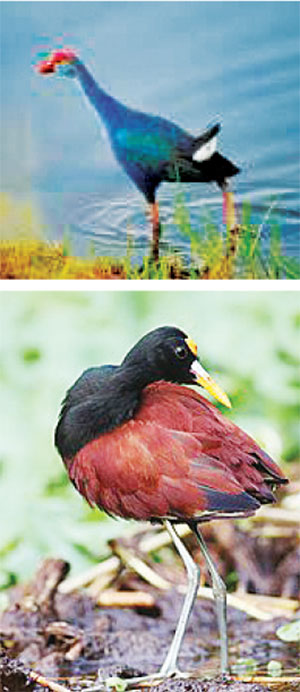
I noticed a strange-looking bird, like a young chicken, walking on the leaves of the water lilies. It was mostly white, wore a necklace of black and had a bronze back and short stump of a tail. It had several companions walking about on the lily pads. It puzzled me to see other similar individuals but with a different plumage, consisting of a jet-black belly and long black tail. They took to the air uttering strange cat-like calls (hence their Sinhala name halal-sera) and flew from one part of the tank to another like giant butterflies fluttering in the wind.
My notebook began to fill up with copious notes and sketches. That was my first introduction to the water birds of the tank and it was the beautiful pheasant-tailed jacana. The birds were in two different kinds of plumage, the non-breeding and the breeding. Later I would spend hours watching them walking daintily on the water lilies as their long toes helped to spread their weight over a large surface on the leaves. As they walked they fed on various small creatures and the vegetation. The jacanas flew low over the water in a tail-heavy flight with their long legs trailing behind. The black-edged white wings made a striking contrast against the green water plants as they flew.
Purple coot
Glimpses of brilliant blue patches among the vegetation on closer scrutiny revealed the presence of several rotund birds partly hidden among the plants. As I watched patiently some of them came out into the open and I had my first sighting of the colourful purple coot. It had a scarlet bill and long reddish legs. The plumage had various hues of blue in different parts of the body, varying from sky blue in the belly to dark purplish blue on the back. The short tail was jerked up repeatedly as it walked, flashing the white under-tail coverts. It constantly used to feed among water plants, a tasty morsel being held down with one foot while the bird devoured it piece by piece with its short thick bill.
The coots spent most of the day feeding, preening and resting while hidden among the vegetation and were not given to much flying. Towards the evening they came out into the open and were readily observed. The flight when undertaken was short and heavy as they flew up on to a clump of lotuses or reeds. Sometimes a sharp note “trrrt…, trrrt…” was uttered in flight.
I once saw a purple coot standing on top of a clump of reeds towards dusk. It bent down the reeds one by one with its bill and trampled on them, thus making a platform of reeds and then stood on it motionless for several minutes. With the approach of twilight it sat down on it, probably to roost for the night. Its mate also made a similar platform close by.
Teal
On scanning the tank carefully with binoculars, some brownish birds were seen, their plumage blending perfectly with the brown and green surroundings. These small duck-like birds kept to the middle of the tank. They were partially hidden by the vegetation and kept still, keeping a wary eye on any intruder. Thus I got my first glimpse of the whistling teal or the tree duck. Sometimes they would swim slowly in the open patches of water, but always keeping close to cover.
They were most of the time in small groups of up to half a dozen birds, but sometimes in pairs. From time to time a bird would put its head and neck under water in order to feed on aquatic vegetation. In the evenings some birds would take to wing and fly around the tank uttering their shrill whistling calls, before settling down once again in the water. They may circle the tank a few times or would fly away to a distant foraging ground.
It was sometime later that I was able to set my eyes on its smaller but more beautiful cousin, the cotton
teal. As I approached the tank one day, a pair of small ducks came flying fast and low and hit the water close to the shore without any apparent slowing down. They started swimming slowly in an open patch of water in a curious waddling action. The male was pure white in its head, neck and belly and a metallic greenish-black on the back. It had a black collar round its neck and was quite a handsome bird.
However its mate, in contrast, was an inconspicuous, brownish bird. After a few minutes they started bobbing their heads rapidly in unison as if agreeing on something.
They took off as suddenly as they had landed and flew away to the centre of the tank. The male displayed a striking white wing bar in flight. My subsequent sightings of them were few and far between owing to their small numbers and also to the fact that they merged perfectly with their surroundings as they swam among the lotus leaves.
Other water birds
As I sat patiently by, the tank day by day I became familiar with its other avifauna. A purple heron would stand motionless among the water plants in perfect camouflage as it waited patiently for a fish to turn up. It slowly extended its long cinnamon-coloured neck on the approach of a fish, and stabbed it with its dagger-like bill. When resting, it kept the neck curved in the shape of an S. When alarmed it had the neck pointing straight and upward. It kept still, the body merging perfectly with the reeds.
Scattered about the tank were numerous pond herons. Little and median egrets were ever vigilant in their quest for prey. A streak of yellow revealed a yellow bittern as it darted on blackish wings into a reed bed. This being the smallest member of the heron family, it was always difficult to see this bird owing to its skulking habits. A black bittern, with its brown-streaked neck poised to strike, walked stealthily along the edge of a reed bed. It was much more readily observed.
My curiosity was greatly aroused one day when I spotted several small birds swimming and diving in the water. I thought them to be baby ducks, but as I gathered more details of their brown, maroon and buff plumage, I realised that they were the dabchicks or little grebes. I was fascinated, and spent hours watching them swimming, diving and racing through the water chasing each other. As they did so they frequently uttered a shrill, high pitched call ” hi hi hi hi hi….” It was hard to tell where they would reappear after a dive. Occasionally, when swimming, a bird would stop, raise its body up, exposing the buff white underparts, and shuffle the plumage before resuming its swim.
I would get an occasional glimpse of a kora or watercock (wil-kukula, S) as it took a short flight among the dense bushes growing on the small islets in the tank. These shy, skulking birds are quite difficult to see and one would only be rewarded by patiently sitting and observing. During the breeding season they become vociferous and more active, taking short flights among the reeds and the bushes, thus offering a greater chance of seeing them.
Little cormorants and Indian shags dived for fish in the open stretches of water. Some were seen drying their outstretched wings in the sun, perched on a rock or tree stump.

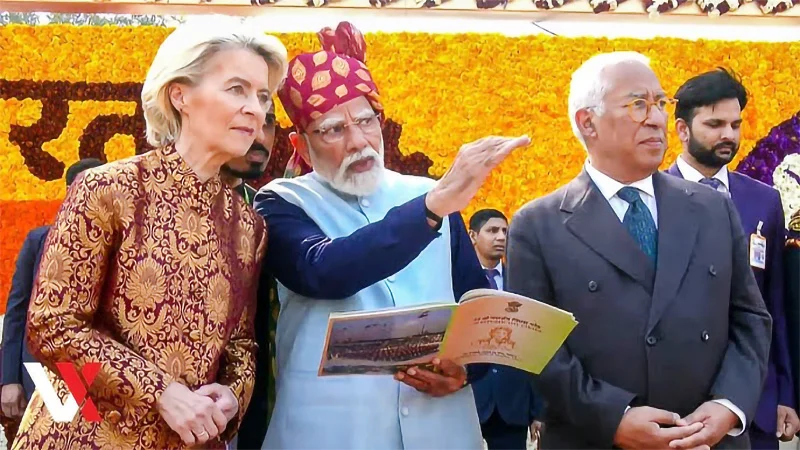
 The world of democracy is bound to be cheering India on as it conducts its 77th Republic Day celebrations. The main reasons ought to be plain to see; in the global South it remains one of the most vibrant of democracies while in South Asia it is easily the most successful of democracies.
Besides, this columnist would go so far as to describe India as a principal ‘Swing State.’ To clarify the latter concept in its essentials, it could be stated that the typical ‘Swing State’ wields considerable influence and power regionally and globally. Besides they are thriving democracies and occupy a strategic geographical location which enhances their appeal for other states of the region and enables them to relate to the latter with a degree of equableness. Their strategic location makes it possible for ‘Swing States’ to even mediate in resolving conflicts among states.
More recently, countries such as Indonesia, South Africa and South Korea have qualified, going by the above criteria, to enter the fold.
For us in South Asia, India’s special merit as a successful democracy resides, among other positives, in its constitutionally guaranteed fundamental rights. Of principal appeal in this connection is India’s commitment to secularism. In accordance with these provisions the Indian federal government and all other governing entities, at whatever level, are obliged to adhere to the principle of secularism in governance.
That is, governing bodies are obliged to keep an ‘equidistance’ among the country’s religions and relate to them even-handedly. They are required to reject in full partiality towards any of the country’s religions. Needless to say, practitioners of minority religions are thus put at ease that the Indian judiciary would be treating them and the adherents of majority religions as absolute equals.
To be sure, some politicians may not turn out to be the most exemplary adherents of religious equality but in terms of India’s constitutional provisions any citizen could seek redress in the courts of law confidently for any wrongs inflicted on her on this score and obtain it. The rest of South Asia would do well to take a leaf from India’s Constitution on the question of religious equality and adopt secularism as an essential pillar of governance. It is difficult to see the rest of South Asia settling its religious conflicts peacefully without making secularism an inviolable principle of governance.
The fact is that the Indian Constitution strictly prohibits discriminatory treatment of citizens by the state on religious, racial, caste, sex or place of birth grounds, thus strengthening democratic development. The Sri Lankan governing authorities would do well to be as unambiguous and forthright as their Indian counterparts on these constitutional issues. Generally, in the rest of South Asia, there ought to be a clear separation wall, so to speak, between religion and politics.
As matters stand, not relating to India on pragmatic and cordial terms is impossible for almost the rest of the world. The country’s stature as a global economic heavyweight accounts in the main for this policy course. Although it may seem that the US is in a position to be dismissive of India’s economic clout and political influence at present, going forward economic realities are bound to dictate a different policy stance.
India has surged to be among the first four of global economic powers and the US would have no choice but to back down in its current tariff strife with India and ensure that both countries get down to more friction-free economic relations.
In this connection the EU has acted most judiciously. While it is true that the EU is in a diplomatic stand-off of sorts with the US over the latter’s threat to take over Greenland and on questions related to Ukraine, it has thought it best to sew-up what is described as an historic free trade agreement with India. This is a truly win-win pact that would benefit both parties considering that together they account for some 25 percent of global GDP and encompass within them 3 billion of the world’s population.
The agreement would reduce trade tariffs between the states and expand market access for both parties. The EU went on record as explaining that the agreement ‘would support investment flows, improve access to European markets and deepen supply chain integration’.
Besides, the parties are working on a draft security and defence partnership. The latter measure ought to put the US on notice that India and the EU would combine in balancing its perceived global military predominance. The budding security partnership could go some distance in curbing US efforts to expand its power and influence in particularly the European theatre.
Among other things, the EU-India trade agreement needs to be seen as a coming together of the world’s foremost democracies. In other words it is a notable endorsement of the democratic system of government and a rebuffing of authoritarianism.
However, the above landmark agreement is not preventing India from building on its ties with China. Both India and China are indicating in no uncertain terms that their present cordiality would be sustained and further enriched. As China’s President Xi observed, it will be a case of the ‘dragon and the elephant dancing together.’
Here too the pragmatic bent in Indian foreign policy could be seen. In economic terms both countries could lose badly if they permit the continuation of strained ties between them. Accordingly, they have a common interest in perpetuating shared economic betterment.
It is also difficult to see India rupturing ties with the US over Realpolitik considerations. Shared economic concerns would keep the US and India together and the Trump administration is yet to do anything drastic to subvert this equation, tariff battles notwithstanding.
Although one would have expected the US President to come down hard on India over the latter’s continuing oil links with Russia, for instance, the US has guarded against making any concrete and drastic moves to disrupt this relationship.
Accordingly, we are left to conclude from the foregoing that all powers that matter, whether they be from the North or South, perceive it to be in their interests to keep their economic and other links with India going doubly strong. There is too much to lose for them by foregoing India’s friendship and goodwill. Thus does India underscore its ‘Swing State’ status.
Professor, Dept of Public & International Law, Faculty of Law, University of Colombo, Sri Lanka and independent member, Constitutional Council of Sri Lanka (January 2023 to January 2026)
This is an adapted version of the Bishop Cyril Abeynaike Memorial Lecture delivered on 14 June 2025 at the invitation of the Cathedral Institute for Education and Formation, Colombo, Sri Lanka.
(Continued from yesterday)
Conviction
I now turn to my third attribute, which is conviction. We all know that we can have different types of convictions. Depending on our moral commitments, we may think of convictions as good or bad. From the Bible, the convictions of Saul and the contrasting convictions of Paul (Saul was known as Paul after his conversion) provide us with an excellent illustration of the different convictions and value commitments we may have. As Christians we are required to be convinced about the values of the Kingdom of God, such as truthfulness and rationality, the first and second attributes that I spoke of. We are also called to act, based on our convictions in all that we do.
I used to associate conviction with fearlessness, courage or boldness. But in the last two to three years of my own life, I have had the opportunity to think more deeply about the idea of conviction and, increasingly, I am of the view that conviction helps us to stand by certain values, despite our fears, anxieties or lack of courage. Conviction forecloses possibilities of doing what we think is the wrong thing or from giving up. Recall here the third example I referred to, of Lord Wilberforce and his efforts at abolishing the slave trade and slavery. He had to persevere, despite numerous failures, which he clearly did. In my own experiences, whether at the university or at the Constitutional Council, failures, hopelessness, fear or anxiety are real emotions and states of mind that I have had to deal with. In Sri Lanka, if convictions about truth, rationality and justice compel a public official to speak truth to power and act rationally, chances are that such public official has gone against the status quo and given people with real human power, reason to harm them. Acting out of conviction, therefore, can easily give rise to a very human set of reactions – of fear for oneself and for one’s family’s safety, anxiety about grave consequences, including public embarrassment and, sometimes, even regret about taking on the responsibilities that one has taken on. In such situations, such public officials, from what I have noticed, do not ever regret acting out of conviction, but rather struggle with the implications and the consequences that may follow.
When we consider the work of Lord Wilberforce, Lalith Ambanwela and Thulsi Madonsela we can see the ways in which their convictions helped them to persist in seeking the truth, in remaining rational and in seeking justice. They demonstrate to us that conviction about truth and justice pushes and even compels us to stand by those ideals and discharge our responsibilities in a principled and ethical way. Convictions help us to do so, even when the odds are stacked against us and when the status quo seems entrenched and impossible to change. This is well illustrated in how Wilberforce persisted with his attempts at law reform, despite the successive failures.
Importantly, some public officials saw the results of acting out of conviction in their lifetime, but others did not. Wilberforce saw the results of his work in his lifetime. Dietrich Bonhoeffer, a German theologian who opposed Hitler’s rule, was executed, by hanging, by the Nazi German state, a couple of weeks before Hitler committed suicide. Paul spent the last stage of his life as a prisoner of the Romans and was crucified. These examples suggest that conviction compels us to action, regardless of our chances of success, and for some of us, even unto death. Yet, conviction gives us hope about the unknown future. Conviction, indeed, is a very powerful human attribute.
I will not go into this, but the Christian faith offers much in terms of how a public official may survive in such difficult situations, as has been my own experience thus far.
Critical Introspection
I chose critical introspection as the fourth attribute for two reasons. One, I think that the practice of critical introspection by public officials is a way of being mindful of our human limitations and second it is a way in which we can deepen and renew our commitment to public service. Critical introspection, therefore, in my view, is essential for securing public trust and it is an attribute that I consider to be less and less familiar among public officials.
In Jesus, and in the traditions of the Church, we find compelling examples of a commitment to critical introspection. During his Ministry, he was unapologetic about taking time off to engage in prayer and self-reflection. He intentionally went away from the crowds. His Ministry was only for three years and he was intentional about identifying and nurturing his disciples. These practices may have made Jesus less available, perhaps less ‘productive’ and perhaps even less popular. However, this is the approach that Jesus role-modelled and I would like to suggest to you today, that there is value in this approach and much to emulate. Similarly, the Biblical concept of the Sabbath has much to offer to public officials even from a secular perspective in terms of rest, stepping away from work, of refraining from ‘doing’ and engaging with the spiritual realm.
Importantly, critical introspection helps us to anticipate that we are bound to make mistakes. no matter how diligent we may be and of our blind spots. Critical introspection creates space for truth, rationality and conviction to continue to form us into public officials who can secure public trust and advance it.
In contrast, I have found, in my work, that many embrace, without questioning, a relentless commitment to working late hours and over the weekends. This is, of course, at the cost of their personal well-being, and, equally importantly, of the well-being of their families. Relentless hard work, at the cost of health and personal relationships, is commonly valorised, rather than questioned, from what I can see, ironically, even in the Church.
One of the greatest risks of public officials not engaging in critical introspection is that they may lose the ability to see how power corrupts them or they may end up taking themselves too seriously. I have seen these risks manifest in some public officials that I work with – power makes them blind to their own abuse of power and they consider themselves to be above others and beyond reproach.
Where a public official does not practice critical introspection, the trappings of public office can place them at risk of taking themselves too seriously and losing their ability to remain service-oriented. Recall the trappings of high constitutional office – the security detail, the protocol and sometimes the kowtowing of others. It is rare for us to see public officials who respond to these trappings of public office lightly and with grace. Unfortunately for us, we have seen many who thrive in it. In my own work, I have come across public officials who are extremely particular about their titles and do not hesitate to reprimand their subordinates if they miss addressing them by one of their titles. Thankfully, I also know and work with public officials who are most uncomfortable with the trappings of public office and suffer it while preserving their attitude of humility and service.
Permit me to add a personal note here. In April 2022 a group of Christians and Catholics decided to celebrate Maundy Thursday by washing the feet of some members of the public. I was invited to come along. On that hot afternoon, in one corner of public place where people were milling about, the few of us washed the feet of some members of the public, including those who maintain the streets of Colombo. I do not know what they thought of our actions but I can tell you how it made me feel. The simple act of kneeling before a stranger and one who was very obviously very different to me, and washing their feet, had a deep impact on me. Many months later, when I was called, most unexpectedly, to be part of Sri Lanka’s Constitutional Council and had to struggle through that role for the better part of my term, that experience of washing feet of member of the public became a powerful and personal reminder to me of the nature of my Christian calling in public service. I do think that the Christian model of servant leadership has much to offer the world in terms of what we require of our public officials.
Compassion
Due to limitations of time, I will speak to the fifth attribute only briefly. It is about compassion – an aspect of love. Love is a complex multi-dimensional concept in Christianity and for today’s purposes, I focus on compassion, an idea that is familiar to our society more generally in terms of Karuna or the ability to see suffering in oneself and in others. The Gospels, at one point, record that when Jesus saw the crowds that he was ministering to, that he had compassion on them.
Of course, we know that the people are not always mere innocent victims of the abuse of power but can be active participants of the culture of patronage and corruption in our society. Nevertheless, for public officials to secure public trust, I think compassion, is essential. Compassion, however, is not about bending the rules, arbitrarily, or about showing favouritism, based on sympathy. In Sri Lanka we are hard pressed to find examples of compassion by public officials, at high levels, despite the horrors we have experienced in this land. However, in the everyday and at lower layers of public service, I do think there are powerful acts of compassion. An example that has stayed with me is about an unnamed police officer who is mentioned in the case of Yogalingam Vijitha v Wijesekera SC(FR) 186/2001 (SC Minutes 28 August 2002). In 2001, Yogalingam Vijitha was subject to severe forms of sexual torture by the police. After one episode of horrific torture, including the insertion of the tip of a plaintain-flower dipped in chilli to her vagina, the torturers left her with orders that she should not be given any water. This unnamed police officer, however, provided her with the water that she kept crying out for. In a case which records many horrific details about how Yogalingam Vijitha was tortured, this observation by the Court, about the unnamed police office, stands out as a very powerful example of compassion in public office.
Compassion for those who seek our services whether at university, at courts or at the kachcheri, should be an essential attribute for public officials.
Aspects not explored
There is much more that can be said about what a Christian perspective has to offer in terms of securing public trust in public office but due to limitations of time, I have only spoken about truthfulness, rationality, conviction, critical introspection and compassion – and that, too, in a brief way. I have not explored today several other important attributes, such as the Christian calling to prioritise the vulnerable and the Christian perspectives on confession, forgiveness and mercy that offers us a way of dealing with any mistakes that we might make as public officials. I have also not spoken of the need for authenticity – public officials ought to maintain harmony in the values that they uphold in their public lives with the values that they uphold their personal lives, too. Finally, I have not spoken of how these attributes are to be cultivated, including about the responsibility of the Church in cultivating these attributes, practice them and about how the Church ought to support public officials to do the same.
Securing Public Trust
Permit me to sum up. I have tried to suggest to you that cultivating a commitment to truthfulness, rationality, conviction about the values of public service, critical introspection and compassion – are essential if public officials are to secure public trust.
The crisis of 2022 is a tragic illustration of the pressing need in our society to secure trust in public office. In contrast, the examples of Thulsi Madonsela, former Public Protector of South Africa, of late Lalith Ambanwela, former Audit Superintendent from Sri Lanka and Lord Wilberforce illustrate that individual public officials who approach public service can and have made a significant difference, but, of course, at significant personal cost. Given the mandate of this memorial lecture, I drew from the Christian faith to justify and describe these five attributes. However, I do think that a similar secular justification is possible. Ultimately, secular or faith-based, we urgently need to revive a public and dynamic discourse of our individual responsibilities towards our collective existence, including about the ways in which can secure public trust in public office. I most certainly think that the future of our democracy depends on generating such a discourse and securing the trust of the public in public office.
If any of you here have been wondering whether I am far too idealistic or, as some have tried to say, ‘extreme’ in the standard that I have laid out for myself and others like me who hold public office – I will only say this. Most redeeming or beautiful aspects of our human existence have been developed mostly because individuals and collectives dared to dream of a better future, for themselves and for others. Having gone through what has easily been the toughest two-three years of my life, I know that, here in Sri Lanka, too, we have among us, individuals and collectives who dare to dream of a better future for this land and its peoples – and they are making an impact. Three years ago, you could have dismissed what I have had to say as being the musings of an armchair academic – but today, given my own experiences in public office with such individuals who have dared to dream of a better future for us, I can confidently tell you – these are not mere musings of an armchair academic but rather insights drawn from what I have been witness to.
(Concluded)
by Dinesha Samararatne
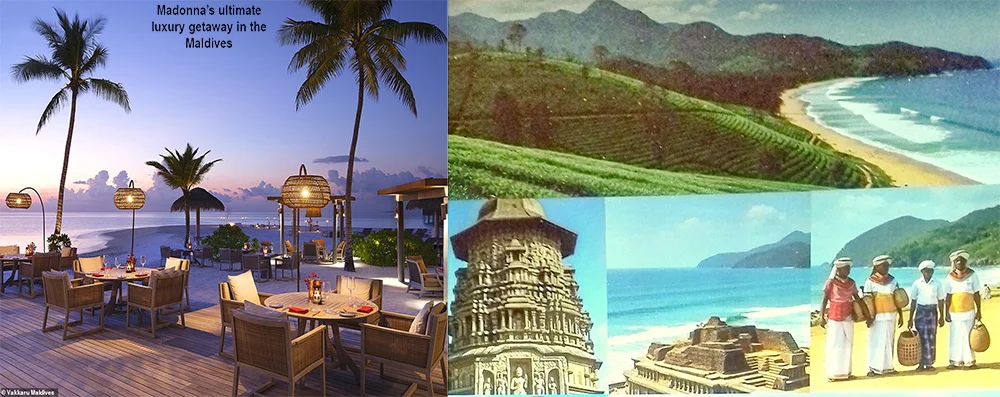
 According to the Sri Lanka Tourism Development Authority (SLTDA), over 130,000 tourists have arrived in the country during the first 15 days of this year.
Impressive, indeed, but how many of them make up the big spending list, or were the majority backpackers?
Of course, we need both – the big spenders and the backpackers – but, as one knowledgeable source said, it’s better to have 10 tourists spending 1000 dollars (per day) than 1000 tourists spending 10 dollars (per day)!
When it comes to tourism, countries often prioritise big spenders over high numbers. Why? Because big spenders bring in more revenue.
A smaller number of high-spending tourists can generate more income for local businesses, infrastructure, and communities, compared to a large number of low-spending visitors.
For example, luxury travellers tend to spend more on accommodation, dining, and activities, boosting the local economy.
Yes, Sri Lanka’s got the potential to attract both – high-end tourists and a steady flow of budget-friendly visitors.
One would say that with our rich culture, stunning beaches, and wildlife, Sri Lanka is a gem for tourism – the high-end tourists, in particular – but, at the same time, the question crops up: how come lots of big spenders visit the Maldives, and the Maldives have no nightlife, wildlife, etc.?
The big spenders, I’m told, visit the Maldives for total relaxation…to check out the beaches and the beautiful resorts, and that’s because they seek exclusivity, luxury, and relaxation.
They’re drawn to stunning beaches, high-end resorts, privacy and exclusivity, world-class amenities (spas, fine dining), unique experiences (sunset cruises, snorkeling).
And, guess what! Anant Ambani, son of Indian businessman Mukesh Ambani, and his wife Radhika Merchant, have arrived in the Maldives for a holiday.
Ambani’s Boeing 737 private jet landed in the Maldives on Saturday (17) and they are currently staying at Waldorf Astoria Maldives Ithaafushi’s private island.
The Ambani family has previously spent holidays in the Maldives. Last year, other members of the family spent the Christmas and New Year period at Waldorf Astoria Maldives Ithaafushi.
In fact, even singer Madonna went to the Maldives, a few years ago, for a $32,000-a-week Maldives holiday, with her family – cycling, sunset picnics on private beaches, infinity pools, luxury spas, etc.
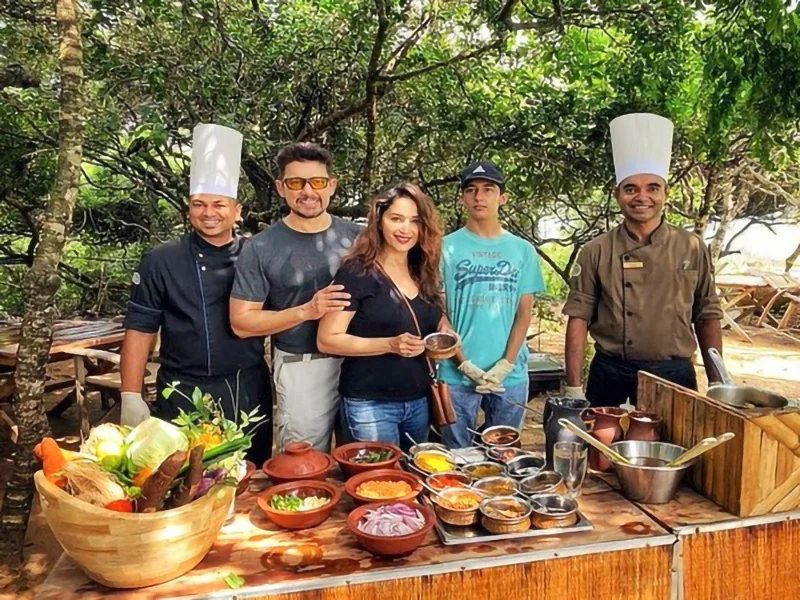
Madhuri Dixit’s cooking scene in Sri Lanka
In early 2020, Bollywood actress Madhuri Dixit visited Sri Lanka for a family vacation, during which she explored local culture, nature, and cuisine.
She took a local cooking class during her visit, which, she later mentioned, was helpful during the 2020 COVID-19 lockdown.
Dixit described a tour of a local tea factory as “intricate and interesting”.
Perhaps, we should introduce Tea Plantations Retreats – High-end bungalows in tea estates with tea-tasting sessions.
Dixit’s trip also included visits to scenic spots in the mountains.
No doubt, Sri Lanka’s got the natural beauty, rich culture, and warm hospitality but we need to package it into luxury experiences that big spenders crave; Think boutique hotels, private villas, and curated experiences.
We should tap more into this luxury relaxation vibe – maybe we could add some more sparkle by introducing Gourmet Food Trails: Exclusive culinary tours with private chefs, wine tastings, and farm visits; Festival Experiences: VIP access to Esala Perahera or Vesak festivals with cultural performances; Island Hopping: Luxury yacht cruises to untouched islands, like Pigeon Island or coral reefs; Adventure Sports: Private surfing lessons in Arugam Bay or hot air balloon rides over Ella.
I believe Sri Lanka could become the ultimate luxury destination if the SLTDA works diligently towards that goal.

Chamuditha’s 110, Akash four-for keep Sri Lanka’s hopes alive in Super Six

Heavy gunfire and blasts heard near airport in Niger’s capital

“We hope that first day of school becomes a cherished memory in the lives of our beloved children” – PM

Rathnayake in Sri Lanka squad for England T20Is; Thushara, Kamindu left out

U19 World Cup: Peake ton fires Australia into the semis

The National Strategic Action Plan to monitor and combat human trafficking (2026-2030) officially launched

‘Dates have the highest sugar content to fight Coronavirus’

Sunday Island 27 December – Headlines

#SundayIsland 17th December – Headlines

Sunday Island – 28th March

Sunday Island Headlines – 21 March

Sunday Island – 21st February – Headlines
-
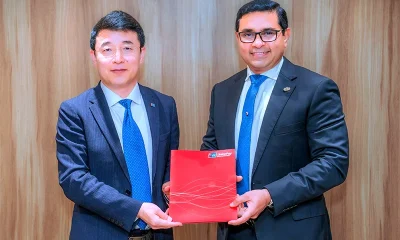
 Business4 days ago
ComBank, UnionPay launch SplendorPlus Card for travelers to China
-
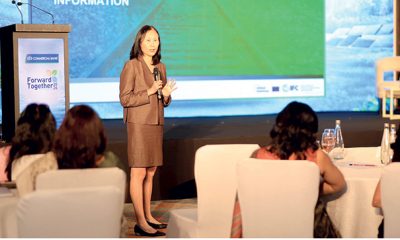
 Business5 days ago
ComBank advances ForwardTogether agenda with event on sustainable business transformation
-
 Opinion5 days ago
Conference “Microfinance and Credit Regulatory Authority Bill: Neither Here, Nor There”
-
 Opinion7 days ago
A puppet show?
-
 Business19 hours ago
Climate risks, poverty, and recovery financing in focus at CEPA policy panel
-
 Opinion4 days ago
Luck knocks at your door every day
-

 Business6 days ago
Dialog Brings the ICC Men’s T20 Cricket World Cup 2026 Closer to Sri Lankans
-
 Features7 days ago
‘Building Blocks’ of early childhood education: Some reflections