
News
Biomass power producer forced to shut due to CEB’s unpaid arrears


Company saves country USD 3 mn. Annually
by Ifham Nizam
An independent power supplier to Sri Lanka’s national grid whose supplies could annually save the country Rs 450 Million in energy costs and USD 3 million in foreign exchange has shut down because of huge unpaid arrears owed to it by the Ceylon Electricity Board and because of the very large recent increases in the cost of wood fuel.
Mirigama Dendro Power (MDP) is a 4 MW biomass plant which provides 3.8 MW of power to Sri Lanka’s national grid annually.
“CEB has not paid us from December last year and owes us Rs 194 million” said MDP Chairman Dr. Romesh Bandaranaike.
The price of fuelwood used by the Plant has increased by over 75% because of the recent exchange rate changes and the price increases in diesel, which has prompted many industries to change the fuel used by their boilers, which supply process steam, from diesel to wood.
“Raw wood has increased from Rs 4/kg. to more than Rs 7/kg and wood chips from Rs 7/kg to over Rs 11/kg. At these prices, it is not economical to run the plant. It will only be viable if there is a substantial increase in what we are paid for the energy we supply to the CEB,” Bandaranaike said.
“We need a minimum increase of Rs 7-8 per kWh from the present Rs 26.65 we are paid if we are to meet our costs and service our bank loans.”
He adds: “The tariff formula in our agreement with the CEB is “backward looking with five year past averages.” It was never designed to handle situations like the present with massive inflation.
The Rs 34-35 per kWh that Dr. Bandaranaike has requested is still substantially lower than what it costs the CEB to generate the same energy, which is Rs 41 per kWh using coal and over Rs 70 per kWh using diesel according to him. The plant can generate 28,000,000 kWh annually.
The savings to the CEB by purchasing power from the plant at Rs 34/kWh rather than generating the power itself at an average cost of Rs 50 per kWh would be Rs. 448 million per year.
Since the plant uses local fuel rather than imported coal or diesel, the foreign exchange savings would be in excess of USD three million, if the average fuel cost per kWh for the CEB’s plants whose power will be replaced is Rs 40.
“We owe the banks Rs 610 million in project loans and Rs 100 million in overdrafts. The collateral for these loans is the plant assets. We have asked the banks to take over our plant because we cannot operate it any more,” Bandaranaike said.
“The shareholders are resigned to losing their equity investment which was in excess of Rs 500 million. The banks will also lose their loan funds because no one will want to take over and run the Plant even if it is given at Rs 1.”
“It is a shame that a Plant which can generate power cheaper than the CEB’s coal power plants and also save USD three million in foreign exchange each year will have to be sold for scrap.”
He says that given his long experience with dealing with the CEB – he used to be the CEO of Sri Lanka’s largest small hydro power developer – there is little hope in approaching the CEB to request a revision in their present tariff and expedite payments.
Repeated requests to the CEB for payments of even a portion of their arrears have also fallen on deaf ears.
“They have so many other problems with power cuts due to fuel unavailability, consumer tariffs substantially lower than costs which result in massive losses, and so on. We are a tiny part of the solution and the CEB has no time for us.”
He says that MDP will make one last attempt to save their plant by going along with the banks to the Public Utility Commission and see if they can make “sanity prevail.”

News
The book “Intimidated?” presents a significant and timely contribution to understanding challenges, resilience, and innovation in the modern world, offering valuable insights for education, research, and social transformation – PM


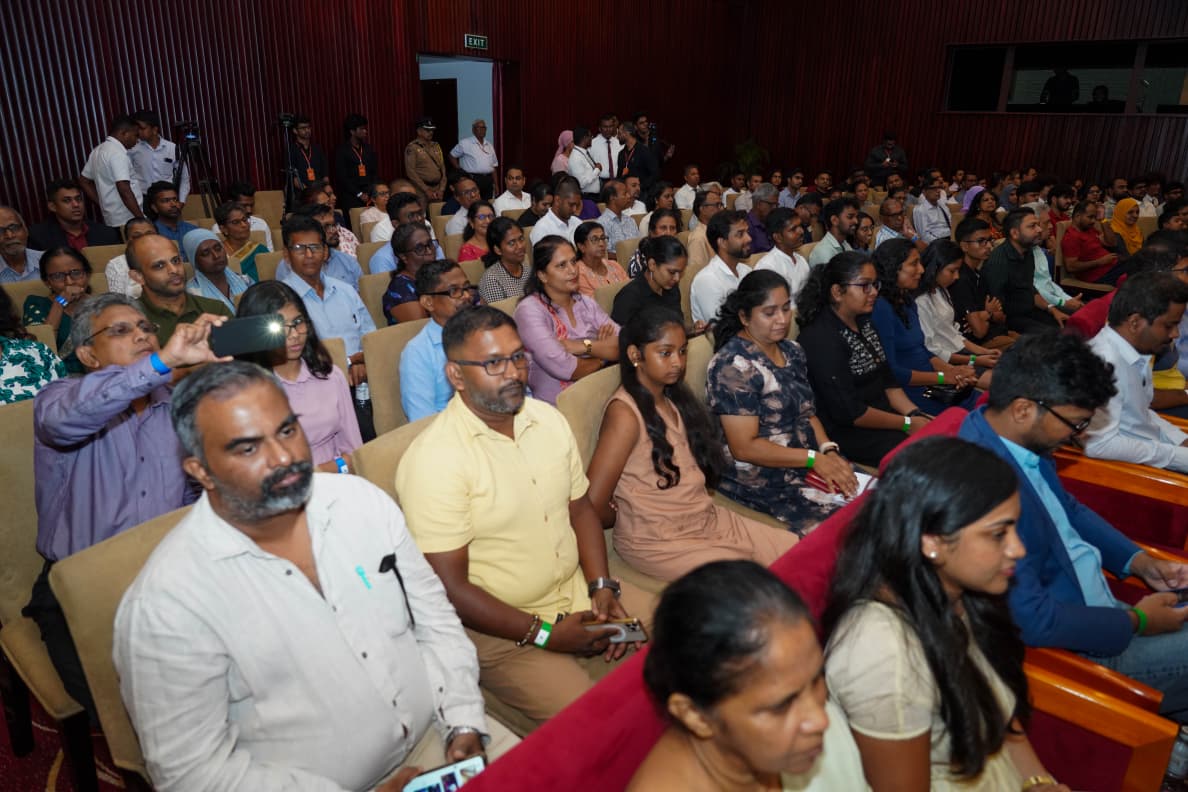
Prime Minister Dr. Harini Amarasuriya made these remarks while participating in the book launch of “Intimidated?” authored by Professor Suranga Nanayakkara, Head of Department at the National University of Singapore, held on Saturday 28 March 2026 at the Lotus Hall of BMICH.
Authored by Professor Suranga Nanayakkara, the book “Intimidated?” reflects on contemporary global and personal challenges, innovation, and the importance of resilience, offering readers a thoughtful and inspiring perspective grounded in academic experience and global exposure. The publication, along with its English translation, was ceremonially presented to the Prime Minister during the event.
Congratulating the author on this important publication, the Prime Minister stated that such scholarly work plays a vital role in inspiring future generations, particularly students and young researchers, to think critically, embrace challenges, and contribute meaningfully to society. She further emphasized the importance of knowledge-sharing and innovation in shaping a progressive and inclusive educational environment in Sri Lanka.
The Prime Minister also ceremonially launched the programme to distribute 5,000 copies of the book free of charge to students and educational institutions, highlighting the importance of making knowledge accessible to a wider audience.
The event was attended by Deputy Minister of Digital Economy Eranga Weeraratne, Secretary to the Ministry of Education Nalaka Kaluwewa, family members of Professor Suranga Nanayakkara, university Vice Chancellors, professors and lecturers, senior officials of the Ministry of Education, school principals, students, and invited guests.

(Prime Minister’s Media Division)
News
It is the government’s objective to create an education system that provides every child with access to modern technological opportunities — Prime Minister

Prime Minister, Dr. Harini Amarasuriya, stated that it is the government’s objective to establish an education system that ensures every child has access to modern technological opportunities.
The Prime Minister made these remarks while attending the opening ceremony of the National Competition of the World Robot Olympiad (WRO), that aims to elevate the technological skills of Sri Lanka’s younger generation to international standards, held on Saturday (28) at Burhani Serendib College in Colombo.
A total of 66 teams from schools across the island participated in this year’s competition, marking a threefold increase compared to last year. The event was held under the theme “Robots Meet Culture,” and over 500 students, presented creations blending local culture with modern engineering concepts.
Expressing her views, the Prime Minister stated:
“In today’s rapidly evolving world, giving priority to the fields of Science, Technology, Engineering, and Mathematics (STEM) should be a national priority.
Platforms such as the World Robot Olympiad provide opportunities for our younger generation to develop essential skills such as logical thinking, innovation, and teamwork”,
Sri Lanka participated in the International Robot Olympiad held in Singapore in 2025, with two teams representing the country, which marked a highly significant and enriching experience for our children.
The Prime Minister further emphasized that the government remains committed to building an education system that enables every child to benefit from such technological opportunities.
The event was attended by the Secretary to the Prime Minister, Pradeep Saputhanthri, officials from the Indian High Commission, government officials, and school students.

(Prime Minister’s Media Division)
Latest News
Heat Index likely to increase up to ‘Caution level’ at some places in the Western, Sabaragamuwa, Southern, Eastern, North-western, Northern and North-central provinces and in Monaragala district

Warm Weather Advisory
Issued by the Natural Hazards Early Warning Centre
Issued at 3.30 p.m. on 29 March 2026, valid for 30 March 2026.
The Heat index, the temperature felt on human body is likely to increase up to ‘Caution level’ at some places in the Western, Sabaragamuwa, Southern, Eastern, North-western, Northern and North-central provinces and in Monaragala district.
The Heat Index Forecast is calculated by using relative humidity and maximum temperature and this is the condition that is felt on your body. This is not the forecast of maximum temperature. It is generated by the Department of Meteorology for the next day period and prepared by using global numerical weather prediction model data.

Effect of the heat index on human body is mentioned in the above table and it is prepared on the advice of the Ministry of Health and Indigenous Medical Services.
ACTION REQUIRED
Job sites: Stay hydrated and takes breaks in the shade as often as possible.
Indoors: Check up on the elderly and the sick.
Vehicles: Never leave children unattended.
Outdoors: Limit strenuous outdoor activities, find shade and stay hydrated.
Dress: Wear lightweight and white or light-colored clothing.
Note:
In addition, please refer to advisories issued by the Disaster Preparedness & Response Division, Ministry of Health in this regard as well. For further clarifications please contact 011-7446491.

The book “Intimidated?” presents a significant and timely contribution to understanding challenges, resilience, and innovation in the modern world, offering valuable insights for education, research, and social transformation – PM

It is the government’s objective to create an education system that provides every child with access to modern technological opportunities — Prime Minister

Caf general secretary resigns amid Afcon final fallout

Heat Index likely to increase up to ‘Caution level’ at some places in the Western, Sabaragamuwa, Southern, Eastern, North-western, Northern and North-central provinces and in Monaragala district

National Namal Uyana Declared a ‘National Heritage of Sri Lanka’

Philippine transport strikers say Marcos Jr failing to control oil prices

‘Dates have the highest sugar content to fight Coronavirus’

Sunday Island 27 December – Headlines

#SundayIsland 17th December – Headlines

Sunday Island – 28th March

Sunday Island Headlines – 21 March

Sunday Island – 21st February – Headlines
-

 News5 days ago
Senior citizens above 70 years to receive March allowances on Thursday (26)
-

 Features2 days ago
A World Order in Crisis: War, Power, and Resistance
-

 Features7 days ago
Trincomalee oil tank farm: An engineering marvel
-

 News3 days ago
Energy Minister indicted on corruption charges ahead of no-faith motion against him
-

 News4 days ago
US dodges question on AKD’s claim SL denied permission for military aircraft to land
-

 Features7 days ago
The scientist who was finally heard
-

 Business4 days ago
Dialog Unveils Dialog Play Mini with Netflix and Apple TV
-

 Sports3 days ago
SLC to hold EGM in April