
News
BIA to handle more than 10 million passengers this year

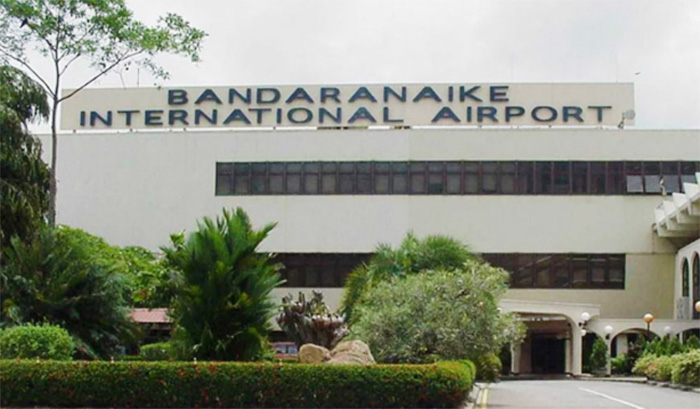
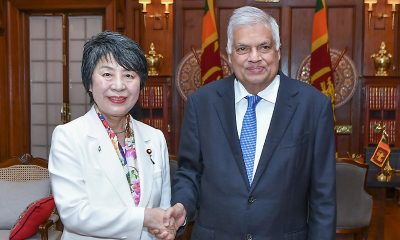
Approximately 10 million passengers would use Bandaranaike International Airport (BIA) by the end of this year, the President’s Media Division (PMD) announced on Wednesday (20), quoting the Chairman of Airport and Aviation Services (Sri Lanka) Ltd., Athula Galkatiya.
He said from January 1 to March 19, 2024, 850,000 air passengers had used BIA services.
Galkatiya said that the total number of passengers that used the BIA in 2022 was five million, and it had increased to around eight million in 2023.
He added that the arrival of foreign tourists had risen owing to President Ranil Wickremesinghe’s economic policies and the peaceful environment within the country.
According to official data, in 2018, about 11 million passengers used the BIA.








News
SC finds Keheliya, others, guilty of violating FRs of public through corrupt drug procurement deal

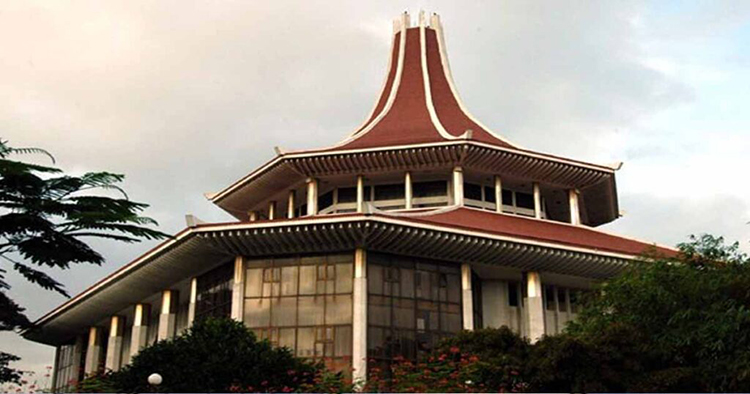
The Supreme Court yesterday held former Health Minister Keheliya Rambukwella and several senior health officials liable for violating the fundamental rights of the public over a controversial drug procurement carried out under the 2022 Indian Credit Line.
Delivering the judgment, a three-judge bench, headed by Chief Justice Preethi Padman Surasena, and comprising Justice Kumudini Wickremasinghe and Justice Janak de Silva, found that the procurement of medical supplies from an unregistered company, in breach of established procedures, had resulted in a serious infringement of public rights.
The Court ruled that the granting of a Waiver of Registration by the authorities was “wrongful, arbitrary and capricious,” and held that the direct procurement carried out on an unsolicited basis was unlawful. The transaction was accordingly declared null and void.
In a significant order, the Court directed Rambukwella to pay Rs. 75 million in compensation to the State from his personal funds.
The then Health Ministry Secretary Janaka Chandragupta and former Chairman of the National Medicines Regulatory Authority (NMRA), Prof. S. D. Jayaratne, were each ordered to pay Rs. 50 million.
The Court further directed NMRA Chief Executive Officer Dr. Wijith Gunasekara and former Director of the Medical Supplies Division Dr. Thusitha Sudarshana to pay Rs. 50 million each as compensation.
The ruling followed the hearing of a fundamental rights petition filed by Transparency International Sri Lanka and two other parties.
The Court also instructed the Commission to Investigate Allegations of Bribery or Corruption to initiate appropriate action under the Anti-Corruption Act against those found responsible.
Senior Counsel Senany Dayaratne, with Nishadi Wickramasinghe, Lasanthika Hettiarachchi, Janani Abeywickrema and Maheshika Bandara, appeared for the petitioners.
News
Sajith nudges govt. to follow India’s example in giving relief to consumers by slashing taxes on fuel
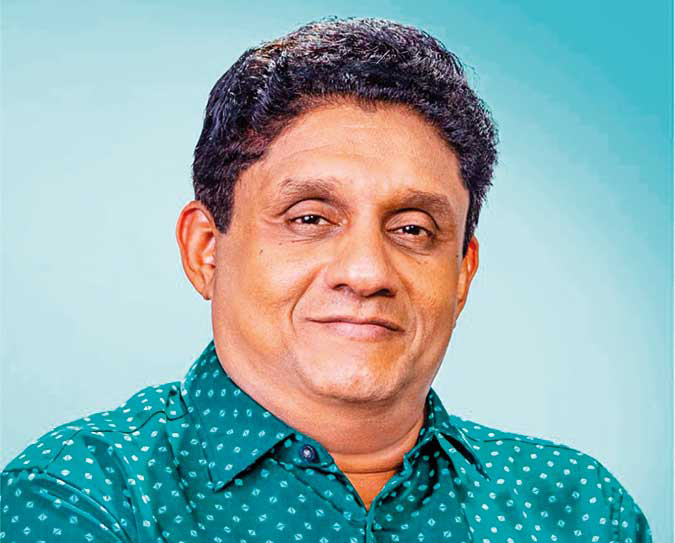
Opposition and SJB Leader Sajith Premadasa yesterday urged President Anura Kumara Dissanayake to reduce taxes on fuel, just as the Indian government has done.
He said in a post on X that “Modi government has decided to reduce the Special Additional Excise Duty on petrol and completely remove it for diesel in order to cushion the hardship on the Indian consumer. High time for Anura Kumara Dissanayake to keep up to his election promise and follow suit.”
Meanwhile foreign media reported that India has slashed excise duties on petrol and diesel to protect consumers and rein in a potential spike in inflation, while imposing windfall taxes on aviation fuel and diesel exports, amid volatile global oil markets, as a result of the Iran war.
Global oil prices have surged past $100 per barrel after the near closure of the Strait of Hormuz, which serves as a conduit for 40% of India’s crude oil imports, since the US and Israel first struck Iran on February 28.
In a government order, released late on Thursday, India’s Finance Ministry reduced the special excise duty on petrol to three Indian rupees ($0.0318) per litre from 13 Indian rupees earlier. It also cut the duty on diesel to zero from INR 10 rupees per litre.
The government did not say how much the duty cuts would cost. The move comes ahead of elections next month in four Indian states and one federal territory, with Indian voters known to be extremely sensitive to higher prices.
“Government has taken a huge hit on its taxation revenues to ensure very high losses of oil companies, approximately 24 rupees a litre for petrol and 30 rupees a litre for diesel, at this time of sky high international prices, are reduced,” Indian Oil Minister Hardeep Singh Puri said in a post on X.
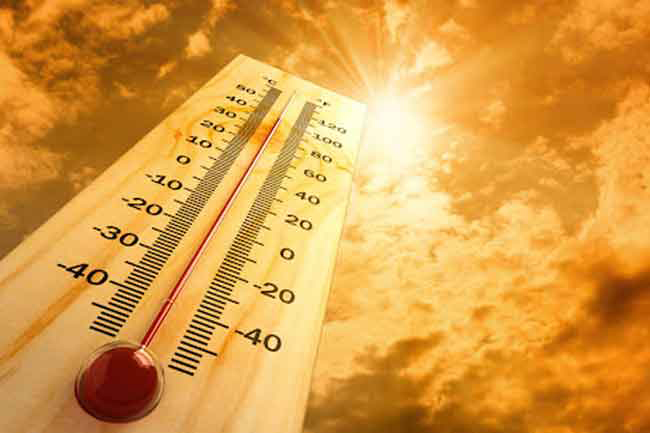
The Met Dept. advises public to avoid outdoors between 11am and 4pm
Sri Lanka is set to experience continued hot weather conditions until May, the Department of Meteorology warned yesterday.
Additional Director General of Meteorology Ajith Wijemanna said the current heatwave is expected to ease only slightly once the southwest monsoon sets in toward the latter part of May.
Wijemanna explained that the country is currently in the first inter-monsoon period, characterised by low wind speeds and shifting wind directions, which contribute to rising temperatures. Reduced cloud cover and the sun’s direct position over the country are causing increased heating of land and sea, generating heat waves and warmer atmospheric conditions.
He cautioned that the hottest period of the day will be between 11:00 a.m. and 4:00 p.m., urging the public to limit outdoor activities during these hours.
Authorities also advised drinking plenty of water, wearing light-colored clothing, and avoiding prolonged exposure to direct sunlight, particularly for children and the elderly.The Meteorology Department further noted that rainfall may remain limited in the coming months, with drier conditions possible due to climate variability.

SC finds Keheliya, others, guilty of violating FRs of public through corrupt drug procurement deal

Sajith nudges govt. to follow India’s example in giving relief to consumers by slashing taxes on fuel

Expect hot weather until end of May

SLRCS steps in to help Lankans to reconnect with loved ones in West Asia

Minister Jayakody indicted in Colombo High Court over alleged corruption

Court of Appeal orders fresh trial into the murder of TNA MP Raviraj

‘Dates have the highest sugar content to fight Coronavirus’

Sunday Island 27 December – Headlines

#SundayIsland 17th December – Headlines

Sunday Island – 28th March

Sunday Island Headlines – 21 March

Sunday Island – 21st February – Headlines
-

 News3 days ago
Senior citizens above 70 years to receive March allowances on Thursday (26)
-

 Features5 days ago
Trincomalee oil tank farm: An engineering marvel
-

 News1 day ago
Energy Minister indicted on corruption charges ahead of no-faith motion against him
-

 News2 days ago
US dodges question on AKD’s claim SL denied permission for military aircraft to land
-

 Features5 days ago
The scientist who was finally heard
-

 Business2 days ago
Dialog Unveils Dialog Play Mini with Netflix and Apple TV
-
 News3 days ago
CEB Engineers warn public to be prepared for power cuts after New Year
-

 Sports1 day ago
SLC to hold EGM in April