
Features
Best option available to President

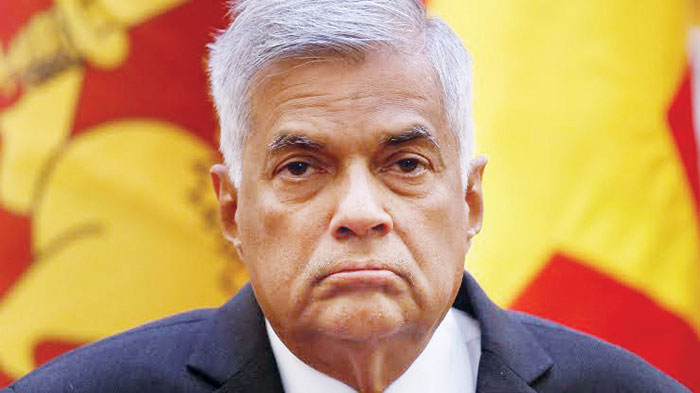
By Jehan Perera
The oft repeated comparison between the economic and political chaos that prevailed before President Ranil Wickremesinghe took office and the stability thereafter is wearing thin. Mahatma Gandhi’s observation that preaching to a hungry man is not effective is becoming increasingly relevant in the present context in which government leaders and their supporters claim that conditions in the country are improving. This claim is giving rise to an argument that is subtly and not-so-subtly being made that elections at this time could pose a danger to these gains. But the reality on the ground contradicts these assertions. The economy has been shrinking from the time of the Aragalaya to the present. The economy has yet to make the turn. In the last quarter it shrank by three percent, adding to the 11 percent shrinkage the previous quarter. This was on top of the seven percent shrinkage in the last year.
The reality on the ground is that people are continuing to lose jobs as businesses close. With businesses downsizing or closing, and the job market shrinking, people have less money in their hands. Even these lesser amounts are being further reduced due to the 10 percent price increases in petrol, diesel and cooking gas that took place last week which will have ripple effects on the entire economy. There is now the prospect of a 20 percent increase in the price of electricity, which went up by 100 to 200 percent in the past year, just like petrol, diesel and cooking gas. The World Bank has stated that the poverty level in the country, which was 13 percent before the economic crisis, is 25 percent today, and is expected to rise to 28 percent in the coming year. The tragedy of the current situation, which cannot be glossed over by strong denials, is that heavy burdens are being cast on those who cannot afford to make ends meet to match government expenditures with revenues.
Despite these sacrifices the people are making, the IMF has informed the government that it is not collecting enough revenue and needs to meet the commitments it has made to get the second installment of the IMF loan. As a result, both direct and indirect taxes are likely to increase further squeezing those who have already been squeezed to their limit. The majority who are now paying their taxes were people who were barely able to cover their expenses, prior to the tax hikes. They find they cannot pay any more. It appears that the IMF is not targeting them for higher taxes. The problem is that the government is not taxing a wide swathe of the wealthiest sectors of the population and not putting a stop to corruption and tax fraud. These include not only the banks and big registered businesses, it also includes politicians, commission agents, drug dealers and unregistered businesses.
IMF REPORT
An indicator of the high level of uncontrollable corruption in the government, at present, can be seen in the ongoing saga over the health system. For months now the country’s top medical and health professionals have been complaining about the shortages of medicines and substandard medicines purchased at higher than market prices. But to no avail. There have been bland denials by the health authorities and the acts of corruption continue if media reports and statements by medical and health professionals are to be believed. Recently there was even a vote of no-confidence against the Health Minister which was defeated by the government using its majority in Parliament. Instead of dealing with the problem and resolving it for the sake of the people who use the state health system, there are denials. It appears that those in the government have lost their conscience. Where there is no internal check and balance it needs to come externally and this appears to be happening in the form of the IMF and the international community on which Sri Lanka is increasingly dependent for a bailout package.
The IMF has recommended 16 priority actions in its recently released Governance Diagnostic Assessment (GDA) on Sri Lanka to address systematic and severe governance weaknesses and deep-rooted corruption vulnerabilities across State functions. According to the statement the IMF released, “The technical assistance report released last week revealed widespread corruption vulnerabilities and governance weaknesses originating from ad-hoc tax policy practices, half-baked approaches to Anti-Money Laundering/Combating Financing of Terrorism (AML/CFT), lack of a robust legal framework and poor processes utilized in SOEs, the absence of public procurement legislation, ad-hoc tax policy practices frequently modifying tax laws, conflict of interest concerns of Central Bank managing EPF and regulating NBIFs, and absence of clear mechanisms for information sharing among tax authorities.” The report also pointed out that “the authorities were yet to take action on recovering stolen funds.”
The IMF also stated “Current governance arrangements have not established clear standards for permissible official behaviour, acted to deter and sanction transgressions, nor pursued individuals and stolen public funds that have exited the country. Regular civil society participation in oversight and monitoring of government actions is restricted by limited transparency, the lack of platforms for inclusive and participatory governance, and by the broad application of counter-terrorism rules. GDA stressed that the impunity for misbehaviour enjoyed by officials continues to undermine trust in the public sector and compounds concerns over limited access to an efficient and rule-based adjudication process for resolving disputes and hurts the integrity of the judiciary.”
REGAIN SUPPORT
Sri Lanka is today at risk of losing support from the international community. IMF support cannot be taken for granted any more. It requires major changes in governance, or at least evidence of a start in that direction. One of the IMF requirements is that the new Anti-Corruption law should be implemented. President Ranil Wickremesinghe, who met USAID Administrator Samantha Power on the sidelines of the United Nations General Assembly (UNGA) sessions in New York, said that tackling corruption would take time. He noted that the Anti-Corruption Commission is currently grappling with the task of recruiting staff with formal training. Given this circumstance, it is anticipated that it will require an additional year to realize the anticipated outcomes of the Anti-Corruption law adoption, making the timeline for achievement approximately two years. This is too late when the IMF is demanding change now. The Bribery Act of 1954 was amended in 1994 leading to the establishment of the Bribery Corruption Commission. Unfortunately, no substantial progress has been made during the past 30 years. It is not surprising that many of our parliamentarians, some of whom are currently in the House, were unable to recruit staff with formal and professional training.
The government’s response to the multiple crises affecting the country is to deny them. The two proposed laws that are currently before Parliament, the Anti-Terrorism Bill and the Online Safety Bill will give the government more power to suppress the rights of free expression and the right to protest. President Ranil Wickremesinghe’s interview with DW German Television has evoked a measure of controversy within the country and internationally. The President was put into a difficult situation by the interviewer who asked him questions about the most serious problems facing the country. These included the issue of child malnutrition, human rights violations of the past and the investigations into the truth of the Easter bombing. The President had to defend the indefensible. The bottom line is that the President can do little to solve these problems as he decided to work with a government composed of the very people who created those problems.
The tragic reality for the President is that the parliamentary majority who form the government appear to be in no mood to be held accountable for economic or war crimes as the IMF and UN Human Rights Council are urging. In these circumstances, the next installments of the IMF loan and the EU’s GSP plus tax relief will become more difficult to access, and may even be lost to the further detriment of the country and its people. If the majority in parliament are unwilling to follow the reformist path that the president needs to follow, he should consider dissolving such a recalcitrant parliament without further delay so that he has a new and less corrupt team of elected representatives of the people to work with to lead Sri Lanka out of its current dark hole into the sunshine.











SERIES: THE GREAT DIGITAL RETHINK: PART I OF V
The Great Digital Bet
 Cast your mind back to the late 1990s. Technology evangelists, in government, in schools, in Silicon Valley boardrooms, were making a very confident prediction: the classroom of the future would be digital, and that future was essentially already here. Wire the schools. Buy the computers. Train the teachers to press the right buttons. And stand back as a generation of turbo-charged, digitally-empowered learners leapfrogs every educational problem ever known to humanity.
It was, to be fair, an intoxicating idea. Who wouldn’t want to modernise education? Who could argue against progress? And so governments around the world, rich and poor, north and south, opened their wallets and signed their contracts. Phase One of the Great Digital Experiment had begun, and very few people were allowed to ask awkward questions.
From Computer Labs to Pocket Supercomputers
Through the 2000s, the experiment scaled up. We moved from shared computer labs to 1:1 device programmes, a laptop or tablet for every child, like some kind of annual prize-giving that never ended. Vendors introduced the irresistibly catchy notion of ‘digital natives,’ a generation supposedly born knowing how to swipe, and, therefore, desperately in need of classrooms that matched their wired-up lives. And, gradually, quietly, commercial platforms began mediating almost everything that happened between a teacher and a student.
The research, even then, was sending mixed signals. OECD data showed that more personal screen time was not automatically producing better learners. Students who used computers heavily in school were not streaking ahead in reading or maths. But these inconvenient findings were absorbed into a simple narrative: the problem was not the technology, it was how teachers were using it. More training. Better platforms. Upgraded hardware. The answer, invariably, was more.
‘The pen is mightier than the keyboard’,
a slogan that turned a psychology study into a revolution in educational policy.
Then the Pandemic Happened
And then came COVID-19, and suddenly every school in the world was forced to discover whether digital education actually worked when it had no analogue alternative. The answer, for most children, was: not very well. Schools closed, screens opened, and learning largely ground to a halt, not because the technology failed, but because education, it turned out, is stubbornly, irreducibly human. What worked was teachers who knew their students, relationships built over time, the unquantifiable texture of a real classroom. A Zoom rectangle, however crisp the resolution, is not a substitute.
The pandemic accelerated digitalisation to a degree nobody had planned for and exposed its limits simultaneously. UNESCO’s own global monitoring report, not exactly a hotbed of anti-technology radicalism, sounded the alarm in 2023, issuing what amounted to a polite institutional apology: technology in education must be a tool that serves learners, not an end in itself. Translation: we may have overdone it.
The Evidence Catches Up
The science, meanwhile, had been accumulating quietly. A widely cited study showed that students who take notes by hand retain and understand information better than those typing on laptops, not because handwriting is some mystical ancient craft, but because the physical slowness forces you to process, summarise and think, while typing tempts you into verbatim transcription. Your fingers race across the keyboard and your brain mostly stays home.
At the scale of entire school systems, OECD analysis of PISA 2022 results, which showed historic declines in reading and mathematics across member countries, drew a striking curve: moderate use of digital devices is associated with better outcomes, but heavy use, especially for leisure during school time, correlates with lower performance. Not a little lower. Substantially lower. And this held true even after accounting for students’ socioeconomic backgrounds. In other words, digital distraction is an equal-opportunity problem.
PISA 2022 also produced some of the most dismal reading and maths scores seen in decades across wealthy nations. Was technology entirely to blame? Almost certainly not. But policymakers looking for something tangible to point at, and something they could actually change before the next election, had found their answer.
The Revolt of the Sensible
Finland, long the world’s favourite education success story, passed legislation in 2025 restricting mobile phone use in schools. Phones are now generally prohibited during lessons unless a teacher grants specific permission. Sweden went further still, announcing a full national ban, phones collected at the start of the school day and returned at dismissal, to take effect in 2026. The Swedes had already begun quietly rolling back their earlier enthusiasm for digital devices in preschools, reintroducing books and handwriting after noticing that children’s reading comprehension was suffering. Australia’s Queensland state had already launched its ‘away for the day’ policy, extending the ban to break times as well as lessons. We do not yet know how other wealthy, technologically advanced countries will respond to this challenge, but they are undoubtedly watching the pioneers of de-digitalisation with close attention.
These are not technophobic, backwards-looking nations. Finland and Sweden sit at the very top of every global education ranking. They have the infrastructure, the teacher quality and the research capacity to make considered decisions. What they have decided, after three decades of enthusiastic investment in digital education, is that smartphones in the hands of children during school hours are doing more harm than good. That is a significant statement from people who know what they are talking about.
The Two-Speed World
Here is where things become genuinely uncomfortable for the international education community. While many rich countries like Finland, Sweden and Australia are scaling back, vast swathes of the world are still scaling up. Across parts of South Asia, Africa and Latin America, and in pockets of the Global North that never quite caught up, governments are signing major contracts for tablet programmes and AI tutoring tools. They are, in good faith, doing what wealthy countries told them to do 30 years ago: invest in technology and watch the learning happen.
The people selling them these systems are not pointing to the Nordic retreat.
The multilateral organisations and development banks financing their ed-tech purchases have been slow to update their models. And so the world is now running two parallel education experiments simultaneously:
some rich countries are de-digitalising, while everyone else is still trying to digitalise in the first place. The disparity is not merely ironic, it raises serious questions about who sets the agenda for global education reform, and whose children bear the cost of getting it wrong. While Finland retreats from the classroom screen, others are still signing the contracts that will fill theirs.
What This Series Is About
Over the next four articles, this column will trace this story across every level of education, from primary classrooms where six-year-olds are learning cursive again in Stockholm, to universities where academics are requiring handwritten examinations partly to outwit AI essay-generators. We will look at the evidence honestly, without either the breathless optimism that launched the digital revolution or the nostalgic panic now driving some of the backlash.
We will also ask the question that international education policy rarely pauses to ask: when the wealthy world discovers that an experiment has not gone quite as planned, who bears the cost of correction, and who is still being sold the original experiment at full price?
De-digitalisation is not a confession. It is, at best, a mid-course correction by systems with the luxury of one. The real question is what we owe the rest of the world, which hasn’t had that luxury yet.
SERIES ROADMAP
Part I: From Ed-Tech Enthusiasm to De-Digitalisation (this article) | Part II: Phones, Pens & Early Literacy in Primary Schools | Part III: Attention, Algorithms & Adolescents in Secondary Education | Part IV: Universities, AI & the Return of the Handwritten Exam | Part V: A Critical Theory of Educational De-Digitalisation
(The writer, a senior Chartered Accountant and professional banker, is Professor at SLIIT, Malabe. The views and opinions expressed in this article are personal.)

The escalating conflict in the Middle East is of such magnitude, with loss of life, destruction of cities, and global energy shortages, that it is diverting attention worldwide and in Sri Lanka, from other serious problems. Barely four months ago Sri Lanka experienced a cyclone of epic proportions that caused torrential rains, accompanied by floods and landslides. The immediate displacement exceeded one million people, though the number of deaths was about 640, with around 200 others reported missing. The visual images of entire towns and villages being inundated, with some swept away by floodwaters, evoked an overwhelming humanitarian response from the general population.
When the crisis of displacement was at its height there was a concerted public response. People set up emergency kitchens and volunteer clean up teams fanned out to make flooded homes inhabitable again. Religious institutions, civil society organisations and local communities worked together to assist the displaced. For a brief period the country witnessed a powerful demonstration of social solidarity. The scale of the devastation prompted the government to offer generous aid packages. These included assistance for the rebuilding of damaged houses, support for building new houses, grants for clean up operations and rent payments to displaced families. Welfare centres were also set up for those unable to find temporary housing.
The government also appointed a Presidential Task Force to lead post-cyclone rebuilding efforts. The mandate of the Task Force is to coordinate post-disaster response mechanisms, streamline institutional efforts and ensure the effective implementation of rebuilding programmes in the aftermath of the cyclone. The body comprises a high-level team, led by the Prime Minister, and including cabinet ministers, deputy ministers, provincial-level officials, senior public servants, representing key state institutions, and civil society representatives. It was envisaged that the Task Force would function as the central coordinating authority, working with government agencies and other stakeholders to accelerate recovery initiatives and restore essential services in affected regions.
Demotivated Service
However, four months later a visit to one of the worst of the cyclone affected areas to meet with affected families from five villages revealed that they remained stranded and in a state of limbo. Most of these people had suffered terribly from the cyclone. Some had lost their homes. A few had lost family members. Many had been informed that the land on which they lived had become unsafe and that they would need to relocate. Most of them had received the promised money for clean up and some had received rent payments for two months. However, little had happened beyond this. The longer term process of rebuilding houses, securing land and restoring livelihoods has barely begun. As a result, families who had already endured the trauma of disaster, now face prolonged uncertainty about their future. It seems that once again the promises made by the political leadership has not reached the ground.
A government officer explained that the public service was highly demotivated. According to him, many officials felt that they had too much work piled upon them with too little resources to do much about it. They also believed that they were underpaid for the work they were expected to carry out. In fact, there had even been a call by public officials specially assigned to cyclone relief work to go on strike due to complaints about their conditions of work. This government official appreciated the government leadership’s commitment to non corruption. But he noted the irony that this had also contributed to a demotivation of the public service. This was on the unjustifiable basis that approving and implementing projects more quickly requires an incentive system.
Whether or not this explanation fully captures the situation, it points to an issue that the government needs to address. Disaster recovery requires a proactive public administration. Officials need to reach out to affected communities, provide clear information and help them navigate the complex procedures required to access assistance. At the consultation with cyclone victims this was precisely the concern that people raised. They said that government officers were not proactive in reaching out to them. Many felt they had little engagement with the state and that the government officers did not come to them. This suggests that the government system at the community level could be supported by non-governmental organisations that have the capacity and experience of working with communities at the grassroots.
In situations such as this the government needs to think about ways of motivating public officials to do more rather than less. It needs to identify legitimate incentives that reward initiative and performance. These could include special allowances for those working in disaster affected areas, recognition and promotion for officers who successfully complete relief and reconstruction work, and the provision of additional staff and logistical support so that the workload is manageable. Clear targets and deadlines, with support from the non-governmental sector, can also encourage officials to act more proactively. When government officers feel supported and recognised for the extra effort required, they are more likely to engage actively with affected communities and ensure that assistance reaches those who need it most.
Political Solutions
Under the prevailing circumstances, however, the cyclone victims do not know what to do. The government needs to act on this without further delay. Government policy states that families can receive financial assistance of up to Rs 5 million to build new houses if they have identified the land on which they wish to build. But there is little freehold land available in many of the affected areas. As a result, people cannot show government officials the land they plan to buy and, therefore, cannot access the government’s promised funds. The government needs to address this issue by providing a list of available places for resettlement, both within and outside the area they live in. However, another finding at the meeting was that many cyclone victims whose lands have been declared unsafe do not wish to leave them. Even those who have been told that their land is unstable feel more comfortable remaining where they have lived for many years. Relocating to an unfamiliar area is not an easy decision.
Another problem the victims face is the difficulty of obtaining the documents necessary to receive compensation. Families with missing members cannot prove that their loved ones are no longer alive. Without official confirmation they cannot access property rights or benefits that would normally pass to surviving family members. These are problems that Sri Lanka has faced before in the context of the three decade long internal war. It has set up new legal mechanisms such as the provision of certificates of absence validated by the Office on Missing Persons (OMP) in place of death certificates when individuals remain missing for long periods. The government also needs to be sensitive to the fact that people who are farmers cannot be settled anywhere. Farming is not possible in every location. Access to suitable land and water is essential if farmers are to rebuild their livelihoods. Relocation programmes that fail to take these realities into account risk creating new psychological and economic hardships.
The message from the consultation with cyclone victims is that the government needs to talk more and engage more directly with affected communities. At the same time the political leadership at the highest levels need to resolve the problems that government officers on the ground cannot solve. Issues relating to land availability, legal documentation and livelihood restoration require policy decisions at higher levels. The challenge to the government to address these issues in the context of the Iran war and possible global catastrophe will require a special commitment. Demonstrating that Sri Lanka is a society that considers the wellbeing of all its citizens to be a priority will require not only financial assistance but also a motivated public service and proactive political leadership that reaches out to those still waiting to rebuild their lives.
by Jehan Perera

 A recent panel discussion at the University of Peradeniya examined the implications of the Supreme Court’s judgement on ragging, in which the Court recognised that preventing ragging requires not only criminal penalties imposed after an incident occurs but also systems and processes within universities that enable victims to speak up and receive support. Bringing together perspectives from law, university administration, psychology and students, the discussion sought to understand why ragging continues to persist in Sri Lankan universities despite the existence of legal prohibitions. While the discussion covered legal and institutional dimensions, one theme emerged clearly: addressing ragging requires more than laws and disciplinary rules. It requires institutions that are capable of supporting victims.
Sri Lanka enacted the Prohibition of Ragging and Other Forms of Violence in Educational Institutions Act No. 20 of 1998 following several tragic incidents in universities, during the 1990s. Among the most widely remembered is the death of engineering student S. Varapragash at the University of Peradeniya in 1997. Incidents such as this shocked the country and revealed the consequences of allowing violent forms of student hierarchy to persist. The 1998 Act marked an important legal intervention by recognising ragging as a criminal offence. The law introduced severe penalties for individuals found guilty of engaging in ragging or other forms of violence in educational institutions, including fines and imprisonment.
Despite the existence of this law for nearly three decades, prosecutions under the Act have been extremely rare. Incidents continue to surface across universities although most are not reported. The incidents that do reach university administrations are dealt with internally through disciplinary procedures rather than through the criminal justice system. This suggests that the problem does not lie solely in the absence of legal provisions but also in the ability of victims to come forward and pursue complaints.
The tragic reminders; the cases of Varapragash and Pasindu Hirushan
Varapragash, a first-year engineering student at the University of Peradeniya, was forced by senior students to perform extreme physical exercises as part of ragging, resulting in severe internal injuries and acute renal failure that ultimately led to his death. In 2022, the courts upheld the conviction of one of the perpetrators for abduction and murder. The case illustrates not only the brutality of ragging but also how long and difficult the path to justice can be for victims and their families. Even when victims speak about their experiences, they may not always disclose the full extent of what they have endured. In the case of Varapragash, the judgement records that the victim told his father that he was asked to do dips and sit-ups. Varapragash’s father had testified that it appeared his son was not revealing the exact details of what he had to endure due to shame.
More than two decades after the death of Varapragash, the tragedy of ragging continues. The 2025 Supreme Court judgement arose from the case of Pasindu Hirushan, a 21-year-old student of the University of Sri Jayewardenepura, who sustained devastating head injuries at a fresher’s party, in March 2020, after a tyre sent down the stairs by senior students struck him. He became immobile, was placed on life support, and returned home only months later. If the Varapragash case exposed the deadly consequences of ragging in the 1990s, the Pasindu Hirushan case demonstrates that universities are still failing to prevent serious violence, decades after the enactment of the 1998 Act. It was against this background of continuing institutional failure that the Supreme Court issued its Orders of Court in 2025. Among the key mechanisms emphasised by the judgement is the establishment of Victim Support Committees within universities.
Why do victims need support?
Ragging in universities can take many forms, including verbal humiliation, physical abuse, emotional intimidation and, in some instances, sexual harassment. While all forms of ragging can have serious consequences, incidents involving sexual harassment often present additional barriers for victims who wish to come forward. Victims may hesitate to complain due to weak institutional mechanisms, fear of retaliation, or uncertainty about whether their experiences will be taken seriously. In many cases, those who speak out are confronted with questions that shift attention away from the alleged misconduct and onto their own behaviour: why did s/he continue the conversation?; why did s/he not simply disengage, if the harassment occurred as claimed?; why did s/he remain in the environment?; or did his/her actions somehow encourage the accused’s behaviour? Such responses illustrate how easily victims can be subjected to a second layer of scrutiny when they attempt to report incidents. When individuals anticipate disbelief, minimisation or blame, silence may appear safer than disclosure. In such circumstances, the presence of a trusted institutional body, capable of providing guidance, protection and support, become critically important, highlighting the need for effective Victim Support Committees within universities.
What Victim Support Committees must do
As expected by the Supreme Court, an effective Victim Support Committee should function as a trusted institutional mechanism that places the safety and dignity of victims at the centre of its work. The committee must provide a safe and confidential point of contact through which victims can report incidents of ragging without fear of intimidation or retaliation. It should assist victims in understanding and pursuing available complaint procedures, while also ensuring their immediate protection where there is a risk of continued harassment. Recognising the psychological harm ragging may cause, the committee should facilitate access to counselling and emotional support services. At a practical level, it should also help victims document incidents, record statements, and preserve evidence that may be necessary for disciplinary or legal proceedings. The committee must coordinate with university authorities to ensure that complaints are addressed promptly and responsibly, while maintaining strict confidentiality to protect the identity and well-being of those who come forward. Beyond responding to individual cases, Victim Support Committees should also contribute to broader awareness and prevention efforts, within universities, helping to create an environment where ragging is actively discouraged and students feel safe to report incidents. Without such support, the process of pursuing justice can become overwhelming for individuals who are already dealing with the emotional impact of abuse.
Making Victim Support Committees work
According to the Orders of Court, these committees should include representatives from the academic and non-academic staff, a qualified counsellor and/or clinical psychologist, an independent person, from outside the institution, with experience in law enforcement, health, or social services, and not more than three final-year students, with unblemished academic and disciplinary records, appointed for fixed terms. Further, universities must ensure that committees consist of individuals who possess both expertise and genuine commitment in areas such as student welfare, psychology, gender studies, human rights and law enforcement, in line with the spirit of the Supreme Court’s directions, rather than consisting largely of ex officio positions. If treated as routine administrative positions, rather than responsibilities requiring specialised knowledge, sensitivity and empathy, these committees risk becoming symbolic rather than functional.
Greater transparency in the appointment process could strengthen the credibility of these committees. Universities could invite expressions of interest from individuals with relevant expertise and demonstrated commitment to supporting victims. Such an approach would help ensure that the committees benefit from the knowledge and dedication of those best equipped to fulfil this role.
The Supreme Court judgement also introduces an important safeguard by giving the University Grants Commission (UGC) the authority to appoint members to university-level Victim Support Committees. If exercised with integrity, this provision could help ensure that these committees operate with greater independence. It may also help address a challenge that sometimes arises within institutions, where individuals, with relevant expertise, or strong commitment to addressing issues, such as violence, harassment or student welfare, may not always be included in institutional mechanisms due to internal administrative preferences. External oversight by the UGC could, therefore, create opportunities for such individuals to contribute meaningfully to Victim Support Committees and strengthen their effectiveness.
Ultimately, the success of the recent judgement will depend not only on the directives it issued, the number of committees universities establish, or the number of meetings they convene, or other box-checking exercises, but on how sincerely those directives are implemented and the trust these committees inspire among students and staff. Laws can prohibit ragging, but they cannot by themselves create environments in which victims feel safe to speak. That responsibility lies with institutions. When universities create systems that listen to victims, support them and treat their experiences with seriousness, universities will become places where dignity and learning can coexist.
(Udari Abeyasinghe is attached to the Department of Oral Pathology at the University of Peradeniya)
Kuppi is a politics and pedagogy happening on the margins of the lecture hall that parodies, subverts, and simultaneously reaffirms social hierarchies.
by Udari Abeyasinghe

SriLankan Airlines Alerts Customers to Social Media Scams

Four dead 32 injured in head on collision at Weerawila

JMSDF ship OONAMI concludes goodwill visit

Cabinet nod to amend Central Cultural Fund Act No. 57 of 1980
’National Namal Uyana’ declared as a National Heritage
Establishment of Supervisory Committees for restoring economic activities.

‘Dates have the highest sugar content to fight Coronavirus’

Sunday Island 27 December – Headlines

#SundayIsland 17th December – Headlines

Sunday Island – 28th March

Sunday Island Headlines – 21 March

Sunday Island – 21st February – Headlines
-

 News7 days ago
Historic address by BASL President at the Supreme Court of India
-

 Sports7 days ago
The 147th Royal–Thomian and 175 Years of the School by the Sea
-

 Business3 days ago
Browns EV launches fast-charging BAW E7 Pro at Rs. 5.8 million
-

 Life style4 days ago
From culture to empowerment: Indonesia’s vision for Sri Lanka
-
 News7 days ago
Power sector reforms jolted by 40% pay hike demand
-

 Latest News4 days ago
QR code system will be implemented for fuel with effect from 06.00 a.m. today (15th)
-

 Opinion6 days ago
M. D. Banda: Memories of Appachchi – II
-

 News2 days ago
Australian HC debunks misleading travel risk claims for Sri Lanka