
Latest News
Ben Duckett 76, Harry Brook 71* hand England solid advantage over West Indies

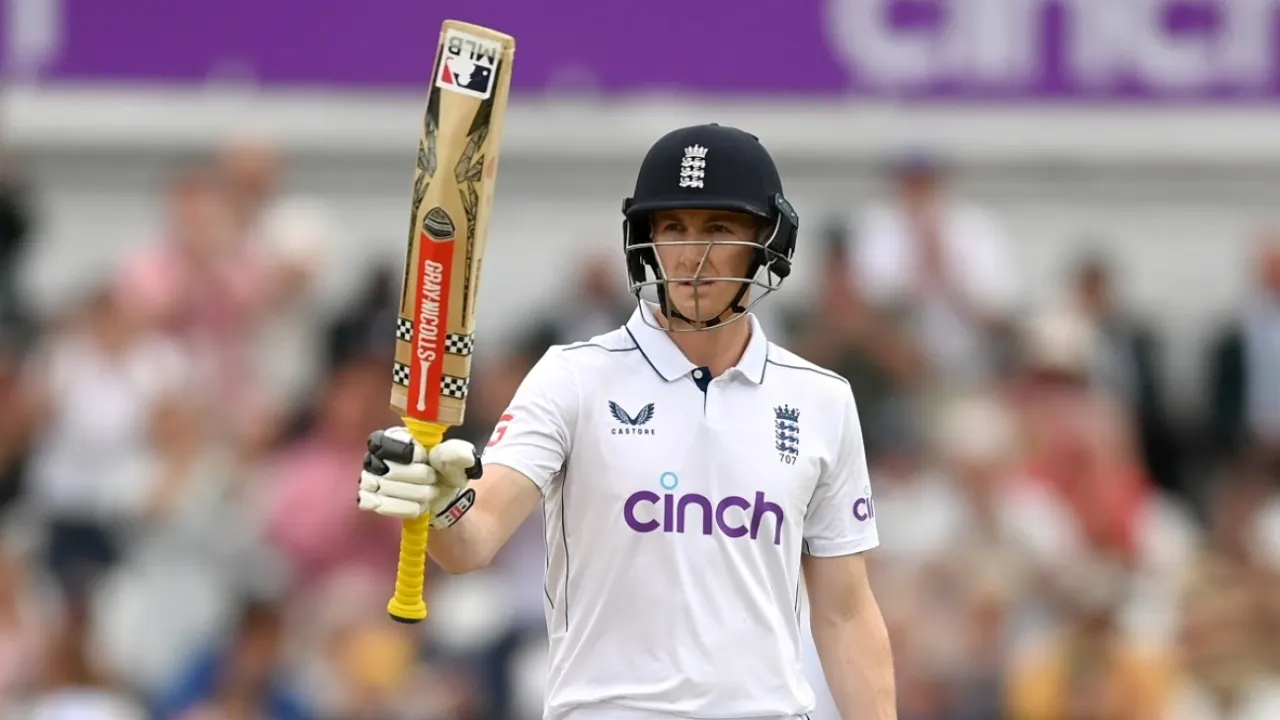
Half-centuries to three of their top five allowed England to wrest back control of the second Test after West Indies’ spirited lower-order resistance had given the tourists a narrow first-innings lead on an enthralling third day at Trent Bridge.
Twin fifties from Ben Duckett and Ollie Pope – the biggest contributors in England’s first innings – steadied the hosts after the loss of Zak Crawley just ten balls into their second innings, a 119-run partnership for the second wicket overhauling West Indies’ 41-run lead and pulling them 86 ahead.
Then fifty to Harry Brook during another century stand for England – worth 108 so far with Joe Root – left West Indies frustrated. At stumps on day three, Brook was unbeaten on 71 and Root was 37 not out.
Crawley, dismissed for a duck in the first innings, managed 3 in the second before his freak run-out at the non-striker’s end. Duckett drove heartily back towards the bowler Jayden Seales, who thrust out a hand on his follow through and the ball deflected off his fingers as Crawley was backing up, his bat still in the air when the stumps were broken.
Duckett raised his second fifty of the match in 55 balls with a trio of sweeps off consecutive deliveries in front of square off Kevin Sinclair, top-edged through fine leg and then behind square to add to his quick-fire 71 in the first innings.
The day’s overcast conditions grew heavier at tea with a very light rain shower sweeping through around the scheduled resumption. Pope, England’s top-scorer in the first innings with 121, brought up his fifty soon after the interval with a single off Alzarri Joseph, but immediately after the misshapen ball was replaced, the same bowler lured Pope into a drive, the outside edge sailing to Sinclair at gully.
Alzarri Joseph then pinned Duckett lbw with a toe-crusher of an inswinging yorker, the batter failing to overturn a straightforward dismissal on DRS, and England went from 127 for 1 to 140 for 3.
Brook and Root steadied things again, though. Brook was hit in the midriff by one that nipped back from Alzarri Joseph, but pulled the next for four through midwicket to move within one boundary of his half-century; and he got there punching the first ball of Alzarri Joseph’s next over to the boundary through wide long-off.
Brook raised the century partnership with back-to-back fours through the cordon off Seales, who was clearly fuming at the end of the over. When Brook and Root strode off the field after the next over, they had every reason to look pleased.
Earlier, Joshua Da Silva’s resolute half-century, and Shamar Joseph’s big-hitting cameo from No. 11 took West Indies into the lead. Da Silva remained unbeaten on 82, having added fifty runs to his overnight score, when Shamar Joseph fell on the final ball of an extended first session for 33 off 27 balls, the pair putting on 71 runs off 78 for the tenth wicket.
Chris Woakes found plenty of swing to lead the bowling for England with three wickets for the day, including two in as many balls, to finish with 4 for 84.
West Indies would have been thrilled with an improved batting performance, led by a century for Kavem Hodge, and Alick Athanaze’s 82 on the second day, which gave them some hope of levelling the series after an innings defeat at Lord’s. But after further encouragement with Crawley’s dismissal, they may be disappointed with their failure to capitalise.
England bowled just one over with the second new ball on Friday evening, but under far cloudier skies, it took just 15 deliveries on Saturday morning for Woakes to break through, Jason Holder prodding at one outside off stump and getting caught behind. Sinclair survived a run-out chance when Pope’s shy at the stumps from short cover went wide, but he was gone soon after, thanks to Brook’s lightning reflexes at gully, off Gus Atkinson.
Alzarri Joseph was put down by Ben Stokes, running in from cover, on 7, off the bowling of Atkinson, but Woakes claimed two wickets in as many balls when he had Alzarri Joseph chasing a wide one outside off stump and feathering behind to Jamie Smith, and then bowled Seales for a first-ball duck.
Shamar Joseph survived the hat-trick ball to support Da Silva, who had taken it slowly through the first 90 minutes of the day but brought up his fifty in emphatic style, using Mark Wood’s pace to guide the ball over the fence at deep extra cover.
Da Silva took another six off Wood over deep third to move West Indies past the 400-mark, then Shamar Joseph drew his side level with England’s first-innings 416 by thrashing Atkinson for six in front of square. He sent broken roof tiles raining on to spectators sitting in the stands below at backward square leg next, and threaded four through fine leg to take 16 off the over.
Da Silva amassed 18 runs off one Joe Root over with three consecutive fours followed by a heave over long-on for six, his third maximum of the innings.
Wood, who had left the field late on day two suffering cramp after a lightning fast four-over spell in the morning followed by ten more overs of hard, fast graft, snared the wicket that had eluded him when Shamar Joseph sent a leading edge high to mid-on, Atkinson snaffling the catch.
Brief scores:[stumps day 3]
England 416 and 248 for 3 in 51 overs (Ben Duckett 76, Harry Brook 71*, Ollie Pope 51, Joe Root 37*; Alzarri Joseph 2-58) lead West Indies 457 in 111.5 overs (Kraigg Brathwaite 48, Mikyle Louis 21, Alick Athanaze 82, Kaveem Hodge 120, Jason Holder 27, Joshua Da Silva 82*, Shamar Joseph 33; Chris Woakes 4-84, Gus Atkinson 2-107, Shoaib Bashir 2-108) by 207 runs
[Cricinfo]

Latest News
Landslide Early Warnings issued to the Districts of Kandy, Kegalle, Matale and Ratnapura

The Hational Building Research Institute (NBRI) has issued landslide early warnings to the Districts of Kandy, Kegalle, Matale and Ratnapura valid from 2200 hrs on 03rd October upto 2200 hrs on 04th October 2026.
Accordingly,
LEVEL II (AMBER) landslide early warnings have been issued to the Divisional Secretaries Divisions and surrounding areas of Udu Dumbara and Minipe 8n the Kandy district, Dehiowita in the Kegalle district, and Ambanganga Korale and Matale in the Matale district.
LEVEL I (YELLOW) landslide early warnings have been issued to the Divisional Secretaries Divisions and surrounding areas of Rambukkana in the Kegalle district, Rattota in the Matale district, and Eheliyagoda in the Ratnapura district.

The head of Turkiye’s football refereeing body and four other officials have been placed in pretrial detention by a court as part of a corruption investigation, the state news agency Anadolu reports.
Ferhat Gundogdu, head of the Central Referees Committee, and six others appeared before a judge over allegations of manipulation of the referee administration process, Anadolu said on Saturday.
They appeared on Friday before a judge at Istanbul’s Caglayan courthouse on several charges, including forgery of official documents, breach of trust and illegal acquisition of personal data, the report said.
The judge remanded five people in custody and granted the other two conditional release, Anadolu said.
It was the latest scandal to shake football in Turkiye, coming exactly a year after the Turkish Football Federation (TFF) suspended 149 referees on charges of illegal betting.
On Thursday night, police from the illegal betting and sports crime unit also detained Yasin Kol, a referee from Turkiye’s top-flight Super Lig, as well as an assistant referee, media reports said.
Justice Minister Akin Gurlek said prosecutors are examining claims about “interference in the processes of referee classification, assignments, scoring and appointments as well as the exams on rules”.
During raids on Tuesday, police searched the VAR room at TFF’s headquarters in Istanbul. Observers said the investigation was likely linked to last year’s betting scandal and would have implications for the federation.
“It does seem to be a continuation of 2025, and it looks like it will continue further,” sports journalist Ayhan Sensoy told the AFP news agency.
Sensoy, who wrote a 2024 book on the issue called The Gambling Pit, said it was unlikely that federation bosses “have any chance of staying in office”.
So far, the TFF has not directly addressed the arrests as its top officials are due to fly home on Saturday after attending Friday night’s Belgium-Turkiye UEFA Nations League clash in Liege, which Turkiye lost 3-0.
[Aljazeera]
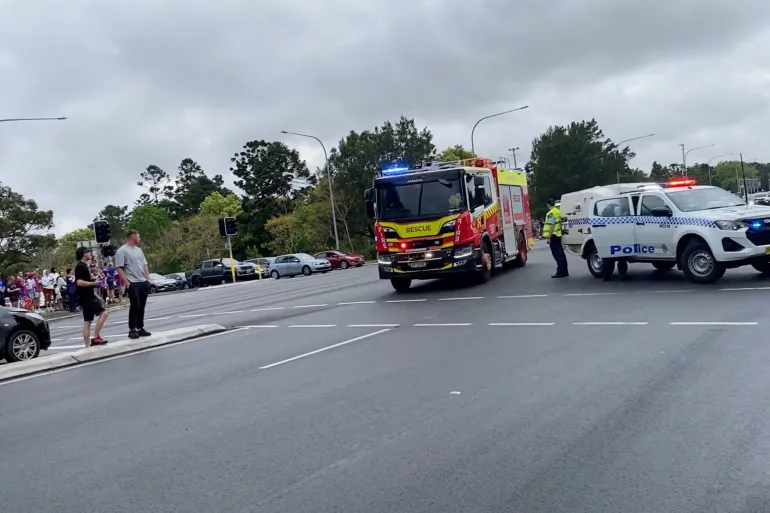
A car has crashed into a crowd of rugby league supporters in the eastern Australian city of Newcastle, injuring 10 people, including three children.
New South Wales police said on Saturday that two of the injured – a five-year-old girl and a 67-year-old man – were in a critical condition and the other eight were in stable condition in hospital.
Police said they had arrested the 18-year-old man driving the vehicle and were investigating what happened. They said the crash was not believed to be related to “terrorism”.
The crowd had gathered to farewell the local rugby league side, the Newcastle Knights, ahead of their grand final against the Sydney Roosters on Sunday.
Newcastle Lord Mayor Gavin Morris said the driver, a rugby league fan, had lost control of his vehicle and had been taken into custody.
“He was revving the car, he was excited, he was a supporter, he was there for the joy of the moment,” Morris told the national broadcaster ABC.
“Somehow he lost control of the car … and he’s gone into the crowd,” he added.
Prime Minister Anthony Albanese said: “My thoughts are with everyone injured or involved in the horrible incident this morning in Newcastle.”
“Rugby league brings people together, and this should have been a weekend of excitement and pride for Newcastle fans,” he wrote in a social media post.
[Aljazeera]

Landslide Early Warnings issued to the Districts of Kandy, Kegalle, Matale and Ratnapura

No handshakes and a delayed ceremony as India beat Pakistan at Asian Games

Showers or thundershowers will occur in most parts of the island after 1.00 p.m

Lanka enters new phase of prosecutions as hurdles clear

Police warn: Court evaders face property seizure

Nearly 20 Iranian tankers stranded off Lanka amid US sanctions

‘Dates have the highest sugar content to fight Coronavirus’

Sunday Island 27 December – Headlines

#SundayIsland 17th December – Headlines

Sunday Island – 28th March

Sunday Island Headlines – 21 March

Sunday Island – 21st February – Headlines
-

 News6 days ago
Police remove Thileepan statue in Jaffna
-

 Features6 days ago
The 22nd Amendment, constitutional recovery and illiberal slippage
-

 Features6 days ago
Of foreigners as CEOs of Lankan ventures
-

 Latest News4 days ago
Gold winner Tharanga gets brand-new Honda Vezel from SLAAJ
-

 News6 days ago
Sajith rejects Jt. Opp. protest sabotage claim; SJB TU chief demands remedial action
-

 Features4 days ago
Why Sri Lanka needs an Inclusive Civic Nationalism – urgently
-

 News3 days ago
US-assisted ‘Ice’ detection: NPC to examine IGP’s move to transfer drug-busting team
-

 Features5 days ago
Thailand’s biggest new global star …