
News
Belarus, Russia, Ukraine rights activists win Nobel Peace Prize

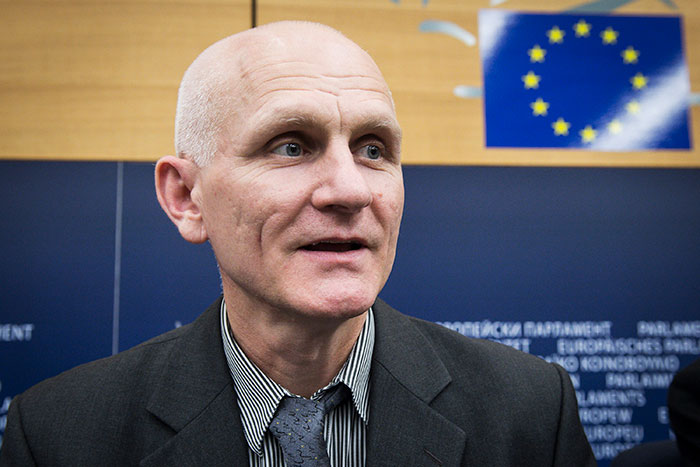
Jailed human rights advocate Ales Bialiatski from Belarus, the Russian human rights organisation Memorial, and the Ukrainian human rights group Center for Civil Liberties, have won the 2022 Nobel Peace Prize for their efforts to document human rights abuses.The announcement was made on Friday at the Norwegian Nobel Institute in Norway’s capital, Oslo.
“The Norwegian Nobel Committee wishes to honour three outstanding champions of human rights, democracy and peaceful co-existence in the neighbour countries Belarus, Russia and Ukraine,” said Committee Chair Berit Reiss-Andersen, who also called on Belarus to release Bialiatski from prison.
The Nobel Peace Prize, worth 10 million Swedish crowns, or about $900,000, will be presented in Oslo on December 10, the anniversary of the death of Swedish industrialist Alfred Nobel, who founded the awards in his 1895 will.
“The Peace Prize laureates represent civil society in their home countries. They have for many years promoted the right to criticise power and protect the fundamental rights of citizens,” the Norwegian Nobel Committee said in its citation.
“They have made an outstanding effort to document war crimes, human right abuses and the abuse of power. Together they demonstrate the significance of civil society for peace and democracy.”
Memorial said that winning the award was recognition of its human rights work and of colleagues who continue to suffer “unspeakable attacks and reprisals” in Russia.
“It encourages us in our resolve to support our Russian colleagues to continue their work at a new location, despite the forced dissolution of MEMORIAL International in Moscow,” said a statement by Memorial board member Anke Giesen to Reuters news agency.
‘Very powerful message’
Kristian Herbolzheimer, the director of the International Catalan Institute for Peace, told Al Jazeera from Brussels that the prize highlighted “the fraternity between these three countries who are facing similar challenges and situations”.
“But beyond that, the committee has awarded the relevance of civil society and that goes beyond these three countries. There is a shrinking space for critical voices inside countries all over the world, no matter if they are autocracies or democracies,” he said. “Therefore this sends a very powerful message.”
Bialiatski, the 60-year-old head of Belarus rights group Viasna, was arrested in July last year on charges of tax evasion, a move that critics of Belarusian strongman Alexander Lukashenko saw as a thinly veiled tactic to silence his work.Bialiatski’s organisation, which translates to “Spring” and was founded in 1996, is Belarus’s most prominent rights group, whose work has charted the increasingly authoritarian tendencies of Lukashenko and his security forces.
Established during mass pro-democracy protests several years after the collapse of the Soviet Union, it sought to help imprisoned protesters and their families.In the years since, Viasna and Bialiatski have gained prominence as Lukashenko’s regime has leaned on more brutal ways of retaining its tight grip on power. Source: Al Jazeera






The Sri Lanka Banks’ Association (SLBA) yesterday in a statement assured the public that banks would continue to operate on all five weekdays as an essential service, despite the temporary measures introduced to conserve fuel and energy resources.
The statement said: Accordingly, banks will remain open from Monday to Friday, including Wednesdays, with operations on Wednesdays limited to the hours of 9.00 a.m. to 1.00 p.m. Customers will therefore continue to have access to core banking services throughout the week without disruption.
Reaffirming its commitment to supporting national priorities during this period, the SLBA urged customers to make greater use of digital and online banking channels, including mobile banking applications and internet banking platforms, to carry out routine transactions. Customers are also encouraged to rationalise travel and visit bank branches only for essential requirements.
The Association emphasised that these measures are in line with broader efforts to conserve fuel and energy, and called onthe public to support the national initiative by avoiding non-essential travel and minimising unnecessary energy usage wherever possible.
The SLBA expressed confidence that the prevailing global uncertainties impacting fuel supplies will stabilise in the near term, enabling Sri Lanka’s economy to continue its forward momentum without prolonged disruption.
The Sri Lanka Banks’ Association is the apex body representing all Licensed Commercial Banks and Licensed Specialised Banks in the country.
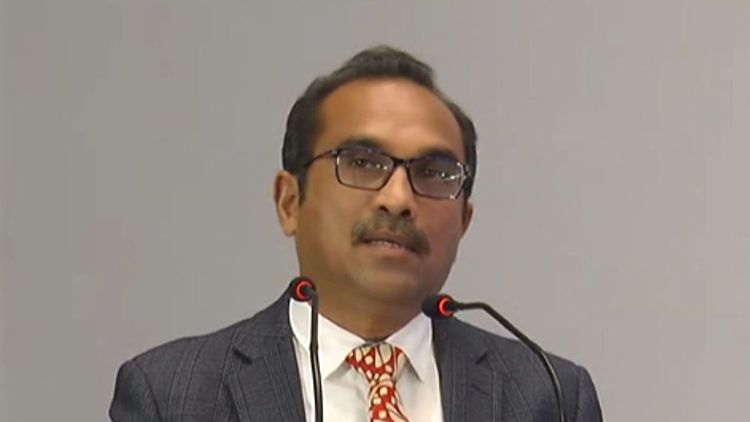
Minister of Transport, Highways and Urban Development Bimal Ratnayake yesterday told Parliament that issues faced by the public in obtaining fuel QR codes would be addressed within the day.
Responding to a query, the Minister said fuel consumption in several districts had risen to nearly double the usual levels, placing added strain on the distribution system.
He said difficulties in accessing QR codes had primarily affected individuals using mismatched vehicle and phone number records, including owners of older vehicles with new phone numbers and those with newly registered vehicles linked to old numbers. He assured that steps were being taken to rectify these issues promptly.
The Minister noted that no such complications had been reported among users with consistent records, such as old vehicles paired with original phone numbers or new vehicles registered with updated contact details.
Providing an update on the system, he said around seven million users were registered under the QR programme in 2023, with the figure expected to increase to approximately 7.2 million this year. At present, about 5.5 million users have completed registration.
He said approximately 2.7 million outdated entries in the database had been removed over a two-day period as part of system improvements.
Minister Ratnayake said some filling stations had reported sales volumes reaching up to two-and-a-half times normal levels, exerting pressure on storage and distribution capacities. He urged the public to avoid panic, expressing confidence that the situation would normalise by today.
He said the “odd-even” fuel distribution system had been introduced to ease unnecessary pressure, although the QR-based system alone was sufficient to manage distribution efficiently.
The Minister also clarified that vehicle owners without number plates could still obtain fuel by producing valid documentation, including a revenue licence, emission certificate, vehicle registration certificate or insurance certificate, all of which carry the registration number.
He added that once the system stabilises, authorities would take action against any fraudulent activities linked to fuel distribution.
By Saman Indrajith
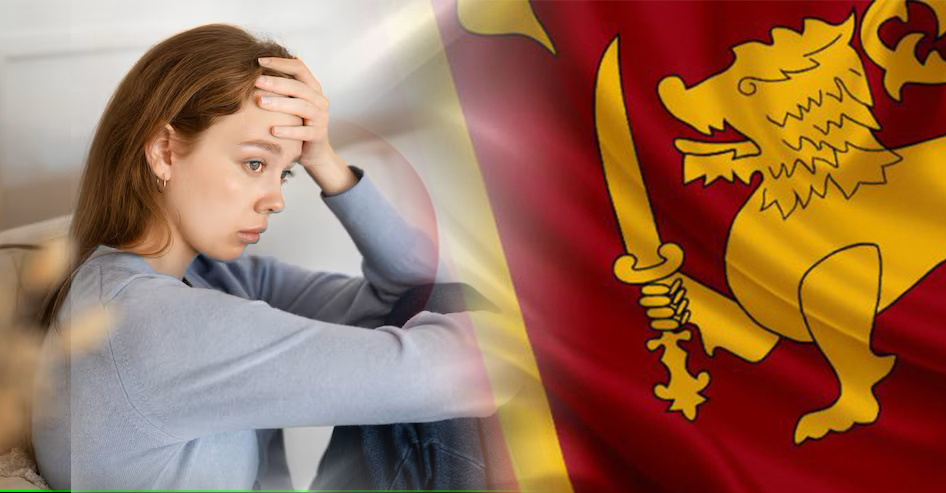
Sri Lanka has been ranked among the least happy countries in the World Happiness Report 2026, placing 134th with a score of 4.0.
The latest report shows Sri Lanka slipping one position from 133rd in 2025, ranking alongside Ethiopia and trailing behind regional neighbours India, Pakistan and Bangladesh.
Finland topped the global rankings as the happiest country, followed by Iceland, Denmark, Costa Rica and Sweden. Norway, the Netherlands, Israel, Luxembourg, Switzerland, New Zealand, Mexico, Ireland, Belgium and Australia completed the top 15.
The report, compiled by the Wellbeing Research Centre at the University of Oxford, is based on findings from the Gallup World Poll, which surveys respondents in 147 countries.
Participants are asked to evaluate their lives using the Cantril Ladder scale, ranging from 0, representing the worst possible life, to 10, representing the best possible life.
Researchers analyse six key factors; GDP per capita, life expectancy, generosity, and perceptions of freedom and corruption to explain differences between countries. Rankings are calculated using a three-year average to minimise fluctuations caused by major events such as conflicts or economic crises.

Fifa rules women’s teams must have female coaches

Banks to operate five days a week; shorter hours on Wednesday

Iran war threatens Sri Lanka’s fragile recovery; SMEs face “Survival Crisis” – Prof. Rohan de Silva

Hidden costs of war

Science and diplomacy in a changing world

Netanyahu says Israel ‘acted alone’ in attack on Iranian gas field

‘Dates have the highest sugar content to fight Coronavirus’

Sunday Island 27 December – Headlines

#SundayIsland 17th December – Headlines

Sunday Island – 28th March

Sunday Island Headlines – 21 March

Sunday Island – 21st February – Headlines
-

 Business4 days ago
Browns EV launches fast-charging BAW E7 Pro at Rs. 5.8 million
-

 Life style5 days ago
From culture to empowerment: Indonesia’s vision for Sri Lanka
-

 News2 days ago
CIABOC questions Ex-President GR on house for CJ’s maid
-
 Business6 days ago
Sri Lanka Institute of Information Technology raises the bar for academic excellence
-

 Life style5 days ago
Ranjith Fernando celebrates cricketing journey with Hob Nails to Spikes
-

 Latest News5 days ago
QR code system will be implemented for fuel with effect from 06.00 a.m. today (15th)
-

 News3 days ago
Australian HC debunks misleading travel risk claims for Sri Lanka
-

 News3 days ago
Sri Lankan marine scientist Asha de Vos honoured at UNGA opening