
Foreign News
Battling a rare brain-eating disease in an Indian state

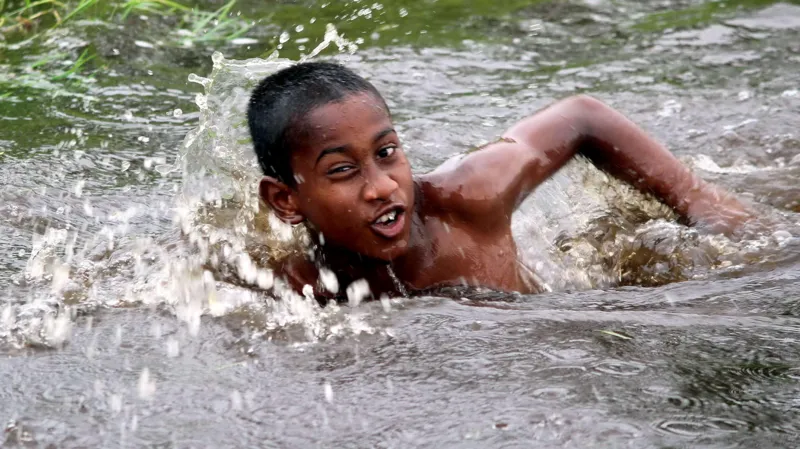
On the eve of Onam, the most joyous festival in India’s Kerala state, 45-year-old Sobhana lay shivering in the back of an ambulance, drifting into unconsciousness as her family rushed her to a medical college hospital.
Just days earlier, the Dalit (formerly known as untouchables) woman, who earned her living bottling fruit juices in a village in Malappuram district, had complained of nothing more alarming than dizziness and high blood pressure. Doctors prescribed pills and sent her home. But her condition spiralled with terrifying speed: uneasiness gave way to fever, fever to violent shivers, and on 5 September – the main day of the festival – Sobhana was dead.
The culprit was Naegleria fowleri – commonly known as the brain-eating amoeba – an infection usually contracted through the nose in freshwater and so rare that most doctors never encounter a case in their entire careers. “We were powerless to stop it. We learnt about the disease only after Sobhana’s death,” says Ajitha Kathiradath, a cousin of the victim and a prominent social worker.
In Kerala this year, more than 70 people have been diagnosed and 19 have died from the brain-eating amoeba. Patients have ranged from a three-month-old to a 92-year-old man.
Normally feeding on bacteria in warm freshwater, this single-cell organism causes a near-fatal brain infection, known as primary amoebic meningoencephalitis (PAM). It enters through the nose during swimming and rapidly destroys brain tissue.
Kerala began detecting cases in 2016, just one or two a year, and until recently nearly all were fatal. A new study has found only 488 cases have been reported globally since 1962 – mostly in the US, Pakistan and Australia. And 95% of the victims have died from the disease.
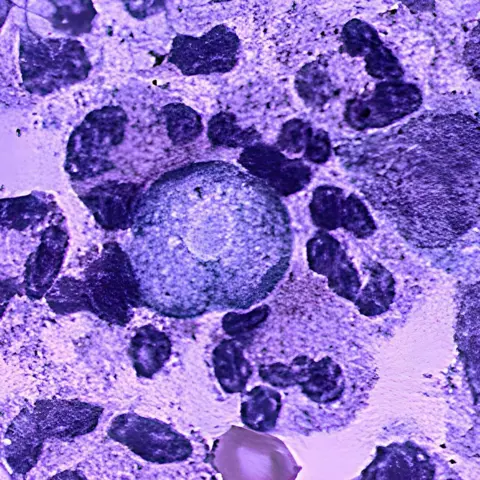
But in Kerala, survival appears to be improving: last year there were 39 cases with a 23% fatality rate and this year, nearly 70 cases have been reported with about 24.5% mortality. Doctors say the rise in numbers reflects better detection, thanks to state-of-the-art labs.
“Cases are rising but deaths are falling. Aggressive testing and early diagnosis have improved survival – a strategy unique to Kerala,” said Aravind Reghukumar, head of infectious diseases at the Medical College and Hospital in Thiruvananthapuram, the state’s capital. Early detection allows customised treatment: a drug cocktail of antimicrobials and steroids targeting the amoeba can save lives.
Scientists have identified around 400 species of free-living amoebae, but only six are known to cause disease in humans – including Naegleria fowleri and Acanthamoeba, both of which can infect the brain. In Kerala, public health laboratories can now detect the five major pathogenic types, officials say.
The southern state’s heavy reliance on groundwater and natural water bodies makes it particularly vulnerable, especially as many ponds and wells are polluted. A small cluster of cases last year, for example, was linked to young men vaping boiled cannabis mixed with pond water – a risky practice that underscores how contaminated water can become a conduit for infection.
Kerala has nearly 5.5 million wells and 55,000 ponds – and millions draw their daily water from wells alone. That sheer ubiquity makes it impossible to treat wells or ponds as simple “risk factors” – they are the backbone of life in the state.
“Some infections have occurred in people bathing in ponds, others from swimming pools, and even through nasal rinsing with water which is a religious ritual. Whether in a polluted pond or a well, the risk is real,” says Anish TS, a leading epidemiologist.

So public health authorities have tried to respond at scale: in a single campaign at the end of August, 2.7 million wells were chlorinated.
Local governments have put up sign boards around ponds warning against bathing or swimming and evoked the Public Health Act to enforce regular chlorination of swimming pools and water tanks. But even with such measures, ponds cannot realistically be chlorinated – fish would die – and policing every village water source in a state of more than 30 million people is unworkable.
Officials now stress awareness over prohibition: households are urged to clean tanks and pools, use clean warm water for nasal ablutions, keep children away from garden sprinklers and avoid unsafe ponds. Swimmers are advised to protect their noses by keeping their heads above water, using nose plugs and avoiding stirring up sediment in stagnant or untreated freshwater.
Yet, striking a balance between educating the public about real risks – of using untreated freshwater – and avoiding fear that could disrupt daily life is challenging. Many say despite guidelines issued for more than a year, enforcement remains patchy.
“This is a difficult problem. In some places [hot springs], signs are posted to warn of the possibility of the amoebae in the water source. This is not practical in most situations since the amoebae can be present in any source of untreated water [lakes, ponds, pools],” Dennis Kyle, a professor of infectious diseases and cellular biology at the University of Georgia, told the BBC.
“In more controlled environments, frequent monitoring for proper chlorination can significantly reduce chances of infection. These include pools, splash pads and other man-made recreational water activities,” he said.

Scientists warn climate change is amplifying the risk: warmer waters, longer summers and rising temperatures create ideal conditions for the amoeba. “Even a 1C rise can trigger its spread in Kerala’s tropical climate and water pollution fuels it further by feeding bacteria the amoeba consumes,” says Prof Anish.
Dr Kyle adds a note of caution, noting that some past cases may simply have gone unrecognised, with the amoeba not identified as the cause.
That uncertainty can make treatment even harder. Current drug cocktails are “sub-optimal,” Dr Kyle explains, adding that in rare survivors, the regimen becomes the standard. “We lack sufficient data to determine if all the drugs are actually helpful or needed.”
Kerala may be catching more patients and saving more lives, but the lesson reaches far beyond its borders. Climate change may be rewriting the map of disease – and even the rarest pathogens may not stay rare for long.
[BBC]


The United States-Israeli war on Iran is estimated to have cost Washington $3.7bn so far in its first 100 hours alone, or nearly $900m a day, driven largely by the huge expenditure of munitions, according to new research.
An analysis by Washington-based think tank the Center for Strategic and International Studies (CSIS) underlined the colossal cost of the war, which entered its seventh day on Friday, as the US attacks Iran with stealth bombers and advanced weapons systems.
Researchers Mark Cancian and Chris Park said only a small amount of the estimated $3.7bn cost of the war in the first 100 hours – or $891.4m each day – was already budgeted for, while most of the costs – $3.5bn – were not.
That meant the Pentagon would likely need to request more funding soon to cover the unbudgeted costs, they said, which was likely to prove a political challenge for the Trump administration and provide “a focal point for opposition to the war,” they said.
Domestic cost-of-living concerns, inflation, and now a knock-on effect of rising gas prices due to the conflict are likely to further diminish support among US citizens for the war. It is also dividing Trump’s “America First” base, which he had promised in his presidential campaigns to not enter “foreign wars”.
Noting that the US Department of Defense had released limited specifics on its operations, the researchers said their analysis drew on Congressional Budget Office (CBO) estimates of the operations and support costs for each unit, adjusting for inflation and unit size, and adding 10 percent for costs of “a higher operational tempo”.
Their analysis said the US had expended more than 2,000 munitions of various types in the first 100 hours of the war, and estimated it would cost $3.1bn to replenish the munitions inventory on a like-for-like basis, with the costs increasing by $758.1m a day.
(Aljazeera)

Britney Spears has been arrested in California under suspicion of driving under the influence.
The singer was detained by California Highway Patrol at around 21:30 local time (05:30 GMT) on Wednesday. A representative for her told the BBC: “This was an unfortunate incident that is completely inexcusable.”
She was released in the early hours of Thursday morning and is due to appear at Ventura County Superior Court on 4 May.
The reason for the singer’s arrest was confirmed to CBS, the BBC’s US partner, by the Ventura County Sheriff’s Office in southern California.
Spears’ representative told the BBC: “Britney is going to take the right steps and comply with the law and hopefully this can be the first step in long overdue change that needs to occur in Britney’s life.
“Hopefully, she can get the help and support she needs during this difficult time.
“Her boys are going to be spending time with her. Her loved ones are going to come up with an overdue needed plan to set her up for success for well being.”
The pop star appeared to have deleted her Instagram account on Thursday as news of her arrest broke.
Spears is one of the most successful pop stars ever, with hits such as Baby One More Time, Toxic, Everytime, Gimme More, Womanizer, and Stronger.
The singer said in January 2024 that she would “never return to the music industry”. Her last song was a duet with Elton John in 2022.
However, in a since-deleted social media post from earlier this year, Spears indicated that, although she would not perform in the US again, she was hoping to play live in the UK and Australia in the near future.
For 13 years until 2021, Spears was in a conservatorship – a legal guardianship that saw her finances and personal life controlled by her father.
The singer published her memoir in 2023 titled The Woman in Me, which saw her reflect on her career and detail her struggles living under the conservatorship.
Her ex-husband, Kevin Federline, released his own memoir, You Thought You Knew, at the end of 2025.
[BBC]
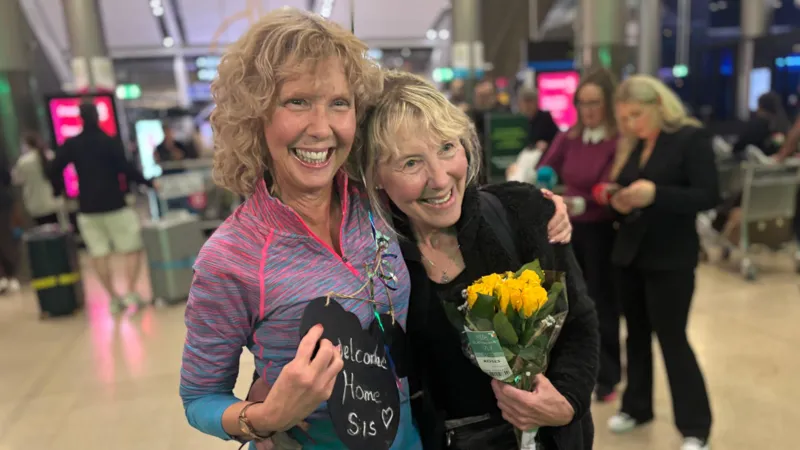
“It’s so good to be home.”
The statement sums up how almost 400 people felt after their flight from Dubai arrived in Dublin on Wednesday night.
The Emirates flight was the first in a number of days after the United States-Israeli attacks on Iran led to the closure of nearly all airspace in the Middle East.
One of the passengers, Norita Geary, said: “Everyone clapped when the plane landed and we all cheered.”
“It was unreal. I mean you see these things on television, you see them in movies but you just don’t think you’ll end up there yourself,” she added.
A second flight directly to Dublin from Dubai is scheduled for Thursday, with a further 400 passengers on it.

Rushali Lakhani said she is feeling “very happy” to be back [BBC]
Rushali Lakhani said she is “very happy” and “very grateful” to be back.
“It was quite a stressful time but grateful and thanking our lucky stars really.”
She said was “it was quite nerve wracking, we couldn’t really sleep much”.
“A lot of sleepless nights, a lot of bangs. There were no airplanes flying so whenever we heard some noises we knew that it wasn’t good news.”
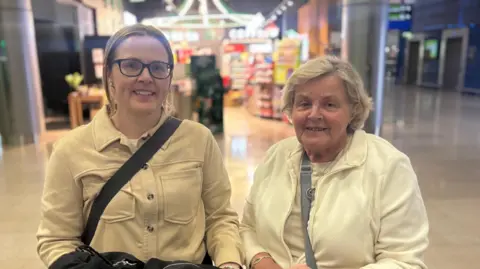
So far 25,000 Irish citizens in the region have registered with the Department of Foreign Affairs – 2,000 of them have said they want to leave.
The Irish government has chartered a flight for Irish citizens from Muscat in Oman on Friday.
The Irish Embassy in the UAE thanked all those had registered but warned that registration is not an expression of interest in a flight.
Meanwhile, a flight chartered by the UK government which had been due to bring back some Britons stranded in the Middle East on Wednesday night did not take off as scheduled..
British citizens stuck in the Middle East have told the BBC there has been a lack of information about available routes to travel home.
The Foreign Office said two more chartered flights would depart by the end of the week.
Foreign Office officials said 138,000 British nationals in the Gulf had registered their presence, of whom 112,000 were in the UAE.
[BBC]

‘No deal with Iran except unconditional surrender,’ Trump says

Tiny possum and glider thought extinct for 6,000 years found in remote West Papua

Maldives Coast Guard Ship Huravee departs island

Cost to US for war on Iran is $3.7bn in first 100 hours, says think tank

More than 120 killed in Israel’s Lebanon attacks as Beirut, south, east hit

Hungary confirms it is holding seven Ukrainian bank workers and $80m

‘Dates have the highest sugar content to fight Coronavirus’

Sunday Island 27 December – Headlines

#SundayIsland 17th December – Headlines

Sunday Island – 28th March

Sunday Island Headlines – 21 March

Sunday Island – 21st February – Headlines
-

 Features5 days ago
Brilliant Navy officer no more
-

 Opinion5 days ago
Sri Lanka – world’s worst facilities for cricket fans
-

 News2 days ago
Legal experts decry move to demolish STC dining hall
-

 Features5 days ago
A life in colour and song: Rajika Gamage’s new bird guide captures Sri Lanka’s avian soul
-

 Business2 days ago
Cabinet nod for the removal of Cess tax imposed on imported good
-

 Features6 days ago
Overseas visits to drum up foreign assistance for Sri Lanka
-
 Features6 days ago
Sri Lanka to Host First-Ever World Congress on Snakes in Landmark Scientific Milestone
-
 Latest News2 days ago
Around 140 people missing after Iranian navy ship sinks off coast of Sri Lanka