
News
BASL files FR petitions in SC over economic crisis


The Bar Association of Sri Lanka (BASL) has filed two fundamental rights applications in the Supreme Court yesterday on the present economic crisis in the public interest.
The applications were filed by the President of the BASL, Saliya Pieris PC; Deputy President, Anura Meddegoda PC; Secretary, Rajeev Amarasuriya; Treasurer, Rajindh Perera; and Assistant Secretary, Pasindu Silva.
The BASL has said in a media stateement: “The Petitioners have claimed that their fundamental rights under Articles 11, 12(1), 13(4), 14(1)(g), 14(1)(h) and 14A of the Constitution are being violated or are in imminent danger of infringement by the actions and/or inaction of the State including the Respondents. The Petitions have made the Attorney General, the Cabinet of Ministers, the Governor of the Central Bank, the Secretary to the Treasury, Secretaries to several Ministries, the Ceylon Electricity Board, the Ceylon Petroleum Corporation and the State Pharmaceutical Corporation as Respondents.
“The Petitioners have made the application as People of Sri Lanka in whom sovereignty is reposed and as People of Sri Lanka in whom is also imposed several Fundamental Duties, under Article 28 of the Constitution for and on behalf of the Bar Association of Sri Lanka, which is the apex professional body in Sri Lanka for Attorneys-at-Law and is committed to upholding the Rule of Law, Fundamental Rights, the Independence of the Judiciary and justice in Sri Lanka, in the public interest.
“The Petitions state that the Country is at present witnessing long queues for the purchase of essential supplies, mass protests and public unrest due to acute short ages and the sharp increase in the cost of goods and services including food, fuel and travel costs.
“The Petitioners complain that Sri Lanka is currently facing an unprecedented economic and financial crisis resulting in acute shortages of fuel, electricity, gas, food, milk powder and medicines. The Petitioners complain that they are compelled to come into court due to the severe shortages in essential goods and services that are considered vital for the survival and existence of the citizens of the Republic in whom is guaranteed the fundamental right to equality, equal protection of the law and the right to life under the Constitution.
“The Petitioners state that in view of the growing unrest and public protests witnessed across the island, they verily fear that there is a substantial, real and grave threat of a breakdown in the law-and-order situation of the Country and a substantial threat to the Rule of Law, which should be addressed through timely and proportionate measures within the legal framework of the country.
“The Petitioners are seeking orders from the Supreme Court:
“1. Directing the Cabinet of Ministers, and/or any other Respondents to immediately consult with all the relevant stakeholders and independent experts to formulate and implement policies to provide uninterrupted access to and to provide concessions in relation to the prices of essential goods and services to the people including LP gas, fuel, electricity, milk powder, medicines and food and to report to the Supreme Court of the policies formulated on the above;
“2. For directions on the Respondents to immediately formulate and implement short term policies and measures to ensure that the people have adequate access to such essentials as well;
“3. To seek directions on the 1” — 28’ Respondents which comprise the Cabinet of Ministers and/or any other Respondents to immediately consult with all the relevant stakeholders and independent experts including the International Monetary Fund to formulate and implement policies to provide uninterrupted access to essentials and report such findings/recommendations and their implementation to the Supreme Court;
“4. Seek directions to formulate mid-term and long-term policies to ensure that the People have uninterrupted access to essentials such as inter alia, food, medicine, fuel, gas and electricity and to formulate medium and long-term policies to provide concessions in relation to the prices of such essential goods and services;
“5. Directions on the Cabinet of Ministers to formulate an urgent national policy to provide immediate relief to the people and businesses affected by the present financial and economic crisis and to formulate and implement urgent policies to prioritize projects and programmes, to alleviate the foreign exchange crisis, guarantee uninterrupted supply of goods and services, control inflation and reduce the cost of living;
“6. Directions on the Cabinet of Ministers to formulate and implement urgent policies to promote the production of local agriculture, dairy farming, and animal husbandry to ensure food security;
“7. Directions on the Respondents in consultation with stakeholders, to formulate new systems, processes, rules and regulatory frameworks which assure transparency and good governance practices in respect of future public debt management.
The Petitioners will be represented by Dr. K. Kanag Isvaran PC, Uditha Egalahewa PC, Suren Gnanaraj and Pulasthi Hewamanne instructed by G.G. Arulpragasam.”

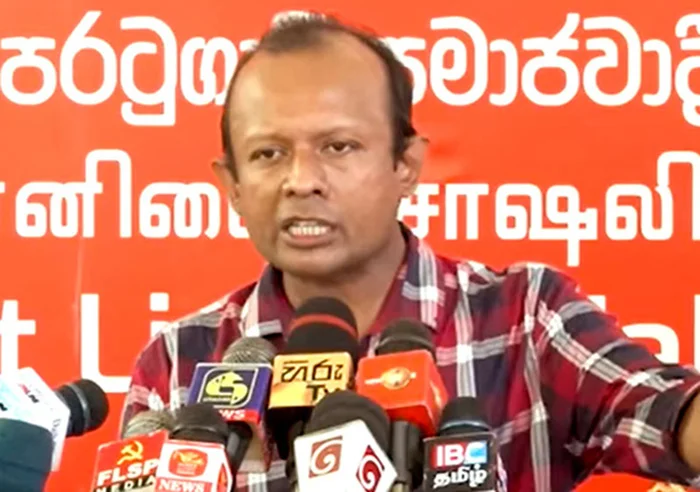
The Frontline Socialist Party (FSP) yesterday accused the government of seeking to use the proposed Protection of the State from Terrorism Act (PSTA) to suppress popular political activity, claiming that some of its provisions were more repressive than those of the Prevention of Terrorism Act (PTA).
FSP Education Secretary Pubudu Jayagoda told a media briefing, in Nugegoda, that the definition of terrorism in the Bill was so broad that it could be used to label almost any form of popular political activity as terrorism.
He said the Bill’s approach to defining terrorism was based largely on attempts to compel a government, or an international organisation, to do, or refrain from doing something, rather than on internationally recognised criteria, such as killings, causing serious bodily harm, kidnapping or acts intended to spread terror among the public.
Jayagoda also alleged that the Bill transferred substantial powers from the judiciary to the executive, while extending powers of arrest, investigation and detention to the armed forces, in addition to the police.
He claimed that the government had sought to portray the Bill as a replacement for the PTA while retaining or introducing provisions that could facilitate political victimisation and repression.
The FSP also questioned the government’s decision to proceed with the Bill, despite having previously sought public views on an earlier draft.
Jayagoda said a draft had been published earlier this year, with the period for public submissions ending on February 28, but the Bill subsequently gazetted was essentially the same draft with some provisions rearranged.
Jayagoda also referred to a letter reportedly sent by Attorney-at-Law Saliya Peiris, a member of a Committee, chaired by President’s Counsel Rienzie Arsecularatne, that had been appointed to draft the legislation. He said Peiris had stated, in the October 06 letter, that changes had been made to the draft prepared by the Committee.
“This means that even the Committee, appointed to prepare the Bill, was a deception,” Jayagoda alleged.
He said that the PSTA was fundamentally similar to the Anti-Terrorism Bill introduced by the previous government, in 2023, which the National People’s Power (NPP) opposed and challenged in court.
“If the NPP opposed that Bill then and is now bringing the same legislation before Parliament, the government must explain its position,” he said.
Jayagoda called on NPP MPs to oppose the PSTA in Parliament and urged trade unions and other groups to build a broad public movement against the legislation.
He challenged the government to an open debate on the Bill.
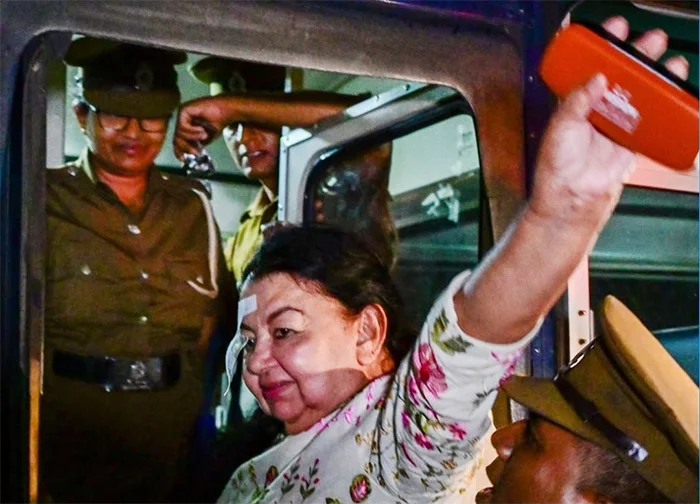
Former First Lady Shiranthi Rajapaksa was yesterday remanded until 13 October after being produced before the Colombo Magistrate’s Court following her arrest by the Commission to Investigate Allegations of Bribery or Corruption (CIABOC).
Shiranthi, wife of former President Mahinda Rajapaksa, was arrested at her residence on Poorwarama Road, Kirulapone, after CIABOC officers recorded a statement from her for nearly two hours.
According to the CIABOC, the arrest was made over allegations that Rs. 10 million obtained from the National Savings Bank through the Siriliya Saviya organisation was misappropriated.
The money was allegedly obtained to provide a Computed Tomography (CT) scanner to the children’s hospital. Investigators allege that the scanner was not provided and that the funds were instead unlawfully used.
CIABOC is investigating alleged offences under the Public Property Act and corruption-related provisions in connection with the transaction and other financial activities involving Siriliya Saviya, which was headed by Rajapaksa.
Rajapaksa returned to Sri Lanka on Monday night on a flight from Malaysia after travelling overseas for medical treatment. She left for Singapore on 16 September after being admitted to a private hospital in Colombo on 15 September following an illness.
She had been due to appear before the Financial Crimes Investigation Division (FCID) on 13 October in connection with its investigation into the financial affairs of Siriliya Saviya.
Meanwhile, her lawyers filed an anticipatory bail application before the Maligakanda Magistrate’s Court on Monday, seeking an order preventing her arrest in connection with the FCID investigation.
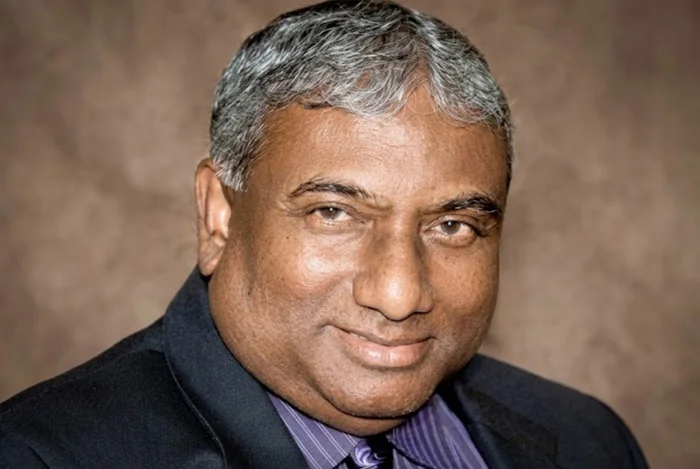
Former National Savings Bank (NSB) Chairman Pradeep Kariyawasam was yesterday granted bail by the Colombo Magistrate’s Court following his arrest by the Commission to Investigate Allegations of Bribery or Corruption (CIABOC).
Kariyawasam, husband of former Chief Justice Shirani Bandaranayake, was arrested in connection with the Bribery Commission’s investigation into the ‘Siriliya Saviya’ account linked to former First Lady Shiranthi Rajapaksa.
The investigation concerns financial activities involving the Siriliya Saviya initiative, which was headed by Rajapaksa, wife of former President Mahinda Rajapaksa.
CIABOC is continuing investigations into the alleged financial irregularities relating to the account.

Showers above 100 mm are likely at some places in the Western, Sabaragamuwa, Central, Uva and Southern provinces and in Anuradhapura district

PSTA worse than PTA: FSP

Shiranthi R remanded until 13 Oct.

Former NSB Chairman Kariyawasam granted bail

Katchatheevu row: India SC urges fishermen to avoid Sri Lankan waters

Remembering Juvenal, Coke, Acton and Machiavelli

‘Dates have the highest sugar content to fight Coronavirus’

Sunday Island 27 December – Headlines

#SundayIsland 17th December – Headlines

Sunday Island – 28th March

Sunday Island Headlines – 21 March

Sunday Island – 21st February – Headlines
-

 Editorial7 days ago
Colombo Port drug bust: The plot thickens
-

 Features5 days ago
The first woman in the foreign service or Ceylon Overseas Service it was then called
-

 Editorial6 days ago
Fuelling discontent and protest
-

 News4 days ago
Geneva takes up Sallay’s case and govt. ignores opportunity to answer accusations
-

 Foreign News5 days ago
Ten injured after car crashes into rugby supporters in Australia
-

 Latest News5 days ago
Tharindu Rathnayake, bowlers secure Asian Games Bronze for Sri Lanka
-

 News5 days ago
Nearly 20 Iranian tankers stranded off Lanka amid US sanctions
-

 Features4 days ago
Sri Lanka Cricket Bill: Governance reform is not yet a cricket strategy