
Latest News
Bangladesh lose 8 for 23 as Ghazanfar spins Afghanistan to victory

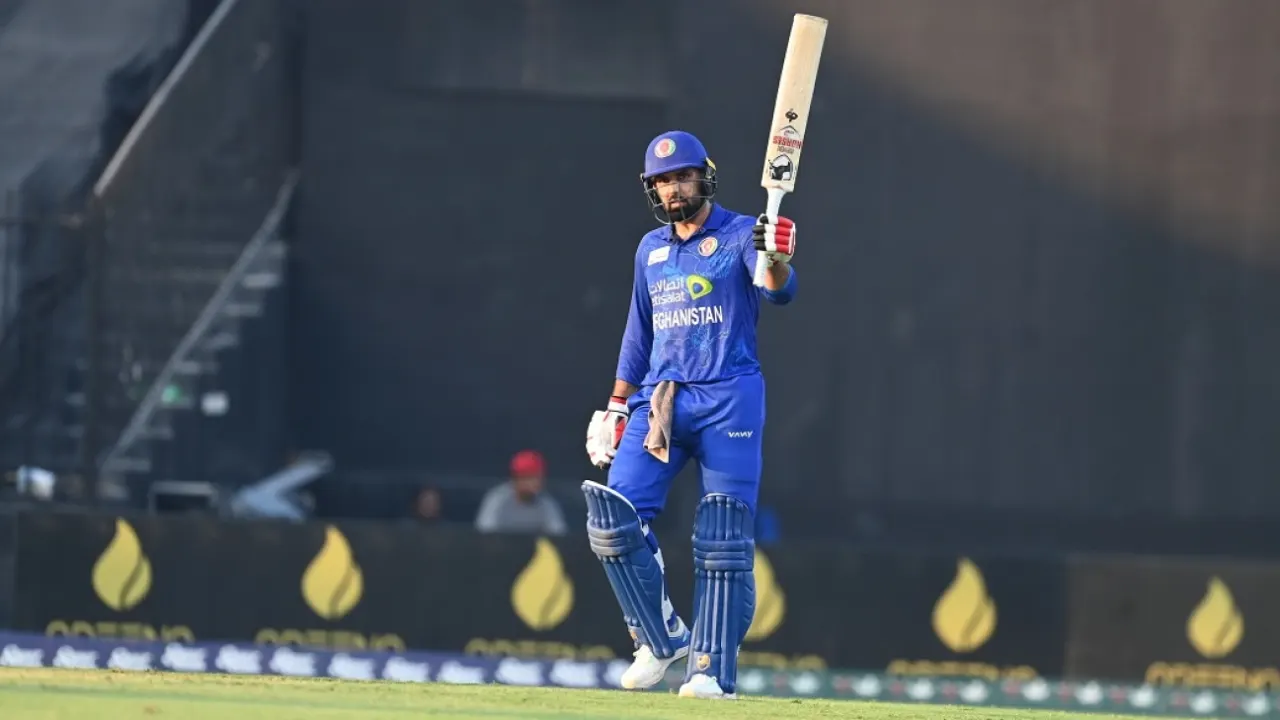
Substitute wicketkeeper Ikram Alikhil had dropped Najmul Hossain Shanto on 21, Mohammad Nabi had put Mehidy Hasan Miraz down on 1, Gulbadin Naib had seen the ball slip through his hands with Mehidy on 4, and Afghanistan had burned both their reviews. At the halfway mark of their chase, Bangladesh were 118 away from their target of 236 and had eight wickets in hand.
What followed was chaos, as AM Ghanzafar sent back one Bangladesh batter after another. From 120 for 2 in the 26th over, Bangladesh lost 8 for 23 to get bowled out inside the 35th over and lost by 92 runs. Ghazanfar finished with a career-best 6 for 26, while Rashid Khan bagged two wickets, as Afghanistan’s spinners ran through Bangladesh.
It was Mohammad Nabi though, who started the slide. In a field change that turned out to be a moment of brilliance, he kept square leg vacant and added a second slip for Shanto. Bangladesh’s captain was tempted immediately, and went sweeping at a length ball slightly wide of off stump. He reached out to paddle sweep, and the top edge popped up for Hashmatullah Shahidi to catch on the fourth attempt at short fine leg.
That broke a 55-run stand between Shanto, who made 47, and Mehidy. The wicket slowed Bangladesh down, and five overs later, in the 31st, Mehidy fell to a terrific catch from Azmatullah Omarzai, again at short fine leg, running across to his left before diving to complete the take. That was Ghazanfar’s second wicket – he had earlier bowled Tanzid Hasan in the fourth over – and that almost flicked a switch in him.
Come the 33rd over, he had Mushfiqur Rahim stumped, Rishad Hossain lbw, and Taskin Ahmed bowled – all off carrom balls. In the over before that, Rashid’s googly had cleaned Mahmudullah up. By this stage, the only matter of interest was if Ghazanfar would complete his hat-trick after having got Rishad and Tasking off successive deliveries to end the over. Bangladesh had two wickets standing, and Rashid cleaned Towhid Hridoy up with another googly.
Ghazanfar couldn’t get the hat-trick at the start of the 35th over, but two balls later had Shoriful Islam bowled to wrap up a dramatic win.
Afghanistan’s victory was set up by two contrasting knocks after they were 71 for 5 in 20 overs. While Shahidi played second fiddle in an innings of 52 from 92 balls, Nabi cracked 84 off 79 deliveries. Their partnership of 104 gave Afghanistan a platform to build on, after Mustafizur Rahman had struck three times and Taskin twice.
While Shahidi was happy to be patient and accumulate singles, Nabi started with a lot more purpose. He dispatched his sixth ball, off Rishad, for a massive six over deep midwicket – a shot he repeated off the same bowler with the same result in the 27th over. In between, Bangladesh lost a review when Rishad and Mushfiqur thought Shahidi had edged behind, only for replays to show a big gap between bat and ball.
The fifty stand between Shahidi and Nabi came up in the 30th over. Then Nabi enjoyed a spate of of luck. First, when on 37 in the 34th over, he went sweeping at Rishad but was struck on his front pad, with neither the umpire giving it out nor Bangladesh opting to review, when DRS would have sent Nabi back. In the 37th, shortly after bringing up his fifty, Nabi slogged Rishad but mistimed, the ball landing just short of the man at long-off who was running forward. In the next over, Nabi went jabbing at a ball from Mahmudullah and got an outside edge that streaked away through the vacant slip region.
Shahidi, meanwhile, took 87 deliveries to get to fifty, remaining content to push for singles and twos. He survived a tight run-out chance at the start of the 40th over, when he pushed the ball to point and the two batters took off for a run. But Shahidi, who was halfway down, was sent back by Nabi, and barely made it before Mushfiqur whipped the bails off.
However, he chopped on off Mustafizur in the 41st, and Rashid swatted one to midwicket off Shoriful, soon after. But Nabi was unmoved. He took Afghanistan to 200 with four overs remaining, and heaved Mustafizur for six over midwicket in the 47th over. Nangeyalia Kharote, who arrived after Rashid’s dismissal, contributed an unbeaten 27, with two fours and a six in the death overs, even as Taskin struck off back-to-back balls in the 48th.


United States Secretary of State Marco Rubio has announced a new set of sanctions against the International Criminal Court (ICC), this time targeting the entity itself, as opposed to the tribunal’s officials or groups that provide support.
The announcement on Friday represented a major escalation from the administration of US President Donald Trump, which has vowed an “all of government” approach to dismantling the court.
“We will ban transactions with this rogue court, cutting off their resources and crippling their ability to operate against us because our message is clear: the United States and the American people are not subject to the jurisdiction of this fake ICC,” Rubio said in a video posted on social media. “Either the ICC will end its threats, or we will end the ICC.”
As justification for its actions, the administration has pointed to the court’s ongoing investigation into abuses committed in Afghanistan, which could ensnare US military and intelligence personnel, as well as the ICC’s arrest warrant for Israeli Prime Minister Benjamin Netanyahu and former Defence Minister Yoav Gallant for war crimes committed in Gaza.
Before Friday’s actions, the US had sanctioned ICC judges and prosecutors, a UN special rapporteur focusing on the occupied Palestinian territories and Palestinian rights groups that have provided evidence to the court.
Several rights groups have challenged those sanctions in US federal court, saying restricting how US citizens interact with the court treads on their constitutional freedoms. Sanctioned ICC judges have also launched legal challenges in the US.
[Aljazeera]

United States President Donald Trump said that Russia has agreed to supply 300,000 tonnes of diesel fuel to global markets amid discussions with Russian President Vladimir Putin.
“I have just concluded a highly successful discussion with President Vladimir Putin, of Russia, wherein it was agreed that Russia will immediately supply over 300,000 Tons of Diesel Fuel to the American and Global Marketplace, another 500,000 Tons during the month of November, and 1,000,000 Tons immediately thereafter,” Trump said in a post on his Truth Social platform.
The president added that Russia would deliver an additional 3 million tonnes of fuel “within a short period of time”. He said that the country would supply 500,000 tonnes in November.
An envoy for Russian President Vladimir Putin, Kirill Dmitriev, praised cooperation between Russia and the United States on diesel and energy in a post on X shortly after.
“Russia-US cooperation on diesel and energy will benefit the world,” Dmitriev wrote on X.
Petrol price pressures
The deal comes despite Ukrainian air strikes, which have taken more than half of the country’s oil refining capacity offline, according to claims made by Ukraine’s Ministry of Defence on Sunday.
The latest announcement comes a week after the G7 countries agreed to release 100 million barrels amid pressure from the White House.
Diesel prices have been elevated in recent months but have started to decline. The average price for a gallon is $6.27 ($1.66 per litre), according to the American Automobile Association (AAA), which tracks daily petrol prices. That’s down $0.10 from this time last week, but up $5.94 from this time one month ago.
[Aljazeera]
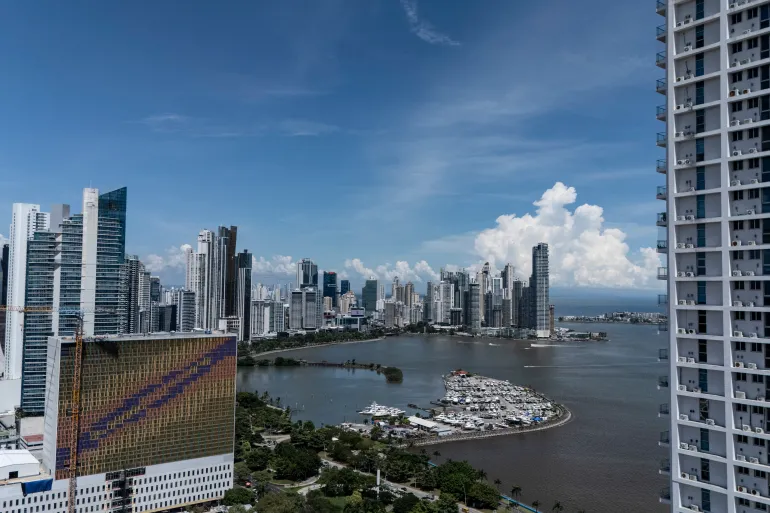
A magnitude 7.7 earthquake has hit southern Panama, triggering tsunami warnings across Central and South America.
The US National Weather Service issued tsunami warnings for Panama, Colombia, Ecuador, Nicaragua and Guatemala on Friday following the quake.
Chile’s naval Hydrographic and Oceanographic Service also issued a tsunami warning.
The US Geological Survey said the earthquake was centred about 10km (6 miles) southwest of the remote community of Pitaloza Arriba along the Pacific Ocean coast.
Residents of Panama City reported feeling tremors, with buildings shaking and people evacuating into the streets.
“We felt it very strongly. It knocked things over in the kitchen, but we’re okay, though we’re very scared,” 60-year-old Rosendo Dominguez, who is from Herrera province, where the earthquake struck, told The Associated Press news agency by phone.
“Everyone is outside, scared,” Dominguez added.
Videos shared by newspaper La Prensa showed the tower of a historic building had collapsed along with several balconies of a residential building in Penonome, a city about halfway between the epicenter and Panama City.
Panama’s ministry of education ordered schools closed.
There have been several destructive earthquakes in the region this year.
In June, twin quakes hit northern Venezuela, causing widespread devastation and killing at least 6,500 people.
In August, a magnitude 7.4 earthquake hit Colombia, killing at least 289 people.
[Aljazwwea]

Sri Lanka ITEC Alumni Association formally launched

Measures underway to protect Diyagama Forest as a Reserve — Deputy Minister of Environment

Showers or thundershowers will occur in most parts of the island after 1.00 p.m.

NPP govt. reminded of its responsibilities as US warship leaves Colombo

CERT: Beware of foreign Uni. scams on social media

Shiranthi receives treatment at National Eye Hospital

‘Dates have the highest sugar content to fight Coronavirus’

Sunday Island 27 December – Headlines

#SundayIsland 17th December – Headlines

Sunday Island – 28th March

Sunday Island Headlines – 21 March

Sunday Island – 21st February – Headlines
-

 Features7 days ago
The first woman in the foreign service or Ceylon Overseas Service it was then called
-

 News6 days ago
Geneva takes up Sallay’s case and govt. ignores opportunity to answer accusations
-

 News7 days ago
Nearly 20 Iranian tankers stranded off Lanka amid US sanctions
-

 Features5 days ago
Preventing grievances from becoming communal
-

 Sports3 days ago
Nissanka absence opens door for Sri Lanka’s young guns
-

 Features6 days ago
Sri Lanka Cricket Bill: Governance reform is not yet a cricket strategy
-

 News4 days ago
Gnansara Thera to be assigned to prison printing section: Officials
-

 News7 days ago
Lanka enters new phase of prosecutions as hurdles clear