
Sports
Bangladesh hoping to improve on previous Men’s T20 World Cup record

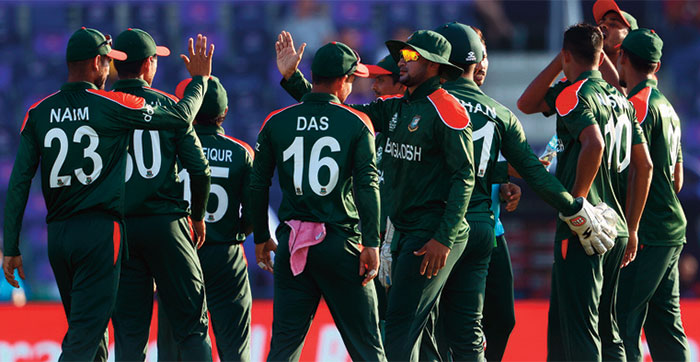
Bangladesh are looking to shake their tag as underachievers when they begin their ICC Men’s T20 World Cup campaign in Australia. Despite being ever-presents at the tournament since its first staging in 2007, the Tigers have won just seven of their 33 matches. A recent tri-series with Pakistan and New Zealand failed to produce a single victory and two changes have been made to the squad off the back of those four matches.
The competition will only get fiercer when they venture down under, with India, Pakistan and South Africa for company in Group 2, in conditions that could not be any more different to what they are accustomed to at home. So how will Bangladesh fare at the World Cup – will they come unstuck again or can they make it a World Cup to remember?
2022 prospects
Bangladesh have an identical record from each of the last three World Cups – having won just two matches, none of which have come at the Super 12 stage. Unlike each of the three previous tournaments, however, Bangladesh will not be starting their campaign at the first-round stage. The opening fixture for Bangladesh is against the runner-up of Group A – Netherlands. A victory there would instill confidence ahead of a crucial match up with South Africa, who are the lowest-ranked side among the other automatic qualifiers in Group 2.
That has to be a game that the squad look to target and a win in Sydney would leave them in a fantastic position ahead of a match-up with the Group B winners in Brisbane. Wins will be hard to come by thereafter, with fixtures against previous winners India and Pakistan. So the realistic ambition for Bangladesh has to be improving on that record of two wins prior to those final two matches.
T20 World Cup History
Arguably Bangladesh’s best T20 World Cup moment came in their very first fixture. Back in 2007 against a highly-fancied West Indies side which included the likes of Chris Gayle, Shivnarine Chanderpaul and Ravi Rampaul, Bangladesh chased down the Windies’ total of 164 with ease, wrapping up victory with 12 balls to spare. Shakib Al Hasan took four wickets that day and contributed with the bat too.
It took another seven years for Bangladesh to taste success again in the competition, as they went winless through each of the 2009, 2010 and 2012 World Cups. The unwanted streak ended on home soil in 2014 with victories over Afghanistan and Nepal but a defeat against Hong Kong in their final group fixture seemed to deflate the team ahead of Super 10 stage, where they lost all four fixtures.
They progressed as group stage winners once again in 2016 but lost all four of their Super 10 stage matches for the second tournament running. Their 2021 campaign then got off to the worst possible start with a defeat to Scotland in Oman. They recovered from there to progress to the Super 12s as group runners-up but struggled thereafter, with a three-run defeat against the West Indies the closest they came to a win over a Full Member nation.
Current form
Preparations began in earnest in July with a pair of three-match series, the first of which came against the Windies. That ended in a 2-0 series defeat after the first contest was abandoned due to rain; Afif Hossain was the shining light of the series, with scores of 51 and 34 from his two innings.
Zimbabwe were next and the Chevrons pulled off a surprise victory in the opening fixture in Harare as Bangladesh finished 17 runs short chasing 205. It seemed as if normality had been restored with a comfortable seven-wicket victory in the second contest, but Zimbabwe once again coasted home in the final T20 and returned home with a 2-1 series win.
A different competition and location failed to yield a change in results, with three straight defeats in the Asia Cup contested in the UAE. The side did then come out on top in a two-match series with the Asia Cup hosts but were firmly third best in their tri-series with Pakistan and New Zealand. Since the last World Cup, they have won four of their 18 T20 matches.
Best batters
Shakib provides a wealth of experience and quality in the middle order. He and Litton Das have proven themselves to be the side’s most consistent batters since the last World Cup. There is no settled opening partnership, however, with four different combinations used during the tri-series in New Zealand. Soumya Sarkar was a late addition to the squad after impressing in that series and could be one to watch for his aggressive intent at the top of the order.
Best bowlers
Mahedi Hasan is the highest-ranked Bangladesh bowler according to the MRF Tyres ICC Men’s T20I Bowling Rankings but there is no place for him among the stable of spin bowlers. In his place, expect Nasum Ahmed and Shakib to try and spin their team to victory – an envious task on flat tracks in Australia.
That means that greater responsibility will fall on the shoulders of left-arm quick Shoriful Islam, who at the age of just 21 has the chance to make himself a hero after finishing as the joint-highest wicket-taker in Bangladesh’s series in the UAE.






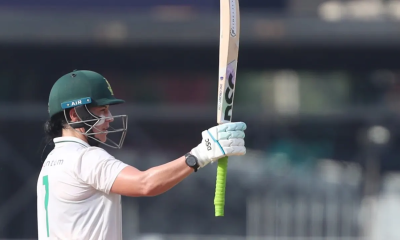

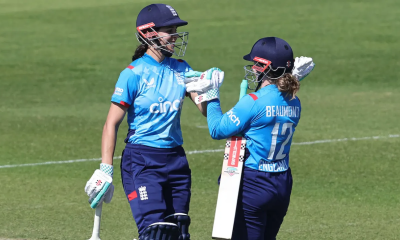


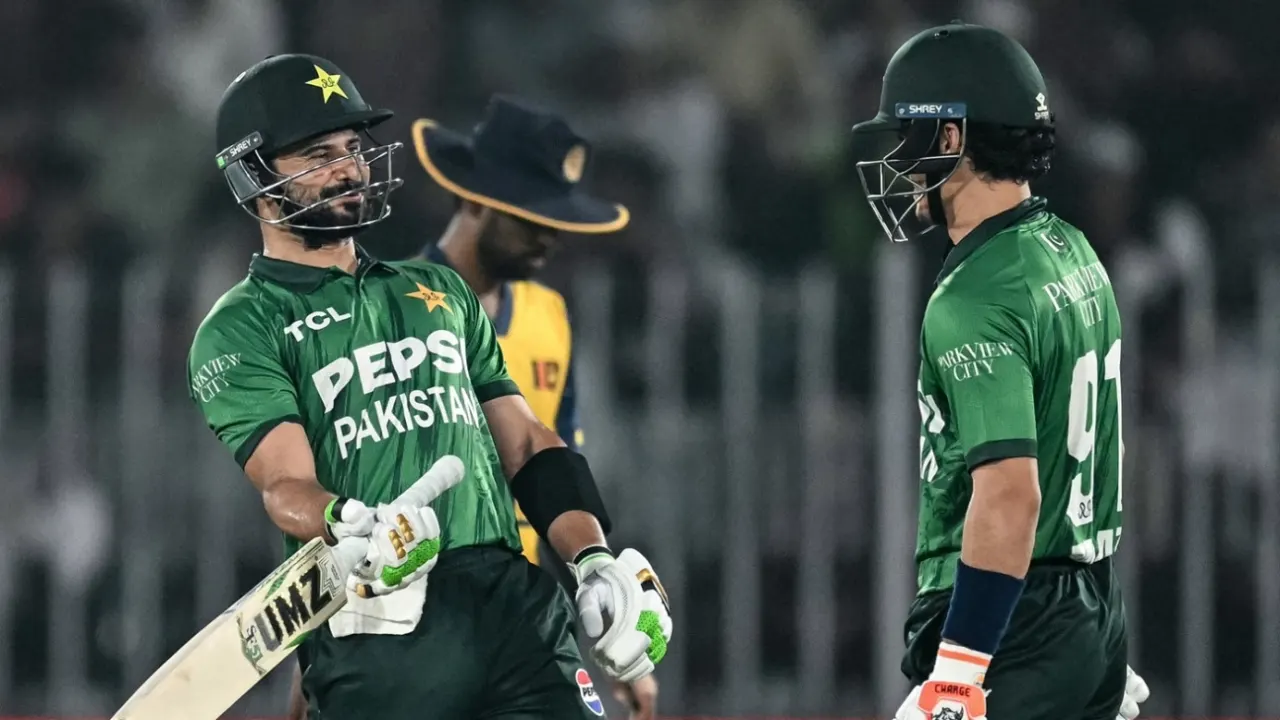
Sahibzada Farhan celebrated his ascension to the captaincy in grand style, smashing a 53-ball 89 that blazed his side to a comprehensive win in the first T20I against Sri Lanka . After Sri Lanka won the toss in Rawalpindi and somewhat curiously opted to set a target, the 182 they put up was made to look inadequate by a bellicose Pakistan’s showing up top that put up 70 in the powerplay and scarcely slowed down after. Maaz Sadaqat, who needed just 28 balls to bring up his half-century, put up a 92-run stand with Farhan after Fakhar Zaman’s cameo up top, flaying a lacklustre bowling attack.
Pakistan’s efforts with the ball were altogether more impressive, if sullied by bursts of untidiness that saw a whopping 29 extras conceded. But they reined Sri Lanka in from time to time, stifling their momentum and keeping the score within chasing range. Mohammad Imran’s 2-21 on debut was the pick of the bowling efforts, and while Lahiru Udara kept Sri Lanka afloat almost single-handedly with 91 off 55, the support he needed from the other end never quite came.
When Sri Lanka batted after winning the toss, it took Kamil Mishara nine deliveries to get off the mark. By the end of the fourth over, Sri Lanka were scoring at a run-a-ball, and had lost two wickets. Pakistan, by contrast, took just 2.2 overs to match that score; by the end of the sixth, they had powered through at dazzling speed thanks to Farhan and Zaman’s onslaught.
Sri Lanka took far too long to begin taking advantage of the powerplay. They struggled to find their timing, the powerplay littered with multiple plays and misses, and extravagant, low-percentage shots that bore no fruit. While they did launch a bit of a recovery in the final two overs, the slow start would end up proving costly as Sri Lanka left runs on the table.
To say Mohammad Imran wasn’t the most exciting debutant from Pakistan this game would be stating the obvious. That title belonged to Razaullah – the fast-bowling, six-hitting, sharp-jawed Edgbaston slayer Razaullah – who appears to have parlayed his stunning Test debut into white-ball call-ups. Imran, who also made his Test debut in that game and ended up being a footnote, instead found his feet in T20I cricket in Rawalpindi today.
Opening the bowling alongside Naseem Shah, he was the more effective bowler, utilizing sideways movement that more than made up for a lack of pace. He conceded just the one run in his opening over and 19 in three powerplay overs. As Sri Lanka found their feet at the halfway stage of the innings, Farhan turned back to him and Imran did not disappoint his captain. He struck with his first delivery upon return and allowed just two in the over, halting Sri Lanka’s momentum once more and capping a stellar debut.
Sri Lanka will want to move quickly on from this game, but to wipe it completely from the record would be a disservice to their opener. Confronted with a decent bowling attack on an off-day for his fellow batters, Udara almost batted through the Sri Lankan innings, playing just about every role a batter can in T20 innings.
He was the flashy starter, before shepherding his side through the early stages of the powerplay. He became an anchor for a bit before churning through the gears in the latter half of the powerplay. At times, he did so with strokes so classical they could be set to music, especially pleasing when he made some room and cleared extra cover off both pace and spin.
While support from Kamindu Mendis and Dasun Shanaka existed, it was fleeting. Soon enough, those wickets would fall, leaving Udara with the delicate dance of keeping the run rate up without letting the innings implode. That was especially true – and shown to be crucial at the death – because Sri Lanka were arguably playing a batter too light. When he finally holed out in the penultimate over, Sri Lanka ended up losing three wickets in five balls, the innings petering out on a surface where batting inadequacy was always going to be punished.
Scores:
Pakistan 187 for 6 in 18.5 overs (Sahibzada Farhan 89, Fakhar Zaman 21, Maaz Sadaqat 50, Khawaja Nafay 12*; Nuwan Thushara 1-32, Dushmantha Chameera 1-40, Eshan Malinga 2-33, Maheesh Theekshanan 2-36) beat Sri Lanka 182 for 8 in 20 overs (Lahiru Udara 91, Kamindu Mendis 23, Dasun Shanaka 18; Naseem Shah 3-36, Mphammad Imran 2-21, Rasaullah 1-29, Shadab Khan 1-33, Saim Ayub 1-17) by 4 wickets
[Cricinfo]
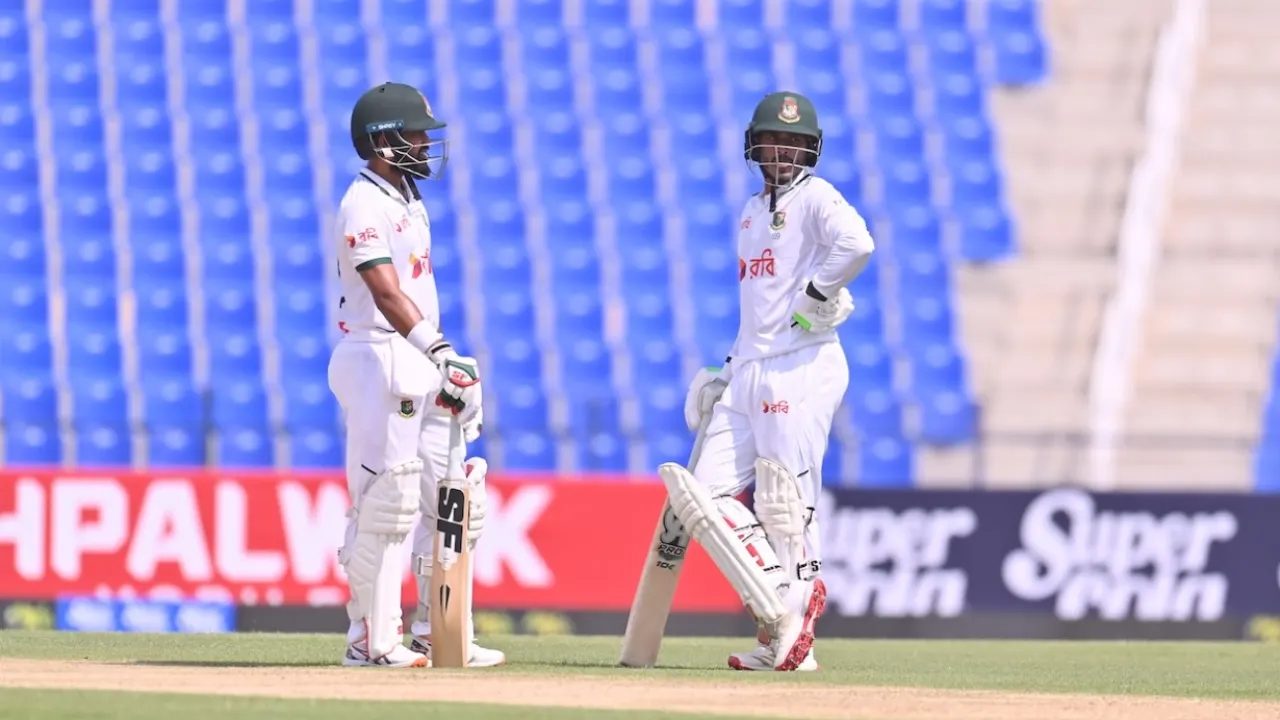
Afghanistan’s pace attack fought back late in the day as Bangladesh went to stumps on 317 for eight on day one in Abu Dhabi.
Mohammad Saleem, Yamin Ahmadzai and Ismat Alam combined to take seven out of the eight wickets that fell on the day. For Bangladesh, Shadman Islam, Tanzid Hassan and Litton Das made fifties.
Saleem targeted the shorter length after lunch, while Ahmadzai found success pitching the ball fuller. Ismat, meanwhile, bowled within himself and was rewarded with the wickets of both set batters Tanzid and Mehidy Hasan Miraz as he drew errors from each.
Tanzid was Bangladesh’s enforcer earlier in the day, hitting eight fours and four sixes in his 71-ball 83 in the first session. He looked set to get to a century in the first session, only for Ismat to thwart his charge.
Later, Shadman Islam and Litton Das struck fifties on either side of Bangladesh’s mini collapse. They lost three wickets for just four runs after they were 221 for two in the second session.
Bangladesh 317 for 8 in 84 overs (Shadman Islam 67, Tanzid Hasan 83, Litton Das 53; Yahmin Ahmadzal 2-62 , Mohmmad Saleem 3-70, Ismat Alam 2-20) vs Afghanistan
[Cricinfo]

Sri Lanka won the toss and chose to bat first in the first T20I against Pakistan being played in Rawalpindi.
Sri Lanka XI: Kusal Mendis (capt & wk), Lahiru Udara (wk), Kamil Mishara, Kamindu Mendis, Sahan Arachchige, Dasun Shanaka, Dunith Wellalage, Maheesh Theekshana, Dushmantha Chameera, Eshan Malinga, Nuwan Thushara
Pakistan XI: Sahibzada Farhan (capt), Saim Ayub, Maaz Sadaqat, Fakhar Zaman, Hasan Nawaz, Khawaja Nafay (wk), Shadab Khan, Muhammed Imran, Razaullah, Naseem Shah, Abrar Ahmed

Farhan, Sadaqat help Pakistan ace 183 chase to go 1-0 up

Afghanistan fast bowlers hit back after Bangladesh’s strong start

Sri Lanka chose to bat first in Rawalpindi

Sutherland and Litchfield lead Australia to quick and convincing win in ODI series opener

USS Tulsa departs Colombo

Appointments for 1,540 Grama Niladhari Officers

‘Dates have the highest sugar content to fight Coronavirus’

Sunday Island 27 December – Headlines

#SundayIsland 17th December – Headlines

Sunday Island – 28th March

Sunday Island Headlines – 21 March

Sunday Island – 21st February – Headlines
-

 Features6 days ago
The first woman in the foreign service or Ceylon Overseas Service it was then called
-

 News5 days ago
Geneva takes up Sallay’s case and govt. ignores opportunity to answer accusations
-

 Editorial7 days ago
Fuelling discontent and protest
-

 Foreign News6 days ago
Ten injured after car crashes into rugby supporters in Australia
-

 News6 days ago
Nearly 20 Iranian tankers stranded off Lanka amid US sanctions
-

 Latest News7 days ago
Tharindu Rathnayake, bowlers secure Asian Games Bronze for Sri Lanka
-

 Features4 days ago
Preventing grievances from becoming communal
-

 Features5 days ago
Sri Lanka Cricket Bill: Governance reform is not yet a cricket strategy