
Sports
Bangalore – India’s garden city

Rex Clementine in Bangalore
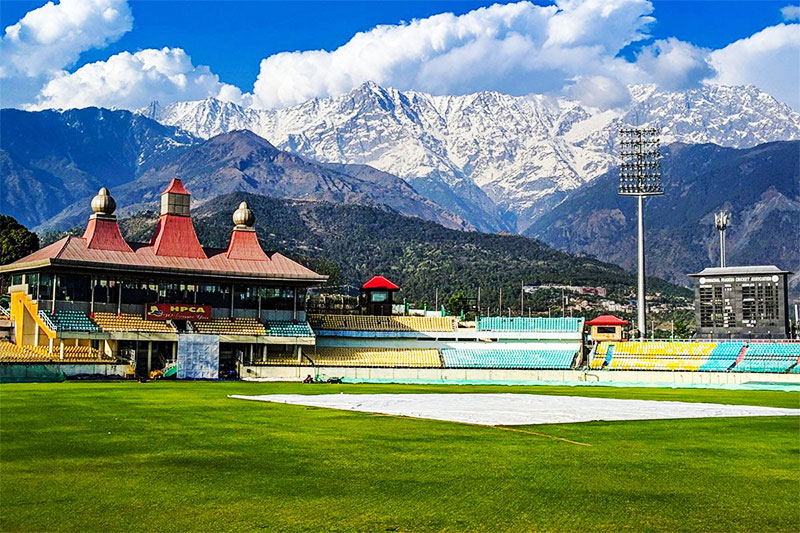
Of all India’s cricketing centers, Dharamshala is quite special for its natural beauty situated in the footsteps of Himalayas. But travelling there costs you an arm and leg with just a couple of flights available from Delhi. The road trip is the best option through the hills of Punjab. Sri Lanka of course do not have a game in Dharamshala. Two of their nine games of the tournament will be played in Bangalore – the garden city.
There are multiple daily flights from Colombo to Bangalore and a family trip in the long weekend to this lovely city is not a bad idea. The weather is pleasant and entertainment is plenty. IndiGo, a budget airline gets you here for a decent price. If you want to cut costs the best option is to fly to Madras and then catch the train.
Bangalore’s airport is of course a marvel. It is a state-of-the-art facility and many European airports are far behind Bangalore. The immigration and customs takes you less than 15 minutes. Hassle free parking and convenient cab services, all these make Bangalore airport a pleasant experience.
Out of the airport as you hit the highway to get to the city, you see all sorts of modern European cars on the road. Then, you wonder whether this is the same India that you visited 20 years ago. They have come a long way in the last two decades.
International cricket in Bangalore is of course played at Chinnaswamy Stadium. The venue is named after Chinnaswamy Mudaliar, a lawyer, who was a founding member of the Mysore State Cricket Association. He went onto become the President of Board of Control for Cricket in India (1977-1980).
It was at Chinnaswamy Stadium a certain Vivian Richards made his Test debut almost 50 years ago in 1974. He wasn’t alone. There was a certain Gordon Greenidge as well receiving his maroon cap for the first time.
Bangalore is also the home for some of India’s all-time greats of the sport. There was Gundappa Viswanath, Anil Kumble, Rahul Dravid, Javagal Srinath, Roger Binny and many more. Binny incidentally is the President of Board of Control for Cricket in India.
Some say that Binny, the 1983 World Cup winner is only a figurehead while the man who calls shots in cricket is Jay Shah, the son of India’s Home Minister Amit Shah. The correct way to put it is that Jay Shah isn’t Indian cricket’s most powerful man but world cricket’s most powerful man.
Not very far from Chinnaswamy Stadium, there is an exclusive club called Century Club. Like SSC, NCC, CCC and Tamil Union, Century Club is over 100 years old.
An Engineer in Bangalore named M. Visvesvaraya during the British rule of India tries to get a membership of Bangalore Club. But he’s refused membership as at that point the membership is exclusive for the British nationals.
Determined to form a club for the locals, Visvesvaraya meets the Mysore Maharaja floating the idea to form a club where Indians can get together. Generously, Mysore Maharaja donates a five-acre land inside the pristine Cubbon Park.
Then, 100 Indian civil servants come together to form the club and hence the name Century Club.
Getting membership at Century Club is extremely difficult these days. The club currently has a membership of 6000 and there is a 30 year wait if someone wants to get a new membership.
Members gather to Century Club for recreation and there are both indoor and outdoor sports and card games. The club also has some posh restaurants and several bars.
The club’s hotel with 30 room is also quite popular. It’s decently priced, at the heart of the city and has fabulous facilities. The only problem is booking a room there is a tedious task. Which is why during your travels to other parts of the world you need to make friendships. It doesn’t matter how many people you know in a city. All what matters is you need to know the right person. If you are in New Delhi, the go to person is Vijay Lokapally, the longstanding cricket writer of English daily Hindu. In Bombay, all your needs are taken care of by G. Viswanath, the cricket writer of Indian Express. If you are in Bangalore it is R. Kaushik, a freelance cricket writer. Knowing them is as good as knowing the Prime Minister of India.
Some Indians repay the complement saying that they don’t have to know the President of Sri Lanka when they come to Colombo. They only need to know the right reporter.


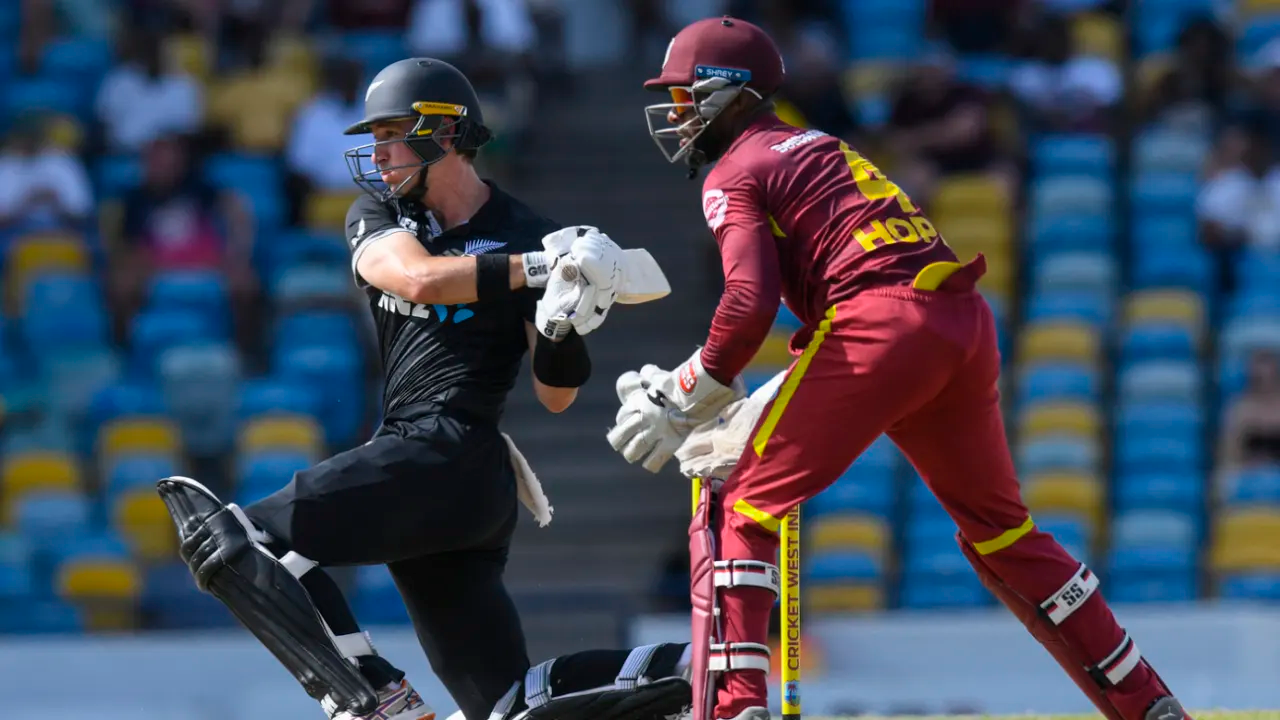
The ICC will get together in Dubai this week for a workshop in which the next Future Tours Programme (FTP) looms large, with members trying to put a shape to the next international cricket calendar cycle from 2027 to 2031.
Starting on Tuesday, the ICC will conduct a cricket operations workshop, which will feature discussions on the FTP, the current cycle of which ends in March 2027. Though lots of progress has been made in recent months, these meetings will not produce a final and comprehensive FTP yet because, as one official put it, there are still “so many moving parts”. Plenty of each member’s main commitments should be finalised, though, with the final FTP likely to be presented at the ICC quarterly meeting in November, scheduled to be held in Bali.
Increase T20Is, reduce bilateral ODIs
There is likely to be more T20Is between Full Members in the next cycle, and that would come at the cost of bilateral ODIs, as cricket struggles to fit everything it wants into a calendar year. T20Is are the ICC’s growth vehicle to expand the game, and its World Cup is also played every two years, as opposed to the four years for the 50-over version. Rudi van Vuuren, the Namibia Cricket chair and newly inducted ICC Board director, recntly said that he saw more opportunities for Associates in the T20 world.
That, though, doesn’t mean the ODI is dead. The World Cup remains the game’s showpiece event. But there has been talk among members of making ODIs more meaningful – not by bringing back the ODI Super League but by going retro with some 1990s staples like tri-series and quadrilaterals.
Big 3 commitments all but set
While the FTP is far from finalised, Cricinfo understands that Australia, England and India’s main commitments with each other have been set for some time. The Ashes will continue its usual pattern, with series in 2027 (in England), 2029-30 (in Australia) and 2031 (in England), while England will travel to India for a Test series in early 2028 before hosting them in 2029.
The 2027-31 cycle also throws up the challenge of the Los Angeles Olympics in the summer of 2028, where cricket marks its first appearance at the Olympics since 1900. The games will take place in July, midway through the English summer, and the week-long men’s T20 cricket event is expected to clash with England’s home Test series against West Indies.
The challenge for most of the other Full Members, as ever, will be to bake commitments first with India and then with Australia or England into their calendars. South Arica, for instance, are expected to host India immediately after the 2027 ODI World Cup, which they are co-hosting with Zimbabwe and Namibia in October-November.
The PCB, for whom bilateral cricket with India is not an option, have pushed for increased commitments with England and Australia. They have already announced a five-match ODI series against England next summer, although that began as discussions for a one-off Test if Pakistan would have been in the running for the World Test Championship (WTC) 2025-27 final. Pakistan also have a three-Test tour of Australia set for 2027-28.
WTC to remain nine teams?
The shape and format of the WTC, currently in its fourth cycle, has been the subject of much discussion over the last year, including talk of a two-tier league which was soon dismissed. In April this year, a presentation by an ICC working committee recommended the inclusion of Zimbabwe, Afghanistan and Ireland in addition to the nine teams in the tournament, as well as including one Test series in the league.
Zimbabwe are believed to be keen to be on the WTC, though it isn’t certain whether Afghanistan and Ireland are. As things stand, it still isn’t clear whether the WTC will expand, at least for its next cycle from 2027-29, although we can expect some direction later this week.
New DRS vendors
A session on the second day of the meetings this week will discuss the ICC’s DRS accreditation programme, with the governing body looking to expand the base of review technology suppliers. At the moment, Hawk-Eye and Virtual Eye are the ICC’s approved suppliers for DRS technology in all international cricket.
[Cricinfo]
Approval has been granted at the meeting of the Cabinet of Ministers held on 08.06.2026 to prepare a draft bill for restructuring Sri Lanka Cricket.
Accordingly, the Legal Draftsman has formulated Sri Lanka draft bill providing legal provisions for the administration of Sri
Lanka Cricket, control, regulation, promotion, establishment of Sri Lanka Cricket for the development and administration, through the concepts of better governance, integrity, transparency, accountability, inclusiveness and providing equal opportunities for the betterment of the cricket sport, establishment of Sri Lanka Cricket for securing the wellbeing of all participants and securing cricket from corruption and other mal practices.
Clearance of the Attorney General has been received for the said draft bill. Approval of the Cabinet of Ministers has been received for the resolution furnished by the Minister of
Youth Affairs and Sports to publish the said draft bill in the government gazette notification and thereby forward the same to the Parliament for its concurrence.
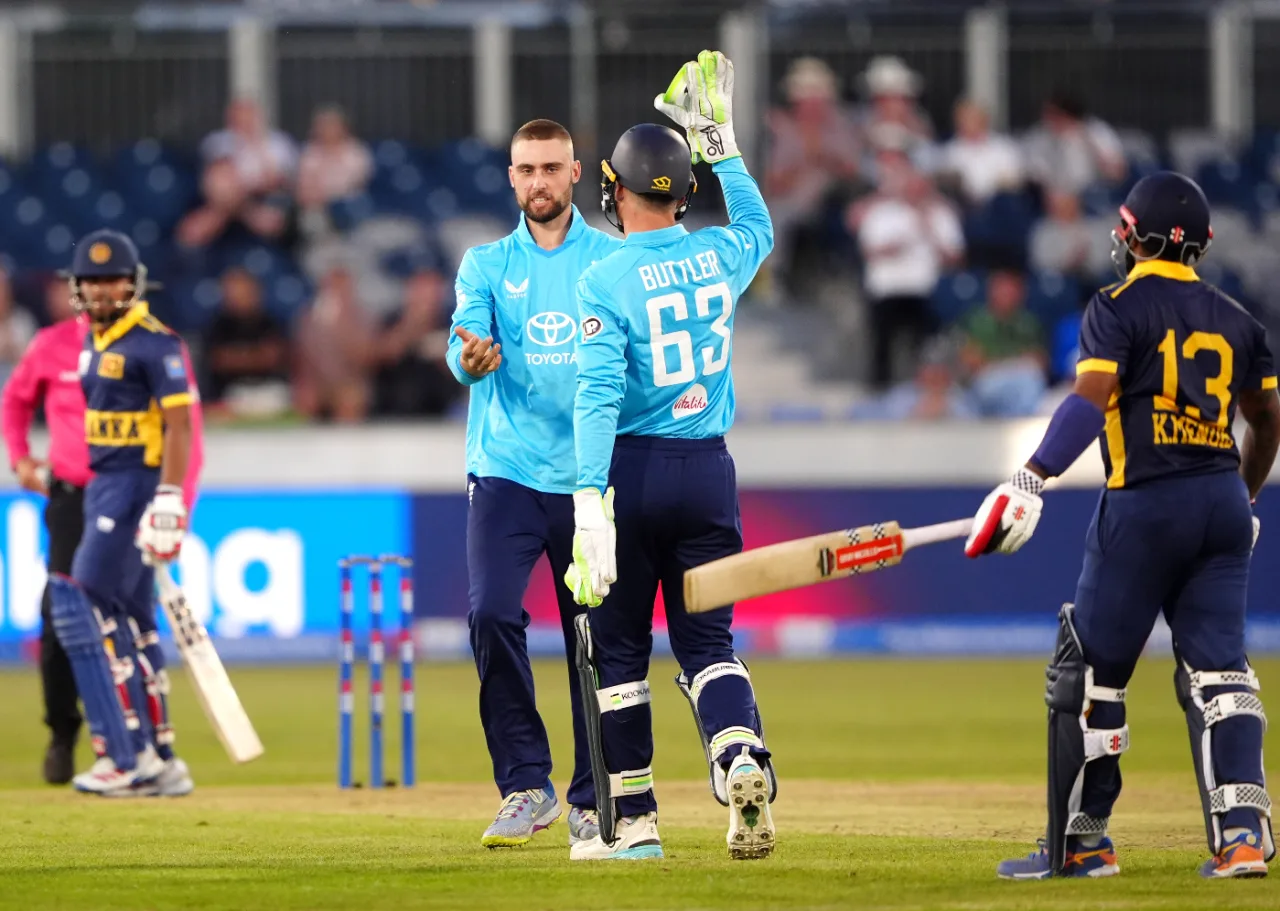
England are finally on the rise again in ODIs, after a long period of stagnation and decline. They pulled off their lowest successful defence in four years as they cruised past Sri Lanka at the Riverside in Durham, and have now won five matches out of seven since the start of this year under Harry Brook and Brendon McCullum.
The first ODI was more competitive than any of the three T20Is last week, as England wobbled against Sri Lanka’s debutant legspinner Sachindu Colombage in the middle overs. They failed to hit a six on a two-paced, end-of-season surface, and Brook – who threw his head back in frustration when he carved to deep point – was the only batter to find any real fluency.
But Sri Lanka’s run chase never got going. Captain Kusal Mendis made 42 on his return from a hamstring injury and Dunith Wellalage landed a few late blows, but their middle order went missing against Jamie Overton’s cross-seamers and Will Jack’s offbreaks. This was an unglamorous and forgettable win, but England have not had enough of those in recent years.
Jacks took three wickets in four balls to finish things off, giving him outstanding figures of 5 for 22 – the second best in an ODI by an England spinner. It meant that Adil Rashid, ruled out of the series with a hand injury, was hardly missed, and completed an impressive all-round performance by Jacks after he cracked 46 not out to drag England to 265.
England’s ODI results have tailed off sharply since they won their first World Cup under Eoin Morgan’s captaincy, with 50-over cricket slipping to the bottom of the ECB’s list of priorities. Across the six years after their 2019 triumph, they won 33 and lost 40 in ODIs and suffered humiliating group-stage exits in both the 2023 World Cup and the 2025 Champions Trophy.
They started 2026 ranked eighth in the world by the ICC, and with players and management anxious to secure automatic qualification for next year’s World Cup, but things have started to click for them. They have come from behind to win series against Sri Lanka (away) and India (home) this year, and will now target wins at Headingley and The Oval to seal a whitewash.
It has been a turbulent summer for McCullum, who lost his job as Test coach after England’s chaotic, self-sabotaging series defeat to New Zealand. But his partnership with Brook has been a revelation: England’s white-ball teams have won 10 completed games out of 11 this summer, and are finally starting to develop a clear identity.
Brook cited strike rotation and playing longer innings as two areas for England’s batters to improve before this series, and their new mentor Kevin Pietersen led a “spin masterclass” at Monday morning’s training session. They showed in this match that there is still plenty of scope to get better, stumbling against Colombage as they lost 4 for 29 in 7.5 overs through the middle.
A legspinner with an idiosyncratic action, Colombage spent last summer playing club cricket for Downham Stow in the East Anglian Premier League, but won his call-up after impressing in the recent Lanka Premier League. He was picked ahead of Wanindu Hasaranga in Chester-le-Street and made Joe Root his first victim in taking 3 for 44 on international debut.
England lost Tom Banton early to an Asitha Fernando outswinger – which trimmed the off bail – after choosing to bat, but Root started brightly. He pinged two early cover drives for four to take England to 64 for 1 after the initial powerplay, before they lost Ben Duckett lbw as he tried to sweep Wellalage’s left-arm spin.
Root had an early scare when he survived an lbw review off Colombage’s third ball, but was busy with Brook through the middle overs. They scampered between the wickets, though perhaps slightly too enthusiastically: Brook very nearly ran Root out on 42 with an optimistic single, though Colombage did for him an over later, finding just enough turn to beat the bat.
It ended a 404-run, five-innings stretch between dismissals for Root in ODIs, and when Brook miscued a charging slap to deep point off Dusmantha Chameera, it set a wobble in motion: Buttler was lbw to Colombage, Charith Asalanka’s direct hit did for Rehan Ahmed, and Overton played around a straight one from Colombage.
Jacks offered some resistance from No. 6, hitting four fours in a row off Chameera when the field came up due to Sri Lanka’s painfully slow over-rate. But the impressive Dilshan Madushanka pegged back Gus Atkinson’s off stump, and two Fernando yorkers accounted for Jofra Archer and Josh Tongue to leave Jacks stranded on 46 not out.
England’s 265 proved far more than enough. Kamindu Mendis fell tamely plinking Atkinson to midwicket, and Pathum Nissanka edged behind flashing at Tongue, while Banton held an excellent low catch at cover to get Pavan Rathnayake. Jacks had Asalanka and Mendis lbw sweeping, and Overton’s hard lengths did for Janith Liyanage.
When Rehan’s googly did for Colombage, Sri Lanka were 133 for 7 and the game was up. Wellalage smeared Archer for the game’s first six, clearing Duckett on the rope, and cracked Rehan for 4-4-6 to put a dent in the margin. But he picked out mid-on for 45 off Jacks, who finished the game by having Fernando caught at long-on then cleaning up Madushanka.
It was Jacks’s second five-wicket haul as an England player and his first since his Test debut four years ago, and he won the match award after a stellar all-round effort. He is Brook’s vice-captain for this series in Jacob Bethell’s injury-enforced absence, and is becoming an increasingly important player.
Scores:
England 265 in 48.1 overs (Joe Root 44, Harry Brook 67, Will Jacks 46*; Asitha Fernando 3-53, Sachindu Colombage 3-44, ) beat Sri Lanka 176 in 37 overs (Dunith Wellalage 45, Kusal Mendis 42; Jamie Overton 2-21, Will Jacks 5-22) by 89 runs
[Cricinfo]

ICC’s agenda for 2027-31: more T20Is, fewer bilateral ODIs

CIF, the world’s favorite multi-surface cleaning brand, arrives in Sri Lanka

A Joint Regional Initiative to Ensure the Digital Safety of Children

PM meets with IMF delegation

Ms. P. M. Jayadeera (Engineer) appointed Director General of Irrigation
Sri Lanka Cricket Draft Bill to be gazetted

‘Dates have the highest sugar content to fight Coronavirus’

Sunday Island 27 December – Headlines

#SundayIsland 17th December – Headlines

Sunday Island – 28th March

Sunday Island Headlines – 21 March

Sunday Island – 21st February – Headlines
-

 News6 days ago
US embassy won’t comment on IGP’s probe into joint drug raid
-

 News4 days ago
Shanakiyan urges urgent action over reported death sentence for Lankan in Saudi Arabia
-

 News5 days ago
Bid for Basil’s extradition nears final stage: Police
-

 News3 days ago
Namal Rajapaksa Buddhist gambit fails, bail denied
-

 Business6 days ago
All-new Bolero MaXX unveiled in Sri Lanka
-
 Opinion6 days ago
A journalist who wrote across the divide
-

 Features4 days ago
Why the spelling Sri Lankan names in English vary
-

 Features4 days ago
Three bands, a new identity: Sri Lankan wolf snake recognised as distinct species