
Editorial
Balls, bombs and law


Thursday 7th September, 2023
Former Sri Lankan cricketer Sachithra Senanayake has been arrested for spot-fixing. He is alleged to have approached some players during the Lanka Premier League tournament in 2020 and sought to lure them into spot-fixing. Senanayake has denied the allegation against him, claiming that it is part of a sinister campaign to tarnish his reputation.
Investigations are still on, and one should refrain from prejudging the former Sri Lankan spinner’s guilt or innocence. The matter is best left to the judiciary.
Strangely, none of the cricket administrators, some of whom are among the worst crooks in the country, has been arrested for corrupt practices. It is only wishful thinking that we will be able to liberate cricket from the clutches of the corrupt by cracking down only on the corrupt players who have entered into s Faustian bargain with bookies, etc. The corrupt officials who are enriching themselves by cutting shady deals at the expense of cricket must be similarly dealt with.
Senanayake’s arrest has proved that the law catches up with suspects, in some cases. If only it did so in respect of those who are alleged to have committed far worse offences than spot-fixing.
The Opposition was on fire in Parliament yesterday, flaying the government; its senior members came out with guns blazing. Referring to a Channel 4 programme on the Easter Sunday attacks, they demanded action against those who were responsible for the terrorist bombings, which claimed more than 250 lives and left over 500 people injured.
Opinion may be divided on the credibility of Channel 4, its agenda, and who the masterminds behind the terrorist attacks were, but the fact remains that the inordinate delays in investigations into the terrorist bombings are unpardonable and lend credence to the claim that justice has been denied to the victims of terrorism.
There is no way the government leaders who gained a great deal of political mileage from the fallout of the Easter Sunday attacks in 2019 to regain power can justify their failure to honour their pledge to have the bombings thoroughly probed and justice served expeditiously. Their failure, if not refusal, to fulfil that promise has caused them to be accused of having had a hand in the terror strikes.
The Presidential Commission of Inquiry (PCoI), which probed the Easter Sunday carnage, has recommended that criminal proceedings be instituted against former President Maithripala Sirisena, some high-ranking police officers and others for their failure to prevent the terror attacks. Its recommendations have not been implemented, but a youth has been arrested and remanded over a social media post, which is said to contain a threat to President Ranil Wickremesinghe!
Cricket, no doubt, has to be cleansed of corruption, and the ongoing investigations into allegations of spot-fixing are welcome. Corrupt practices that plague cricket affect the country adversely, but they do not worsen the people’s economic burden. Curiously, the state prosecutor and the police drag their feet on complaints of corrupt deals that cause huge losses to the state coffers, their inaction in respect of the sugar tax scam being a case in point. Senanayake is facing a foreign travel ban, and such precautions have to be taken to prevent suspects from fleeing the country. But how come former Central Bank Governor Arjuna Mehendran was allowed to leave the country even after his involvement in the Treasury bond scams came to light?
Has the government prioritised its efforts to nab venal cricketers over the task of having terrorist attacks and state sector corrupt deals probed?

Tuesday 7th April, 2026
Water cuts are currently on in some parts of the Colombo District due to the prevailing dry spell. Initially, some suburbs of Colombo were left without water for as long as 24 hours at a stretch, and people protested. Subsequently, the durations of water cuts were reduced. However, people were seen protesting in some areas yesterday as well. The situation is likely to take a turn for the worse throughout the country unless the reservoir catchments receive sufficient rain.
Sri Lanka’s water problem is far more serious than it looks. It is worsening rapidly due to climate change, which disrupts the global water cycle, causing floods and droughts often in the same regions at different times of the year. The acceleration of evaporation due to global warming takes its toll on the snowpack, shifting rainfall patterns the world over, adversely impacting fresh water supplies to billions of people. Hence the need for Sri Lanka to address the water issues related to climate change, as a national priority, and formulate a comprehensive mitigation strategy urgently.
Experts have stressed the need to build the country’s resilience against drought while taking action to conserve and manage water resources efficiently. Among the urgent measures they have called for are fixing leaks in the mains, promoting water-efficient irrigation systems, appliances and industrial processes through incentives and regulation, and, most of all, rainwater harvesting.
Prerequisites for building national resilience against drought include substantial investment in desalination technology mainly for the benefit of the coastal communities, restoring wetlands, forests and watersheds to facilitate the natural water flow that replenishes underground aquifers. Unfortunately, successive governments have allowed the encroachment on wetlands, forests and other such ecologically sensitive areas. The fate of the Muthurajawela wetland may serve as an example. Climatologists and agricultural scientists have pointed out the need to grow drought-resistant crops and adopt smarter agricultural practices, as farming is believed to account for about 70% of freshwater use across the globe. The situation must be more or less the same here.
Climate change mitigation strategies are resource-intensive and heavily policy driven. A chronic lack of vision and capacity of successive governments and state officials has stood in the way of preparing the country for the challenges from climate change and even the adoption of relatively simple and less resource-intensive methods to help the public overcome their water woes. Their failure to develop rainwater harvesting as a national policy is a case in point. It is high time they focused more on rainwater harvesting, which is technically feasible here, given Sri Lanka’s high rainfall, averaging about 2,000 mm annually, according to the Department of Census and Statistics. Even if a faction of this rainfall can be captured properly, that will help supplement domestic and agricultural water supplies significantly, experts have pointed out. Every rooftop can be turned into an effective catchment area for capturing rainwater, which can be stored to reduce the stress caused by the use of treated water for cleaning, gardening, toilet flushing, etc., to the mains.
There has been a proposal that rainwater harvesting be made mandatory in new buildings, private, public or commercial, by requiring them to have water harvesting systems. Sri Lanka can learn how to enforce rainwater harvesting effectively from countries, such as Germany, India, China, Pakistan and Thailand. It, too, encourages such systems, but that has to be done vigorously through public awareness campaigns, incentives, soft loan schemes, etc. An added advantage of rainwater harvesting is that excess stormwater can be used to recharge wells and replenish aquifers, especially in the dry zone. Such systems will also help improve urban drainage.
Lanka Rainwater Harvesting Forum, a collective of government and non-government institutions, including the National Water Supplies and Drainage Board, has been on a mission to raise public awareness and assist in rainwater harvesting. It will be of tremendous help to launch a national rainwater harvesting programme.
Sri Lankans have evinced a keen interest in the country’s energy security vis-a-vis the West Asian conflict, and the resultant global oil supply disruptions and massive price increases. These days, much is also being spoken about energy conservation. This no doubt is a positive development. However, the country’s long-term water security is no less important and warrants the attention of the public, politicians and policymakers alike.


Monday 6th April, 2026
Seven years have almost elapsed since the 2019 Easter Sunday carnage, but there are still no answers to some vital questions about the tragedy that shook the world. Several schools of thought have emerged on the mastermind/s behind the 2019 terror strikes. It is being claimed in some quarters that the terror attacks were carried out by National Thowheed Jamaat (NTJ) leader Zahran Hashim and his followers at the behest of Islamic State (IS), which was suffering severe setbacks at the time. This argument has not found favour with others who think that some foreign powers were behind the terror attacks or the handlers of the suicide bombers were on a mission to facilitate the return of the Rajapaksas to power by stoking fears about national security among the people. These allegations, counter allegations, arguments and counterarguments have given rise to various conspiracy theories which have obfuscated the main issue.
There is hardly anything that politicians spare in their quest for power, and they have made the most of many tragedies, from the rape and murder of Premawathi Manamperi during the 1971 counterinsurgency operations against the JVP to the Easter Sunday carnage. The countless extrajudicial killings during the second JVP uprising and the civilian deaths during the Eelam war are issues that politicians have flogged hard to advance their political agendas. The SLPP came to power, promising to uncover the truth about the Easter Sunday carnage, but reneged on its pledge. The JVP/NPP made a solemn pledge to bring the masterminds behind the terror attacks to justice expeditiously, and secured the support of the campaigners for justice, but its promise also remains unfulfilled although it has been in power for nearly one and a half years.
Those who are seeking justice are confused. They first pinned their hopes on the SLPP and backed it in elections. After being ensconced in power, the SLPP insisted that NTJ leader Hashim or Moulavi Nauffer had masterminded the terror strikes; they cited FBI reports, etc., to bolster their claim. Those seeking justice then accused the SLPP of having masterminded the terror attacks to capture power. Now, the leaders of the JVP/NPP who, as Opposition MPs thundered in Parliament, blaming Islamic extremists for the carnage, and urged some Muslim politicians to put the genie back into the bottle, have changed their tune. They have held their immediate predecessors responsible for the terror attacks and are in overdrive, trying to prove their claim.
Partisan politics have stood in the way of efforts to find out the masterminds behind the Easter Sunday terror attacks. There has been a call for a fresh, thorough probe into the carnage, based on the findings of the Presidential Commission of Inquiry (PCOI) which probed it. This, in our view, is a sensible suggestion. Prejudices and political affiliations of some lead investigators have tainted the integrity of the ongoing probe. An investigation must be free from the influence of those who are trying to cover up their own lapses that led to the terror attacks or to settle political scores. The police have impartial, capable officers and they must be entrusted with the task of investigating the 2019 terror strikes.
Meanwhile, Opposition and SJB Leader Sajith Premadasa, in his Easter Sunday message, has said that delivering justice for the victims of the 2019 terror attacks remains a fundamental responsibility of the state. He has lamented that it is a grave failure as a nation that justice has not yet been delivered to those killed, injured and affected by the Easter Sunday terror attacks. What he says is true, but there is no way he and other SJB MPs who were members of the UNP-led Yahapalana government can absolve themselves of the blame for that dysfunctional regime’s failure to prevent the Easter Sunday carnage. They were in the Yahapalana Cabinet. The PCOI report says, “The government, including President Sirisena and Prime Minister [Ranil Wickremesinghe] is accountable for the tragedy” (p. 471). In other words, the PCOI has held all members of the Yahapalana government, including those who are currently in the SJB, accountable for the carnage. The JVP propped up that failed government which could not protect national security.
The former members of the Yahapalana government and others who won elections by promising to serve justice to the Easter Sunday terror victims should now cast their politics aside and make a concerted effort to have the carnage thoroughly investigated and clear doubts in the public mind.

The Health Ministry and the Government Medical Officers’ Association (GMOA) are playing a game of chicken over doctors’ transfers. The GMOA is protesting against an alleged government move to gain control of doctors’ transfer scheme. It insists that doctors’ transfers must be handled professionally, free from political interference, for the benefit of doctors and the public. Accusing the government of trying to politicise doctors’ transfers for the benefit of the ruling party loyalists in the health service, the GMOA says that such a course of action will plunge the medical service into chaos and place the doctors serving in the ‘difficult areas’ at a disadvantage.
Health Minister Dr. Nalinda Jayatissa has told the GMOA in no uncertain terms that it is his way or the highway. No trade union action would deter him from implementing the new transfer scheme, he said, on Thursday, warning the post-intern doctors that unless they applied for postings by Saturday (04), they would not be allowed to join the state health service.
The GMOA is not entirely blameless for unresolved trade union issues in the health sector. It has been afflicted by what may be described as the Uncle Sam syndrome; it apparently believes that only doctors’ interests must be looked after in the health sector. It has alienated other health workers. However, one cannot but endorse its position on doctors’ transfers, which must be effected systematically, with the participation and concurrence of the trade union representatives of medical officers. Politicians are driven by partisan political interests and known to act according to their whims and fancies. It is thanks to them that the state service finds itself in an unholy mess. There is provision for appeals under the current doctors’ transfer scheme, and the government can intervene in case of complaints of irregularities and injustices.
The doctors’ transfer scheme has worked all these years, and there is no reason why the government should meddle with it. At the time of writing, the GMOA was discussing ways and means of intensifying their trade union to win their struggle. It is likely to resort to a continuous strike if the government leaders try to bulldoze their way through. Its calls for negotiations with the Health Minister have gone unheeded.
The JVP-NPP government’s intransigence, and threats and warnings to workers involved in trade union struggles evoke the dreadful memories of a bygone era when a government, intoxicated with power, rode roughshod over trade unions and resorted to mass sackings to crush strikes and intimidate workers into submission. The politicians of the incumbent government sound just like the ministers in President J. R. Jayewardene’s UNP government. One may recall that in July 1980s, when workers struck work, demanding a pay hike, acting on President Jayewardene’s orders, Prime Minister Ranasinghe Premadasa warned that the workers would be treated as having abandoned their jobs unless they returned to work immediately. More than 40,000 workers who defied the government order were terminated overnight, and the vacancies so created were filled with UNP supporters. Interestingly, the JVP, which had agreed to join that strike, pulled out at the eleventh hour on some flimsy pretext. It was honeymooning with the UNP at the time.
The JVP leaders who came to power, claiming to espouse Marxism and promising to safeguard the interests of workers and resolve all labour issues through negotiations, are emulating their capitalist predecessors, such as Jayewardene and Premadasa, whom they condemned as the worst enemies of the working class. It can also be argued that the current leaders have taken a leaf out of the late LSSP leader Dr. N. M. Perera’s book. In 1972, NM, as the Finance Minister of the SLFP-led United Front (UF) government, chose to wear down the bank employees who launched a strike, demanding better pay and improved service conditions. The UF government invoked emergency regulations and threatened to terminate the strikers who did not return to work. NM succeeded in breaking the strike, which lasted for 108 days. This is how all governments react, regardless of their political ideologies, when their interests are threatened.
The JVP-NPP government should negotiate with the protesting doctors and make a serious effort to resolve the transfer issue amicably. Its intransigence and threats will only prolong the ongoing trade union dispute, causing untold hardships to the public who cannot afford out-of-pocket healthcare expenses.

SJB: Litro, Laugfs making a killing by selling old stocks at inflated prices

UN Regional Director launches SL’s first Country Gender Equality Profile during official visit

Programme to expand cadet corps in schools to promote national reconciliation

50,000 litres of hoarded fuel seized in raids

Samash smashes century as Joes post 354

‘Tap expertise, not just capital’: A practical path for Sri Lanka’s economy

‘Dates have the highest sugar content to fight Coronavirus’

Sunday Island 27 December – Headlines

#SundayIsland 17th December – Headlines

Sunday Island – 28th March

Sunday Island Headlines – 21 March

Sunday Island – 21st February – Headlines
-

 News5 days ago
2025 GCE AL: 62% qualify for Uni entrance; results of 111 suspended
-

 Features2 days ago
Ranjith Siyambalapitiya turns custodian of a rare living collection
-

 News2 days ago
Global ‘Walk for Peace’ to be held in Lanka
-

 Business6 days ago
Hour of reckoning comes for SL’s power sector
-

 Editorial5 days ago
Search for Easter Sunday terror mastermind
-
 Opinion4 days ago
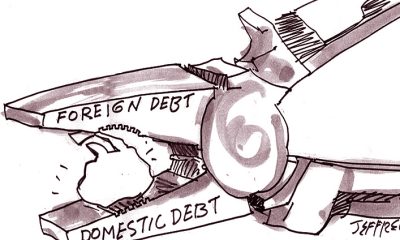
Hidden truth of Sri Lanka’s debt story: The untold narrative behind the report
-
Editorial6 days ago
Ideological confusion and identity crisis
-

 Opinion5 days ago
Is there hope for Palestine?