
Editorial
Back home to a plateful of problems

President Gotabaya Rajapaksa returned home to Sri Lanka on Thursday to a plateful of problems, many of his own making. The farmers protests over the import ban on chemical fertilizer is nowhere near tapering off. Rather, it is gathering further highly-publicized momentum. Then there is the appointment of Bodu Bala Sena chief, Ven. Galagoda Aththe Gnanasara, as the head of a Presidential Task Force (PTF) on ‘One country, one law’ which has been roundly condemned by a wide cross-section of the people. That Gnanasara, whose track record is by no means clean, enjoyed the patronage of Defence Secretary Rajapaksa before he ascended the presidency is well know. While the president was away in Glasgow at the COP26 Summit, defending (or justifying) the inorganic fertilizer ban, Justice Minister Ali Sabry, also a Gota loyalist who was on his legal team on the pre-election dual citizenship challenge, made known that he had not been consulted on the PTF appointment. There was some speculation that he would resign. But remember he didn’t over the Muslim burial issue.
Whether this will or will not be is likely to be clarified when Sabry meets the president in the short term. This is a country where sharp differences have been papered over or overcome before they caused irreparable damage; so some kind of fix is not impossible. Despite the noise they made, also well publicized like the farmers’ and teachers’ protests, few Lankans expect Ministers Weerawansa, Gammanpila, Vasudeva et al and eight other minor party leaders of the Sri Lanka Podu Jana Peramuna constituents, to give up their ministries and attendant perks, national list seats in parliament and other benefits over the New Fortress Energy (NFE) issue. This too has been getting curiouser and curiouser as Alice said in Wonderland. The CEB Chairman says that part of the NFE deal, whose critics allege had been signed in secret at midnight behind the backs of the cabinet and parliament, cannot be disclosed. Pray why? We do know that non-disclosure arrangements are not an unknown business practice. But is it correct for the sovereign to commit a country to an agreement where its people will not see the whole picture and know the whole truth?
We have also heard political leaders, under pressure like never before from farmer protests, repeatedly promising that crop losses will be compensated. Although they are silent about whose money will be utilized for such payments, the people of this country are not konde bandapu cheennu (Chinamen in pigtails) to not know that such payments, if at all, will obviously come off the state exchequer and not out of the pockets of those responsible for taking hasty, irresponsible decisions. Friday’s news reported that India, using military aircraft, “had come to Lanka’s rescue as farmers protests intensify.” This was by airlifting 100,000 kg. of liquid nano-nitrogen for urgent distribution in the context of the ever-growing fertilizer crisis. Agriculture Minister Mahindananda Aluthgamage whose effigy is being freely burnt in the rural hinterland has been proclaiming that there was adequate fertilizer in the country even before the current Maha cultivation season began. Why then airfreight fertilizer? He admits that “we,” meaning the government, “got our marketing wrong” in the effort to convert farmers to organic fertilizer. Clearly there had been little or insufficient preparation for the great leap into the unknown through an instant ban on the import of chemical fertilizer that the country has been used to for the past several decades.
Today the whole world knows very well that mankind must urgently get its act right if planet earth and its population is to survive. British Prime Minister Boris Johnson said at COP26 that the “It’s one minute to midnight and the clock is ticking” while many other world leaders and UN Secretary General Antonio Gutteres offered similar sound bytes. Like smoking, the information of the dangers of greenhouse gases, climate change, rising sea levels, carbon depletion and many more is everywhere. Yet stupids keep lighting up and inhaling harmful smoke to their own detriment and tobacco remains a multi-million dollar industry. So also the global community continuing to plunder natural resources and fragile ecosystems for economic benefits. Rich countries, particularly, refuse to acknowledge reality and do little or not enough to stem tide except mouth platitudes and offer lip service to the cause of the global environment.
Even the ranks of Tuscany cannot forebear but cheer President Rajapaksa’s organic thrust. It sounds very good in theory but can it be implemented in a practical and scientific manner heeding expert advice so that the benefit will outweigh the cost? In an article on Sri Lanka’s “organic experiment” that we publish today, the writer cites Sri Lanka as a cautionary tale from which the right lessons must be taken: organic farming may sound good in principle, but ideology must not be allowed to trump science. When that happens the outcome is likely to be very bad, he says. The EU has already done an analysis and found organic farming unsustainable and be bad for the environment through increased land use. It is no doubt what the writer calls a ‘boutique’ option very attractive to greens, but trying to feed the world (in our case Sri Lanka) organically would be a disaster.



Friday 17th April, 2026
Chinese Foreign Minister Wang Yi is reported to have told his Iranian counterpart, Abbas Araghchi, in a telephone conversation, that reopening the Strait of Hormuz is a unanimous demand from the international community. He has stressed that Iran’s sovereignty, security, and legitimate rights should be respected as a littoral state of the Strait of Hormuz, but the freedom of navigation and safety through the strait should be ensured. One cannot but agree with the Chinese Foreign Minister.
A prolonged closure of the Hormuz Strait will only aggravate global economic woes and therefore be counterproductive. Tehran has a lot to gain on the diplomatic front; even some staunch allies of the US have taken exception to US-Israeli military aggression against Iran. It ought to take the shifting dynamics of the conflict into consideration and change its strategy accordingly.
The Chinese Foreign Minister has rightly noted that the current situation has reached a critical juncture between war and peace and the window of peace is opening. Iran must seize this opportunity. Araghchi has informed Wang Yi that his country is willing to continue to seek a rational and realistic solution through peaceful negotiations. It is hoped that the fragile ceasefire will be extended, and Pakistan will be able to bring the warring sides to the negotiating table again and help work out a compromise formula.
The US has imposed a naval blockade on Iran, targeting ships that enter or leave the Iranian ports, especially though the Hormuz Strait, through which about 20% of world oil supply passes. It has already turned back several ships that sought to enter Iran. Ironically, the US is doing what it has condemned Iran for—restricting international navigation through the Hormuz Strait. With its naval blockade, Washington is likely to incur more international opprobrium. It still has no way of forcing Iran to allow all ships to sail through the strategic chokepoint freely. However, the US naval blockade is likely to have a crippling impact on Iranian oil exports. With both Iran and the US using the Strait of Hormuz as a strategic lever, the countries that have nothing to do with the conflict have to sail between Scylla and Charybdis in the Gulf region.
Some experts are of the view that the China-Iran railway will help mitigate the impact of the US naval blockade and counter Washington’s efforts to isolate China and Iran, but this option could give rise to unforeseen logical and geopolitical issues.
About one-third of global seaborne trade in fertiliser reportedly passes through the Strait of Hormuz. The Gulf countries are key producers of nitrogen fertilisers. They also manufacture about 20% of phosphate fertilisers and 25% of global Sulphur. Urea prices have increased by 25% in the US, and the American Farm Bureau Federation has written to President Donald Trump, warning that production shocks will threaten national food security. The situation is far worse in the developing world. Sri Lanka is running out of its fertiliser stocks, and farmers are up in arms. Máximo Torero, the Chief Economist of the Food and Agriculture Organization of the United Nations, has warned that the ongoing disruption to the Strait of Hormuz trade corridor has triggered “one of the most severe shocks to global commodity flows in recent years, with significant implications for food security, agricultural production, and global markets”.
Meanwhile, Sri Lanka is playing politics with its national energy conservation strategy amidst a global crisis while all other countries are strictly enforcing regulations in place to curtail fuel consumption. The suspension of the QR-based fuel quota system on account of the traditional New Year celebrations must have led to a huge increase in fuel consumption for non-essential purposes, as evident from the record revenue from the expressways. What should have been done was to increase the fuel quota instead of suspending the rationing system so that the public would be compelled to consume fuel sparingly during the festive season. The West Asian conflict is far from over, and the crisis management strategies must not be compromised.

It is said that when the people fear the government, there is tyranny, and when the government fears the people there is liberty. However, in a bid to retain its hold on power, a government that fears the people, tends to resort to draconian measures that are deleterious to civil liberties and democracy and could lead to tyranny. Among them is the misuse of Emergency regulations on some pretext or another. Sri Lanka has spent most of its post-Independence years under a state of Emergency.
The JVP-NPP government keeps on extending emergency regulations even though several months have passed since the landfall of Cyclone Ditwah, which warranted their imposition. It drew severe criticism for an initial delay in declaring a state of Emergency, which it now cannot do without for all intents and purposes. A staunch critic of Emergency and the Prevention of Terrorism Act (PTA), the JVP/NPP came to power, promising to abolish the PTA and use the Emergency regulations responsibly, but it has reneged on that pledge.
On Thursday, Parliament voted to extend the State of Emergency under the Public Security Ordinance. There were 137 ayes and 27 nays. Members of the SJB, the ITAK, the NDF, the SLPP and Jaffna District Independent MP Dr. Ramanathan Archchuna opposed the government motion seeking the extension of Emergency. A vote was held after ITAK MP Shanakiyan Rasamanickam called for division. Worryingly, only 165 MPs, including the Speaker, were present in the 225-member House at the time of voting. Where were the other 60 MPs? Among the absentees were 21 government MPs and 33 Opposition members, according to media reports. At least the Opposition, which called for a division on the motion, should have ensured that all its MPs were present in the House. So much for the commitment of the MPs to their legislative duties and functions. They often haul state employees over the coals for dereliction of duty. First of all, they should put their own house in order.
A state of Emergency is no doubt a legitimate constitutional tool, but it must be used responsibly and sparingly strictly in response to genuine crises. Its extension for political reasons risks undermining democratic institutions, civil liberties and, most of all, public trust in democratic governance.
The deplorable practice of keeping a country under Emergency regulations for extended periods leads to the weakening of democratic culture, public distrust in government, corruption, lack of transparency, the debilitation of civil society and media freedom, an authoritarian drift, and economic and social uncertainty. The misuse of Emergency regulations could create a climate of instability, driving investors away at a time when Sri Lanka is emerging from its worst-ever economic crisis and desperately seeking foreign direct investment to build its forex reserves.
Political leaders currently in the Opposition wax eloquent in Parliament on the ill-effects of a prolonged state of Emergency. But their parties cannot absolve themselves of the blame for the culture of Emergency; the UNP, the SLFP and the JVP are prominent among them. There have been numerous instances where Emergency regulations were invoked in this country. In 1953, a UNP government imposed an emergency rule to restore order during a countrywide hartal. The SLFP did so in 1958 to suppress communal riots. Thereafter, the UNP used Emergency regulations to suppress a Tamil civil disobedience campaign. The SLFP and its leftist allies started the practice of extending Emergency regulations to consolidate its power after crushing the JVP’s first uprising in 1971. The situation took a turn for the worse under the UNP governments after 1977, and the country was under a state of Emergency during the Eelam war, which ended in 2009. The main Tamil political parties backed the LTTE both in and outside Parliament. In the post-war period, an anti-Muslim riot, the Easter Sunday terror attacks, the beginning of the current economic crisis, a mass uprising and natural disasters also led to the imposition of Emergency regulations.
Emergency has been more abused than used in this country. The incumbent government is now emulating the SLFP, the UNP and the coalitions led by them where all bad practices are concerned, while pontificating on the virtues of good governance.
Saturday 11th April, 2026
The JVP-NPP government has dropped the fig leaf of good governance and defended Energy Minister Kumara Jayakody allegedly involved in a coal procurement scam, which has cost the state coffers billions of rupees and caused a huge drop in the national power supply. It went so far as to defeat a no-faith motion against him in Parliament yesterday. In 2023, the JVP/NPP vehemently condemned the then SLPP-UNP government for defending Minister Keheliya Rambukwella allegedly involved in a pharmaceutical procurement scandal. It has just done what it vilified its predecessor for.
The SLPP-UNP government at least allowed legal action to be taken against Rambukwella, who was arrested, remanded and prosecuted, but the incumbent administration has ensured that Jayakody remains above the law.
The no-faith motion was a smart move by the Opposition. It caused the government to make a mockery of its commitment to upholding the rule of law and accountability. President Anura Kumara Dissanayake himself defended his friend, Jayakody, in Parliament on Tuesday, sending a clear signal to the NPP parliamentary group; they had to vote en bloc against the no-faith motion on Friday. It is now clear that the JVP-NPP government has no qualms about defending tainted politicians.
The coal scam will not go away simply because the no-faith motion against Jayakody has been defeated. Governments abuse their parliamentary majorities to defend their members and protect their interests. Now, the Opposition will take the coal issue to the streets and flog it hard to gain political mileage. It held a demonstration near Parliament yesterday. It has got hold of something to beat the government with.
There is no way the government can prove its claim that there has been no wrongdoing on its part where the low-grade coal imports are concerned. The National Audit Office itself has pointed out serious procurement irregularities related to coal imports. Power tariffs will have to be increased again to meet the additional cost of operating oil-fired power plants to make up for the generation shortfall at Norochcholai. It has been reported that Sri Lanka’s household electricity tariffs are among the highest in South Asia, and further power tariff hikes will make the situation far worse, and Sri Lanka will have its work cut out to attract foreign investors who factor in power prices before parking their money in any investment destination. Ordinary Sri Lankans are struggling to make ends meet, and their patience is wearing thin, and this will make the task of mobilising popular support easier for the Opposition. It was people’s economic hardships and public protests that made the JVP’s meteoric rise to power possible in 2024.
Governments with supermajorities succumb to the arrogance of power and ruin things for themselves. The best way out of the current coal imbroglio would have been for the JVP-NPP government to ask Minister Jayakody to step down and let the national anti-graft commission and the police institute legal action against him. Such a course of action would have helped the government convince the public that it was serious about fulfilling its pledge to eliminate bribery and corruption and send a clear message to the corrupt elements in its ranks that they would not be protected.
The JVP/NPP is now without any moral right to be critical of former Presidents who defended their cronies involved in corrupt deals. A fish is said to rot from the head down.

Minister of Power and Energy and Ministry Secretary resign from posts

Rwanda to host inaugural ICC Women’s Challenge Trophy from April 18

Canada T20 World Cup match under ICC corruption investigation

No date set for US-Iran talks, as Pakistan pushes to keep diplomacy alive

Arshdeep and Prabhsimran star as Punjab Kings hammer Mumbai Indians

Showers expected in the Western, Sabaragamuwa, Southern and Uva provinces and in Kandy and Nuwara-Eliya districts after 1.00 pm

‘Dates have the highest sugar content to fight Coronavirus’

Sunday Island 27 December – Headlines

#SundayIsland 17th December – Headlines

Sunday Island – 28th March

Sunday Island Headlines – 21 March

Sunday Island – 21st February – Headlines
-

 News5 days ago
CEB orders temporary shutdown of large rooftop solar systems
-
 Features5 days ago
From Royal College Platoon to National Cadet Corps: 145 years of discipline, leadership, and modern challenges
-
 Latest News5 days ago
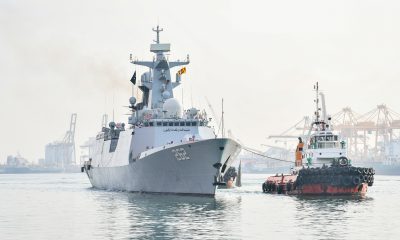
PNS TAIMUR & ASLAT arrive in Colombo
-

 News6 days ago
Anura Solomons passes away
-

 Features5 days ago
CIA’s hidden weapon in Iran
-

 Latest News4 days ago
Prasidh, Buttler set up comfortable win for Gujarat Titans
-

 Business6 days ago
SL’s economic outlook for 2026 being shaped by M-E conflict
-

 News2 days ago
PNS TAIMUR & ASLAT set sail from Colombo