
Sports
Ayomal continues record-breaking run as Junior National Championship concludes

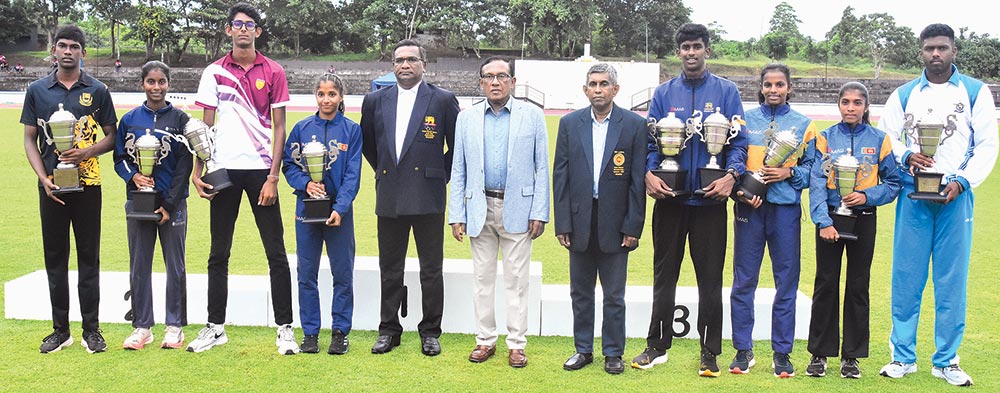
Rising star Ayomal Akalanka joined the sub 47 seconds club in the men’s 400 metres, young aspirant Dilni Rajapaksha bagged a meet record double and Vavuniya’s new-found endurance runner Ilango Vikirthan and St. Aloysius’ Ratnapura prodigy Lahiru Achintha made their presence felt with stunning performaces as the Junior National Athletics Championship concluded with a host of impressive feats at Diyagama on Sunday.
The Ambagamuwa Central athlete Akalanka who shattered his own national junior record in the 400 metres hurdles on Friday, reached his personal best in the 400 metres with a remarkable meet record performance of 46.46 seconds in the Under 20 final. The athlete trained by Anura Bandara was adjudged the Best Athlete in his age category and the Best Performer of the meet for his National Junior record time of 50.20 seconds in the 400 metres hurdles. Incidentally, his 50.20 seconds feat is the fastest performance in Asia this year in the junior category.
Lyceum International Wattala athlete Dilni Rajapaksha continued her record-breaking form winning the Under 16 triple jump with a new meet record distance of 11.66 m. It was the second time she improved a meet record at this meet. She broke her own records in the long jump and triple jump established last year. Her meet record of 5.96 metres in the Under 16 girls’ long jump earned her the Best Athlete title of her age category.
The day’s most remarkable finish was delivered by South Asian Junior Championship medallist Shavindu Avishka of Dhammissara National School and Lahiru Achintha who bettered the meet record in the Under 18 boys’ 1500m with a photofinish. Achintha pipped Avishka by miliseconds to write his name against the new meet record as he stopped the clock at 4:00.47 seconds.
In the corresponding girls’ event Tharushi Abisheka returned a time of 4:33.85 seconds to break her own meet record.
Lyceum International Wattala sprinter Dhananjana Fernando stood out once again in the 100 metres finishing the Under 18 girls’ event in a time of 12.08 seconds. She has been the fastest in the 100 metres even at senior national level this season and the meet record feat was something the enthusiasts were eagerly anticipating as she had clocked sub 12 seconds early this year.
Iresh Bogoda of Sir John Kothalawala College, Kurunegala excelled in the Under 18 boys’ 400 metres winning in a meet record time of 47.58 seconds.
In the girls’ 400 metres, Chenadi Dewhara Bendarage of Gamini National School, Benthota created a new meet record stopping the clock at 57.33 seconds. The fastest 400 metres performance in the girls’ category was achieved by Matara Central’s Nuhansa Kodituwakku who clocked 55.03 seconds to win the Under 20 event. That feat fetched her the Best Athlete title in the age category.
Former Nannapurawa MV athlete Madushani Herath flexed her muscles ahead of the Thailand Open with an impressive jump of 13.53 metres to win the Under 23 triple jump. She won the best athlete title in her age category. In the Under 23 men’s category, Rumesh Tharanga’s record breaking 82.93 metres throw (javelin) won him the Best Athlete award.
The final day was given a strong start by Poovarasankulam MV, Vavuniya athlete Ilango Vikirthan who clocked 15:13.25 seconds to win the Under 20 boys’ 5,000 metres. It was his third title of the meet and the third time he turned tables on athletes traning at high altitudes. His most impressive performance however was his record breaking time of 9:25.81 seconds in the Under 20 3,000metres steeplechase on day two.
by Reemus Fernando

Ilango Vikirthan from Vavunia won three golds and established a meet record in the Under 20 3,000 metres steeplechase.
-

- Ayomal Akalanka with his awards. (Pix by Kamal Wanniarachchi)
-

- Dilni Rajapaksha established two meet records.

Lahiru Achintha (right) pipped Shavindu Avishka to win the Under 18 boys’ 1,500 metres

Madushani Herath competes in the Under 23 triple jump

Latest News
Harmanpreet 82* in vain as Gujarat Giants break Mumbai Indians hoodoo and seal Eliminator spot

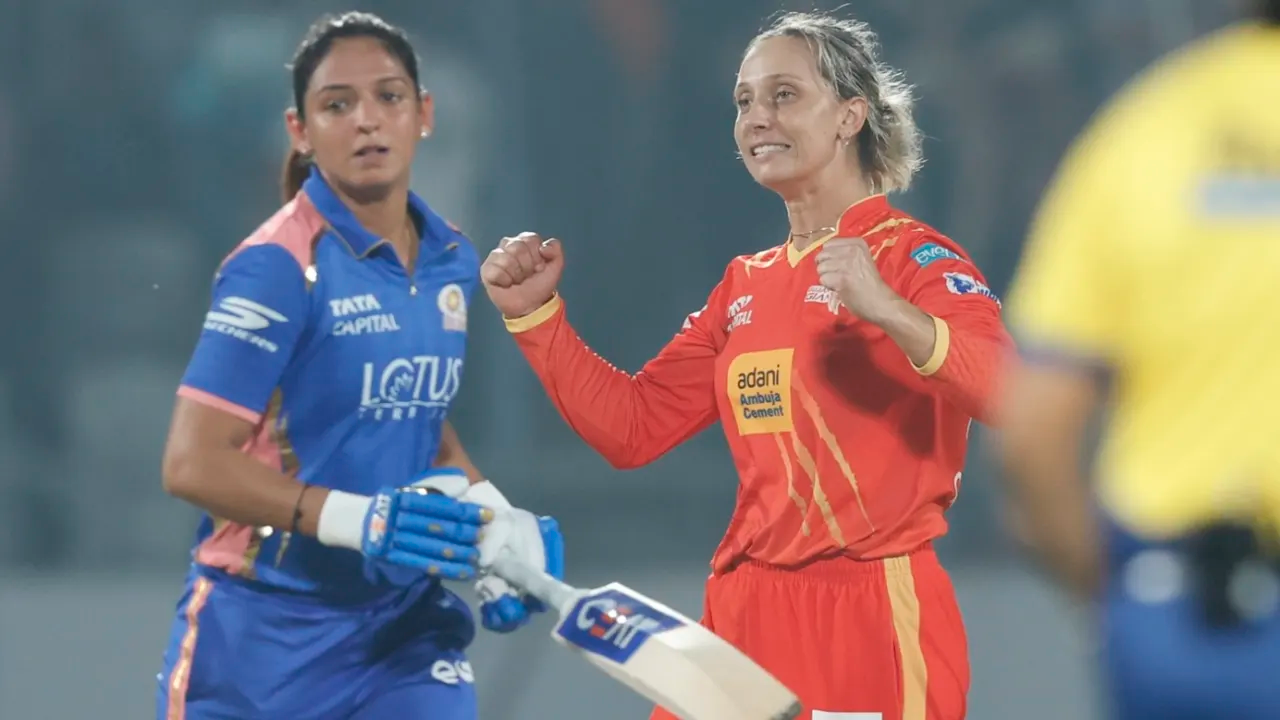
Gujarat Giants (GG) don’t enjoy the routine. On a day when they became the first team in 41 WPL games to bat after winning the toss, they went on to reserve another trend – of not having beatenMumbai Indians (MI) in eight previous meetings. With their fifth win of WPL 2026, all of which have come while defending totals, GG qualified for the Eliminator for a second season in a row.
It did not come easy. Harmanpreet Kaur threatened to do what she did to GG in 2024 with a playoffs spot on the line. With MI needing 58 off 24 balls, she all but single-handedly brought them within reach of victory, hitting three fours and three sixes – twice clearing the rope off Ashleigh Gardner in the final over – to bring the equation down to 14 off 3. But Gardner kept her calm and closed out the over to seal GG’s first-ever win over the two-time champions.
It was a fitting end, because Gardner had been a catalyst in GG’s strong finish earlier in the evening. She scored 46 off 28 balls, and added 71 off 43 with Georgia Wareham to take GG to 167, a total that had looked distant for much of their innings.
It is not yet curtains for MI, though. They will now hope for a UP Warriorz win over Delhi Capitals in the last league fixture on Sunday, with net run rate coming into play.
While GG seemed to back a method that has worked for them this season, their toss decision was fraught with risk, especially after Beth Mooney fell cheaply. Sophie Devine and Anushka Sharma looked solid but couldn’t really force the pace until the final over of the powerplay, in which they scored 12 off Vaishnavi Sharma. Despite not picking up wickets regularly, MI had the innings under control: GG scored in double-digits in only two of the first 11 overs. When Devine and Anushka fell in successive overs, GG had to rebuild with only 45% of their overs left.
Gardner and Wareham hit at least one four in each of the first three overs of their partnership. The switch was truly flicked when Wareham danced down to Amelia Kerr and launched her over the sightscreen in the 15th over. Gardner then hit Hayley Matthews for 6, 4, 4, 4 in the 16th, and both batters hit two fours each in the 17th, Shabnim Ismail’s final over. Gardner was soon stumped off Kerr but Wareham kept the big hits coming, finishing on 44 not out off 26 as GG scored 61 in their last five overs.
With GG going spin-heavy, Harmanpreet began finding the boundary regularly. She particularly targeted the shorter leg-side boundary (51m vs 59m) against Rajeshwari Gayakwad’s left-arm spin, hitting her for two sixes and a four in the space of seven balls spread across two overs. But GG clawed back, with Gayakwad getting Amanjot Kaur stumped and Wareham trapping Sanskriti Gupta for a first-ball duck. Harmanpreet ended the night with the Orange Cap on her head, but it was the team in orange that progressed to the next round.
Brief scores:
Gujarat Giants Women 167 for 4 in 20 overs (Sophie Devine 25, Anushka Sharma 33, Ashleigh Gardner 46, Georgia Wareham 44*; Shabnim Ismail 1-29, Nat Sciver Brunt 1-36, Amelia Kerr 2-26) beat Mumbai Indians Women 156 for 7 in 20 overs (Sajeevan Sajana 26, Harmanpreet Kaur 82*, Amelia Kerr 20, Amanjot Kaur 13; Kashvee Gautam 1-12, Rajeshwari Gayakwad 1-46, Sophie Devine 2-23, Georgia Wareham 2-26, Ashleigh Gardner 1-26) by 11 runs
[Cricinfo]

The ICC and the global players’ body the World Cricketers Association (WCA) are locked in a fresh tussle over player terms, including name, image and likeness (NIL) rights, ahead of the 2026 Men’s T20 World Cup.
The WCA claims the ICC has sent a version of the squad participation terms to players from several countries in the tournament that does not align with an agreed version signed by both bodies in 2024. The WCA claims the new, non-agreed version is exploitative when compared to the 2024 version.
WCA had written to the ICC about these concerns and ESPNcricinfo understands the ICC, in its response, disagreed, saying the 2024 agreement was only applicable to eight member boards (referred to as National Governing Boards, or NGBs). The ICC told WCA that the remaining members who are part of this World Cup were not bound by the 2024 agreement.
The eight NGBs are Australia, England, New Zealand, South Africa, West Indies, Ireland, Netherlands and Scotland – in as a replacement for Bangladesh, who have been excluded after they refused to travel to India. Of the remaining 12 participating countries, boards from India, Pakistan, Sri Lanka, Nepal, Oman and the UAE do not recognise WCA and hence their players are not affiliated with it. Italy, Zimbabwe, Afghanistan, Namibia, USA and Canada have player bodies but had not received the squad terms as of January 15, and were expected to get the non-approved version, the WCA said in a memo.
In its follow-up response, WCA told the ICC that the 2024 agreement stated it was applicable to all players affiliated with the players body – both that were participating in the World Cup and from countries that were not part of the 20-team tournament. As a result, WCA noted, all players should be protected by the 2024 agreement, which it believes is legally binding.
WCA sent a memo on January 15 informing players that the squad terms distributed by ICC were “substantially different” to the agreed 2024 version. It is understood WCA also sent an email to ICC on the same day.
Tom Moffat, the WCA CEO, highlighted differences across eight areas between the two versions: content/media appearances, behind the scenes content, changing room access, biological player related data, licensing, name, image likeness (NIL), player agreement and dispute resolution.
The WCA’s broader contention was that the 2024 agreement gave players the right to decide, and negotiate via the global players body, whereas the ICC version says player consent is not needed, with their boards having that authority.
An example of the significant differences is NIL rights, according to the communication Moffat sent to players. In the ICC’s new version, “the player is required to license their NIL to any third party; 3 players from the same team can be used by an ICC Partner for commercial content which can directly relate to the promotion of the Partners brand or product; the player’s national board approves all use of NIL on behalf of the player; Any use of NIL outside of the Squad Terms can be agreed by the player’s national board.”
In the 2024 agreement, the NIL rights were “restricted” only to the ICC’s commercial partners and the event hosts and the WCA is authorised on behalf of the players to negotiate terms and use. The 2024 version also said a group of players – not three per team – would be “represented in all content” promoting the ICC tournament.
There are significant differences in the terms for the usage of player data during the event as well. The WCA said in the ICC version, the governing body “can use and commercialise player data with the agreement of the player’s national board” and that the ICC “owns” the data. The approved version, WCA said, says the player owns the data and their consent is necessary “given the sensitivities.”
In the ICC version, once the players participate in a global tournament, “he /she is deemed to have accepted the Squad Terms regardless of whether they sign the Terms.” In the version agreed between the WCA and ICC, the players are required to agree the terms and sign for every event separately.
In the memo to players, Moffat accused the ICC and member boards of “deliberately removing” all the protection that players were assured of in the 2024 terms, while “attempting” to “own” players and “claim an almost unlimited ability to use and commercialise it with third parties without your consent, with the only recourse to an in-house dispute resolution process run by the ICC itself .” Moffat also said the ICC and member boards were trying to “exploit the most vulnerable, and worst paid player groups at this World Cup, some of whom are amateur,” through the non-approved version.
This week, Moffat told ESPNcricinfo that the WCA did not want to disrupt the World Cup, but admitted being “deeply concerned” by ICC presenting terms that did not “align” with the 2024 agreement. “The (ICC) terms provided significantly erode player rights and protections including around image and commercial use, compared to those agreed,” Moffat said. “It is especially concerning that it is the most vulnerable playing groups who appear to have been targeted and expected to compete under different terms and conditions to other playing groups participating in the same Men’s T20 World Cup. For many players affected, participation in ICC Events represents a primary source of income and career progression.
“The WCA supports the growth of the game and ICC events, but these objectives should be pursued in partnership with players, not at their expense. The agreed Squad Terms have now been signed by impacted WCA players, and our expectation is for these terms to be honoured by the ICC for the T20 World Cup.”
It is understood the ICC has not responded to WCA’s follow-up mail sent earlier this week. The ICC has been asked for a comment.
[Cricinfo]
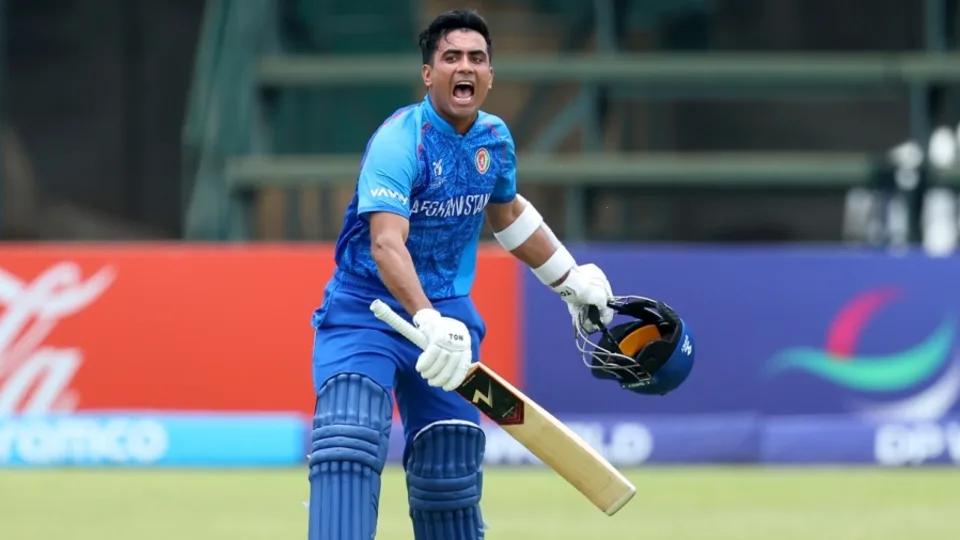
Afghanistan Under 19s 315/7 in 50 overs (Faisal Khan 163, Mahboob Khan 89; Reuben Wilson 3/52) beat Ireland Under 19s 124 in 40.4 overs (Marko Bates 34; Abdul Aziz 3/21) by 191 runs
[Cricbuzz]

More than 200 killed in mine collapse in DR Congo

US government partially shuts down despite last minute funding deal

Harmanpreet 82* in vain as Gujarat Giants break Mumbai Indians hoodoo and seal Eliminator spot

Myanmar election delivers walkover win for military-backed political party

New education reforms for grade one officially launched

ICC and World Cricketers Association clash over player terms ahead of T20 World Cup

‘Dates have the highest sugar content to fight Coronavirus’

Sunday Island 27 December – Headlines

#SundayIsland 17th December – Headlines

Sunday Island – 28th March

Sunday Island Headlines – 21 March

Sunday Island – 21st February – Headlines
-
 Business6 days ago
ComBank, UnionPay launch SplendorPlus Card for travelers to China
-
 Business7 days ago
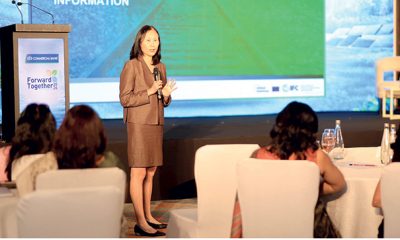
ComBank advances ForwardTogether agenda with event on sustainable business transformation
-
 Business3 days ago
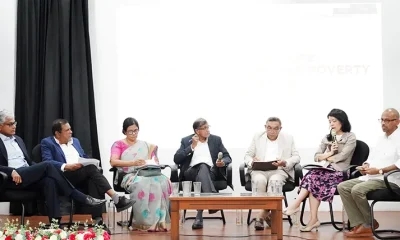
Climate risks, poverty, and recovery financing in focus at CEPA policy panel
-
 Opinion7 days ago
Conference “Microfinance and Credit Regulatory Authority Bill: Neither Here, Nor There”
-
 Opinion2 days ago
Sri Lanka, the Stars,and statesmen
-

 Opinion6 days ago
Luck knocks at your door every day
-

 Business15 hours ago
Hayleys Mobility ushering in a new era of premium sustainable mobility
-

 Business15 hours ago
Advice Lab unveils new 13,000+ sqft office, marking major expansion in financial services BPO to Australia