
Latest News
Australian Senate approves social media ban on under-16s


Australia will ban children under 16 from using social media, after its Senate approved the world’s strictest laws.
The ban – which will not take effect for at least 12 months – could see tech companies fined up to A$50m ($32.5m; £25.7m) if they don’t comply.
Prime Minister Anthony Albanese says the legislation is needed to protect young people from the “harms” of social media, something many parent groups have echoed.
But critics say questions over how the ban will work – and its impact on privacy and social connection – have been left unanswered.
This is not the first attempt globally to limit children’s social media use, but it involves the highest age limit set by any country, and does not include exemptions for existing users or those with parental consent.
“This is a global problem and we want young Australians essentially to have a childhood,” Albanese said when introducing the bill to the lower house last week. “We want parents to have peace of mind.”
Having passed the Senate by 34 votes to 19 late on Thursday, the bill will return to the House of Representatives – where the government has a majority meaning it is sure to pass – for it to approve amendments, before becoming law.
The legislation does not specify which platforms will be banned. Those decisions will be made later by Australia’s communications minister, who will seek advice from the eSafety Commissioner – an internet regulator that will enforce the rules.
Gaming and messaging platforms are exempt, as are sites that can be accessed without an account, meaning YouTube, for instance, is likely to be spared.
The government says will it rely on some form of age-verification technology to implement the restrictions, and options will be tested in the coming months. The onus will be on the social media platforms to add these processes themselves.
However digital researchers have warned there are no guarantees the unspecified technology – which could rely on biometrics or identity information – will work. Critics have also sought assurances that privacy will be protected.
They have also warned that restrictions could easily be circumvented through tools like a VPN – which can disguise a user’s location and make them appear to be logging on from another country.
Children who find ways to flout the rules will not face penalties, however.
Polling on the reforms, though limited, suggests it is supported by a majority of Australian parents and caregivers.
“For too long parents have had this impossible choice between giving in and getting their child an addictive device or seeing their child isolated and feeling left out,” Amy Friedlander, who was among those lobbying for the ban, recently told the BBC.
“We’ve been trapped in a norm that no one wants to be a part of.”
But many experts say the ban is “too blunt an instrument” to effectively address the risks associated with social media use, and have warned it could end up pushing children into less regulated corners of the internet.
During a short consultation period before the bill passed, Google and Snap criticised the legislation for not providing more detail, and Meta said the bill would be “ineffective” and not meet its stated aim of making kids safer.
In its submission, TikTok said the government’s definition of a social media platform was so “broad and unclear” that “almost every online service could fall within [it]”.
X questioned the “lawfulness” of the bill – saying it may not be compatible with international regulations and human rights treaties which Australia has signed.
Some youth advocates also accused the government of not fully understanding the role social media plays in their lives, and locking them out of the debate.
“We understand we are vulnerable to the risks and negative impacts of social media… but we need to be involved in developing solutions,” wrote the eSafety Youth Council, which advises the regulator.
Albanese has acknowledged the debate is complex but steadfastly defended the bill.
“We all know technology moves fast and some people will try to find ways around these new laws but that is not a reason to ignore the responsibility that we have,” he has said.
Last year, France introduced legislation to block social media access for children under 15 without parental consent, though research indicates almost half of users were able to avoid the ban using a VPN.
A law in the US state of Utah – which was similar to Australia’s – was overturned by a federal judge who found it unconstitutional.
Australia’s laws are being watched with great interest by global leaders.
Norway has recently pledged to follow in the country’s footsteps, and last week the UK’s technology secretary said a similar ban was “on the table” – though he later added “not… at the moment”.
[BBC]


This fixture was, of course, known in advance, but the stakes are somewhat surprising. Neither was it expected that India could be knocked out of their own party if they lose to West Indies nor was it expected that West Indies could go to the semi-finals if they win this match.
The expected result still is for India to overcome that one blip against South Africa and make it to the semi-finals. Then again, jeopardy and unpredictability are at the heart of this format.
The path to get here has been similar for both teams: a thumping loss to South Africa and a resounding win over Zimbabwe. Even their scores against Zimbabwe were nearly identical.
West Indies are one team India haven’t faced in their dominant run starting with the 2024 T20 World Cup. They are, in fact, the last team to have beaten India in a series way back in August 2023.
Both sides have improved since then. India are a well-oiled domination machine, West Indies have put together scary six-hitters who have happened to hit form. They have hit more sixes than any side at any T20 World Cup, and India are three behind them with 63 so far.
It is with the ball that India hold an advantage. India’s bowlers are match-winners. They have pace and mystery. It gives them room for error. West Indies are a strictly defensive bowling unit. They’ll need everything to go their way to get the better of India.
He might have taken just 26 balls to get there against Zimbabwe, but it was Abhishek Sharma’s second-slowest fifty in T20Is. That’s because he had scored just 15 runs in the first four matches, which made him take his time against offspin, scoring just 13 off 17 balls against that style of bowling. That makes Roston Chase an important player even though he went for 46 against South Africa. He is the only spinner in the West Indies squad who takes his stock ball away from left-hand batters; India have five of them in their top eight.
Rinku Singh lost his father after the match against Zimbabwe, which he missed with India bringing in Sanju Samson to break up the left-hand batters in the top order. He is expected to join the squad on Saturday night but isn’t expected to play.
India (probable): Abhishek Sharma, Sanju Samson (wk), Ishan Kishan, Tilak Varma, Suryakumar Yadav (capt), Hardik Pandya, Shivam Dube, Axar Patel, Arshdeep Singh, Jasprit Bumrah, Varun Chakravarthy.
Brandon King, who had sustained an injury against South Africa, is fit and available, which should suggest no changes for West Indies.
West Indies (probable): Brandon King, Shai Hope (capt & wk), Shimron Hetmyer, Rovman Powell, Roston Chase, Sherfane Rutherford, Romario Shepherd, Jason Holder, Matthew Forde, Gudakesh Motie, Shamar Joseph.
[Cricinfo]
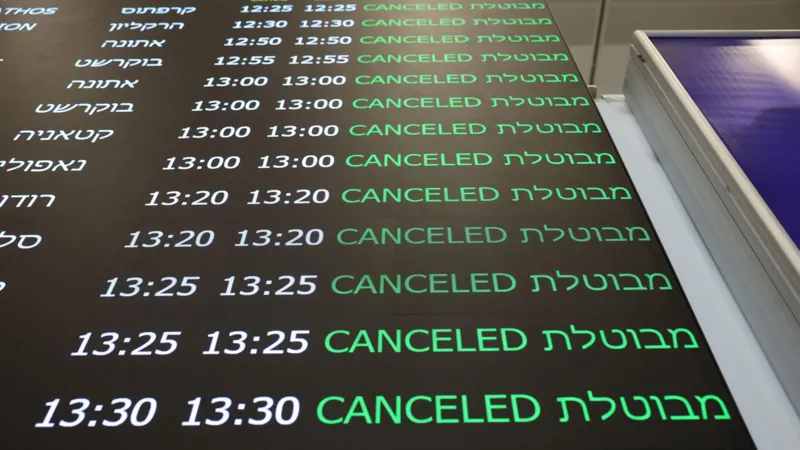
Airlines serving the Middle East cancelled and diverted flights on Saturday after the US and Israel launched deadly strikes against on Iran, including its capital Tehran.
British Airways, Virgin Atlantic and Wizz Air were among carriers to pare back their schedules to destinations in the Middle East, citing safety concerns.
Iran responded by launching a series of attacks, with Israel and four Gulf Arab countries that host US military bases – Bahrain, Kuwait, Qatar and the UAE – targeted by strikes.
The UK Foreign Office urged British nationals in Bahrain, Qatar, Kuwait and the United Arab Emirates (UAE) to immediately shelter in place following explosions.
US President Donald Trump cited a failure to reach an agreement to limit Iran’s nuclear programme and regime change as among the reasons for launching the attack.
Iranian and Israeli airspace were both closed on Saturday, with flight tracking showed international air traffic avoiding the region.
All flights in and out of Dubai International and Al Maktoum International airport in Dubai were suspended on Saturday afternoon.
On Saturday evening, the media office for Dubai International said the airport had sustained “minor damage in an incident” and that four members of staff had been injured.
Qatar Airways confirmed the temporary suspension of flights to and from its capital Doha due to the closure of Qatari airspace, later saying operations would resume 19:00 Doha time on Sunday (16:00 GMT).
British Airways cancelled services to Tel Aviv and Bahrain until Wednesday.
Virgin Atlantic cancelled a Heathrow to Dubai flight and warned its flights to India, Saudi Arabia and the Maldives may take longer due to being rerouted.
Wizz Air suspended all flights to and from Israel, Dubai, Abu Dhabi and Amman up until and including next Saturday.
Heathrow, the UK’s busiest airport, urged travellers to check with their airline for updates.
Passengers on the 20:00 flight to Doha on Friday returned to Heathrow after it turned back part way through the journey, but this was due to a technical issue with the aircraft and unrelated to the military action.
[BBC]
Latest News
Trump says Iran’s Supreme Leader Ayatollah Ali Khamenei is dead after US-Israeli strikes
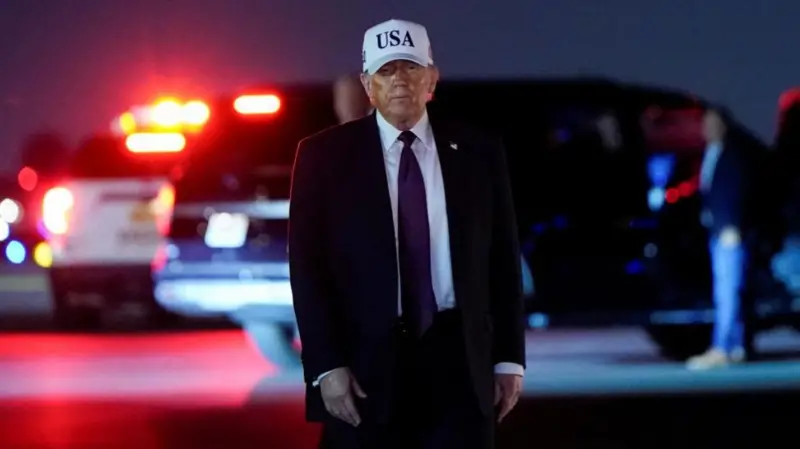
Donald Trump has announced that Iran’s Ayatollah Khamenei has been killed. Here is his whole post on his Truth Social Platform:
Khamenei, one of the most evil people in History, is dead. This is not only Justice for the people of Iran, but for all Great Americans, and those people from many Countries throughout the World, that have been killed or mutilated by Khamenei and his gang of bloodthirsty THUGS. He was unable to avoid our Intelligence and Highly Sophisticated Tracking Systems and, working closely with Israel, there was not a thing he, or the other leaders that have been killed along with him, could do. This is the single greatest chance for the Iranian people to take back their Country. We are hearing that many of their IRGC, Military, and other Security and Police Forces, no longer want to fight, and are looking for Immunity from us. As I said last night, “Now they can have Immunity, later they only get Death!” Hopefully, the IRGC and Police will peacefully merge with the Iranian Patriots, and work together as a unit to bring back the Country to the Greatness it deserves. That process should soon be starting in that, not only the death of Khamenei but the Country has been, in only one day, very much destroyed and, even, obliterated. The heavy and pinpoint bombing, however, will continue, uninterrupted throughout the week or, as long as necessary to achieve our objective of PEACE THROUGHOUT THE MIDDLE EAST AND, INDEED, THE WORLD!
Thank you for your attention to this matter.
[BBC]

Can West Indies make up for bowling gulf in virtual quarter-final against India?

Flights cancelled as travel warnings issued after strikes on Iran

Trump says Iran’s Supreme Leader Ayatollah Ali Khamenei is dead after US-Israeli strikes

South Africa put spotless record on the line in all-African clash

Fair weather will prevail over most parts of the island

Renewed Lanka’s Easter Bombing probe puts NTJ’s South India radicalisation network back under lens

‘Dates have the highest sugar content to fight Coronavirus’

Sunday Island 27 December – Headlines

#SundayIsland 17th December – Headlines

Sunday Island – 28th March

Sunday Island Headlines – 21 March

Sunday Island – 21st February – Headlines
-

 Features6 days ago
LOVEABLE BUT LETHAL: When four-legged stars remind us of a silent killer
-

 Business6 days ago
Bathiya & Santhush make a strategic bet on Colombo
-
 Business6 days ago
Seeing is believing – the silent scale behind SriLankan’s ground operation
-
 Latest News7 days ago
India, South Africa meet in the final before the final
-

 Features6 days ago
Protection of Occupants Bill: Good, Bad and Ugly
-
 News6 days ago
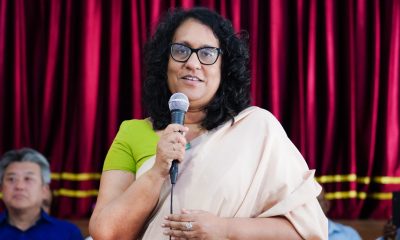
Prime Minister Attends the 40th Anniversary of the Sri Lanka Nippon Educational and Cultural Centre
-

 Business6 days ago
Huawei unveils Top 10 Smart PV & ESS Trends for 2026
-

 News6 days ago
Coal ash surge at N’cholai power plant raises fresh environmental concerns