
Opinion
Australian Monk Bhante Dhammika in Sri Lanka


Recounts a meeting with Rohana Wijeweera after his release from prison in 1977
Well-known Australian monk, Bhante S. Dhammika, will be in Colombo for several weeks.
He was recently interviewed by
Hasala Perera
Hasala – Welcome to Sri Lanka again, Bhante.
Thank you. Last year I came briefly after being away for nearly 20 years. Now I’m delighted to be back again.
Hasala – When did you first come to Sri Lanka?
I first visited your county when I was 14-years old when my parents took me to the UK. Our ship stopped in Colombo for a day. I remember travelling from Fort to the Mount Lavinia Hotel and seeing all the coconut trees on each side of the road. I notice that there are none there now. Then I came in 1976 as a monk and I ended up staying for 20 years. I became a monk in India but it was in Sri Lanka that I learned Buddhism at a deeper level.
Hasala – Over the last decades you have become quite well-known for your writings. How and why did you start writing?
I was a rather poor student; bad at spelling and grammar, so it’s always been a surprise to me that I have written so much and that people appreciate what I write. As I learned the Dhamma, I often noticed how many books made claims about Buddhism that were not true or which failed to mention aspects of the Dhamma which I thought were important. It was to rectify such a problem that first prompted me to start writing; then I just improved my grammar and spelling as I went along. I don’t think I’m a good writer but I’m good at explaining the Dhamma in a simple and understandable manner.
Hasala – Of all your books, which is your favourite?
I like them all (laughs). So rather than tell you which ones I like, I’ll tell you which ones have proved to be most popular. My book ‘Good Question Good Answer’ has been translated into 37 languages, most recently into Russian and Marathi. I identified questions people most often ask about Buddhism and then gave simple straightforward answers to them. No Pali terms or deep philosophical explanations. So, it’s a good primer on Buddhism and hence it’s been reprinted hundreds of times. My most recent book, ‘Footprints in the Dust,’ is now available in Chinese, German, Indonesian, Marathi and Sinhala and there are currently Spanish and Vietnamese translations underway. There are literally hundreds of biographies of the Buddha, but all of them mix the few details from Tipitaka with the myths and legends that grew up over the centuries after him. ‘Footprints …’ is based only on the information about the Buddha from the Pali Tipitaka, and most readers comment on what a startlingly different and more realistic image this gives of the Buddha. It shows him as an extraordinary and accessible human.
Hasala – You have also written a guidebook to Sri Lanka, haven’t you?
Yes, although it’s not the usual guidebook about where to eat, where to stay, or which are the best beaches. It’s a guide book for people coming to Lanka to discover its Buddhist heritage; it’s a guidebook specifically for Buddhist pilgrims. During my years in Sri Lanka, I travelled from Point Pedro to Dondra Head, from the lighthouse at Sangamam Kanda to the Dutch Fort at Kalpitiya which is about as far west as it’s possible to go, and to the top of Pidurutalagala and a place near Hambantota which I was told was the lowest place in Sri Lanka, several metres below sea level.
In the 1970s and 80s, I visited nearly all the well-known sacred places but also many arannas; long abandoned ones in the forest and ones still inhabited by monks. So, my book covers all the well-known Buddhist sites plus many of the little-known, rarely visited ones. My favourite places are Tiriyaya, Kutumbigala and Rajagala, in Ampara district. The pristine forest, the wildlife and the austere monks living in these places made this a wonderful experience for me.
I hope the book also encourages more Sri Lankans to explore more of their Buddhist heritage off the beaten track.
Hasala – What are you writing about next?
I have just finished two new books. One is called ‘Begging Bowl and Banquet; Food and Drink in the Buddha’s India’ which includes everything the Buddha had to say about what we eat and drink, a subject people don’t often associate with the Dhamma. But the Buddha had something to say about dieting, food fads, gluttony, vegetarianism, digestion, table manners, healthy eating habits and much else. You will be surprised to know that in the Jatakas there are actually recipes on how to prepare and cook several dishes. The other book is due out soon from Neptune Publications in Pelawatta. It is called ‘The Buddha in History, Tradition and Culture’ and looks at the profound impact the Buddha has had throughout history.
Hasala – You have been writing for the Sunday Island for a long time now haven’t you?
Yes. I started writing for the newspaper at least 20 years ago, then stopped, then started again. I think you see in my articles the other thing about my writing – I write about unusual and obscure but still interesting and important aspects of Buddhism. I like to clarify misunderstandings about it, too. You may remember that some months ago I wrote an article debunking the silly notion that the Buddha was born in Sri Lanka.
Hasala – During your decades in Sri Lanka who were the most impressive or the most interesting people you met?
One of the virtues of Sinhalese people is their hospitality, their openness to and curiosity about outsiders, to foreigners, and this made it easy for me to meet people and very often they would approach me and talk to me. I think the most interesting person I ever met was Rohana Wijeweera – beret, beard and all. After his release from prison in 1977 he came to Kandy to give a talk; there was a huge crowd, I happened to be passing by the venue where he was to speak, and although I didn’t know why they had all gathered, out of curiosity I went in.
Wijeweera apparently noticed me and one of his people told me he would like to speak with me. That’s how it happened. He asked me about myself and seemed intrigued that a Westerner would become a Buddhist monk. We chatted for about 10 minutes and when he told me it was his time to speak, he excused himself and left.
The most impressive people I got to know and who had a very positive effect on me were the meditation teacher Godwin Samararatna, Hinatinna Dhammaloka and the German monk Nyanaponika; one layman and two monks. They exhibited all the best Buddhist virtues – kindness and patience, learning and modesty. I think I’m a better person for coming into contact with them. They made the Dhamma real for me. People tell me the standards within the Sangha have declined nowadays but I’m sure there are still monks who cherish the Dhamma and try to live by it.
Hasala – What do you plan to do during your stay in Sri Lanka?
I will be visiting the Colombo Book Fair, and giving talks at the university, on the TV and at several other venues. I have also been invited to give several talks at Maitriya Hall in Bambalapitiya. When I arrived in Sri Lanka in 1976, I was invited to give a talk there. It was the first public talk I ever gave as a monk so I have a long association with Maitriya Hall. As I will probably not be able to visit Sri Lanka again due to age, I also plan to meet the many friends I made while here.


China has invested more than USD 60 Billion in Venezuela and plans to invest further in that country. This is happening despite the abduction by the US of Venezuela’s president Maduro and his wife and US President Donald Trump’s boastful claim that he will be selling Venezuela’s oil. And what is even more surprising is that the Venezuelan Ambassador to China says nobody but Venezuela will decide the price of its oil and to whom it sells. He has assured that Chinese investments in his country will be safe and secure.
According to media reports, Venezuelan Ambassador to China, Remigio Ceballos, has stated that Venezuela will determine the price of its oil exports to China independently, asserting that prices will follow international market trends rather than dictates by the United States. Ceballos has stated that Caracas “will not heed the arrangements of the US or other countries” on oil pricing. The remarks followed reports that the U.S. is planning to exercise control over Venezuela’s state-run oil company, PDVSA, and potentially push prices down to $50 per barrel. Ceballos sought to reassure China that its investments in the South American country remained secure, emphasising that China and Venezuela are “trusted partners”. The ambassador clarified that despite geopolitical tensions, Venezuela would not follow Washington-led pricing structures, ensuring its oil remains competitive. These statements came in response to intense geopolitical maneuvering in early 2026 regarding Venezuela’s oil sector and its ongoing energy relationship with China (CNBC, 4th Feb. 2026).
Failure of agression
These developments reveal the failure of aggression in the face of support and cooperation. The US imposed crippling sanctions on Venezuela while China helped it to survive. Finally, true to form, the US did what it does best, take out the leader, like it did in Iraq, Libya and several other countries. Nowhere has this strategy succeeded, whereas the Chinese Belt and Road Initiative has been welcomed in most countries in Asia, Africa and the Middle East. China provides leadership in several key international associations and organisations designed to foster, or in some cases offer alternatives to, the existing global order. Key groupings include the Shanghai Cooperation Organization (SCO), BRICS, and the Asian Infrastructure Investment Bank (AIIB), alongside specialised UN agencies and regional forums like the Forum on China-Africa Cooperation (FOCAC). In contrast most of the US led organizations such as NATO, QUAD, AUKUS, are military alliances. Further, the US has defence agreements with several countries which are strategically vital for its interests, in the Middle East, Africa, Americas and Asia. China does not have a formal alliance requiring it to fight for another country. China adopts an anti-alliance policy and officially opposes NATO-like military alliances, arguing they create “small cliques” that cause confrontations in the region. China focuses on strategic partnerships rather than formal blocs, treating various countries as partners to avoid the confrontational nature of alliances.
With regards to aid, while the US focuses on capacity building China seems to believe that infrastructure development is more beneficial and would help the recipient country to develop its economy and be independent. Sri Lanka has experience with these US capacity building programmes and know that they are more often aimed at influencing the participants to change their political orientation and to be aligned with Western socio-political ideology. It is said that these programmes may have helped the US to bring about a regime change in the country. In Cambodia, too, the US has conducted capacity building programmes which the discerning Cambodians are suspicious of. China is the largest source of Foreign Direct Investment and top trading partner for Cambodia, with investment totaling over $23 billion by mid-2024, heavily focused on manufacturing, infrastructure, and real estate. Key projects under the Belt and Road Initiative include highways, hydroelectric dams, special economic zones, and the $1.7 billion Funan Techo Canal.
Bid to counter Chinese influence
The US attempts to counter the burgeoning advances of China by use of force. The abduction of President Maduro of Venezuela, the country with the largest oil deposits and increasingly coming under the influence of China, was its diabolical response. This criminal act shows the poverty of the US strategy. What it could do instead is develop cordial relations and respect the rights these countries must have in deciding on their socio-political structures and help them to come out of poverty without bullying and exploiting their resources. If that had been their policy no other country would have an opportunity to get a foothold in their backyard.
Iran joined the BRICS and was in the process of mending its fences with Saudi Arabia, a staunch ally of the US, with Chinese mediation. Saudi Arabia was also joining the BRICS, which is not well-disposed towards the US. China was planing to invest heavily in Iran. China and Iran signed a 25-year, $400 billion strategic cooperation agreement in 2021, aiming to boost energy and infrastructure.. The US and its ally in the Middle East, Israel, could not silently watch those developments that they saw as a threat to their hegemony and dominance in the region. The US felt the need to thwart the Chinese advance and also the growth of BRICS while Israel saw it as an opportunity to wipe out the opposition to its master plan of total genocide of Palestinians and grabbing their ancestral land in whole.
After killing Iranian supreme leader and bombarding the country into what they thought was submission, Trump said he must have a say in the appointment of the next leader and also that Ayatollah’s son was not acceptable to him. He demanded unconditional surrender of Iran and said there probably would not be anybody in Iran even to declare a surrender. Iran has not only said it will never surrender but also gone ahead and appointed the murdered supreme leader’s son as his successor. Trump said the Iranian navy was gone, its air force was gone, missile stockpiles were gone and it was already defeated. But Iran miraculously continues to fire missiles at Israel and US bases in the neighbouring countries.
Iran probably will be defeated in the war, but whether the US and Israel will achieve their goals is most unlikely. The underlying reason for this conflict is the problem of Palestine. The two-state solution adopted by the UN could be the basis for peace. The US knows this but it does not want peace in the Middle East. It can exploit the oil resources in the region by keeping it under eternal turmoil. This policy perfectly suits Israel as well and it exploits the situation to commit genocide of the Palestinians and grab their land.
In this era of multipolarity with several countries possessing long range missiles and nuclear capability and several of those countries being not in friendly terms with either US or Israel, re-arming, re-grouping and re-emerging of forces that will continue the anti-imperialist, anti-expansionist struggle cannot be prevented.
If only US, Europe emulate China
If the US and also the influential Europe could see how beneficial the policy adopted by China could be to everybody living on this planet, there would be peace in the world. This is what the Chinese have been telling the West while it engages in confrontation and aggression against those who do not fall in line and abide by their dictate. Chinese have shown their readiness to help everybody without discrimination, whether foe or friend of the US. China has significantly increased its investment in Saudi Arabia and other US allies in the Middle East, with 2024 seeing a record high in BRI (Belt and Road Initiative) engagement—reaching $39 billion in construction contracts and investments in the region. Saudi Arabia has emerged as the top recipient of Chinese investment, with over 93 projects initiated since 2021 despite it being one of the staunchest allies of the US in the Middle East with a large US military presence. The US has its largest military base in the Middle East in Qatar. Yet China has heavily invested in Qatar, primarily focusing on energy, infrastructure, and financial sectors. Major investments include Sinopec and CNPC securing stakes in Qatar’s North Field East LNG expansion projects, as well as significant participation in infrastructure projects like the Hamad Port and Lusail Stadium.
Vietnam, a victim of US aggression, has recently signed a defence cooperation agreement with it. Yet China has invested heavily in Vietnam, becoming a top source of foreign direct investment and leading in new projects as of 2025–2026. Chinese firms are investing billions in high-tech, electronics, and manufacturing in Vietnam, with over $6.7 billion pledged between January and November 2025.
Based on reports from international human rights organisations, the U.S. Department of State, and various news analyses, Saudi Arabia is widely considered a highly repressive, authoritarian country with intensified crackdown on political dissent, freedom of expression, and human rights activists. In 2016, the kingdom executed 146 people, including a mass execution of 47 men on January 2. The US says it’s attacking Iran because it is repressive, but in truth it is doing so because Iran does not toe its line, Saudi Arabia does and goes scot-free.
All in all, in this imperfect world what everybody must do is help each other disregarding their imperfections. If the US and also Europe try to emulate China, the world, in the least, would be safer.
(Some information contained in this article is from Wikipedia.)
by N. A. de S. Amaratunga

My father was an ardent believer of astrology. It was his hobby. As a result, not only my family, friends, and neighbours had horoscopes, but our pets also had their own. No need to say, my early life was choreographed according to celestial movements. When I sat for my ordinary level exam, father came up with an auspicious time to leave for the exam. This posed a huge logistical and psychological challenge. I was at Ananda hostel at that time, and he suggested that I leave at the auspicious time, which was more than an hour ahead of start time, sat in the basketball court until the doors open to the examination hall.
I told him no way. Not only that I would be laughingstock, but it would also disrupt the daily routine of study hall, breakfast, and arriving on time without wasting precious time, and disturbing the important mental harmony. By this time, I also had developed enough courage not to accept tradition without justification, mainly thanks to Ven. Kotagama Wachissara thero, our Dhamma teacher. It must have hurt his feelings, but my father backed out. I did well in the exam, and that was the last time I had anything to do with astrology.
Not exactly, when we got married, our parents came up with an auspicious time for the traditional ceremony, but due to a logistical hitch, we missed it. Not to worry, after five decades, the spark has not left and things are going smoothly. Since then, we have moved across continents, taken up jobs, moved into houses, and brought up kids without the assistance of astrology. Similarly, I know countless people who lead successful, happy, and prosperous lives without ever having heard of astrology.
Vedic Astrology, also called Jyotish, originated over 5,000 years ago in India. It is deeply rooted in the Vedas, ancient Hindu scriptures. Western Astrology began around 2,000 years ago in Mesopotamia and developed further in Greece and Rome. For millennia, humanity has tried to correlate celestial movements with terrestrial events, especially seasonal changes, for the benefit of agriculture, maritime navigation, and trade over long distances. This “mundane astrology” was a practical effort to bring order to a chaotic world. Naturally, the ancients extended this study to interpret the effect of celestial events on the individual. Vedic Astrology emphasises spiritual growth, while Western Astrology focuses on personality and psychological traits.
Until the 17th century, astrology and astronomy were virtually indistinguishable. Great scientists like Johannes Kepler and Isaac Newton practised astrology or lived in a world where it was considered a legitimate academic discipline. However, Enlightenment, or the Age of Reason in the 17th–18th century, which emphasises reason, individualism, and skepticism toward tradition introduced a rigorous scientific method that astrology could not satisfy. From a physical standpoint, the gravitational or electromagnetic influence of distant planets on a newborn human is negligible compared to the influence of the immediate environment. Parenting, education, and social background, for example.
Consequently, the scientific community classifies astrology as a pseudoscience, noting that its predictions rely on the tendency for people to find personal meaning in vague, generalized statements. Once a person starts believing this system, they tend to seek out and remember information that confirms their beliefs while ignoring or rationalising the many times the predictions were wrong. Phrases like “You will go through a difficult time during such a period” feel personal, but who would not go through challenging times in their lives. This is called the Barnum Effect. In times of high stress or uncertainty, astrology provides a sense of structure and predictability, making a chaotic world feel more manageable.
Vedic Astrology uses the sidereal zodiac, which aligns with the actual positions of stars and constellations. In contrast, Western Astrology relies on the tropical zodiac, based on the Earth’s seasons. The sidereal zodiac reflects fixed star positions, while the tropical zodiac shifts due to the Earth’s axial precession. Unlike my father, I know nothing about astrological calculations, but I wonder if the current disagreement on the New Year auspicious times is a result of following such different methods.
There is some validity in having a unified timetable for major events as it can coordinate and bring together a community, or an entire nation in this case. It is a good thing. However, it cannot be denied that astrology is a belief system that the individual must decide to accept or reject depending on their own wishes. Expecting the government to take any part in endorsing a belief system that has absolutely no empirical evidence goes beyond lunacy. Where would it stop? Do we expect the government to decide the auspicious time to get married, indula katagema, or akuru kiyaweema of children? Instead, we must demand our government get out of pandering to belief systems of any nature and focus on the business of governance based on facts and figures.
In our household, we celebrate New Year to suit our lifestyle: we cook a special meal, but on the same old stove, at our convenience so that it does not disrupt the regular mealtimes and share it with family and friends. It is a social event for sharing fun and goodwill. We tell the children about the traditions, how they started, and the food, but we do not expect them to subscribe to any belief systems and engage in meaningless activities that waste their time and resources. We expect them to grow up to be realistic, yathabutha, not bahubutha, as my grandfather would have said.
by Geewananda Gunawardana
Opinion
Neutral Waters, Timeless Laws: Graf Spee, IRIS Dena, and the enduring relevance of neutrality

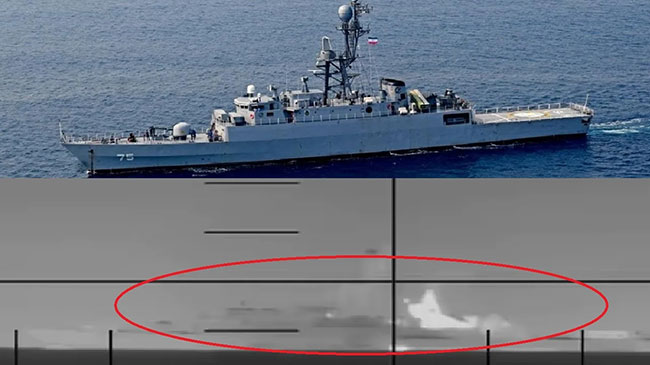
The story of the German pocket battleship Admiral Graf Spee in 1939 remains one of the most cited lessons in the law of neutrality. During her commerce-raiding mission in the South Atlantic and Indian Ocean between September and December 1939, Graf Spee sank nine merchant ships totalling over 50,000 GRT. Her actions forced the British to deploy multiple hunting groups across vast oceans, culminating in the Battle of the River Plate, where British cruisers HMS Exeter, HMS Ajax, and HMNZS Achilles engaged her. Severely damaged, Graf Spee sought refuge in the neutral port of Montevideo, Uruguay, before being scuttled. This incident highlighted the strict application of neutrality principles under the 1907 Hague Conventions V and XIII—rules still referenced in modern maritime law.
The conventions limited belligerent warship entry into neutral ports to 24 hours, allowed repairs only to restore seaworthiness (not combat capability), and prohibited replenishment beyond provisions for the crew. Neutral states were also responsible for ensuring impartial treatment of all belligerents. The Montevideo episode, often taught in legal and diplomatic schools, resonates today in Sri Lanka, following the sinking of the Iranian naval vessel IRIS Dena and the temporary shelter granted to her accompanying ships, IRIS Bushehr and IRIS Lavan, in Colombo and Kochi, India.
Understanding Neutrality in International Law
Neutrality is the legal status assumed by states that choose not to participate in an armed conflict while maintaining impartial relations with all belligerents. Neutral states refrain from providing military support and undertake obligations to prevent hostilities from spreading through their territory or waters.
The Hague Conventions of 1907, V on land warfare and XIII on naval warfare, codified long-standing customs about the rights and duties of neutral states. These principles are reinforced today by customary international law, the Geneva Conventions, and the San Remo Manual on Naval Warfare, which clarifies modern naval operations involving neutral waters. Neutrality applies only in international armed conflicts between states. By assuming a neutral status, third states commit to abstaining from hostilities and ensuring that their territory and waters are not exploited for military purposes.
Historical Roots
Neutrality evolved to prevent wars from spreading geographically and to protect commerce. By the 17th and 18th centuries, maritime powers began asserting neutral rights, particularly the protection of merchant shipping. The Declaration of Paris (1856) strengthened these protections, recognising neutral flags and codifying blockades. Later, the Hague Peace Conferences formalised obligations to prevent neutral territory from being used as a base for belligerent operations. These frameworks laid the foundation for modern neutrality, balancing sovereignty, commerce, and conflict containment.
Core Principles
The law of neutrality rests on three pillars:
=Abstention – Neutral states must refrain from participating in hostilities or aiding belligerents with troops, weapons, or military facilities.
=Impartiality – Neutral states must apply rules equally, ensuring no belligerent gains an advantage by exploiting neutrality.
=Prevention – Neutral states must stop their territory from being used for military actions, including attacks, recruitment, or establishing bases.
At sea, these principles are codified in Hague XIII, which limits warship stays, repairs, and supplies in neutral ports. Modern interpretations in the San Remo Manual reaffirm these obligations.
Modern Conflicts and “Undeclared Wars”
Today, wars often occur without formal declarations. Military operations, limited strikes, or hybrid conflicts challenge traditional neutrality. Under the Geneva Conventions’ Common Article 2, an international armed conflict exists whenever hostilities occur between states, triggering neutral obligations.
The Russia–Ukraine war illustrates this. Third states face complex decisions, balancing assistance, neutrality, and legal obligations. Similarly, attacks like the sinking of IRIS Dena test neutral states’ ability to uphold the law while responding to regional crises.
Neutrality and Strategic Dilemmas
The Persian Gulf today highlights modern tensions between neutrality law and military realities. Gulf states such as Qatar, Bahrain, Kuwait, and the United Arab Emirates host significant United States military bases that are central to regional security arrangements, yet aim to avoid direct involvement in regional conflicts. Traditional neutrality forbids belligerents from using neutral territory for operations, but permanent military installations complicate matters.
States often adopt “benevolent neutrality,” officially neutral while indirectly supporting one side. Historical examples include U.S. Lend-Lease aid to Allies before entering World War II. Gulf states today may provide logistical or defensive support while avoiding direct combat. Yet the distinction between support and participation is subtle; command centres, intelligence operations, and logistical hubs can implicate neutral states in hostilities if they directly aid military operations.
This ambiguity creates a strategic paradox for Gulf states in the current conflict, trying to stay neutral while hosting major foreign military infrastructure. On one side, such bases offer security guarantees, deterrence, and advanced defensive capabilities. On the other hand, their involvement in military networks that support active hostilities exposes the host states to constant devastating retaliation by Iran and undermines the credibility of neutrality claims. The Persian Gulf thus exemplifies how the classical law of neutrality, developed in an era of geographically limited wars, faces significant challenges.
Indian Ocean Security and Neutral Ports
The conflicts in the Gulf involving Iran carry wider consequences for the Indian Ocean, a historically peaceful maritime zone. Disruption of shipping through chokepoints such as the Strait of Hormuz risks disrupting global trade and triggering an energy crisis and eventually an economic recession should the conflict be prolonged. Iran’s unilateral closure of the Strait of Hormuz, a strategic Strait used for international navigation, let alone sporadic attacks on oil tankers, lacks any legal basis. Under UNCLOS, the Transit Passage is unimpeded, and International Law on armed conflict at sea (Hague Convention XII) prohibits attacks on merchant vessels unless a ship ascertains a military objective. Mining and conducting indiscriminatory attacks on ships, restricting transit passage, is illegal as well.
The Indian Ocean hosts crucial East–West sea routes connecting the Gulf, South Asia, and Southeast Asia. Incidents like the Dena incident highlight the importance of neutrality in maintaining maritime order. By rescuing survivors and controlling port access, neutral states safeguard trade, human lives, and regional stability. The maritime security and freedom of navigation in the Indian Ocean will be at an unprecedented threat in the event of escalation of belligerency at sea through direct or Proxy attacks, which was evident in 2023 through 2024, when merchant vessels were subject to attack using drones both in the air and on the surface. Belligerents may board or search neutral merchant vessels for contraband, and potentially the USA, attempting to exercise an embargo on Iran, with overreach could escalate conflict in the Indian Ocean.
Neutral ports play a key role. Hague XIII restricts belligerent warship stays, repairs, and operations in neutral waters. On 4th March 2026, IRIS Dena, a modern 1,500-ton frigate of the Iranian Navy, was torpedoed by a US Navy Submarine 19 nautical miles off Galle. Sri Lanka Navy recovered 32 survivors and 84 bodies. Her accompanying ships, Bushehr and Lavan, were granted temporary refuge in Colombo and Kochi, in accordance with strict neutrality rules.
Legal Implications
The Second Geneva Convention mandates humane treatment for wounded or shipwrecked forces, regardless of nationality. Neutral states may temporarily intern personnel while preventing the port from being used for military operations. Attacks outside neutral waters are lawful under the San Remo Manual and customary international law, provided they respect the principles of distinction, proportionality, and military necessity and explain the legitimacy of the US submarine to sink IRIS Dena outside the Sri Lankan Territorial Sea.
Neutral states must also regulate repairs and replenishments. Hague XIII allows only what is necessary for seaworthiness, prohibits enhancements to combat capability, and imposes strict time limits. Impartiality is essential: all belligerent vessels must be treated the same. Sri Lanka and India applied these rules with care, preserving neutrality while fulfilling humanitarian duties.
Limits of Innocent Passage
Under UNCLOS, belligerent warships may pass through territorial seas via “innocent passage.” However, damaged ships that actively avoid combat or return to operations may lose this right. Although Article 10 of Hague XIII also allows belligerent warships to be in ‘mere passage’ within territorial waters, Articles 1 and 5, taken together, prevent a belligerent from exploiting neutral waters for protection from the enemy. Coastal states may restrict passage to prevent their waters from becoming tactical corridors. This principle explains why Dena, Bushehr, and Lavan required entry into neutral ports rather than violating neutral seas for safe passage. Neutral states must actively enforce neutrality in their territorial waters. Failure to do so may invite belligerents to intervene, undermining neutrality. In 1940, during World War II, the British destroyer HMS Cossack entered neutral Norwegian waters, boarded the German tanker Altmark, and rescued 300 British prisoners captured by German raiders while the tanker was passing through Norwegian territorial waters.
Lessons from History
The Graf Spee incident in 1939 and the IRIS Dena in 2026 demonstrate continuity in neutrality law. Montevideo and Colombo showed how neutral ports can mediate crises, enforce legal limits on belligerent activity, and offer humanitarian aid while managing diplomatic pressure from belligerent states. Neutrality law, grounded in abstention, impartiality, and prevention, continues to guide states in complex modern conflicts, balancing legal, strategic, and humanitarian considerations. This incident was not the first time Sri Lanka had been in the spotlight for its neutrality. Sri Lanka faced a similar challenge earlier when Pakistan air force planes were permitted to land and refuel in 1976, during the East Pakistan war, after India closed its airspace to West Pakistan. The unique stance taken by the Sri Lankan government was that East and West Pakistan are not belligerent states, and that neutrality, as applied in international armed conflict, was irrelevant.
Conclusion
While warfare has evolved, the principles of neutrality remain vital. Classical laws codified in the Hague Conventions, the Geneva Conventions, and the San Remo Manual remain fully applicable in the 21st century. Coastal states such as Sri Lanka and India demonstrate that adherence to these laws preserves sovereignty, protects lives, and stabilises critical maritime corridors. The IRIS Dena incident is not only a contemporary test of neutrality but also a reaffirmation of its enduring relevance in international law.
The writer is a distinguished naval leader, maritime strategist, and defence academic who served as the 25th Commander of the Sri Lanka Navy, completing nearly four decades of service.
A three-time recipient of the Rana Soora Medal for gallantry, he commanded all major naval vessels and elite units of the Navy and shaped doctrine, including Naval Strategy 2030. As Navy Commander, he strengthened international partnerships, led the Navy’s entry into the Combined Maritime Forces, and advanced digital transformation and was highly effective in counter-narcotics operations.
A scholar with three Master’s degrees, he also champions nautical tourism and youth empowerment, and holds the record for Sri Lanka’s first-ever sea-kayak circumnavigation.
by Admiral Pryantha Perera,
the 25th Commander of the Sri Lanka Navy

Israel says it’s killed Ali Larijani, Iran’s security chief and Basij commander

Devon Conway, bowlers star as New Zealand make it 1-1

Israel claims to have assassinated commander of Iran’s Basij militia unit

Trump seeks to delay meeting with Xi in China

Pakistan lodge official complaint about Bangladesh’s review at end of chase

Showers or thundershowers will occur at several places in the Central, Sabaragamuwa, Southern and Uva provinces after 2.00 pm.

‘Dates have the highest sugar content to fight Coronavirus’

Sunday Island 27 December – Headlines

#SundayIsland 17th December – Headlines

Sunday Island – 28th March

Sunday Island Headlines – 21 March

Sunday Island – 21st February – Headlines
-

 Business7 days ago
BOI launches ‘Invest in Sri Lanka’ forum
-
 News6 days ago
Historic address by BASL President at the Supreme Court of India
-

 Sports6 days ago
The 147th Royal–Thomian and 175 Years of the School by the Sea
-

 Sports7 days ago
Royal start favourites in historic Battle of the Blues
-

 News7 days ago
CEBEU warns of operational disruptions amid uncertainty over CEB restructuring
-
 Features7 days ago
Indian Ocean zone of peace torpedoed!
-

 News6 days ago
Power sector reforms jolted by 40% pay hike demand
-

 News4 days ago
Crypto loopholes funnel Lankan funds abroad