
Latest News
Australia ahead after Cummins, Rabada and Ngidi dominate pulsating second day


For two hours in the middle of day two, Australia had one hand on the WTC mace after taking a 74-run first-innings lead at Lord’s. For the next two, South Africa did their utmost to prise their fingers from it, and for the one after that, Alex Carey and Mitchell Starc fought them off with a 61-run eighth-wicket partnership. As things stand, Australia still have a few fingers on the mace after a gripping day of Test cricket.
It was, once again, a day for bowlers. Fourteen wickets fell on day two, the same number as the first day, for a total of 28 wickets in six sessions.
Pat Cummins stole the early headlines when he became the first visiting captain to take a five for at Lord’s and then went on to pluck his 300th Tet wicket. Then it was over to Kagiso Rabada and Marco Jansen, who had Australia 44 for 3 before Lungi Ngidi, back in the Test side after ten months and coming off a poor first innings, redeemed himself with three wickets in a nine-over spell that broke Australia open.
Where things stand at the end of the day is that South Africa will already have to pull off the fourth-highest sucessfyl chase at Lord’s, and do it against Australia’s unrelenting attack. That means it’s probably still advantage Australia after a breathless seven-and-half-hours in a final that has hit fast-forward.
South Africa resumed the day on 43 for 4, 169 runs behind Australia’s 212, and on a go-slow. Temba Bavuma had laboured his way to 3 off 37 overnight as South Africa’s innings ground yo a halt. but he showed more initiative on the second morning. He struck two glorious lofted drives in Mitchell Starc’s second over of the day and looked to be finding his touch. Bavuma was on 17 before he was given out lbw off a Josh Hazlewood delivery that nipped in and struck his back pad, and he reluctantly reviewed. To everyone’s disbelief including Bavuma’s, Snicko showed an inside-edge. Bavuma went on to drive Hazlewood and Starc over the covers and pull Cummins into the stands for six in what looked like an increasingly authoritative stay at the crease.
His partnership with David Bedingham grew to 64 and it took a moment of magic in the field to separate them. Bavuma drove Cummins in the air and to the right of Marnus Labuschagne, who dived full length at cover and pouched it with both hands.
Bavuma’s dismissal sent South Africa back into their shell. Bedingham and Kyle Verreynne scored 17 nervy runs in the next 52 balls and both looked vulnerable: Bedingham was drawn into a false stroke by Hazlewood and Verreynne was on 1 when he edged Beau Webster just short of Smith at second slip. But the moment of controversy came when Bedingham edged Webster onto the flap of his pad. Alex Carey moved towards him in an attempt to take a catch and the ball bobbled into and then out of Bedingham’s pad flap. At that moment, Bedingham reached for the ball and dropped it close to his foot. Usman Khawaja and Steven Smith began appealing for obstructing the field, and there was some excitement before it was decided the ball was dead. Bedingham responded by hitting the next ball, a half-volley, for four and South Africa went to lunch on 121 for 5, 91 runs behind.
More drama ensued after the break when Cummins hit Verreynne on the pad as he shuffled across, and the ball deflected to fine leg. Verreynne attempted a run, Cummins turned to appeal, and the pair collided, by which point a throw had come in and there was also the chance of a run-out. Cummins asked for a review on the lbw and replays suggested the ball would have gone on to hit leg stump. Three balls later, Jansen handed Cummins a simple return catch, and at 126 for 7, South Africa were in disarray.
Cummins completed his five-for when he had Bedingham caught behind off a thin edge three overs later and then got his 300th when Rabada nailed a pull to Webster at deep square. Cummins finished with 6 for 28 in a final analysis that included six maiden overs out of 18.1 and barely a bad ball. Crucially, he gave Australia an important lead that could still have a decisive say on this game.
The same could be said of South Africa’s collapse. They lost 5 for 12 in 35 balls; Australia had lost 5 for 20 at around the same time on day one.
South Africa came out looking flat as Labuschagne took Rabada’s opening over for seven. Rabada and Jansen bowled three no-balls in the first four overs, but started to find their rhythm when Rabada hit Labuschagne on the pad in his third over and then induced an outside edge.
In the next over, Jansen thought he had Khawaja caught behind and Bavuma burned a review to see daylight between bat and ball. It took until the 11th over for things to start happening for South Africa. For the second time in the match, Rabada struck twice in an over, against the same two batters. Khawaja was caught behind poking outside off and Cameron Green edged to third slip. Smith sought to restore order with a straight drive that went for four. Australia went to tea on 32 for 2, 106 ahead.
As was the case on day one, the evening session could only be described with one word: mayhem. Jansen bowled a marathon spell either side of the break and was into his eighth over when he offered Labuschagne a full one that was just short of driving length, and he nicked off.
Khawaja, Labuschagne and Green had collectively scored 49 runs in this match, the worst return by an Australian top three since 1890.
Then came Ngidi. After three unspectacular overs post-tea, he went fullish and straight. Smith missed and was hit on the back pad and Bavuma was convinced to review again and was successful this time. Ngidi then hit Webster on the back pad with a ball that tailed in and the No. 6 reviewed unsuccessfully. In the next over, Wiaan Mulder beat Travis Head’s inside-edge and the ball ricocheted off his pads onto the stumps, and then came the delivery of the evening: Ngidi’s yorker to Cummins. It thudded into middle and off and Australia were 73 for 7.
But just as South Africa may have started to sniff something special, their momentum drained away. Carey and Starc put on 61 for the eighth wicket at a good clip – 4.31 runs an over – before Rabada had one last word on the day. He got the ball to move back into Carey from around the wicket and had him out lbw in an over peppered with no-balls. All told, Rabada bowled five on the day and six in the match and South Africa have overstepped 19 times.
They’ll worry about that as much as what could have been in the final over when Jansen dropped Starc at gully, off Mulder, off the third-last ball of the day. By then, South Africa had moved the fielders behind the bat closer in, as several balls had dropped short, and Jansen’s attempts to juggle were not as successful as they had been on the first day. Australia go into the third day with a lead of 218 runs and two wickets in hand.
Brief scores:
Australia 212 in 56.4 overs and 144 for 8 in 40 overs (Marnus Labuschagne 22, Alex Carey 43; Lungi Ngidi 3-35, Kagiso Rabada 3-44) lead South Africa 138 in 57.1 overs (David Bedingham 45, Temba Bavuma 3; , Pat Cummins 6-28, Mitchell Starc 2-41) by 218 runs
[Cricinfo]

Latest News
Showers above 100 mm are likely at some places in the Western, Sabaragamuwa, Central, Uva and Southern provinces and in Anuradhapura district

WEATHER FORECAST FOR 08 OCTOBER 2026
Issued at 05.30 a.m. on 08 October 2026 by the Department of Meteorology
Misty conditions can be expected at some places in the Western, Sabaragamuwa, Central and Uva provinces and in Galle and Matara districts during the early hours of the morning.
Showers or thundershowers will occur in the most part of the island after 1.00 p.m. Heavy showers above 100 mm are likely at some places in Western, Sabaragamuwa, Central, Uva and Southern provinces and in Anuradhapura district.
The general public is kindly requested to take adequate precautions to minimize damage caused by temporary localized strong winds and lightning during thundershowers.

Former first lady Shiranthi Rajapaksa, wife of former President Mahinda Rajapaksa was produced before the Hulftsdorp court, after being arrested by officers of the Commission to Investigate Allegations of Bribery or Corruption (CIABOC) and produce
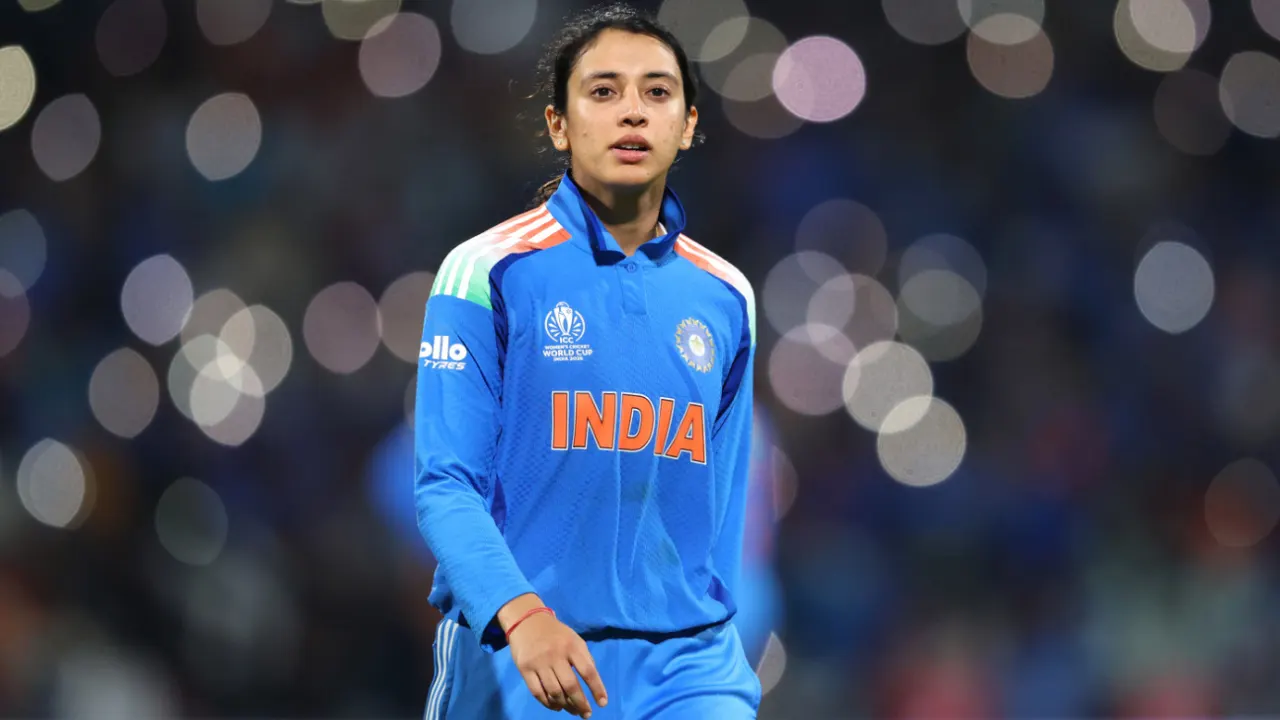
Smriti Mandhana has been named India’s all-format women’s captain on the same day Harmanpreet Kaur stepped down from the role after nearly a decade since she first took over.
Mandhana – vice-captain to Harmanpreet for much of this period – has previously led India in four ODIs and 18 T20Is, apart from captaining Maharashtra in domestic cricket and Royal Challengers Bengaluru in the Women’s Premier League.
Mandhana’s first assignment will be the limited-overs series against Zimbabwe beginning with the three T20Is in Raipur from October 16. On Tuesday, Mandhana was part of the selection meeting chaired by Amita Sharma to pick the squad for the tour.
Terming the appointment a “special honour”, Mandhana also acknowledged the contributions of her predecessor in her welcome note.
“I would also like to acknowledge Harmanpreet and the contribution she has made as captain over the years,” she was quoted as saying by the BCCI. “She has led the team with great commitment and has been an important part of our journey.
“I understand the responsibility that comes with this role and look forward to working with the team, learning along the way and giving my best to take Indian cricket forward.”
Mandhana’s appointment comes on the back of a review meeting held on Monday in Guwahati. Chaired by secretary Devajit Saikia, the meeting was also attended by Mandhana, Harmanpreet and head coach Amol Muzumdar to chart a roadmap forward, with an eye on next year’s inaugural Women’s Champions Trophy in February as well as the T20 World Cup and Los Angeles Olympics in 2028.
Mandhana, India’s best all-format batter, has been knocking on the doors for a while. Earlier this year, she led RCB to their second WPL title, in which she also top-scored in the final.
In September, she overtook Mithali Raj to become the leading run-scorer in women’s international across formats. Her 18 international hundreds are also the most in women’s cricket. She is also the first Indian woman to score centuries in all formats.
[Cricinfo]

Showers above 100 mm are likely at some places in the Western, Sabaragamuwa, Central, Uva and Southern provinces and in Anuradhapura district

PSTA worse than PTA: FSP

Shiranthi R remanded until 13 Oct.

Former NSB Chairman Kariyawasam granted bail

Katchatheevu row: India SC urges fishermen to avoid Sri Lankan waters

Remembering Juvenal, Coke, Acton and Machiavelli

‘Dates have the highest sugar content to fight Coronavirus’

Sunday Island 27 December – Headlines

#SundayIsland 17th December – Headlines

Sunday Island – 28th March

Sunday Island Headlines – 21 March

Sunday Island – 21st February – Headlines
-

 Editorial7 days ago
Colombo Port drug bust: The plot thickens
-

 Features5 days ago
The first woman in the foreign service or Ceylon Overseas Service it was then called
-

 Editorial6 days ago
Fuelling discontent and protest
-

 News4 days ago
Geneva takes up Sallay’s case and govt. ignores opportunity to answer accusations
-

 Foreign News5 days ago
Ten injured after car crashes into rugby supporters in Australia
-

 Latest News6 days ago
Tharindu Rathnayake, bowlers secure Asian Games Bronze for Sri Lanka
-

 News5 days ago
Nearly 20 Iranian tankers stranded off Lanka amid US sanctions
-

 Features4 days ago
Sri Lanka Cricket Bill: Governance reform is not yet a cricket strategy