
Sports
Aussie teams improving in Round four of Trans-Tasman, or are they?


by Rajitha Ratwatte
A second-string Crusaders team (mainly due to All Black resting of players requirements) took on the Western Force in Christchurch. The preceding week had torrential rain that caused havoc on the roads and in the farms of the South Island, but the ground was dry and conditions underfoot as good as could be expected. The Crusaders without Mo’uanga, Seevu Reece, Blackadder, Whitelock, and a host of their regular starting line-up. The Force with Kurandrani in the center looking like a real threat. Referee Ben O’Keefe.
The Western Force started with a bang, with star winger Tony Pulu stepping beautifully off his right foot and leaving the famed Crusader defence standing to score extreme right in the second minute of the game. Tony Pulu who was injured later in the game, made that try look easy and would have made a bigger impact on the final result had he been around for longer. Converted from a difficult angle and a 0–7 lead to the visitors. The Crusaders struck back in the tenth minute from a judicious chip kick by Braydon Ennor playing at center that was picked up by Manasa Matele showing a great turn of speed from the wing and scoring mid-right. Fergus Burke who took the kick in the absence of Mo’uanga added the extra points and the scores were locked up at seven each. Nine minutes later some great hands in the three-quarter line saw Will Jordan in a gap with 22 meters ahead of him and crossing the line was a mere formality for the full-back. The conversion was difficult from the extreme left of the field and Fergus Burke was not up to the task. 12–7 Crusaders in the lead. Twenty five minutes into the game two successive penalties were awarded to the Crusaders and the resulting touch kicks saw the now famous rolling maul activated and Whetukamokamo Douglas (..and they say Sri Lankan names are difficult!) scored a try which remained unconverted 17–7 to the Crusaders.
The Force was spending a lot of time in Crusaders’ territory and strung together 10 phases before the defence finally crumbled and their no eight Olli Callan scored far left. It was converted nicely, and the score read 17-14 after 30 minutes of very “uncrusaderlike” rugby. All the marginal decisions and line calls seemed to be going the way of the visitors but that may have been this reporter’s bias towards NZ teams! However, it left the room to wonder if a directive had been made in an attempt to “level the playing field” in favour of the “weaker” Australian teams. This thought started with the last game played in round three during which the Waikato Chiefs lost and was exacerbated by certain occurrences in the next game played on this day. One hopes sincerely, that this is not the case because should it be and should it have come from the television Moghuls, in a ham-handed attempt to attract bigger audiences from Australia, it is totally unacceptable! Two crusader tries were disallowed by the TMO over the next five minutes and finally, another rolling maul from the crusaders got them a seven pointer on the halftime whistle. 24–14 but the home side not looking very convincing.
The second half started badly for the Crusaders with Will Jordan misjudging the kick-off and allowing it to bounce. That gain of territory made by Force combined with 16 phases put together by them had the Crusaders defending grimly. There was no change in the scoreline, but the Force dominated this phase of the game playing with numerous penalty advantages given by the referee. Two more Crusader tries scored by Will Jordan and Tamati Williams (a huge man 6’5″ and 140+ kgs- Playing his first game at prop) were disallowed by the TMO until a forward’s scramble and a great pass from the Crusaders halfback saw an unconverted try take the score to 29–14 with an all-important bonus point for the home side. This is when the Crusaders skipper with maybe some input from the coach should have decided to close the game down and settle for a win, with this margin, but they are not used to playing like that and suffered the consequences of having dominated rugby in this part of the world for so long. Even the regular starters and star players who made it to this game like David Havili and Will Jordan were looking nonplussed and Crusaders fans who associated jersey numbers of the regulars with their usual impeccable performances were disappointed when those numbers didn’t deliver. An injury caused to a Force player after the full use of the bench saw them a player short for the last ten minutes of the game. This may have been the reason for the Crusaders’ brains trust to decide on an all-out attack even neglecting to kick from well inside their territory and try to run the ball out and losing it to the opposition. Finally, a kick ahead from the Force saw no one manning the last line of defence for the Crusaders and a straight sprint for the line won by the Force, getting themselves a converted try and removing the bonus point from the Crusader’s final tally of 29–21. There are three possible contenders for the final, all NZ teams, and the bonus points may decide the outcome. The Crusaders now have to wait and see how the Auckland Blues and the Wellington Hurricanes go later in the weekend.
The next game on Friday was at the Suncorp Stadium in Brisbane. The Queensland Reds hosting the Auckland Blues who have missed out on finals contention in the Aotearoa Super Rugby tournament are now looking for an opportunity to make up. The Blues remained in the Red’s territory from the kick-off when they charged down the attempted clearing kick but couldn’t capitalise until the 11th minute when Oteri Black converted a penalty from mid-left, awarded by referee Mike Frazer for a “no hands in the tackle” by a Red’s player. Red cards have been issued for such offences in the past. 3–0 Blues ahead. 20 minutes into the game the Red’s number eight Harry Wilson collected an offload from Hunter Paisamy, who had an exceptional game, an offload that could only have gone forwards in the view of Andrew Mhertens and everyone else except the referee ran 30 meters to score under the posts. 3–7 the Australian Champions in the lead. A series of baffling decisions by the on-field referee including disregarding a tackle on a player in the air (fortunately rectified by the TMO) and issuing only a yellow card for collapsing two mauls inside the Red’s 10-meter line, instead of at least one penalty try, saw the scoreline remain unchanged. Dalton Papelili was finally able to score the first of two tries in the 10 minutes that the Reds were a player down due to the yellow card issued to their Hooker Amosa for collapsing a maul in a possible scoring area. The first try took the score to 10-7 and the second unconverted try in the 33rd minute scored by Mark Telea took the Blues ahead by 17–7 at halftime.
The Blues forwards started to dominate the second half with a few line out steals complemented by stringing together 19 phases of play that saw the number nine Christie who failed to see a scoring opportunity for himself, pass to his skipper Patrick Tuapoletu who barged his way over the line for a seven pointer; 24–7. The Blues had to defend furiously against a sustained attack by the Red’s who were finally awarded another try off a ball that squirted out of a ruck off a Reds player and in the view of the officials was deemed to have bounced sideways first before it bounced forward and was pounced upon over the line by Paenga Amosa trying to make up for his yellow card. 24–14 Blues still ahead. 53 minutes into the game The Blues Halfback was in a similar situation to their last scoring opportunity inches away from the Reds line, when he saw the gap, he had missed last time and dived over to score his first try of the game and to cap off a fine run of form. No problems for Oteri Black with the conversion 31–14 and the Blues looking comfortable. 50 minutes or so into the game All Black prop and impact player Nepo Laulala suffered a brain freeze and was caught blatantly offside, picking a ball up off a ruck and exacerbating the “dumb” reputation that the big men in the engine room seem to attract every once in a while! The Blues line-out jumpers continued to dominate and kept either stealing the ball or spoiling the Reds lineouts. Zaan Sullivan who has played brilliantly in the number 15 jersey for the Blues continued finding great touch with his left boot. Special mention must be made of the Pacifica players in the reds lineup Sulasi Vunivelu, Taniela Tupou, Hunter Paisami, and Krisi Kurindrani in particular who continue to impress and are undoubtedly among the prime reasons for the Reds dominating Australian rugby. The Reds kept attacking with penalty advantage after penalty advantage being given to them, it took a cross-kick to Daugunu on the wing who split the Blues defence and left two Blues defenders gaping to score under the posts. The score read 31–21 at this stage and the commentators were getting excited with their perceived view that the reds had a chance of winning with 10 minutes left in the game. The benefit of the doubt and all marginal calls kept going to the Reds until a penalty was awarded from around 40 meters out but right in front of the posts. Who steps forward but the one and only Filipo Daugunu a truly outstanding exponent of the game and boots it over easy as you like! 31–24 remained the final score, taking the Auckland Blues to the top of the leader board until the next games in 24 hours.
supersubsports@gmail.com

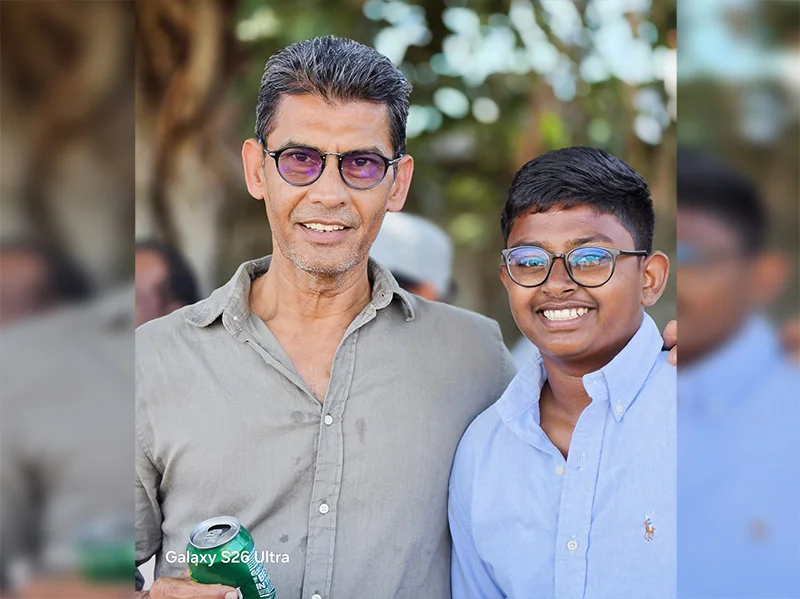
by Rex Clementine
Last week, the scorebooks of school cricket needed a fresh rewrite as Kingswood College, Kandy broke a 68-year hoodoo to clinch their Big Match against Dharmaraja College in the hill capital. Almost in tandem, down south, another long wait ended when St. Servatius’ College, Matara turned the tables on arch-rivals St. Thomas’ College, Matara, sealing a famous win after 55 years.
St. Servatius’ rise has not been a flash in the pan. For the better part of 15 years, they have been punching well above their weight, taking guard in Division 1 and holding their own against the heavyweights. The production line has not dried either, with a steady stream of Sri Lanka Under-19 cricketers making their mark on bigger stages. In many ways, they have helped put outstation cricket back on the front foot.
Behind the sightscreen, however, stands a quiet architect. Ruchira Palliyaguruge, a name that may not grab headlines but one that has been doing the hard yards. A former teammate of Sanath Jayasuriya at St. Servatius’, Ruchira was no mug with the bat or ball, enjoying a prolific domestic career after narrowly missing the national cap.
Post-retirement, he swapped spikes for the white coat, rising through the ranks to officiate on the ICC panel, standing in matches across the globe. But his most telling contribution has come away from the glare of international arenas.
In the aftermath of the Big Match triumph, it emerged that for two decades Ruchira had been quietly footing the bill for the school’s cricket coaches, no drum roll, no fanfare, just a man playing a straight bat for a cause close to his heart.
This has not been merely about opening his wallet. He has invested time, energy and know-how, ensuring the game at St. Servatius’ keeps moving in the right direction. Even after the boys hang up their school caps, he has remained in their corner, helping them find employment and navigate life beyond the boundary.
Good Samaritans like Ruchira are the need of the hour if outstation cricket is to stay in the game. While Colombo schools enjoy the luxury of deep pockets and old boys’ networks, many rural schools are forced to play on a sticky wicket. It is through the generosity and vision of individuals like him that the game continues to tick over smoothly beyond the city limits.
Sports
Wins for Inqube Global , WSO2, Star Garments, MAS Active Kreeda, CDB ‘B’ and Wiley Global Technology on Sunday [22]

15TH STAFFORD MOTORS – MCA G DIVISION T20 LEAGUE CRICKET TOURNAMENT
Inqube Global, WSO2, Star Garments, MAS Active Kreeda , CDB ‘B’ and Wiley Global Technology emerged victorious in the league stage matches of the Stafford Motors sponsored, MCA G division T20 League Cricket Tournament played on Sunday 22nd March.
At the SLC Ground in Banadaragama, Kanishka Eshan grabbed four wickets and Hiranga Jayasinghe and Suresh Madusanka chipped in with 40 runs and 30 runs respectively to help Inqube Global beat Swisstek Ceylon by four wickets to lead group F of the tournament. Daminda Wijekoon contributed 58 runs off 38 balls for the losers. In the afternoon game at the same venue Dimutu Madushan captured four wickets to help WSO2 defeated Hayleys Group by five wickets .
At the Royal College Grounds, Star Garments registered their fourth win in four outings defeating Pyramid Wilmar by one wicket in the penultimate ball of their innings. In a group B game played in the afternoon, MAS Active Kreeda consigned group leaders Emar Pharma to their second defeat in the tournament.
At de Mazenod College Grounds in Kandana, Chathuranga Dikkumbura and Isuru Jayaranga scored 39 runs each to help CDB ‘B’ registered a net run rate boosting ten wicket win over Sysco Labs. In the afternoon match Panitha Dangalla and Sayuru Wanasinghe guided Wiley Global Technology to a five wicket win over 99X.
At SLC Grounds Bandaragama:
Inqube Global won by 4 wickets
Swisstek Ceylon 174/8 in 20 overs
[Lasith Karunathilake 10, Danidu Wijekoon 58, Tihan Senanayake 17, Dushmantha Dias 33, Lahiru Piyumal 25, Nadeera Liyanage 16; Isuru Lakshan 1-21, Lahiru Subashana 1-35, Kanishka Eshan 4-25]
Inqube Global 175/6 in 19.5 overs
[Hiranga Jayasinghe 40, Isuru Lakshan 18, Suresh Madusanka 30, Sanindu Deshan 23*, Upul Chandra 23; Dushmantha Dias 1-16, Tihan Senanayake 1-25, Saranga Lakshan 1-18, Lahiru Piyumal 1-18, Gamini Wanasinghe 2-35]
WSO2 won by five wickets
Hayleys Group 127/8 in 20 overs
[Adeesha Jayarathna 50, Dilan Suraweera 13, Lasantha Prabath 31*; Dimuthu Madushan 4-19, Osanda Herath 1-25, Oshanda Yomal 2-24, Dev Wijewarden 1-14]
WSO2 132/5 in 18.5 overs
[Devin Jayasinghe 42, Isuru Ruhunage 31, Kaveesha Rajapaksha 19, Osanda Herath 13, Dev Wijewardena 15*; Mahesh Deepal 1-15, Lasantha Prabath 1-45, Pasindu Adithya 2-14, Sumudu Marasinghe 1-39]
At Royal College Grounds:
Star Garments won by 1 wicket
Pyramid Wilmar 140/10 in 20 overs
[Lasith Fernando 54, Shanaka Fernando 24, Sahas Vihanga 21; Randu Fernando 2-25, Dunik Perer 1-29, Dhanuka Dulanjana 1-21, Yohan Aloka 2-25, Rishantha Anushka 2-19]
Star Garments 141/9 in 19.5 overs
[Nadeesha Rajakaruna 12, Chathuranga Dilshan 13, Yohan Aloka 25, Shakila de Silva 22, Randu Fernando 20, Dhanuka Dulanjana 17*; Budhdhika Herath 2-22, Udesh Nishan 3-23, Umeda Madusha 2-23, Upeksha Lakshan 2-31]
MAS Active Kreeda won by 5 wickets
Emar Pharma 101/10 in 20 overs [Janith Jayasinghe 23, Devinda Ayesh 26, Dishan Hettiarachchi 30; Suventhiran Subikaran 2-28, Adeesha Miyusara 1-18, Sivakumar Partheepan 3-12, Kanesh Piratheepan 2-23]
MAS Active Kreeda 103/4 in 12.1 overs
[Jineetha Malith 14, Adeesha Miyusara 28, Suventhiran Subikaran 29*; Deshan Fernado 3-34, Rajendran Sagitharan 1-21]
At De Mazenod College Grounds
CDB ‘B’ won by 10 wickets
Sysco Labs 79/9 in 13 overs
[Bhagya Dissanayake 20, Chathura Hennanayake 10; Vishwa Dhananjaya 2-14, Chamod Madushan 2-17, Dhanushka Dharmasiri 1-08, Dasun Senevirathne 1-09]
CDB ‘B’ 82/0 in 20 overs
[Chathuranga Dikkumbura 39*, Isuru Jayaranga 39*]
Panitha and Sayuru power Wiley Gliobal to a 5 wicket win
99X 122/7 in 20 overs
[Sachith Jayasinghe 14, Ishrath Raji 35, Sameera Piyasundera 18, Saranga Liyanage 19; Sayuru Wanasinghe 1-13, Lilan Karunarathne 1-14, Omal Bhagya 2-25]
Wiley Global Technology 125/5 in 15.4 overs
[Thushara Peiris 19, Lilan Karunarathne 15, Panitha Dangalla 40*, Sayuru Wanasinghe 25*; Sachith Jayasinghe 1-31, Kushan Rathnayake 2-21, Ishrath Raji 1-21, Saranga Liyanage 1-19]
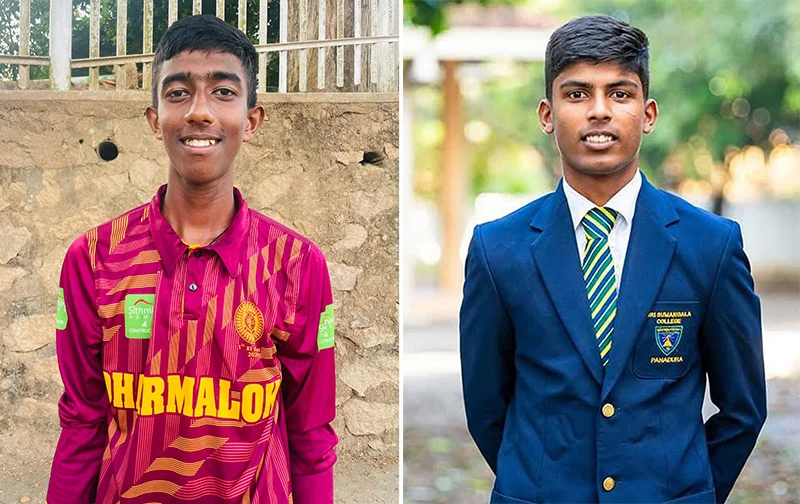
An impressive century by opener Kaveen Deneth and a five-wicket haul from Mevindu Kumarasiri highlighted an absorbing first day in the Under 19 Division I Tier B quarter-final between Sri Dharmaloka College, Kelaniya and Sri Sumangala College, Panadura played at Kuruvita on Wednesday.
After winning the toss and electing to bowl first, Sri Sumangala kept the pressure on by striking at regular intervals. However, Deneth produced a determined innings to anchor the Sri Dharmaloka batting line-up and keep his team in the contest.
Sri Sumangala made the early breakthrough in only the second over when paceman Sihas Nethdinu dismissed Mewan Randeepana without scoring. Deneth then shared a brief partnership with Tharusha Mihiranga, whose 24-ball stay produced just seven runs.
With Sri Dharmaloka struggling at 30 for 2 in the 10th over, Deneth steadied the innings and received useful support from the middle order. Senuka Pehesara contributed 29 runs, while Chanul Nethsitha (17) and Koshitha Adithya (19) also chipped in with valuable runs.
Deneth’s patient knock of 106 off 161 balls, which included 12 fours and two sixes, proved crucial in holding the innings together as Sri Dharmaloka were eventually bowled out for 211 in 76.3 overs.
Sri Sumangala’s bowling honours went to Mevindu Kumarasiri, who delivered a tireless spell and finished with impressive figures of 5 for 82 in 32.3 overs, emerging as the standout bowler of the day.
In reply, Sri Sumangala encountered early trouble as spinner Sathindu Prabodha struck in successive overs to put the Panadura side under pressure.
At stumps on day one, Sri Sumangala were struggling at 11 for 2, setting up an intriguing second day in this closely contested quarter-final encounter.

A strong Technical and Vocational Education and Training (TVET) system equips individuals with practical, relevant, and future-oriented skills helping to innovate responsibly towards a greener and sustainable future – PM

PM reviews progress of the committee appointed for the establishment of a National Nursing University

UN votes to recognise enslavement of Africans as ‘gravest crime against humanity’

Meta and YouTube found liable in landmark social media addiction trial

Showers expected in the Western and Sabaragamuwa provinces and in Galle and Matara districts after 2.00 pm.

Heat Index at ‘Caution level’ in the Western, Sabaragamuwa, Southern and North-western provinces and in Anuradhapura, Mannar, Vavuniya and Monaragala districts

‘Dates have the highest sugar content to fight Coronavirus’

Sunday Island 27 December – Headlines

#SundayIsland 17th December – Headlines

Sunday Island – 28th March

Sunday Island Headlines – 21 March

Sunday Island – 21st February – Headlines
-

 News2 days ago
Senior citizens above 70 years to receive March allowances on Thursday (26)
-

 Features4 days ago
Trincomalee oil tank farm: An engineering marvel
-

 News7 days ago
CIABOC tells court Kapila gave Rs 60 mn to MR and Rs. 20 mn to Priyankara
-

 Features7 days ago
Science and diplomacy in a changing world
-

 Features4 days ago
The scientist who was finally heard
-
 News2 days ago
Japanese boost to Sri J’pura Hospital, an outright gift from Tokyo during JRJ rule
-

 News2 days ago
CEB Engineers warn public to be prepared for power cuts after New Year
-

 News6 days ago
Colombo, Oslo steps up efforts to strengthen bilateral cooperation in key environmental priority areas