Connect with us

Sports

Asian Games medals cap remarkable year in track and field sports  

Published

on

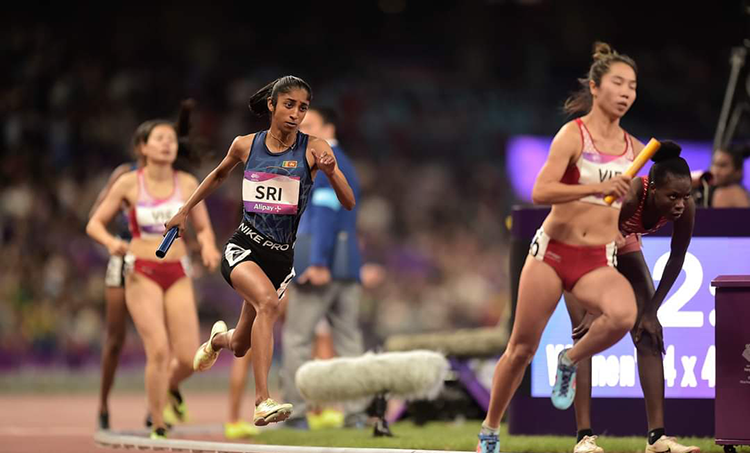
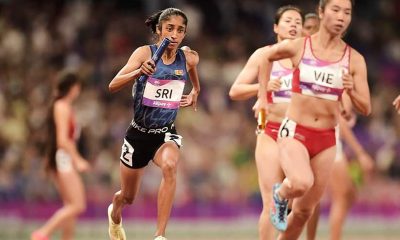
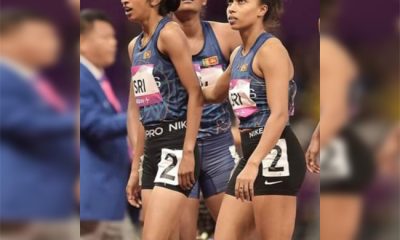
Tharushi Karunaratne in action in the women’s 4x400 metres relay

by Reemus Fernando   

Ending a decades long medal drought at the Asian Games was the most remarkable accomplishment by the track and field athletes during 2023. From schoolgirl Tharushi Karunaratne’s triumphant entry into track and field folklore to the men’s 4×400 metres team’s record-breaking feat at the Asian Athletics Championships breathed life into otherwise forgotten disciplines in the country’s sporting landscape.

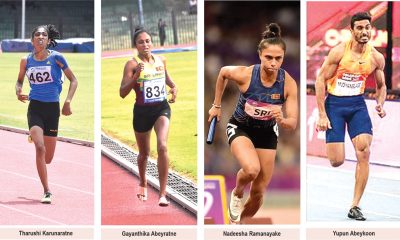
The Ratnayake Central Walala prodigy had already showcased her potentials when she brushed shoulders against the likes of Gayanthika Abeyratne in the 800 metres and Nadeesha Ramanayake in the 400 metres during the previous year. The season opening trial in March was where Karunaratne exhibited her prowess first this year, winning the 800 metres in an Asia leading time of 2:01.39 seconds at Diyagama. It was followed by an impressive 53.41 seconds triumph in the 400 metres.

At the Asian Junior Championships, she bagged three medals including two golds. She was some five seconds clear of the silver medal winner when she sealed the gold in the 800 metres in a 2:05.64 seconds feat at the Yecheon Stadium in Yecheon, South Korea. Then she clinched the silver in the 400 metres while Jayeshi Uththara bagged the bronze. The 4×400 metres mixed relay gold was won in a new national record time when she joined Uththara, Vinod Ariyawansa and Shehan Dilranga. The other medal, a bronze was won by Kahawatta Central athlete Malith Yasiru who cleared 15.82 metres in the triple jump.

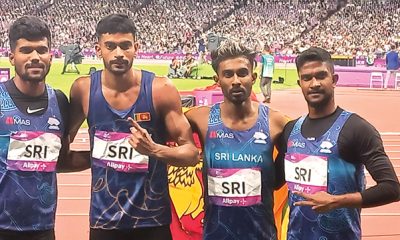
The Asian Athletics Championship held in Thailand was a remarkable success as Sri Lanka won eight medals including three golds. Sri Lanka men’s 4×400 metres team inclusive of Aruna Dharshana, Kalinga Kumarage, Pabasara Niku and Rajitha Rajakaruna smashed the meet record to win gold in a time of 3:01.56 seconds. They beat formidable India to the second place and shocked relay enthusiasts earning applauds from even rivals in a World Championship year.

They could not repeat the same feat at the Asian Games and the World Championships but the future looks bright for the relay team as three out of the four medallists are still in their early 20s. The other two gold medals were won by Karunaratne and Nadeesha Ramanayake. Karunaratne won the 800 metres gold in a new championship record time of 2:00.66 seconds, which Ramanayake stopped the clock in the 400 metres in a new personal best of 52.61 seconds. Veteran Gayanthika Abeyratne won bronze medals in the 800 metres and the 1,500 metres.

When Sri Lanka entered the Asian Games this year the country had endured a medal drought in track and field since 2006. Tharushi Karunaratne, the men’s 4×400 metres team, the women’s 4×400 metres team and Dilhani Lekamge combined to win four medals for Sri Lanka. While Karunaratne beat a strong field to win the 800 metres gold, the men’s 4×400 metres team settled for bronze behind India and Qatar. Lekamge threw the javelin to a new national record distance of 61.57 metres to clinch the silver medal. The women’s 4×400 metres team inclusive of Karunaratne, Ramanayake, Uththara and Lakshima Mendis settled for bronze behind Bahrain and India.

While victories at Asian Level were the top performances of the track and field team, triple jumper Shreshan Dhananjaya decamping during a competition in Europe and steeplechaser Nilani Ratnayake’s suspension due to a doping violation were the real low points of an otherwise remarkable year.

The country could not have the services of two leading athletes at Asian level this year. While Italy based sprinter Yupun Abeykoon who had produced a phenomenal sub ten seconds performance in the 100 metres had to withdraw from the team due to an injury, US based high jumper Ushan Thivanka did not make himself available due to reasons best known to him.

With their probable return Sri Lanka can only look forward to better performances during the Olympic year.


Sports

Senior Australia players hold off Cricket Australia deal amid BBL pay frustration

Published

on

By

The player pay concerns have intensified in Australia [Cricinfo]

At least five senior Australia players have been left unimpressed by the initial 2026-27 Cricket Australia contract offers they have received in recent days and are yet to commit to signing them.

Meanwhile, a larger group of BBL stars are considering whether to play overseas during the summer after the stuttering BBL privatisation proposal stalled pay re-negotiations that would have redressed the fact that they have been earning between A$100-200,000 less than overseas players in the league in recent years.

First reported by Code Sports on Saturday, ESPNcricinfo understands a handful of Australian players were unimpressed by the initial CA contract offers that were tabled to them in the last week.

This follows reporting in the Age on Thursday that Test and ODI captain Pat Cummins had been offered A$4 million per year over the next three years, much of which was reported to be guaranteed money.

Under the current MoU (Australian players pay deal between CA and the Australian Cricketers Association), which runs until mid-2028, up to 24 national contracts are given out by national selectors for the 2026-27 financial year (July 1, 2026 to June 30, 2027) and those players share A$21,916,257 in the year in base salaries.

Players are ranked and receive contracts based on importance and the number of games they are likely to play in the cycle, with the lowest player earning a base of $360,645. In addition, players also earn nearly A$19,000 per Test appearance, nearly $8000 per ODI and nearly $5000 per T20I in match payments on top of the base. There are win bonuses on top, with a Test win worth roughly $30,000 per player in total. There is also a CA marketing pool, which contracted players share depending on appearances with commercial partners.

Player pay was already an issue in Australia and at the heart of the BBL privatisation debate. The rising money on offer in the franchise world has led players to consider whether locking themselves into a 12-month CA deal would cost them money over the year.

Players like Marcus Stoinis and Tim David have not had CA deals in recent years, knowing they would qualify for a base upgrade by playing the minimum number of T20Is in a year (six), whilst being able to sign franchise deals freely without the need for NOCs, to maximise earnings elsewhere.

CA got creative this year by offering contracts for only 21 players for for 2026-27 so that fewer players could share more of the unchanged pool despite Australia being set to play an unprecedented 17 Tests (possibly 18) in the financial year. They will only play nine ODIs and five T20Is in the period.

But the priority of paying Test players has been a source of tension for the white-ball players, who feel they can earn more than the offered CA deal if they went freelance. Meanwhile, there are three-format players concerned about what they are missing out on if they have to rest from certain series, or if more minor bilateral series are being played while lucrative franchise tournaments are on.

Cummins articulated this concern in March around playing two Tests against Bangladesh in August this year while letting go of the chance to earn upwards of A$675,000 (US$485,000) to play in the Hundred.

How the issue gets resolved in the short term remains unclear. Australia have two white-ball tours of Pakistan and Bangladesh coming up but they fall in the previous contract cycle. The first games of the 2026-27 cycle are the home Bangladesh Tests in August.

Meanwhile, a group of a dozen high-profile Australian BBL players are understood to be furious over the stalled privatisation proposal. The players had set up a WhatsApp group last October to discuss their long-term options after spending three years frustrated at CA over the pay disparity between them and overseas players. The introduction of the draft and the platinum signing of A$420,000 meant the likes of Luke Wood and Mohammad Rizwan were paid significantly more than Australian players with significantly better T20 records, who were on $200,000-$300,000.

CA was set to renegotiate the MOU with the ACA if they could move to the next phase of their privatisation plan but that fell over when two states did not want to proceed. A hybrid plan is now being devised but discussions with the players have been set aside for the moment.

The BBL stars are now considering their options. It is a unique season coming with the ILT20 moving to November before the BBL. There are Australian players who have been offered A$500,000 to play in the UAE.

Meanwhile, the SA20, which is seen as the major threat to the BBL, is rumoured to start on January 17.

The BBL is likely to run from mid-December until the last weekend in January, as it did last year. It does mean Australian players could play both but would need an NOC to go and would miss the first week of the SA20. It would lead to the farcical situation that happened a couple of years ago when several Australian players benefited from their BBL teams not making finals, which meant they could get to South Africa earlier and earn more money, as contracts are generally prorated on a games played basis. Australia’s Test players, however, would not be available for either as they have a five-Test tour of India that runs from mid-January to early March that immediately follows a four-Test home series against New Zealand in December and early January.

Australian players were furious when Dewald Brevis and Aiden Markram were bought for R16.5 million (A$1.3 million or US$940,000 approximately) at the SA20 auction last year, four to five times more than some of the top Australian contracts in the BBL.

It is understood that the senior BBL stars do not expect that type of money in the BBL in the short term but were hoping to close the gap significantly this year before privatisation redressed the situation in 2027-28.

It is understood that part of CA’s proposal to the states was to increase the salary cap by up to A$1.5 million. The issue for Australia’s players is that the bottom-end players in the BBL earn a minimum of A$52,000, whereas it is only roughly A$17,000 in the SA20, with the two salary caps reasonably similar at around A$3.2 million.

[Cricinfo]

Continue Reading

Latest News

Gill, Sai Sudharsan, Rashid power Gujarat Titans to second spot with fourth straight win

Published

on

By

Shubman Gill and Jason Holder celebrate Jofra Archer's wicket [Cricinfo]

Twenty-eight overs into the contest in Jaipur, Rajasthan Royals (RR) were keeping pace with Gujarat Titans (GT). They were 86 for 3 in seven overs, chasing 230. Dhruv Jurel looked like he had excised his slow-batting demons. He was on 24 off 9 and ready to go bigger. Then, Rashid Khan spun one past Jurel’s slog to peg back his stumps. It was the first of his four wickets. On a night of spin chokeholds by both RR and GT, Rashid’s spell of 4 for 36 was the point of difference between both sides.

At the end of it all, GT zoomed up to second spot in the points table with 14 points. It was their fourth consecutive win, as they continued their late surge in this IPL.

Earlier in the evening, half-centuries from Shubman Gill and B Sai Sudarshan – and their 118-run opening partnership – headlined GT’s biggest IPL score outside Ahmedabad. They had been greeted by an all-pink Jaipur. RR’s jerseys were the same colour, in honour of their women’s empowerment movement. By the end of the powerplay, Gill and Sudharsan couldn’t have felt more at home themselves. They had raced away to 82 for 0, and alongside Rashid’s spell, they headlined a 77-run win.

Jofra Archer took 11 deliveries to get through the first over of the match. It featured nine extras and was the longest opening over in the history of the tournament. By the end of it, Gill and Sai Sudharsan – without taking any big risks – had raced away to 18 for no loss. This was the theme of the powerplay: the opening pair kept getting balls on their pads or bouncers shooting way over their heads. They played most of their shots in the ‘V’ down the ground. By the end of the first six, they were just 18 runs away from their ninth 100-plus partnership, the second-best tally in the IPL, just behind Virat Kohli and AB de Villiers.

Despite their big start, Gill and Sai Sudharsan slowed down in characteristic fashion. Both of them reached their fifties off 30 balls. Yash Raj Punja (1 for 37) and Ravindra Jadeja (1 for 34) did not find much turn off the surface, but bowling in tandem through the middle overs, they cut off the risk-free boundary options for the opening pair.

A leg injury while running between wickets affected Gill’s running as well. Punja took out Sai Sudharsan for 55 off 36, holing out to long-on, and Jadeja speared in a delivery to Jos Buttler at 107kph to rush him on a drive straight to long-off.

After GT’s whirlwind start, 220 was a base expectation from their innings. By the end of the 19th over, they were on track to finish under it, stuck on 208 for 4. Brijesh Sharma had plucked out Jason Holder’s wicket and given away just four runs in the 19th, varying his pace and bowling into the blockhole. However, his gold-dust over was reduced to a footnote when Tushar Deshpande missed his lines in the last over. Rahul Tewatia maneuvered around the crease to leather back-to-back sixes, before Washington Sundar hit one of his own to drag GT to 229 for 4.

It is the stuff of routine now. The bowler chugs in, bowls a perfectly okay delivery, and Vaibhav Sooryavanshi sends him into the stands first-ball. Saturday night was no different, as Sooryavanshi clobbered Mohammed Siraj across the line over the long-on boundary. Next ball, a Siraj yorker rifled towards the stumps, and Sooryavanshi inside-edged onto his foot and fell to the ground.

Sooryavanshi looked set for another big start, despite limping between wickets, blasting Siraj for three fours in four deliveries. On the fifth delivery, he was rushed into a hook off a fiery bouncer that carried to square leg. In the blink of an eye, Sooryavanshi went from zero to 16-ball 36, then from the middle to the dugout.

Siraj (1 for 55) and Kagiso Rabada (2 for 33) became the first pair of IPL bowlers to bowl through the powerplay four matches in a row. Jurel ventured down the track to plunder a 22-run over against Siraj before the powerplay ended. Rashid would pluck him out soon anyway.

With Sooryavanshi and Jaiswal gone, the onus was on Jurel and Ravindra Jadeja – who clobbered six and four off his first two deliveries – to play against type and shift into fifth gear. But Rashid got the ball to jag and turn off a pitch like no other spinner on the night. He also bowled more legbreaks than googlies – a rarity for him – to keep the batters guessing.

Once Jurel perished, Donovan Ferreira saw the ball turn the other way, past an innocuous front-foot defence. Harsh Dubey soon went for another missed slog, Rashid’s third consecutive dismissal to rattle the stumps. Rashid wore a wry smile when Jadeja swiped him over backward square leg for six in the 14th over. Next ball, Jadeja was trapped lbw in front of the stumps as the ball spun into his pads.

Holder soon mopped up the tail, taking the final three wickets in five deliveries and RR had lost their third game in four matches.

Brief scores:
Gujarat Titans 229 for 4 in 20 overs  (Sai Sudharsan 55, Shubman Gill 84, Joss Buttler 13, Washington Sundar 37*, Rahul Tewatia 14*; Brijesh Sharma 2-47, Yash Raj Punja 1-37, Ravindra Jadeja 1-34) beat Rajasthan Royals 152/10 in 16.3 overs  (Vaibhav Sooryavanshi 36, Dhruv Jurel 24, Ravindra Jadeja, 38, Shubham Dubey 15, Dasun Shanaka 16; Mohammed Siraj 1-15, KagisoRabada 2-33, Rashid Khan 4-33, Jason Holder 3-12)  by 77 runs

[Cricinfo]

Continue Reading

Sports

A Ratnapura gem polished at Ragama

Published

on

Eshan Malinga’s stocks keep rising as he’s emerged the second highest wicket taker in IPL.

Ratnapura is fondly known as the ‘City of Gems’. It is fair to say that Sri Lanka’s gemstone capital has turned more ordinary men into billionaires than any other corner of the island. Many locals believe the blessings of the sacred Maha Saman Devalaya, situated in the heart of the city, are behind the prosperity that adorns many homes there. They may as well add another name to that glittering list. He is neither a miner nor a gem trader. He is a cricketer who answers to the name of Eshan Malinga.

Malinga is currently the second highest wicket-taker in this season’s IPL. His stocks continue to soar with every outing as captains increasingly trust him with the toughest assignment in T20 cricket – the death overs. He does not possess the sling-shot action of his namesake Lasith Malinga nor the express pace of Dushmantha Chameera. What the new Malinga has mastered instead is the dying art of reverse swing.

More often than not, he is introduced during the closing stages of the innings and has made a habit of getting the old ball to talk. Add to that his clever variations – slower balls, wide yorkers and sharp changes of pace – and his armoury suddenly looks complete.

The IPL is a breeding ground for elite fast bowlers. There’s Kagiso Rabada, Pat Cummins and Jasprit Bumrah, while rising stars such as Marco Jansen and Arshdeep Singh continue to make waves. Amid all these celebrated names, Malinga is not merely holding his own; he is carving out an identity for himself. Bought for just over USD 100,000 last season, expect his value to multiply several times over by the next auction.

Some may wonder how Ratnapura, hardly known as a cricketing hub, produced a fast bowler of Eshan Malinga’s calibre. His breakthrough came when Airtel conducted a fastest bowler competition. Malinga won it comfortably and caught the eye of Sri Lanka Cricket Fast Bowling Coach Darshana Gamage, who was impressed not merely by the pace, but also by the youngster’s attitude and perseverance.

Gamage recommended him to several clubs and Ragama moved swiftly to secure his services. That is where the Ratnapura gem was polished.

Ragama Cricket Club has survived on a shoestring budget despite competing in First Class cricket for nearly three decades. While traditional outstation strongholds such as Kandy, Galle and Kurunegala have struggled to stay afloat, Ragama’s longevity is remarkable, especially considering they do not even own a ground. Scratch beneath the surface and you discover a handful of diehard office bearers who kept the club alive by pumping in their own money during an era when Sri Lanka Cricket’s support for domestic cricket was painfully inadequate.

Despite limited means, Ragama always looked after their players. Youngsters arriving from outstations were provided accommodation and meals and Eshan Malinga was among those who benefited from the programme.

Luck, however, did not always bowl in his favour. Just when he was beginning to break through, injury struck. He was referred to Sri Lanka Cricket’s medical unit, only to be turned away because he was not a contracted player.

Ragama’s officials stepped in and funded his treatment themselves before sending him back onto the park. But cruelly, he broke down once again and spent another lengthy spell on the sidelines.

Selectors, however, had been monitoring him closely and he eventually earned his maiden national call-up during last year’s tour of New Zealand. Sunrisers Hyderabad too liked what they saw and quickly snapped him up. Today, he is not merely a permanent fixture in the side, but a genuine match-winner.

Malinga was part of Sri Lanka’s World Cup squad, but a freak injury ruled him out of the tournament and the team sorely missed his services. At just 25, he has the potential to become a key figure in Sri Lanka’s fast bowling future. Hopefully he does. Yet history suggests otherwise.

Last season, when Ragama CC were battling relegation, the club appealed to Malinga – someone they had nurtured and supported through thick and thin – to turn out for a crucial must-win game. The fast bowler declined the request. Ragama were relegated. Soon after, Malinga moved on, abandoning the club that had stood by him when few others did.

Just not cricket.

by Rex Clementine

Continue Reading

Trending