
Sports
Asia Cup team of the tournament – Power up top, many all-round options, and fire with the ball


Six last-over finishes, one century, one five-for, and plenty of thrills and spills – the Asia Cup 2022 had it all. A tournament that fights for relevance was in the end the perfect build-up to the T20 World Cup that will follow, and had a number of star performers to thank for it. The best of them figure in the ESPNcricinfo Team of the Tournament.
Kusal Mendis
Numbers:
155 runs at a strike rate of 156.56
He ended the tournament with back-to-back ducks, but played a big role in Sri Lanka’s inspired run to the final. He set the tone at the top of the order with his blazing strokeplay and firebrand approach to help scale down targets of 184, 176 and 174 against Bangladesh, Afghanistan and India respectively. That he has made a seamless switch from being a middle-order batter to an opener bodes well for Sri Lanka as they prepare for the T20 World Cup.
Rahmanullah Gurbaz (wk)
Numbers: 152 runs at a strike rate of 163.44; three catches
Gurbaz provided a peek into his big-hitting abilities on the opening night when he blasted an 18-ball 40 in a small chase against Sri Lanka. Around a week later, also against Sri Lanka, he was at it again, when he laid the platform up top with a robust 45-ball 84 to set up a strong total batting first. He ended with a duck, against India, but it was good signs from a strong hitter up top.
Virat Kohli
Numbers: 276 runs at a strike rate of 147.59
Two half-centuries, and, finally, his first T20I century. Along the way, his century drought across formats, that had lasted 1020 days, ended. He started scratchily, but the fluency kept getting better with every passing innings. He ended the tournament second on the run chart behind Mohammad Rizwan and looked his dominant old self again.
Ibrahim Zadran
Numbers: 196 runs at a strike rate of 104.25
If Afghanistan proved there’s more to them than just their spinners and six-hitters, it was courtesy performances of the kind Ibrahim displayed. Normally an opener, he has had to adjust to a middle-order role, and provided the ice to the fire of the stroke-makers around him. His unbeaten 42 against Bangladesh was a big show of responsibility in seeing off a small chase, while knocks of 40 and 64* against Sri Lanka and India respectively were further proof of his evolution.
Bhanuka Rajapaksa
Numbers: 191 runs at a strike rate of 149.21
Only nine months ago, he had hastily retired from international cricket, only to be coaxed back. An IPL stint followed by a stream of decent scores all year round made him a key player for Sri Lanka. At the Asia Cup, he brought out a big performance on the big stage – the final – with Sri Lanka with their backs to the wall. From 58 for 5, his rescue act, along with Wanindu Hasaranga, took them to 170 for 6, which was then defended by a young line-up.
Dasun Shanaka (capt)
Numbers: 111 runs at a strike rate of 138.75; 2 wickets at an economy rate of 12
He rallied a young team through a tough phase and is now reaping the rewards. He also played a key role in delivering two key wins. The first was a 33-ball 45 in a chase of 184 against Bangladesh. And then, he went one better against India. First, his wickets of Suryakumar Yadav and Hardik Pandya denied India the finish they were looking for. Then he made a calm, unbeaten 18-ball 33 to take them home in the final over.
Mohammad Nawaz
Numbers: 8 wickets in six innings at an economy rate of 5.89; 79 runs at a strike rate of 143.63
His overs of no-frills left-arm spin gave Babar Azam some flexibility in the field to bring him on according to match-ups. With the bat, Nawaz proved to be more than a handful, especially in Pakistan’s win over India where he was essentially promoted to disrupt India’s two legspinners. He responded with a 20-ball 42 to script a win that helped them make a dash to the final.
Wanindu Hasaranga
Numbers: 9 wickets in six innings at an economy rate of 7.39; 66 runs at a strike rate of 150
He was a star with the bat in the final, and a star with the ball all tournament long. With him around, Sri Lanka didn’t need to worry about keeping batters quiet in the middle overs. He ended the tournament with back-to-back three-wicket hauls, but the impact performance was his 58-run partnership off just 36 balls with Rajapaksa that helped launch the big fightback. His nine strikes were the second-most in the tournament.
Bhuvneshwar Kumar
Numbers: 11 wickets in five innings at an economy rate of 6.05
It was far from a perfect performance, where his death-overs execution went awry more than once, but with the new ball, Bhuvneshwar was as good as they come. Like Afghanistan found out in the dead rubber when he uprooted their top order in a superb spell of 5 for 4. His impact performance, however, was in the tournament opener against Pakistan, when he combined with Hardik to set up victory for India by executing a sharp short-ball plan. He finished as the leading wicket-taker in the tournament.
Haris Rauf
Numbers: 8 wickets in six innings at an economy rate of 7.65
If opponents thought they could relax a bit after Pakistan’s relentless new-ball attack, Haris Rauf had reason to have a good laugh about it. He can be deceptive, especially when he hits hard lengths. He can combine that with serious gas, like he did in the final when he sent Danushka Gunathilaka’s stumps flying with a 151kph thunderbolt. His strengths lie in being able to bowl with pace and fire at all stages of an innings.
Naseem Shah
Numbers: 7 wickets in five innings at an economy rate of 7.66
The late curve into Mendis in the final, that snuck through to send off stump cartwheeling, was a small glimpse into the magical world of Naseem Shah. He swings the ball at a serious pace and has an excellent short ball to boot. With the bat, he reminded many of good old Javed Miandad when he hit back-to-back sixes to win a Sharjah thriller against Afghanistan.



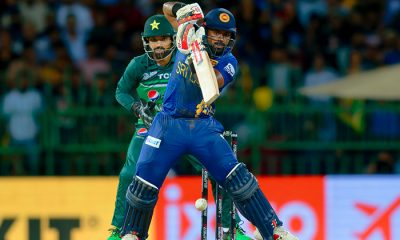

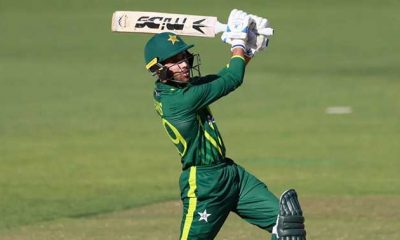





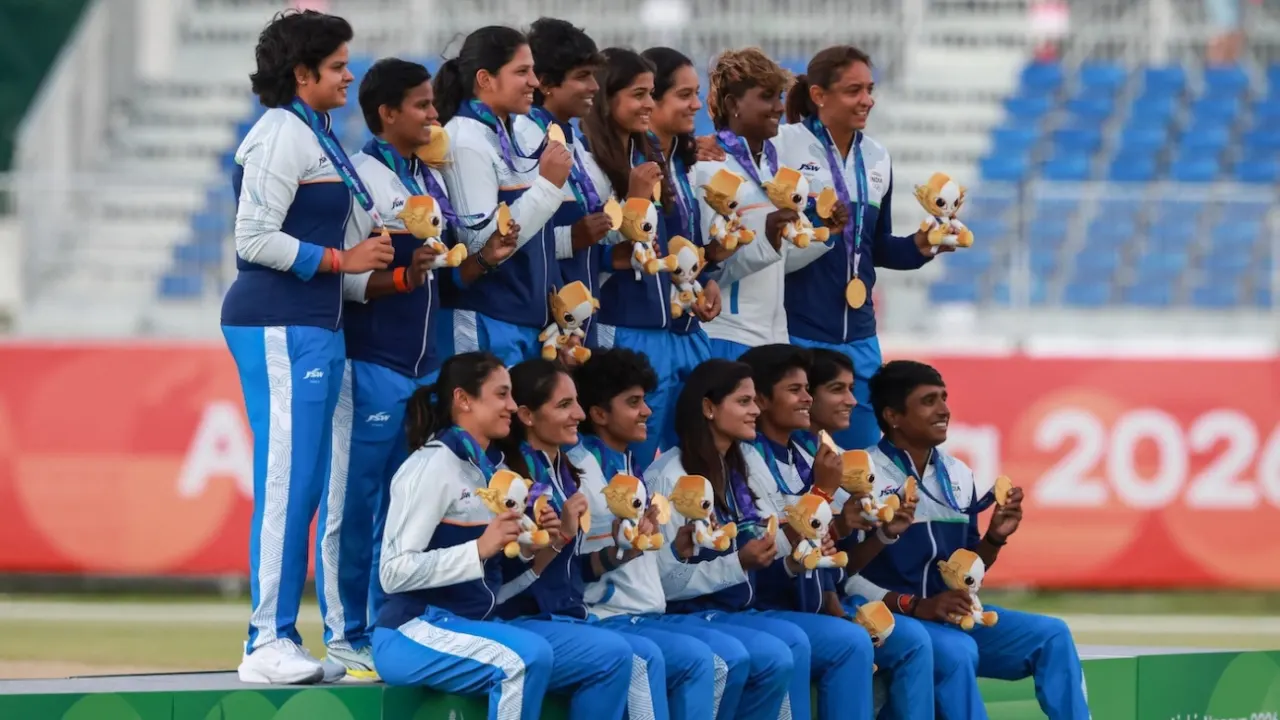
India thrashed Sri Lanka by 147 runs in the Asian Games women’s cricket competition final in Nisshin to win the country’s first gold medal of the multi-sport event, with Smriri Mandhana, Shafali Verma, Richa Ghosh and the bowling group starring in the dominant display. That made it back-to-back gold medals for India in the event after their triumph in 2023.
Mandhana and Shafali laid the foundation of the win for India with a 99-run opening stand after they opted to bat, with Mandhana finishing on 79 off 45 balls. Ghosh then provided the finishing touches, making 49 not out off 22 balls to power India to 216 for 3, the highest Asian Games innings total.
Sri Lanka couldn’t get anywhere near India’s firepower as they struggled against spin. Chamari Athapaththu fought with a 21-ball 29, but they folded for a paltry 69 – just two runs more than what India managed in their powerplay – to lose another final to India in the space of ten days after going down in the Asia Cup title contest.
The match unfolded similarly to that game in Dubai. Mandhana in particular was at her menacing best, starting off with two boundaries off Sugandika Kumari in the first over and then launching three sixes to different parts of the ground. She first rocked back to Sugandika’s short delivery outside off and cleared mid-on with ease. Sugandika then went fuller and strayed onto the pads, allowing Mandhana to whip it over square leg for another six. And in the next over, she stepped down the track and carved Mithali Ayodhya over cover for her third six of the day.
Shafali then joined in the fun, taking Athapaththu for two sixes, pulling a short ball over deep midwicket before driving a floated delivery over mid-off. Mandhana rounded off the over by flat-batting a back-of-a-length delivery just beyond long-on for another six, much to Athapaththu’s frustration. India were going at over 11 at that point, posting 67 for no loss at the end of the powerplay.
Fours and sixes came frequently with Mandhana continuing to be the more aggressive of the two, bringing up her fifty off 30 balls in the tenth over. Shafali survived a stumping scare in the same over but couldn’t cash in on the chance as she top-edged a shot to Kawya Kavindi at short third off Chamudi Praboda for 48 off 29 balls.
Sri Lanka briefly managed to stem the flow of runs, conceding just one boundary in 19 balls, but that period did not last long. Harmanpreet Kaur and Mandhana started finding the gaps soon, though the India captain’s stay did not last long as she departed for a 17-ball 19.
Ghosh walked out at No. 4 and helped India pick up the pace again, taking on Praboda for two boundaries while Mandhana continued to attack at the other end. Mandhana went on to clobber two more sixes before falling in an attempt to go big, miscuing a length delivery from Sugandika while looking to clear deep-backward square-leg.
With 200 in sight, Ghosh took charge as she helped India plunder 19 runs, including two fours and a six, off Kavindi’s over before launching two more sixes off Ayodhya in the next, pulling a half-tracker over deep midwicket before moving across to club another full delivery over cow corner. Ayodhya also conceded five wides in the over. Ghosh capped the innings with another boundary as India finished on 216.
Sri Lanka were facing a daunting target, but it was not the brightest of starts for India on the field either. After Shreyanka Patil dropped a regulation catch off Imesha Dulani at backward point in the first over, Athapaththu looked in good touch as she scored two boundaries off Nandani Sharma in the second.
Harmanpreet then turned to India’s go-to part-time spin option – Shafali – and she delivered instantly, deceiving Dulani in flight, with Ghosh completing the stumping. She claimed her second wicket in her next over, with a loopy delivery that Hasini Perera sliced to cover point.
Sri Lanka found boundaries against the faster bowlers but could barely keep up with the required run rate, moving to 41 for 2 at the end of the powerplay. India then turned to spin for the rest of the innings, and Sri Lanka’s chase quickly unravelled.
Deepti Sharma ended their slim hopes when she had Athapaththu miscuing to long-off in the seventh over. Patil then had Harshitha Samarawickrama caught and bowled for a duck, before N Shree Charani dismissed Hansima Karunaratne for 1 after another miscued slog.
Deepti then added a second wicket when Kavisha Dilhari spooned a drive back to her, leaving Sri Lanka six down and in deep, deep trouble.
The result all but decided by then, and India continued to strike at regular intervals with Sri Lanka offering no resistance, barring a six and a four from Kaushini Nuthyanganam, whose wicket brought Sri Lanka’s innings to an end in the 16th over. Deepti finished with figures of 3 for 6, while Shafali, Shree Charani and Patil bagged two each.
Scores:
India Women 216 for 3 in 20 overs (Shafali Verma 48, Smriti Mandhana 79, Harmanpreet Kur 19, Richa Ghosh 49; SugandikaKumari 1-49, Kavisha Dilhari 1-35, Chamudi Praboda 1-34) beat Sri Lanka 69 in 15.4 overs (Chamari Athapaththu 29, Kavisha Dilhari 11, Kaushini Nuthyangana 14; Deepti Sharma 3-06, Shafali Verma 2-03, Shreyanka Patil 2-9, N Shree Charani 2-13) by 147 runs
[Cricinfo]
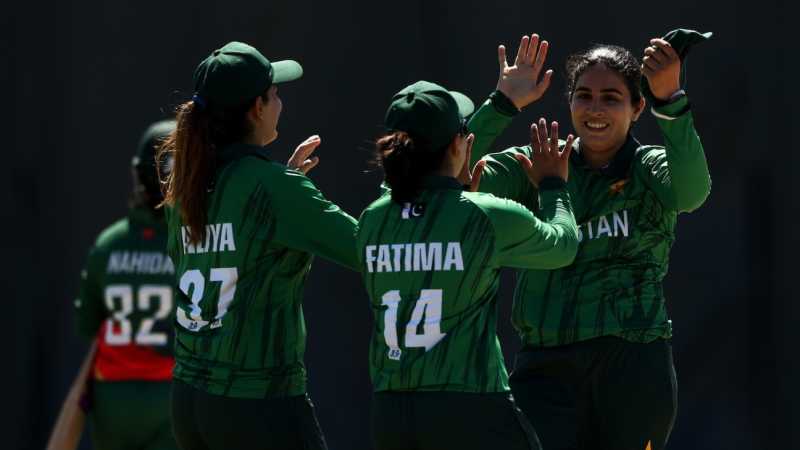
At 67 for 5 in the 12th over, Pakistan were under the cosh against Bqngladesh in their bronze-medal playoff at the Asian Games women’s competition. That’s when Fatima Sana walked out, slammed 45 in 30 balls, and gave Pakistan 145, which was 31 too many for Bangladesh, especially after Umm-e-Hani picked up three top- and middle-order wickets to end with 3 for 10 from her four overs.
Bangladesh’s big concern, of late and in general, has been the number of dot balls they play out in a typical T20 innings. In this game, it was a marginal improvement from the loss to India in the semi-final – they had 43 dot balls here compared to 61 in that game. But it was still fewer than the 48 they bowled to Pakistan in the first half. The difference was Sana, who scored at 150.00 to change the complexion of the contest.
Pakistan’s start had been decent, thanks to Gull Feroza, after they won the toss and opted to bat. Feroza and Shawaal Zulfiqar added 46 in 41 balls before being separated in the seventh over. The one to be dismissed was Feroza, who had scored 31 in 23 balls. Zulfiqar batted on before becoming the third batter to fall, having struggled to 17 off 27 balls. And the wickets kept falling, Shorna Akter picking up two of them to leave Pakistan in a mess with five batters gone.
Sana had a solid stand for the sixth wicket with Aliya Riyaz, who scored 25 in 22 balls and added 67 with Sana in just 43 balls. The control Bangladesh had was gone with the two hitting five sixes between them.
The target for Bangladesh, which looked like it might be in the region of 100, was suddenly closer to 150. And the chase never took off. Umm-e-Hani struck in the third over, then in the fifth over, and again in the 16th over. By then, Bangladesh were floundering: 77 for 5 with under five overs to go.
The resistance came from senior pro Sharmin Akther, who scored an unbeaten 46 in 45 balls, but there was nothing around her, and Pakistan ran out comfortable, 31-run victors.
Scores:
Pakistan women 145 for 8 in 20 overs (Shawaal Zulfiqar 17, Fatima Sana 45, Gull Feroza 31, Aliya Riyaz 25; Sanija Akter Meghla 1-28, Nahida Akter 2-21, Shorna Akter 2-16, Ritu Moni 2-27) beat Bangladesh women 114 for 7 in 20 overs (Dilara Akter 12, Nigar Sultana 25, Sharmin Akhter 46*, Nahida Akter 10*; Tasmia Rubab 1-25, Fatima Sana 1-25, Umm-e-Hani 3-10, Nashra Sandhu 1-19, Ayesha Zafar 1-10) by 31 runs
(Cricinfo)

India Women won the toss and chose to bat first in the Asian Games women’s cricket final in Nishin, Japan.
India: Smriti Mandhana, Shafali Verma, G Kamalini, Harmanpreet Kaur (capt), Richa Ghosh (wk), Bharti Fulmali, Deepti Sharma, Shreyanka Patil, Kranti Gaud, N Shree Charani, Nandani Sharma
Sri Lanka: Imesha Dulani, Chamari Athapaththu (capt), Hasini Perera, Kavisha Dilhari, Harshitha Samarawickrama, Hansima Karunaratne, Kaushini Nuthyangana (wk), Kawya Kavindi, Mithali Ayodhya, Chamudi Praboda, Sugandika Kumari
(Cricinfo)

High Court convicts 14 over deadly Easter bombings

Mandhana, Shafali and Ghosh lead dominant India to Asian Games gold

Fatima Sana and Umm-e-Hani secure bronze for Pakistan in Asian Games

India bat first in Asian games womens cricket final

Showers about 100mm will occur in the Western, Sabaragamuwa, Central and North-western provinces and in Galle and Matara Districts

Govt. confident of 2/3 majority despite NPP split speculation

‘Dates have the highest sugar content to fight Coronavirus’

Sunday Island 27 December – Headlines

#SundayIsland 17th December – Headlines

Sunday Island – 28th March

Sunday Island Headlines – 21 March

Sunday Island – 21st February – Headlines
-

 News6 days ago
US embassy won’t comment on IGP’s probe into joint drug raid
-

 News5 days ago
Bid for Basil’s extradition nears final stage: Police
-

 News4 days ago
Shanakiyan urges urgent action over reported death sentence for Lankan in Saudi Arabia
-

 Business6 days ago
All-new Bolero MaXX unveiled in Sri Lanka
-

 News3 days ago
Namal Rajapaksa Buddhist gambit fails, bail denied
-

 Opinion6 days ago
A journalist who wrote across the divide
-

 Editorial7 days ago
More fuel price shocks shrouded in secrecy
-
 Sports7 days ago
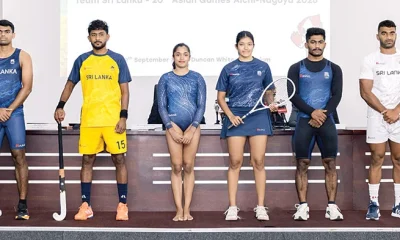
MAS Holdings, official clothing sponsor of Sri Lanka team at Aichi–Nagoya 2026 Asian Games