
Latest News
Asia Cup 2025: Kusal Mendis, Nuwan Thushara knock Afghanistan out


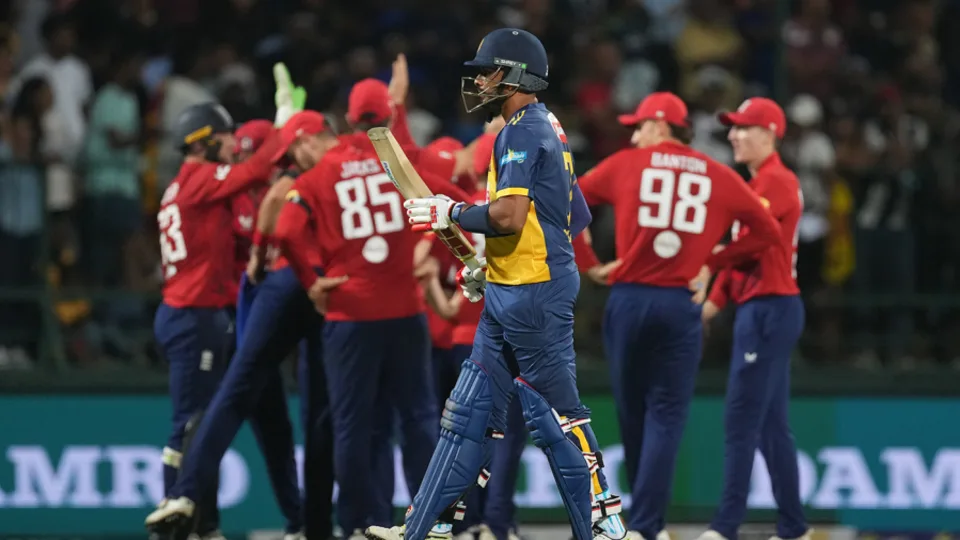
Kusal Mendis ensured Sri Lanka’s 100% record through the group stage as his unbeaten 74 off 52 trumped Mohammad Nabi’s outrageous 60 off 22 for a six-wicket win against Afghanistan. The result means Bangladesh also qualify with a second place in group B.
Kusal was crucial to the chase with his ability to navigate Afghanistan’s variety of spinners – courtesy of well-executed sweeps and pulls – proving crucial in Sri Lanka running down a tricky target with eight deliveries to spare.
Kusal was therefore the common denominator in a string of partnerships – 22, 25, 45, 27 and 52* – as Sri Lanka put aside a potentially momentum-shifting cameo from Nabi.
Nabi had earlier resurrected the Afghanistan innings, striking five sixes in the final over bowled by left-arm spinner Dunith Wellalage, who had been drafted in to this game ahead of Maheesh Theekshana. Prior to that, Dushmantha Chameera had been taken for 17 runs in the penultimate over of the innings, meaning Afghanistan struck 49 in the last two overs to give their total a monster boost.
Up until that point, though, Sri Lanka had dominated proceedings, with Nuwan Thushara, in particular, shining with figures of 4 for 18. It was a performance worthy of a win, and so it proved in the end.
Losing Pathum Nissanka early was not ideal, nor was Kamil Mishara falling in the powerplay. But Kusal ensured that he took on the scoring burden and kept Sri Lanka in the chase with timely boundaries through the middle overs.
However, nerves still remained with Sri Lanka needing 48 off the last five overs. It was here that Kusal was joined by the other Mendis in the side – Kamindu – who once more showed off his capabilities as a finisher.
Kamindu struck two pivotal sixes – one each off Noor Ahmad and Fazalhaq Farooqi – to take the pressure off his senior compatriot and finished unbeaten on 26 off 13. It meant Kusal rarely had to shift gears, even at the death, as Sri Lanka ran down the target with ease.
Starting left-arm spin-bowling allrounder Wellalage over Theekshana was a call presumably predicated on the idea that Afghanistan had ten right-handers in their batting line-up, while also a move that simultaneously lengthened the batting and improved the fielding.
As things transpired, though, Wellalage was not needed with the bat, while he dropped Nabi on 5. But more pertinently, so effective were Sri Lanka’s strike bowlers – particularly Thushara – that Charith Asalanka decided that it was worth the gamble to bowl his main bowlers out early in the hopes of picking up wickets sooner rather than later.
And the plan worked – to an extent. Thushara bowled three overs in the powerplay, picked up three wickets in that period, before getting a fourth at the death. Chameera bowled well, but was unlucky to go for 50 runs in his four overs – the most expensive spell of his career. Dasun Shanaka, nominally the fifth bowler, got away with 29 runs in his four overs, while Hasaranga gave away just 18 in four wicketless overs.
Even Wellalage had given away just 17 up until his last over. For Nabi, a fantastic hitter of spin, this was an ideal match-up and he took on Wellalage in epic fashion. Five sixes in the V saw 32 come off that final over – and with it gave Afghanistan hope.
It’s unfortunate that many will remember Wellalage for that final over, because up until then, he, along with the rest of the Sri Lanka bowlers, had kept Afghanistan quiet right through their innings.
Thushara was the star, taking three in the powerplay with his outswingers to the right-handers, and one searing in swinger to left-hander Sediqullah Atal.
Asalanka smartly got through his fifth bowler quota with Shanaka in the middle overs as Afghanistan sought to consolidate, though it was that extra over from Thushara in the powerplay that proved decisive in the end as it meant Wellalage wound up having to bowl to Nabi in the final over – a strategy rarely, if ever, employed by a Sri Lanka side in recent years.
Fortunately for Wellalage and Sri Lanka, it mattered little once all the chips were counted.
Brief scores:
Sri Lanka 171 for 4 (Kusal Mendis 74*, Kusal Perera 28, Charith Asalanka 17, Kamindu Mendis 26*; Mujeeb Ur Rahman 1-42, Azmatullah Omarzai 1-10, Mohammad Nabi 1-20, Noor Ahmad 1-37) beat Afghanistan 169 for 8 in 20 overs (Rahmanullah Gurbaz 14, Sadiqullah Atal 18, Ibrahim Zadran 24, Mohammad Nabi 60, Rashid Khan 24; Nuwan Thushara 4-18, Dushmantha Chameera 1-50, Dunith Wellalage 1-49, Dasun Shanaka 1-29) by six wickets
[Cricinfo]

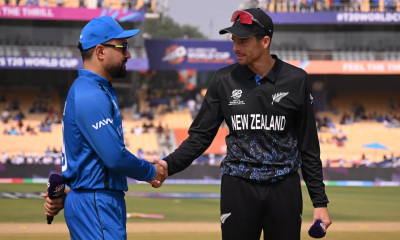



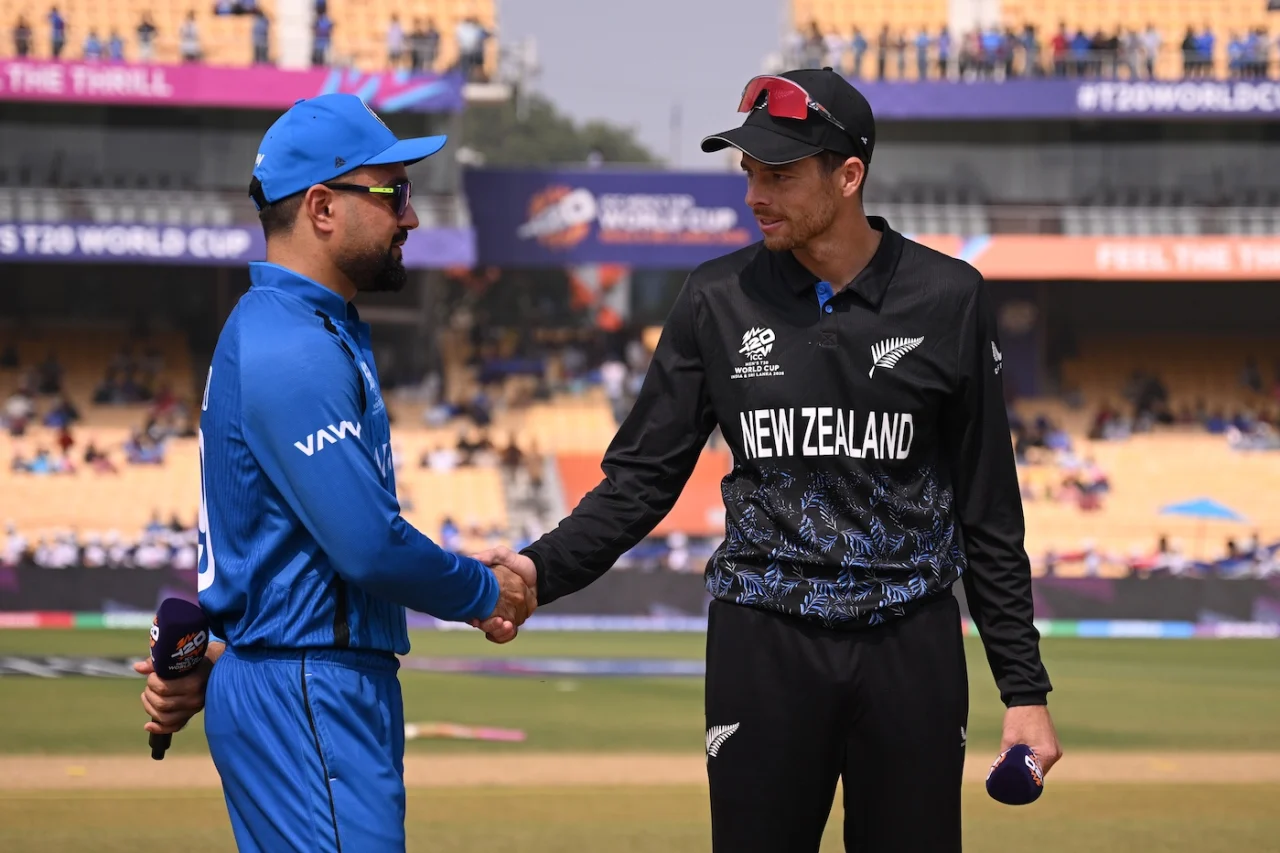
Afghanistan won the toss and elected to bat first in the 2026 T20 World Cup Group D encounter against New Zealand..
New Zealand XI Finn Allen, Tim Seifert (wk), Rachin Ravindra, Glenn Phillips, Mark Chapman, Daryl Mitchell, Mitchell Santner (capt), James Neesham, Matt Henry, Lockie Ferguson, Jacob Duffy
Afghanistan XI Rahmanullah Gurbaz (wk), Ibrahim Zadran, Sediqullah Atal, Darwish Rasooli, Azmatullah Omarzai, Gulbadin Naib, Mohammad Nabi, Rashid Khan (capt), Fazalhaq Farooqi, Ziaur Rahman, Mujeeb Ur Rahman
Latest News
‘I’d like to play on flat tracks’ – Shanaka links Sri Lanka’s batting woes to spin-friendly pitches at home
Dasun Shanaka’s got 99 problems, and the pitch is also one. If cricket writers misappropriating Jay Z lyrics from 22 years ago is getting kind of old, so is the complaint, sadly. For years now, Sri Lanka’s captains have been campaigning to get more batting-friendly tracks on the island. For years now, surfaces have been given to substantial spin, depressing totals while envenoming spinners through the middle overs, especially.
At the World Cup, though, a struggling Sri Lankan captain hopes his batters can perform on what he thinks will be better tracks. Sri Lanka arrive at this tournament fresh from a 3-0 bruising at home at the hands of England. Shanaka’s own returns in that recent series were modest. His scores were 20 off 16, 1 and 4.
“I think in this World Cup the ICC has told the groundstaff that they have to leave a certain amount of grass on the pitch,” Shanaka said. “Because of that, I think the number of dismissals will fall. Eventually, I’d like to get a good track on which to show how I can bat, because it’s harder to showcase my striking ability on turning wickets. Lots of people see me negatively because of this.”
In fact, there is no actual official requirement from the ICC regarding length of grass – it is only that there is greater pressure to produce surfaces conducive to good cricket (read: batting tracks) in global events.
In any case, Sri Lanka’s problems at home go back far further than the series against England, however. Since the start of 2024, Sri Lanka have lost 13 and won only nine T20Is at home. Previous captains – Charith Asalanka and Wanindu Hasaranga among them – had asked for flatter decks. But then Sri Lanka were having success on big turners in the ODI format.
“Recently, we’ve had a lot of issues with the pitches,” Shanaka said. “I know the middle order hasn’t performed well. If you want to know why that happened, you should look at the kind of pitches we played on. You’ll be able to figure out why the strike rates are low and we’re losing wickets.
“I was only recently reappointed as the captain. I didn’t know what the plan was before that. In my opinion I’d like to play on flat tracks. Yes, we have some good spinners in our side, but at the same time other teams also have quality spinners. I think giving 50-50 wickets will help in future. I’d like to bat on flat tracks.”
Although Shanaka expects Sri Lankan surfaces to be better for batting, there may still be a gap between Indian tracks and Sri Lankan ones in this World Cup. Since the start of 2020, the T20I strike rate in India is 143 (the highest in the world), compared with 123 in Sri Lanka.
“If you look at India you will see how good the pitches they play on are,” Shanaka said. “Some people have a problem with India scoring so many runs and ask why Sri Lanka can’t do the same. It totally depends on conditions. You’ll be able to assess what the numbers in the World Cup are and what the previous numbers were. I think this will be a good tournament for our batters.”
[Cricinfo]
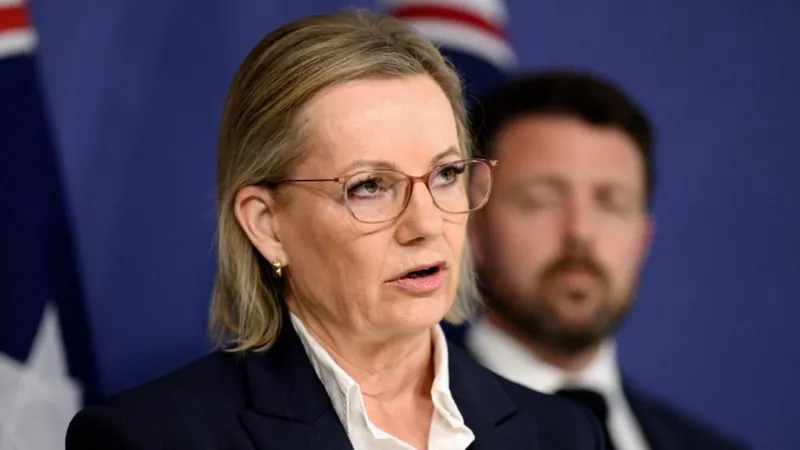
Australia’s Liberal-National Coalition, the country’s main opposition, reunited on Sunday, more than two weeks after the centre-right partners split in a row over hate speech laws.
“The Coalition is back together and looking to the future, not to the past,” Liberal Party leader Sussan Ley said, appearing alongside National Party leader David Littleproud in Canberra.
The Coalition split on 22 January after the Nationals, citing free speech concerns, refused to back reforms moved by the government after two gunmen targeted a Jewish festival at Bondi Beach in December, killing 15 people.
“It’s been disappointing, we’ve got to where we are but it was over a substantive issue,” Littleproud said.
The Coalition suffered a heavy election loss last year and the split last month was the second in less than 12 months.
Last year’s separation in May – largely over climate and energy policy – was resolved within a week.
This time the divisions were sown by hate speech reforms introduced by the centre-left Labor government after the Bondi Beach attack.
While the Liberals sided with the government, their National colleagues abstained from the vote in the lower house and voted against the measure in the senate, saying the measures had been rushed and posed a threat to free speech.
The legislation includes provisions that will ban groups deemed to spread hate and introduce tougher penalties for preachers who advocate violence.
Ley said the coalition had a responsibility to find a way back to government.
“I acknowledge this has been a difficult time. It has been a difficult time for millions of our Coalition supporters, and many other Australians who rely on our two great parties to provide scrutiny and leadership,” she said.
The Liberal Party leader said both parties had struck an agreement that neither party could overturn decisions taken by the Coalition’s joint “shadow cabinet”.
Dating back to the 1940s, the Coalition had not split since 1987 before the brief separation last year.
The National Party mainly represents regional communities and often leans more conservative than the Liberals.
The Coalition is facing pressure from populist Senator Pauline Hanson’s anti-immigration One Nation party, which has surged in polling, while the Liberal Party lost a swath of seats at last year’s federal election.
[BBC]

Afghanistan to bat first against New Zealand

‘I’d like to play on flat tracks’ – Shanaka links Sri Lanka’s batting woes to spin-friendly pitches at home

Washington Post chief executive steps down after mass lay-offs

Australia’s opposition coalition reunites after row over hate-speech laws

Showers may occur in the Western, Uva and Sabaragamuwa provinces and in Matale, Nuwara-Eliya, Ampara, Batticaloa, Galle, Matara and Polonnaruwa districts

King Charles to host Nigeria’s first UK state visit in 37 years

‘Dates have the highest sugar content to fight Coronavirus’

Sunday Island 27 December – Headlines

#SundayIsland 17th December – Headlines

Sunday Island – 28th March

Sunday Island Headlines – 21 March

Sunday Island – 21st February – Headlines
-

 Business1 day ago
Zone24x7 enters 2026 with strong momentum, reinforcing its role as an enterprise AI and automation partner
-

 Business5 days ago
SLIM-Kantar People’s Awards 2026 to recognise Sri Lanka’s most trusted brands and personalities
-

 Business6 days ago
All set for Global Synergy Awards 2026 at Waters Edge
-

 Business1 day ago
HNB recognized among Top 10 Best Employers of 2025 at the EFC National Best Employer Awards
-

 Business5 days ago
API-first card issuing and processing platform for Pan Asia Bank
-

 Business1 day ago
GREAT 2025–2030: Sri Lanka’s Green ambition meets a grid reality check
-

 Editorial3 days ago
All’s not well that ends well?
-

 Features3 days ago
Phew! The heat …