
Latest News
Asia Cup 2025: Saif and Hridoy fifties hand Sri Lanka their first Asia Cup defeat

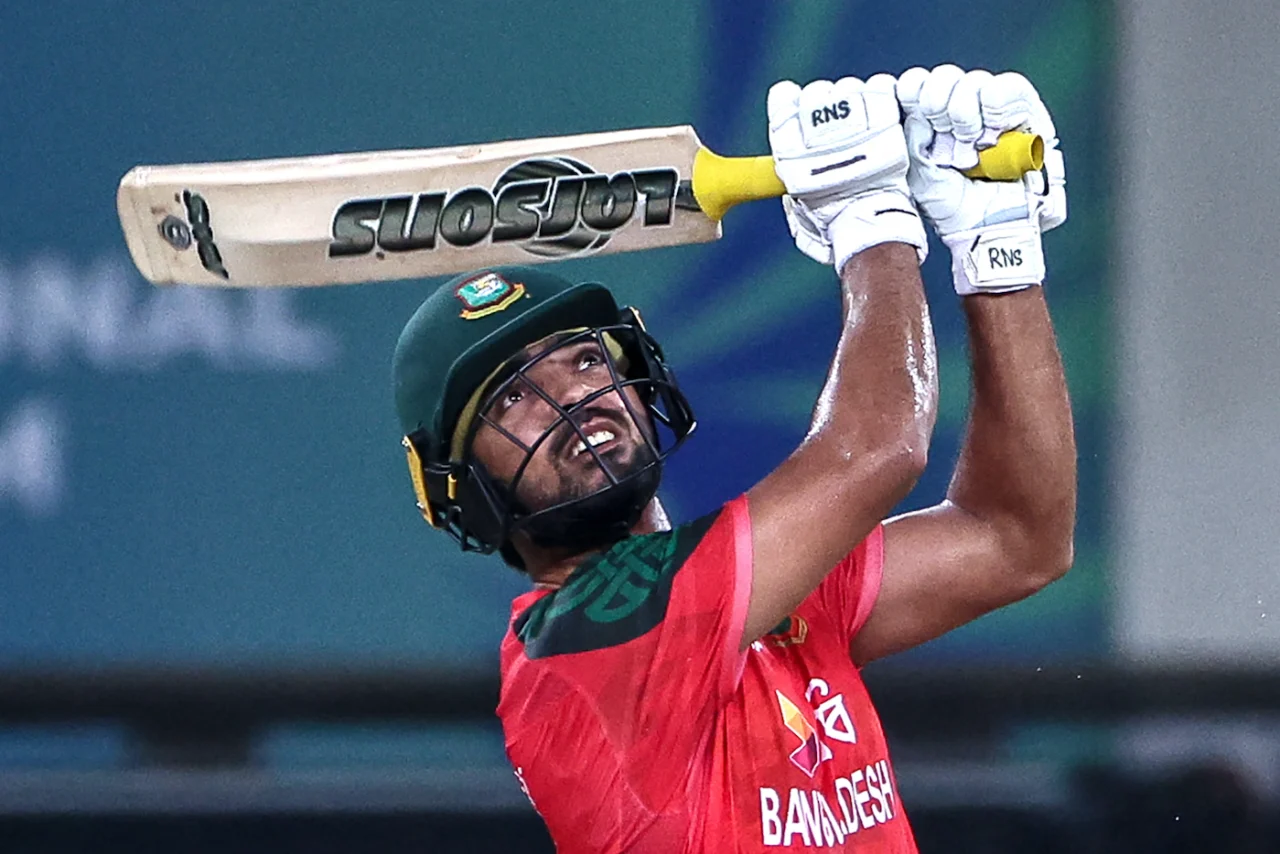
Three top order stands, one after the other, led by Saif Hassan, then Towhid Hridoy propelled Bangladesh to overhaul Sri Lanka’s 168, on a dry Dubai track.
Saif’s 59-run stand with Litton Das came off 34 balls. It saw Bangladesh set the platform. Then Saif joined Hridoy for a 54-run stand off 45 balls, that consolidated their innings through the middle overs. Hridoy then took charge in a 45-run partnership off 27 balls with Shamim Hossain that put Bangladesh on the cusp of victory. There were some wobbles very late in the game, but those batters had done enough. Bangladesh only needed five to win going into the final over, and they got there with a ball to spare, even if they’d lost two wickets and almost a third scoring the winning run.
Sri Lanka struggled for wickets right through the innings, with Saif especially good at keeping the seamers at bay in the powerplay. By the end of the 15th over, Bangladesh had still only lost three wickets, and needed only 39 more to win. It seemed highly unlikely they would lose from there. In fact, they had looked good for the majority of this chase.
In Sri Lanka’s innings, Dasun Shanaka’s promotion to No. 5 had yielded results, as he struck 64 not out off 37 balls, to give Sri Lanka a decent – if not spectacular – finish. But two Bangladesh bowlers had also shone: Mustafizur Rahman took 3 for 20, and Mahedi Hassan claimed 2 for 25.
When Nuwan Thshara dismissed Tanzid Hasan in the first over, you wondered if this would be another match which his first spell goes some distance to winning. He has tended to have rich hauls against this opposition. But in Saif, Bangladesh had a beautiful counter to Thushara. Saif was outstanding down the ground as Thushara kept going full (as he often does in the powerplay). Saif hit a four over the bowler’s head first ball of the second over, before running at Thushara next ball and depositing him over the rope. Thushara’s second and third overs would cost 14 runs each, Saif doing the majority of that damage.
Sri Lanka’s general strategy is to have Shanaka and one of the spin-bowling allrounders share four overs between them. Usually Charith Asalanka bowls himself. But in this game he chose not to bowl, and gave the 15th over of the innings to Kamindu Mendis. It would be the one in which the match would swing definitively in Bangladesh’s direction.
Hridoy crashed him over cover for four second ball, then when Kamindu fired a shortish ball at the stumps, Hridoy got inside the line and launched it high over the deep square leg boundary. Later in the over, he slashed one between cover point and backward point to fetch another four. At the start of that over Bangladesh had needed 55 off 36 balls. Hridoy’s 16 runs off that over made the equation much simpler.
Unlike Sri Lanka’s bowlers, Bangladesh kept striking regularly after Sri Lanka’s openers had put on 44 runs together. Shanaka was the only one to make a substantial score through the middle and later overs, crashing six sixes and three fours. He’d been dropped off the bowling of Mustafizur on 38, in a period in which Bangladesh gave at least three batters reprieves. Shanaka’s most productive over was against the spin of Nasum Ahmed, whom he clobbered for two sixes and a four in the 15th over.
Arguably the best over Bangladesh bowled was delivered by Mustafizur, who had both Kamindu and Asalanka caught in the 19th over, in which he conceded only five runs. Taskin Ahmed then bowled four dots to a mid-blitz Shanaka in the next over, delivering a clutch of good slower balls. He was hit for a six and a four too, but between them Bangladesh’s senior quicks had conceded only 15 in the last two overs, which Sri Lanka had been well-set to exploit.
Brief scores:
Bangladesh 169 for 6 in 19.5 overs (Saif Hassan 61, Litton Das 23, Towhid Hridoy 58, Shamim Hossain 14*; Nuwan Thushara 1-42, Dushmantha Chameera 1-32, Wanidu Hasaranga 2-22, Dasun Shanaka 2-21) beat Sri Lanka 168 for 7 in 20overs (Pathum Nissanka 22, Kusal Mendis 34, Kusal Perera 14, Dasun Shanaka 64*, Charith Asalanka 21; Taskin Ahmed1-37, Mustafizur Rahman 3-20, Mahedi Hasan 2-25) by four wickets
[Cricinfo]

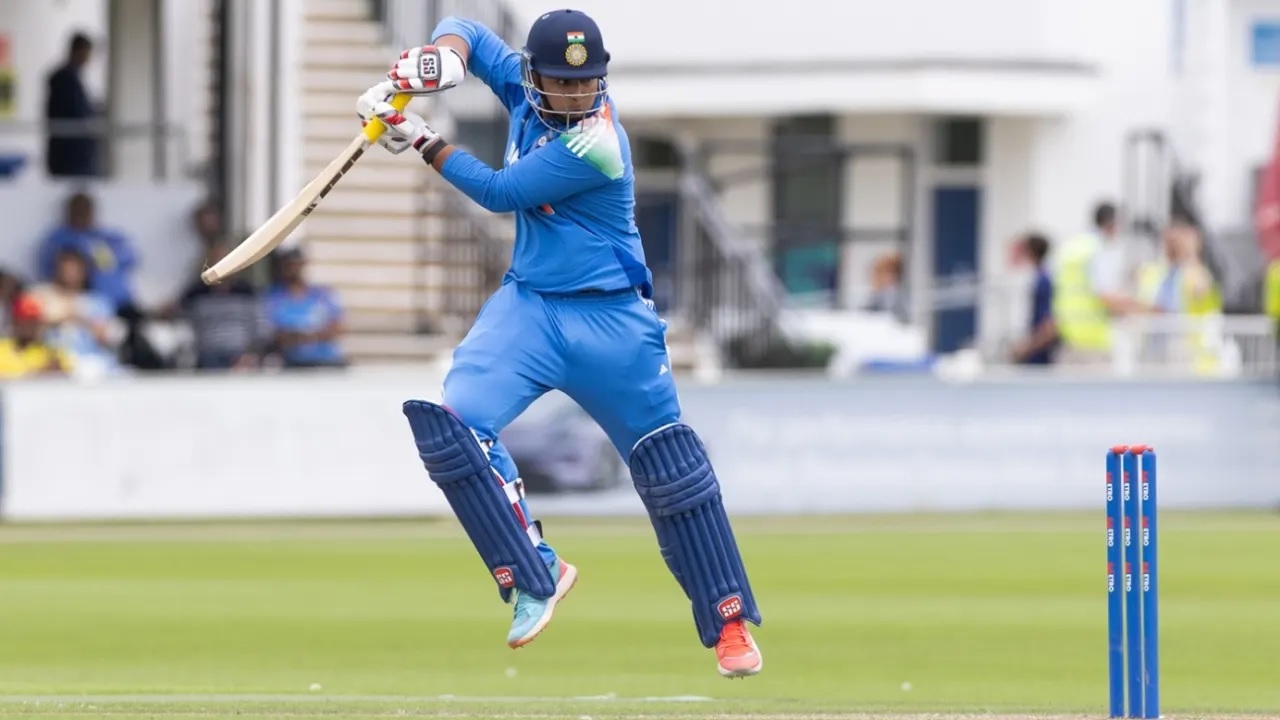
Vaibhav Suryavanshi slammed a blistering 95 ball 171 in the Under 19 Asia Cup opener against UAE on Friday. He fell just six short of Ambati Rayudu’s long-standing India record in youth one-dayers – the 177 against England in Taunton back in 2002.
Suryavanshi, yet to turn 15, hit nine fours and 14 sixes during his innings, before being bowled attempting a paddle in the 33rd over of India’s innings. They eventually finished with 433 for 6 after being put in to bat.
Last month, Suryavanshi had smashed a 42-ball 144 – the joint third fastest century by an Indian in men’s T20s – against UAE at the Rising Stars Asia Cup in Doha. He had got to his century off 32 deliveries that day, in the process recording the joint-sixth-fastest century in all men’s T20s.
Suryavanshi – a certainty to feature in next month’s Under19 World Cup in Namibia and Zimbabwe – also recently slammed an unbeaten 61 ball 108 at the Syed Mushtaq Ali Trophy to become the youngest century-maker in the tournament’s history.
He had a breakthrough year in 2025, when he became the youngest to slam an IPL century, for Rajasthan Royals [101 off 38 balls] against Gujarat Titans. Having made history just a few months earlier – by becoming the youngest pick in an IPL auction at 13 – Suryavanshi featured in seven games in the 2025 edition, all as an opener. He made 252 runs at a strike rate of 206.55.
After IPL 2025, he was part of the India Under-19 squads that toured England and Australia. He smashed a 78 ball century in the first four-day fixture in Brisbane, and finished as the second-highest run-getter of the multi-day series against Australia Under-19s, scoring 133 runs in three innings as India won 2-0.
Prior to that, he had amassed 335runs at a strike rate of 174.01 in the one-dayers against England Under-19s.
[Cricinfo]
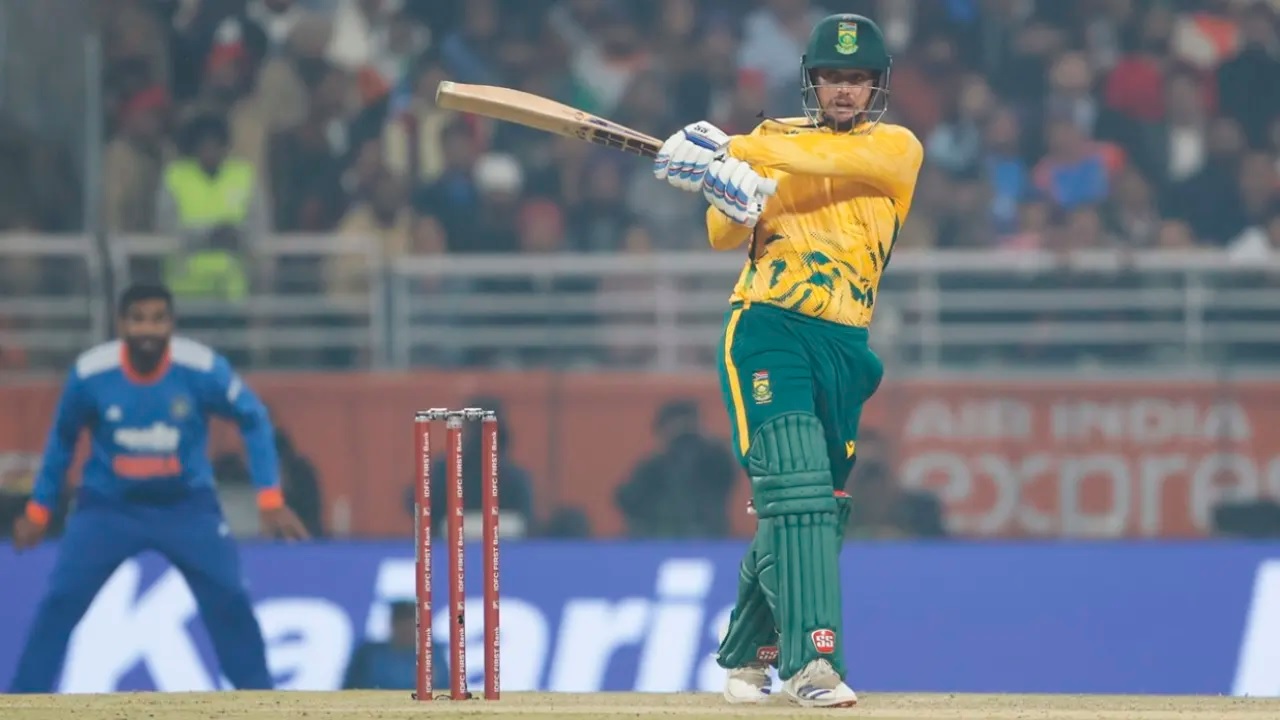
If India defied losing the toss and getting the worst of the conditions, theoretically, in Cuttack, South Africa did the same in New Chandigarh to come roaring back into the T20I series, which is now locked 1-1 with three matches to go.
India captain Suryakumar Yadav noted at the toss that the outfield was already dewy when the players were going through their pre-match warm-ups. It was a no-brainer to chase. But Quinton de Kock put India under pressure with a 46-ball 90 studded with seven sixes, and Donovan Fererrira finished brilliantly with an unbeaten 16-ball 30, taking South Africa to an imposing total of 213 for 4.
Imposing, but not dew-proof; certainly not given how India’s bowlers had struggled with the conditions and bowled 15 wides — including seven in one Arshdeep Singh over — and 13 full-tosses.
But the dew never got a chance to test South Africa, as their new-ball bowlers made the best possible use of early movement to take three wickets in the first four overs. These included the Test-match-style dismissals of both India openers.
It was all steeply uphill from 32 for 3, and India never really challenged the visitors, with Tilak Varma’s 34-ball 62 standing out for its fluency and enterprise on a difficult night for his team. South Africa bowled India out with five balls still remaining, with Ottneill Baartman hastening their end with three wickets in the 19th over.
This pitch wasn’t a complete featherbed, with the ball occasionally stopping on the batters and making them mistime shots. Two members of South Africa’s top three, Reeza Hendricks and Aiden Markram, scored 37 off 36 balls between them.
The other member, however, was in an entirely different mood, taking full toll of anything remotely too short, too full, or especially too straight. De Kock kept clearing the ropes whenever he had half a chance, particularly with his pulls and pick-up shots square and behind square on the leg side.
This put India’s bowlers under tremendous pressure. They couldn’t attack de Kock’s stumps, because that ran the risk of being whisked over the leg side, and they couldn’t afford to give him width either. This pressure led India to attempt yorkers and wide yorkers frequently, and the pressure combined with the dew to produce errors in the form of wides and full-tosses.
Arshdeep suffered the most from this, sending down seven wides in the 11th over — all to de Kock – and nine in all.
Jitesh Sharma’s alert run-out of de Kock — who wandered out of his crease instinctively after bottom-edging the ball towards the keeper — in the 16th over, followed by Axar Patel’s dismissal of Dewald Brevis in the 17th threatened to stall South Africa at a critical stage of their innings. But Ferreira and David Miller made sure they cleared 200 by a good margin, putting on an unbroken 53 off 23 balls for the fifth wicket.
The highlight of the partnership was an 18-run final over during which Ferreira hit Jasprit Bumrah for two sixes: a full-toss drilled straight, and a good short ball that followed the batter’s premeditated movement pulled authoritatively over the leg side.
In all, Bumrah conceded four sixes, the most he has gone for in a T20I.
Given all the dew around, it was imperative that South Africa made the new ball count. They did that emphatically. Ngidi set things in motion with a first-over jaffa to Shubman Gill, squaring him up in defence with one that straightened from a good length and having him caught at slip. Jansen followed up in the next over with the mirror-image dismissal of Abhishek Sharma; angling in, straightening, squaring up the batter and catching the outside edge.
Abhishek’s wicket was particularly crucial, since he’d already hit two sixes, in just eight balls.
Suryakumar followed the openers to the dressing room in the fourth over, sending a thin edge to the keeper — confirmed after South Africa reviewed the not-out decision — while looking to steer Jansen behind point.
India never threatened to make a match of it, particularly with Axar Patel — promoted to No. 3 — and Hardik Pandya struggling for fluency, scoring 41 off 44 balls between them.
But there was one bright spot for the home team in the form of Tilak, who looked in excellent rhythm right from the time he walked in, and combined that with his awareness of the field to find the boundary frequently even while his partners got stuck. Against Ferreira’s 110kph offspin rockets, for example, he made room to use the pace and steer him behind point, off the stumps. Then, against George Linde’s left-arm spin, he collapsed his back knee smartly to reverse-sweep over backward point for six. A slog-swept six off an Ngidi slower ball took him to a 27-ball half-century in the 14th over.
Jitesh, who came in at No. 7, also made good use of the V behind the wicket, scoring 27 off 17, but the result was already certain by the time he walked in, with India needing 96 off 34 balls at that point.
Brief scores:
South Africa 213 for 4 in 20 overs (Quinton de Kock 90, Aiden Markram 29, Dewald Brevis 14, Donovan Ferreira 30*, David Millerr 20*; Varun Chakrawarthy 2-29, Axar Patel 1-27 ) beat India 162 in 19.1 overs (Abhishek Sharma 17, Axar Patel 21, Tilak Varma 62, Hardik Pandya 20, Jitesh Sharma 27; Ottneil Baartman 4-24, Marco Jansen 2-25, Lungi Ngidi 2-26, Sipamla 2-46) by 51 runs
[Cricinfo]

Jacob Duffy, who had to wait until his 31st birthday for a Test debut earlier this year, claimed his second five-wicket haul of the series as West Indies folded tamely on the third day in Wellington. Bowled out for just 128, West Indies left New Zealand a target of 56, which was knocked off before tea for a 1-0 lead in the three-match series with one game to go. It was New Zealand’s first win of the 2025-27 World Test Championships [WTC] cycle. West Indies, meanwhile, have now lost six of their seven outings in this cycle and remain winless.
The collapse began with Brandon King’s run-out for 22 in the morning session. After a careful start with overnight partner Kaveem Hodge (35), King set off for a risky single in the morning’s eighth over. Sent back and left stranded, he was gone once substitute Michael Bracewell’s sharp throw was relayed on to the stumps by debutant wicketkeeper Mitchell Hay.
Shai Hope fell in the same over after closing the bat face in an attempt to work Michael Rae to the leg side, offering a simple return catch. Roston Chase, averaging under 16 as Test captain, then nicked a rising delivery from Duffy through to the keeper.
Hodge and first-Test hero Justin Greaves (25) attempted to stabilising things, with Hodge unfurling crisp strokes through the covers and square leg. But in the 31st over, one of those well-struck pulls picked out substitute fielder Will Young, who held a superb rebound catch at midwicket.
At 88 for 6, with the lead still below 20, the match was effectively gone, and Duffy accelerated the finish. He trapped Greaves lbw with a full delivery that jagged in, a decision first turned down but later overturned on review. In his next over, Duffy drew Tevin Imlach into a loose drive away from his body for an edge to second slip. Rae added his third by removing Jayden Seales caught behind, before Duffy completed his five-for by going short to No. 11 Ojay Shields, who miscued a leg-side swipe to fine leg.
Duffy walked off to applause with the innings ball raised, and openers Tom Latham and Devon Conway dashed away to pad up with an hour left before tea and a small target in front.
The pair added 26 in seven overs before Latham got a leading edge off Anderson Phillip to third slip. Conway held fort, attacking with six fours in his unbeaten 22-ball 28. Kane Williamson, with 16 off 12 balls, wrapped up the match with back-to-back boundaries in the tenth over.
Earlier in the Test, Blair Tickner’s first-innings four-for and Rae’s three wickets dismissed West Indies for 205. New Zealand replied with a disappointing 278 for 9 declared, with Tickner unable to bat after picking up a shoulder injury. But half-centuries from Conway (61) and Hay (60) ensured a meaningful lead, which, combined with West Indies’ limp second-innings effort, set up a comfortable win.
After the game, New Zealand captain Latham said they got “better and better” as the game progressed. “We took a little bit to get into the game, morning of day one, potentially some heavy legs. But we adjusted things and we bowled better and better in the second innings. And obviously Duffy on the back of that [five-wicket haul] and some of our substitutes coming on and getting on the board was pleasing.
“Mitch Hay played beautifully in the first innings coming under pressure. The way he played was pretty much the way he plays for Canterbury and that’s what we asked of him. And Michael Rae picked up some really important wickets on day one, trucked into the wind all week. All those efforts do not go unnoticed. We probably weren’t where we wanted to be with the bat but we can look into that over the rest of this week.”
Chase said West Indies’ batters didn’t make the most of the conditions on offer: “Batting is a bit of a concern, after coming from the first Test, that beautiful second innings [in Christchurch]. But we came here and our batters never really capitalised. Initially we thought the pitch would be similar to Christchurch. But this pitch was a lot easier for batting. The scores didn’t reflect that. There is still one Test match left and we can still level the series. That can help motivate the guys further.”
The third Test begins on December 18 in Mount Maunganui.
Brief scores:
New Zealand 278 for 9 dec (Mitchell Hay 61, Devon Conway 60; Anderson Phillip 3-70, Kemar Roach 2-43) and 57 for 1 (Devon Conway 28*, Kane Williamson 16*; Anderson Phillip 1-17) beat West Indies 205 (Shai Hope 47, John Campbell 44; Blair Tickner 4-32, Michael Ray 3-66) and 128 (Kaveem Hodge 35, Jacob Duffy 5-38, Michael Rae 3-45) by nine wickets

Vaibhav Suryavanshi slams 95-ball 171 in Under-19 Asia Cup opener

Quinton de Kock’s 90 powers South Africa to massive win

Duffy five-for triggers West Indies slide to give New Zealand first win of WTC cycle

Showers or thundershowers will occur at times in the Northern, North-Central, Eastern and Uva provinces and in Puttalam, Matale and Kurunegala districts

Rs 1. 3 bn yahapalana building deal under investigation

SL Railways suffers staggering losses; more than 2/3 of rail tracks out of service

‘Dates have the highest sugar content to fight Coronavirus’

Sunday Island 27 December – Headlines

#SundayIsland 17th December – Headlines

Sunday Island – 28th March

Sunday Island Headlines – 21 March

Sunday Island – 21st February – Headlines
-

 Features3 days ago
Finally, Mahinda Yapa sets the record straight
-

 News5 days ago
Over 35,000 drug offenders nabbed in 36 days
-

 News4 days ago
Cyclone Ditwah leaves Sri Lanka’s biodiversity in ruins: Top scientist warns of unseen ecological disaster
-

 Business7 days ago
LOLC Finance Factoring powers business growth
-

 News7 days ago
CPC delegation meets JVP for talks on disaster response
-

 News7 days ago
A 6th Year Accolade: The Eternal Opulence of My Fair Lady
-

 News5 days ago
Rising water level in Malwathu Oya triggers alert in Thanthirimale
-

 Features6 days ago
The Catastrophic Impact of Tropical Cyclone Ditwah on Sri Lanka: