
Sports
Ashwin’s six help India hit back after Khawaja-Green show


R Ashwin picked up his 32nd five-wicket haul, leading India’s retort with the ball after Usman Khawaja’s epic 180 ground the hosts out for the major part of the first two days. Khawaja was given excellent support by Cameron Green, who put on 208 with him for the fifth wicket, before Ashwin got into the act and restricted Australia to 480.
For a large part of the first half of the Day 2, Australia threatened to get in excess of that because of an unflustered, fluent partnership. Green, who started the day on 49, was fluent throughout even as India attempted to keep things tight on a flat pitch. He managed to cash in whenever India erred in their lengths, picking up 18 boundaries in total, en route to a maiden Test century.
At the other end, Khawaja did little to change his methods and continued to bat serenely, barely showing discomfort against any bowler. The duo had batted through the first session of the day unscathed, and stayed together for 378 balls in total to grind India down. It helped Australia when Green partnered Khawaja earlier in the day. India’s ploy to bowl dry was kept up at one end right through but Umesh Yadav’s profligacy proved to be a deterrent to their overall strategy.
Despite his waywardness, Rohit Sharma persisted with Umesh over a 6-over spell that ended up going for 37 runs in the session, adding the punch to Australia’s solidity. Green was the beneficiary of many of these freebies and he accepted them with glee. Their 177-run stand left India searching for answers as Australia’s grind was near perfect once again.
However, just as Green was about to up the ante in the second session, starting off with well timed drives, he fell gloving a sweep against Ashwin which was caught well by KS Bharat down the legside. Ashwin topped up that breakthrough by dismissing Alex Carey for the fifth time in the series. With a tossed up ball, he lured Carey to play a big shot and had him caught at short third man for a duck. The inspired spell continued as he had Mitchell Starc caught at short leg with one sliding on. In the space of five overs, Australia lost three for nine to stymie a lot of the good work that had been done earlier.
But despite the slip-ups at the other end, Khawaja went about unfazed in occupying the crease and became the first overseas batter in 13 years to bat 400 balls in an innings in India. His dismissal eventually came soon after Tea when Axar Patel managed to get past a shot that had been largely productive, the flick, and had him LBW on 180.
Khawaja’s departure could have signaled a quick end, but India were made to toil for their wickets again with Nathan Lyon putting on 70 with Todd Murphy. It was only with the third new ball that the end came swiftly as Ashwin had one sliding on from round the wicket to get Murphy LBW and then had Lyon nicking a similar one to slip to bowl Australia out and finishing with a six-wicket haul.
India’s openers saw off the remaining ten overs without much problem to give the hosts a confident end after a fighting day’s play.
Brief Scores:
Australia 480 (Usman Khawaja 180,Cameron Green 114; R Ashwin 6-91) lead India 36/0 (Shubman Gill 18*, Rohit Sharma 17*) by 444 runs.

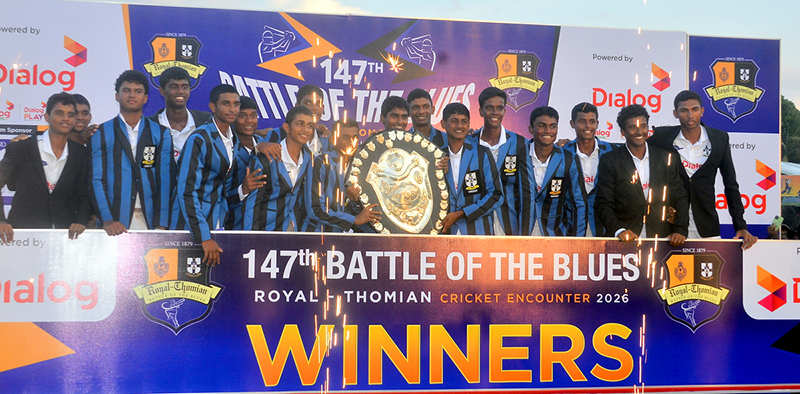
The 147th edition of the historic Battle of the Blues ended in a draw, with Jaden Amaraweera producing the only century of the Big Match to give fans a rare highlight after three days of largely uneventful cricket.
Amaraweera’s unbeaten hundred in the final stages of the match provided an individual milestone for spectators who had otherwise endured a contest dominated by cautious batting and slow scoring.
From the outset it appeared that S. Thomas’ College Mount Lavinia had approached the game with the intention of batting for a draw. Their first innings progressed at a snail’s pace, raising questions among critics about whether the Mount Lavinia side had come prepared to merely occupy the crease rather than push for a result.
The Thomians batted for a massive 124 overs but managed only 302 runs, a modest return for more than 500 minutes of batting. Openers Jaden Amaraweera and Avinash Fernando set the tone with an extremely cautious approach, adding 110 runs for the first wicket in 40 overs. Even their consistent batsman, Reshon Solomon, consumed 147 deliveries for his 66 runs.
In contrast, Royal College Colombo scored at a comparatively brisker rate in their first innings. Skipper Rehan Peiris and Ramiru Perera struck half centuries to guide Royal’s reply. The Reid Avenue school eventually declared their innings in 86 overs with nine wickets down, still trailing by 41 runs.
However, the declaration had little impact on the outcome, as the final day offered limited opportunity for a decisive result.
With the match drifting towards an inevitable draw, the stage was set for individual achievements. Amaraweera seized the moment, crafting the only century of the 2026 encounter. His composed unbeaten 100 came off 162 deliveries and included nine fours and three sixes, ensuring that the match would at least be remembered for a notable batting effort.
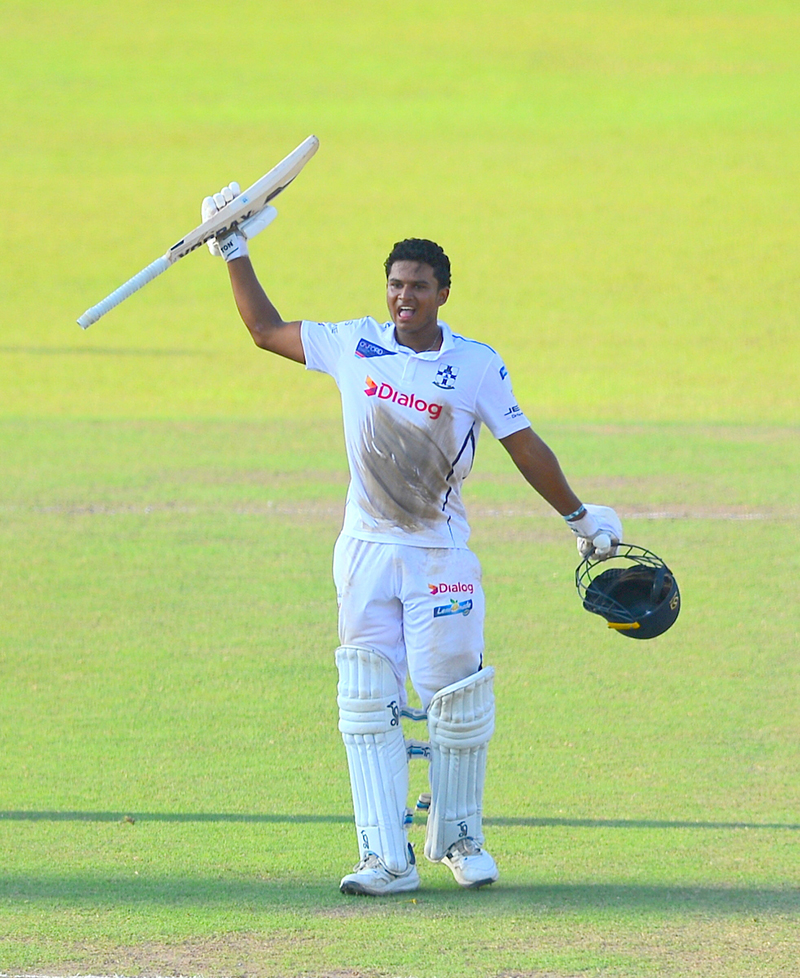
Jaden Amaraweera scored an unbeaten century in the second innings
Royal entered the contest as favourites, yet the Thomians once again managed to deny their arch rivals victory, settling for a draw in another chapter of Sri Lanka’s most celebrated school cricket rivalry

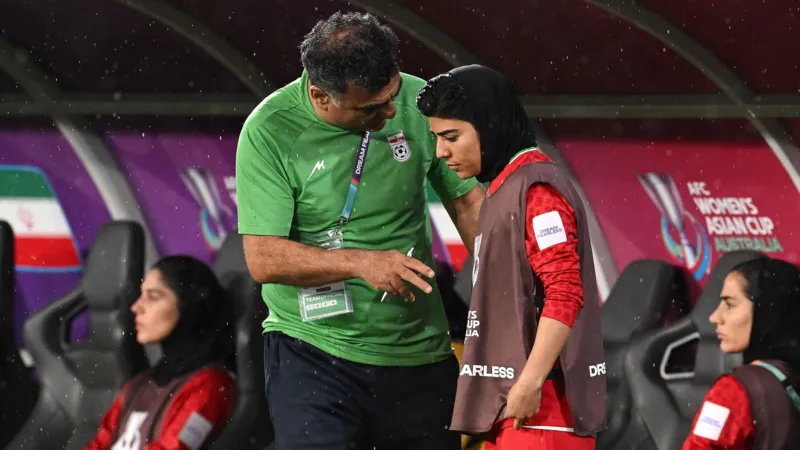
Three more members of the Iranian women’s football delegation – who were given humanitarian visas to stay in Australia – have changed their mind and will return home.
The trio have been named by human rights activists in the Iranian diaspora as Zahra Soltan Meshkehkar, Mona Hamoudi, and Zahra Sarbali.
Concerns grew for the Iranian team after they were silent for the country’s anthem in their opening Asian Cup match against South Korea on 2 March – which led to them being branded “war traitors” in Iran.
Confirming the decisions, Australia’s home affairs minister said his government had done everything it could to ensure the women were given the chance to have a safe future in the country.
“Australians should be proud that it was in our country that these women experienced a nation presenting them with genuine choices and interacted with authorities seeking to help them,” Tony Burke said in a statement.
“While the Australian government can ensure that opportunities are provided and communicated, we cannot remove the context in which the players are making these incredibly difficult decisions.”
Iran’s sports ministry also earlier confirmed the news, first reported by the Islamic Revolutionary Guard Corps-linked Tasnim News Agency, in a statement.
“The national spirit and patriotism of the Iranian women’s national football team defeated the enemy’s plans against this team,” the statement says, also accusing Australia’s government of “playing in Trump’s field”.
Tasnim said the three were on their way to Kuala Lumpur in Malaysia to join the rest of the squad and were “returning to the warm embrace of their families and homeland after withdrawing their asylum application in Australia”.
It said they had resisted “psychological warfare, extensive propaganda and seductive offers”.
It means that, of the seven who initially said they wanted to stay in Australia, only three now remain as defectors. One of the players made the same decision to return to Iran on Wednesday.
Hamoudi and Sarbali were among the original five who refused, after giving minders the slip at the team’s hotel on the Gold Coast, south of Brisbane, last Monday and being taken to a safe house by Australian Federal Police.
Zahra Soltan Meshkehkar, a member of the team’s technical staff, was one of two more women from the group to seek asylum the next day. The other – Mohaddeseh Zolfi – changed her mind hours after being given the right to stay. She is understood to have already rejoined the team.
There was concern in Australia that members of the team and their families might face repercussions in Iran after the players refused to sing the national anthem.
One conservative commentator on Iranian state media accused them of being “wartime traitors” and called for a harsh punishment.
The team did sing the anthem in their last two games before they were eliminated on Sunday, leading critics to believe they had been told to sing by government officials accompanying them during the tournament.
The remaining Iranian players left Australia on Tuesday night local time – two days after they were knocked out of the Asian Cup.
[BBC]

Our cricket bosses didn’t earn many admirers for their choice of chairman of selectors, but they have certainly struck a chord with students of the game like us, and more importantly with the fans, in their appointment of the national team’s head coach. In Gary Kirsten, Sri Lanka have brought in a man with a proven pedigree and it looks like a step in the right direction.
As an opening batsman for South Africa, Kirsten never quite possessed the charm, elegance or textbook technique of his older brother Peter Kirsten. Gary’s success was forged the hard way. He thrived on grit, discipline and a stubborn refusal to give in, the sort of qualities that don’t always make headlines but win you matches. Once asked to follow on by England, he dug in for more than 14 hours at the crease and churned out 275, the highest score of his career. That innings summed up the man perfectly. When the going got tough, Gary simply rolled up his sleeves and got going.
Those very traits travelled with him into coaching, where he carved out an enviable reputation. Managing a star-studded Indian dressing room featuring Sachin Tendulkar, Rahul Dravid, VVS Laxman and MS Dhoni is no walk in the park. Handling so many big personalities requires more than tactical nous; it demands man management. Kirsten passed that test with flying colours. Under his watch India climbed to the No.1 ranking in Test cricket and, of course, lifted the 2011 World Cup, breaking 21 million Sri Lankan hearts in the final in Bombay.
Kirsten was hugely popular with Indian supporters. Many wanted him to stay on, but he knew better than to overstay his welcome and bowed out gracefully.
Soon after, South Africa came calling and true to form he went about the job methodically, guiding the Proteas to the top of the world rankings. Wherever he has gone, results have tended to follow.
That said, simply because Kirsten has joined our ranks does not mean Sri Lanka will suddenly start knocking over the top sides week in, week out. Kirsten carries no magic wand. A coach, after all, can only take the horse to water; it is the players who must drink.
For a cricket team to flourish, the entire system needs to be rock solid. It starts with the players themselves, their hunger to improve, their willingness to leave their comfort zones and put in the hard yards. The next crucial cog in the wheel is selection. In years gone by, men like Michael Tissera and Sidath Wettimuny had the foresight to look beyond the obvious and the courage to make unpopular calls when necessary. A selection panel that continues to back Dasun Shanaka as captain, however, is asking for trouble. It’s a bit like appointing Sagala Ratnayake as National Security Adviser.
Sri Lanka Cricket deserves credit for trimming down the number of teams competing in the First Class tournament, but the worrying reality is that the number of international games Sri Lanka play each year has shrunk alarmingly. Last year the country played a grand total of four Test matches, hardly enough cricket for a side hoping to stay relevant in the longest format. The Test calendar needs beefing up and the Lanka Premier League must return to the fold if Sri Lanka are to stay competitive in white-ball cricket.
For a team to succeed consistently, cricket has to run like a well-oiled machine. In Sri Lanka’s case, however, the wheels tend to wobble. Ahead of almost every major tournament our leading bowler seems to be nursing an injury. That is hardly the hallmark of a smooth operation.
Kirsten, to his credit, has struck all the right notes since being appointed. He has spoken about improving Sri Lanka’s rankings, winning overseas and developing a strong bench, the sort of forward thinking the game desperately needs here.
Just look at India for an example of depth. Sanju Samson walks in as their back-up wicketkeeper and ends up as Player of the Tournament in a World Cup. They can hand the gloves to Ishan Kishan, while players of the calibre of Rishabh Pant and KL Rahul struggle to find a place in the squad. Any one of those four would walk into most international sides as the first-choice keeper. Such is the luxury of India’s bench strength.
There’s no point envying them. The smarter move is to learn from them.
Kirsten, therefore, has plenty on his plate. And if he is looking for a place to begin, he might start with a rather pressing issue, figuring out how Sri Lanka’s batters plan to play spin, a challenge that has been turning our innings into a procession far too often in recent times.
by Rex Clementine ✍️

PSC orders implementation of 2026 transfers from April 2

Iran lauds Lanka for assistance in saving Dena frigate sailors

Sri Lanka’s recovery reveals a ‘numerical puzzle’ in employment stats

The silent crisis: A humanitarian plea for Sri Lankan healthcare

From Que Sera, Sera … to QR

Plant-based tourism could be Sri Lanka’s overlooked growth opportunity: Andrea Diaz

‘Dates have the highest sugar content to fight Coronavirus’

Sunday Island 27 December – Headlines

#SundayIsland 17th December – Headlines

Sunday Island – 28th March

Sunday Island Headlines – 21 March

Sunday Island – 21st February – Headlines
-

 News7 days ago
Repatriation of Iranian naval personnel Sri Lanka’s call: Washington
-

 News6 days ago
Prof. Dunusinghe warns Lanka at serious risk due to ME war
-

 News4 days ago
Historic address by BASL President at the Supreme Court of India
-

 Sports5 days ago
Royal start favourites in historic Battle of the Blues
-

 Sports4 days ago
The 147th Royal–Thomian and 175 Years of the School by the Sea
-

 Business5 days ago
BOI launches ‘Invest in Sri Lanka’ forum
-

 News5 days ago
CEBEU warns of operational disruptions amid uncertainty over CEB restructuring
-

 News4 days ago
Power sector reforms jolted by 40% pay hike demand