
Sports
Arthur lauds Dhananjaya and ‘Brian Lara’ Embuldeniya

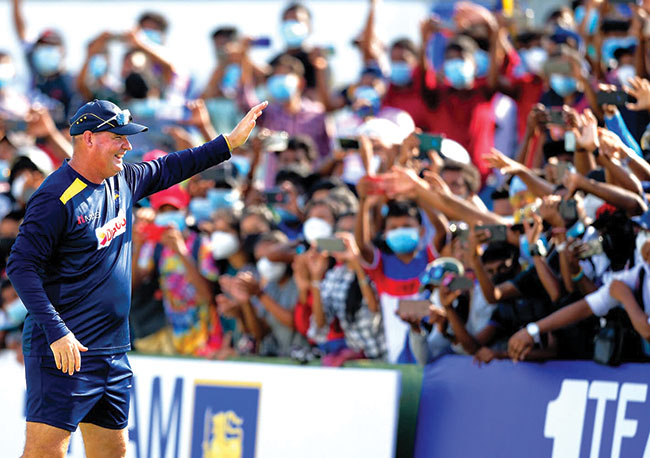
Mickey Arthur was quite emotional after his final game as Head Coach of Sri Lanka on Friday in Galle.
His was the type of happy farewell that few Sri Lanka coaches get. The team won the match by 164 runs, and the series 2-0. In the first innings, West Indies had been 24 runs behind Sri Lanka’s total with only three wickets down, when Ramesh Mendis imposed himself on the game, and sparked a collapse.
“The game did see-saw. After day one I thought we were in prime position (Sri Lanka had been 113 for 1),” Arthur said. “And then they knocked us over the next day. And then, they themselves had a good partnership. We did know that wickets fall in clumps here. It was tough to start. Once you got in, it became a lot easier to bat. Ramesh Mendis’ spell in the first innings brought us back into the game. A lead of 49 was not insurmountable.”
Sri Lanka also began their second innings with the bat poorly, however, and had been three down with a lead of only 24 when de Silva came to the crease. He helped Sri Lanka recover with a 78-run partnership with Pathum Nissanka, put on 51 runs alongside Mendis, and then really changed the game with the 124-run tenth wicket stand he managed with Lasith Embuldeniya, who hit 39.
“Dhananjaya de Silva’s innings was simply outstanding,” Arthur said. “On a pitch like this, the ease with which he played was incredible. It just shows how talented he is. That, for me, was the defining moment. I knew that once we got a lead of 250, our spinners would do the job for us. So that innings of Dhananjaya de Silva’s was paramount. He couldn’t have played it without Lasith ‘Brian Lara’ Embuldeniya at the other end.
“In terms of pressure of match situation, and in terms of pitch condition, the innings Dhananjaya played here, it was one of the better innings I’ve seen. It was remarkable. That’s testimony to the amount of work he’s put in. And it’s testimony to his talent and what a wonderful player he is.”
Mendis was the Player of the Series in the first full series he has played for the Test side, taking 17 wickets across the two matches, in addition to his contributions with the bat. Although at the lower levels, Mendis has been thought of as a batting allrounder, it is with the ball that he has announced himself at the top level. He has 26 wickets now at an average of 21.53, after eight bowling innings.
“One thing Mendis does do is he spins the ball really big,” Arhtur said. “We’ve just had to work on him being really consistent with his lines and with his lengths – the attacking lines that he’s worked on. I was just sitting next to [batting coach] Grant Flower out there and we were watching the guys out in the field. And I was saying, which guys have really made an impression on you? For both of us it was Ramesh Mendis.
“He’s toured with us almost since when I started two years ago. He didn’t play many games at the start, but every tour, he’s the guy that’s training the hardest. He wanted more and more throw-downs. He always wanted to bowl. He’s worked hard at his fielding. And I just think he’s getting his just rewards now. I couldn’t be happier for him. He’s an attacking cricketer, and he’s going to be an asset for Sri Lanka.”
Arthur has been with the Sri Lanka team for two years now, and given the travel restrictions to Australia, has spent almost that entire time either in Sri Lanka, or with the team as they traveled. With many players going straight into a Lanka Premier League bio-bubble on Saturday, the series-winning celebration on Friday night is Arthur’s last opportunity to spend time with many of the players he has coached in that time.
“I’m going to get really emotional tonight, when we eventually say farewell, because the characters who are in that dressing room are remarkable. They’re really a wonderful bunch of players and bunch of people.”








It is with deep sorrow that we announce the passing of Mr. S. K. Sangakkara, Attorney-at-Law. He was the loving husband of Kumarie, beloved father to Thusharie, Vemindra, Saranga, and Kumar, loved father-in-law to Sanjay, Nipuni, Ru, and Yehali, adored grand father to Thehan, Methvan, Nethya, Vinaya, Kaya, Seth, Kavith and Swyree.
His remains will lie at his residence in Kandy for relatives and friends to pay their last respects. We also ask that the privacy of the family be respected.
The funeral will take place on the 4th of March 2026 at 6.00 p.m. at the Mahaiyawa Cemetery, Kandy. The cortège will leave the residence at 4.30 p.m.
He will be dearly missed by his loving family, friends, colleagues, and all who knew him.
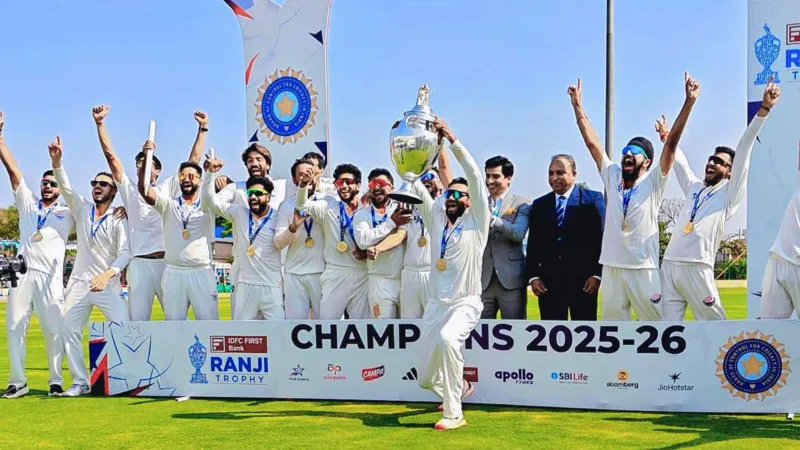
Jammu and Kashmir’s maiden triumph in India’s premier domestic championship last week is more than a sporting milestone – it is one of the most stirring stories in the country’s cricket.
The Ranji Trophy, one of the oldest first-class competitions in the sport, sits at the heart of the game in the world’s most powerful cricketing nation.
To win it is to claim a place in the country’s cricketing mainstream; for Jammu and Kashmir, it marks a breakthrough that was decades in the making.
Cricket in the disputed region dates back to the colonial era, when the Kashmir Willow – prized for its strength and resilience – helped craft bats that powered the sport across India.
For decades, the region was scarred by insurgency, political turmoil and a deep sense of alienation – tensions that culminated in 2019 when Delhi revoked Jammu and Kashmir’s autonomy and split the state into two new federally-administered territories.
Yet, even through these upheavals, passion for cricket ran deep. Success, however, proved elusive.
That changed over a remarkable fortnight.
In a season overshadowed by the ongoing high-voltage T20 World Cup, where India are defending champions, it was this unfancied northern side that quietly commanded attention.
After defeating seven-time champions Delhi to enter the knockouts, Jammu and Kashmir gathered momentum.
Former champions Madhya Pradesh fell in the quarter-finals. Bengal were subdued in the semi-finals. In the final, stood eight-time winners Karnataka, boasting four current internationals – KL Rahul, Mayank Agarwal, Karun Nair and Prasidh Krishna – and overwhelming experience.
Jammu and Kashmir were the underdogs and most expected them to falter. Instead, they produced cricket of composure, skill and steel, outplaying their decorated opponents to claim India’s premier first-class title.
The breakthrough did not come out of nowhere.
Over the past decade, the team has flirted with history, reaching the quarter-finals three times and missing last year’s semi-final by the slimmest of margins – a one-run first-innings deficit against Kerala.
The Jammu and Kashmir Cricket Association was formed in 1959-60. It has taken nearly 67 years – marked by political upheaval, institutional neglect and chronic underinvestment – for the region to complete the circle and reach the summit of Indian domestic cricket.
For decades, cricket’s real power centres lay elsewhere: Mumbai, Delhi, Kolkata, Chennai and Bengaluru. Proximity to these hubs – of money, infrastructure and influence – often determined how quickly cricket flourished in a state.
Jammu and Kashmir, geographically and politically distant from these nerve centres, remained on the margins – a cricketing outpost far removed from the game’s corridors of power.
A lack of basic infrastructure, scant coaching facilities and self-serving administration stunted cricket’s growth for decades. That Jammu and Kashmir won their first Ranji match only in 1982-83 – more than 20 years after gaining state association status – underlines how halting that progress was.
In 1983, during a match in Srinagar city against Clive Lloyd’s touring West Indies, Indian players were booed and jeered – a spectacle that prompted authorities to sideline the state from hosting major fixtures.
The hostility reflected a deepening political alienation in the Muslim-dominated Kashmir region, where resentment against Delhi over autonomy and governance was already simmering. Though a full-blown insurgency against Indian rule would erupt only in 1989, the faultlines were visible.
In 1986, Allan Border’s Australians played what would prove to be the last international match in Kashmir. Four decades on, top-level cricket has yet to return.
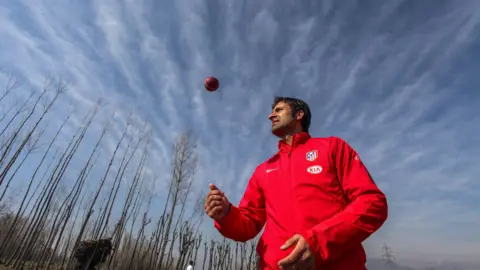
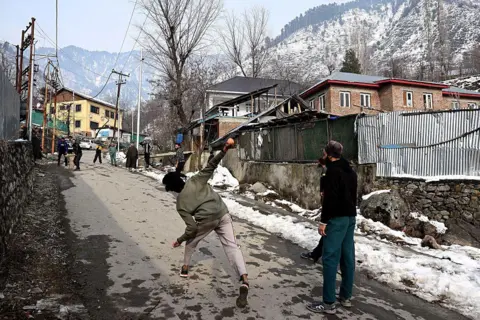
Cricket in Jammu and Kashmir began to turn a corner over the past 15 years as militancy ebbed and political volatility eased. With greater stability came long-missing attention to development and structure.
Three clear inflection points underpin the team’s rise.
The first came between 2011 and 2013, when former India captain Bishen Singh Bedi took charge as coach. He transformed a side burdened by diffidence into one that believed it belonged – urging players long overawed by reputation to compete as equals on the national stage.
Pervez Rasool, the first cricketer from Jammu and Kashmir to play for India, was among the chief beneficiaries of Bedi’s confidence-building approach – a debt he has acknowledged in recent years.
The second inflection point came in 2018-19, when the state association brought in former India all-rounder Irfan Pathan as player-cum-mentor. During his two seasons with the side, Pathan said his central message was simple: shed regional faultlines and play as one team.
That phase unearthed notable talent, including batsman Abdul Samad and the explosive fast bowler Umran Malik – only the second cricketer from Jammu and Kashmir to represent India.
The third inflection point came about five years ago, when the state association was replaced by an Apex Council to oversee the game. It was headed by Mithun Manhas, a former Delhi stalwart born in Jammu who had also played a season for J&K – blending administrative authority with local roots and top-tier experience.
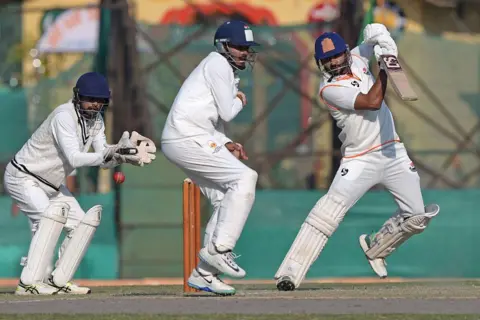
Manhas, now the head of the Indian cricket board, professionalised the set-up, appointing his former Delhi teammate Ajay Sharma as coach and tightening structures around the team.
Top-tier infrastructure followed, along with modern coaching methods – scientific fitness, nutrition planning and structured mental conditioning – bringing the set-up in line with national standards.
Paras Dogra, a seasoned and prolific domestic batsman, was drafted in as captain to anchor the rebuild. Selectors then cast the net wide, scouting both established and emerging talent.
At 41, Dogra proved a natural leader – delivering his own best while elevating those around him, a journey that culminated in this year’s coveted title.
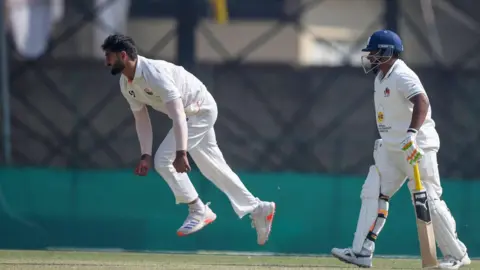
Several batsmen and bowlers stood out, but the spearhead was fast bowler Aquib Nabi, who finished the season with 60 wickets. He had claimed 44 the previous year, earning an IPL contract with the Delhi Daredevils.
Many observers believe he is ready for the highest level – the national team. Former India captain Sourav Ganguly was among those who publicly endorsed him, saying Nabi has the tools to play Test cricket for India.
Whether, and how soon, that leap to the international stage comes remains uncertain.
What is beyond doubt is the significance of Jammu and Kashmir’s surge as a cricketing force – a rise that, in its improbable sweep, recalls Afghanistan’s ascent in the global game.
For India, it matters in at least two profound ways.
First, it underscores how deeply and widely cricket’s footprint now runs across the country – a key reason India stands as the pre-eminent force in the global game.
Second, this triumph offers the beleaguered federally-administered territory and its people something long yearned for: a meaningful stake in the national mainstream through shared pride and sporting excellence.
[BBC]
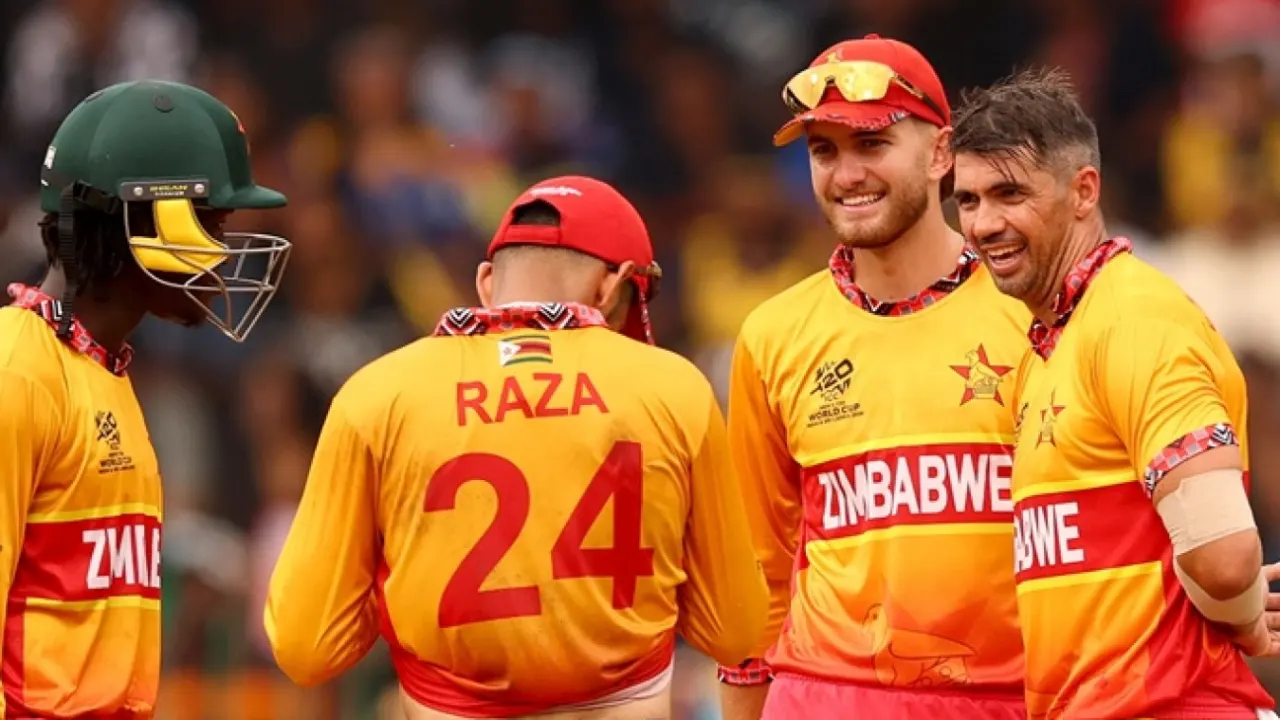
Zimbabwe have become the first team at the T20 World Cup to be affected by the closure of air spaces in West Asia, and will remain in India for the foreseeable future after their final match against South Africa on Sunday.
West Indies have also been forced to delay their departure from India*, due to “security threats posed by military action in the Gulf region”, CWI announced on Monday.
“CWI is working closely with the ICC, relevant governmental authorities and airline partners to secure the earliest possible safe travel arrangements for the squad and support staff,” the board said in a release. “The safety and wellbeing of our players, coaches, and officials remain our highest priority.
“The team is currently accommodated in India and remains safe and well. We continue to monitor the situation closely and will provide further updates as confirmed travel arrangements are finalised.”
Tournament organisers have been exploring alternative routes to get teams home as they finish their campaigns at the T20 World Cup in India and Sri Lanka. ESPNcricinfo understands that the Zimbabwe contingent was due to return home in batches, with some leaving as early as 4.30am on Monday morning and the rest to follow later in the day. They were booked on Emirates flights, which would take them from Delhi to Dubai and then on to Harare.
While it is understood that other airlines and routes are being considered, Zimbabwe are booked to stay at their Delhi hotel until March 4.
“No, not that I’ve heard of,” Zimbabwe’s coach Justin Sammons said when asked if there was clarity over the team’s travel plans. “When we started the game there wasn’t anything. And now we’ve just been focused on the game, so I’ve not heard anything since.”
Pakistan, who played their final Super Eight game on Saturday and were knocked out of the tournament, have returned to Lahore from Colombo via a Sri Lankan airlines flight.
On Saturday morning, the USA and Israel exchanged missile strikes with Iran, leading to the closure of airspace over several countries in West Asia, disrupting air travel to the region and also internationally, with several airlines having to cancel flights or change routes.
The ICC, in a statement on Saturday, said it had been monitoring the evolving situation and had “activated comprehensive contingency plans to safeguard the travel, logistics and well-being of all stakeholders” at the 2026 T20 World Cup.
“While the crisis in the Middle East has no direct bearing on the conduct of the tournament, the ICC acknowledges that a significant number of personnel – including players, team management, match officials, broadcast teams, and event staff – rely on Gulf hub airports, particularly Dubai (DXB), as key transit points for onward travel to their home countries upon concluding their commitments at the event,” the ICC said in a statement.
“The ICC Travel and Logistics team is actively working with major international carriers to identify and secure alternative routing options, including connections through European, South Asian and South-East Asian hubs. The ICC security consultants are liaising with relevant authorities and will provide real-time advisories as the situation develops. A dedicated ICC Travel Support Desk has also been activated.”
[Cricinfo]

Attorney At Law S K Sangakkara pasess away

SriLankan Airlines Update on Middle East Operations

Trump says Iran war projected to last 4 to 5 weeks, could go ‘far longer’

Qatar downs two Iranian fighter jets as conflict widens

Jammu and Kashmir’s long road to India cricketing glory

Rembrandt painting worth millions rediscovered after 65 years

‘Dates have the highest sugar content to fight Coronavirus’

Sunday Island 27 December – Headlines

#SundayIsland 17th December – Headlines

Sunday Island – 28th March

Sunday Island Headlines – 21 March

Sunday Island – 21st February – Headlines
-

 Opinion4 days ago
Jamming and re-setting the world: What is the role of Donald Trump?
-
 Features4 days ago
An innocent bystander or a passive onlooker?
-

 Features5 days ago
Ratmalana Airport: The Truth, The Whole Truth, And Nothing But The Truth
-

 Features6 days ago
Building on Sand: The Indian market trap
-
 Opinion6 days ago
Future must be won
-

 Business6 days ago
Dialog partners with Xiaomi to introduce Redmi Note 15 5G Series in Sri Lanka
-
 Business5 days ago
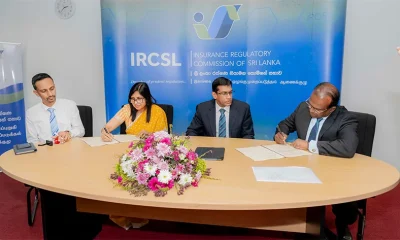
IRCSL transforms Sri Lanka’s insurance industry with first-ever Centralized Insurance Data Repository
-
 Opinion1 day ago
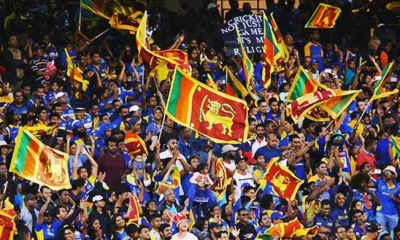
Sri Lanka – world’s worst facilities for cricket fans