
News
Army Chief explains at Investment Forum strategy of battling Covid-19

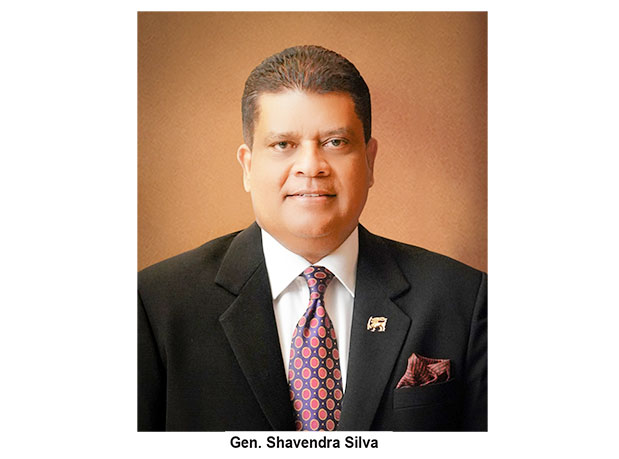
Army Commander General Shavendra Silva says the ongoing inoculation project which is the main focus of the government is being carried out covering the entire country andcordial diplomatic ties have facilitated efforts to procure vaccines.
General Silva, who is also the Head, National Operation Centre for Prevention of COVID-19 Outbreak (NOCPCO) says the government intends to shield the entire population by the end of 2021 to early 2022 to enable the restoration of stability.
“We have effectively managed the first and second wave of the COVID-19, and we are so far in the process of controlling the third wave successfully.”
General Silva was participating at virtual online sessions at the Sri Lanka Investment Forum (SLIF) yesterday.
Excerpts of General Silva’s speech: “Sri Lanka’s response strategy is based on firstly, breaking the chain of spread; secondly, curbing the spread by separating the infected from uninfected and isolating the exposed and vulnerable population; thirdly, treatment of infected personnel minimizing the loss of lives; fourthly, minimizing citizen suffering from associated loss of earnings, travel restrictions and difficulties to access medical and other necessities; fifthly, achieving the population immunity through vaccination which is the accepted best mean of defence against the virus; and finally, maintaining and progressing the economy and livelihood during and post-pandemic.
“This strategy is operationalised by distancing rules, encouraging best practices, contact tracing, isolation and quarantine process. Military and National intelligence are extensively utilised for contact tracing supported by the public health authorities for subsequent monitoring and evacuation. Military, assisted by health authorities, spearheads the isolation and quarantine process, where Security Forces build and maintain quarantine facilities and provide security and medical assistance to run the quarantine centres island-wide.
“In curbing the spread by separating the infected from uninfected and isolating the exposed and vulnerable population, the military assists in establishing and managing the Intermediate Care Centres under the guidelines of the health care authorities. Also, it is important to note that we have never neglected the tourists, foreign nationals and business partners living in Sri Lanka. We have had special consideration for such personnel from the beginning of the Pandemic, and we have taken care of them and assured their wellbeing as Sri Lankan citizens.
“As of today, healthcare authorities make a tremendous effort to minimise the loss of lives. We have been able to manage all infected cases giving best possible treatments and facilities to save their lives.
“It has to be understood that COVID-19 is not merely a health issue. Managing the Pandemic is essentially managing the economy and livelihood as well. Also, the resilience in a Pandemic is essentially the resilience in the economy too. Therefore, the Government has never underestimated the importance of local and international economic activities to run the country’s economy.
“Preserving the National Economy has been a decisive factor for Sri Lanka before the Pandemic, during the Pandemic and will be in post-pandemic too. We have given equal emphasis to external and internal aspects of the National Economy. Let me emphasize that despite having imposed travel restrictions to control the spreading of COVID 19, the country was never closed for economic and economic-related activities.
“We have emphasised on safe tourism, giving the guarantee to long-and short-term tourists that Sri Lanka is a safe destination. We are in the process of developing and improving the ‘Bio Secure Bubble’ in tourism, sports, and diplomatic visits. Sri Lanka has proven its competencies in providing a bio secure environment from the port of landing back to the departure. In this aspect, we have readjusted infrastructure, transport, food and beverage and health facilities to provide cutting edge and quality service.
“Also, by now, we are focusing on enhancing Sri Lanka’s potential in facilitating MICE (Meetings, Incentives, Conferences and Exhibitions) tourism. Considering the situation in and around the world, we expect the relatively safer situation in Sri Lanka will give a boost to this market in time to come.
“Despite the restrictions due to COVID-19 pandemic, Sri Lanka has been committed to continuing the building of necessary infrastructure and service facilities for industrial and business advancement, which is a significant prerequisite for external and internal economic partnerships. Sri Lanka’s major development projects and infrastructure projects were not delayed due to the Pandemic, and also, the health and safety of the workers have never been compromised.



The Public Utilities Commission of Sri Lanka (PUCSL) has granted approval to increase electricity tariffs with effect from 1st April .
The Ceylon Electricity Board (CEB) requested a 13.56% electricity tariff revision for the second quarter of this year.
The revision announced by the PUCSL for domestic consumers:
0–30 units category, electricity tariffs will rise by 4.3%,
31–60 units category, tariffs will rise by 6.9%,
61–90 units category, tariffs will rise by 6.9%,
91–120 units category, tariffs will rise by 7.2%,
Above 180 units, electricity tariffs will rise by 25.3%
The PUCSL has decided not to increase electricity tariffs for religious and charitable institutions that consume below 180 units monthly and a 9.6% increase for institutions that consume above 180 units.
Ectricity tariffs for the general and household consumer categories has been increased by 8%, while the electricity tariff increase for the industrial sector is 8.7%, the increase in tariff for government institutions is 14.4%.

It was decided at the committee appointed to oversee the distribution of essential goods to appoint five officials from the Ceylon Petroleum Corporation to cover all ministries in order to examine fuel-related issues and undertake the necessary interventions.
It was further discussed that the responsibility of these officials would be to examine fuel-related issues arising in institutions under each ministry and to intervene in providing solutions by maintaining coordination with the Corporation.
These matters were discussed at a meeting of the committee appointed to oversee the distribution of essential goods, chaired by Minister of Transport, Highways and Urban Development Bimal Rathnayake held on Friday (27) at the Presidential Secretariat.
It was also noted, with particular attention, that requests have been made by industrialists indicating that the current fuel quota allocated to vehicles for the distribution of their products across the country is insufficient. It was further discussed that, if these concerns are not addressed, there is a likelihood of an increase in the prices of goods, which could in turn cause significant hardship to the public during the festive season.
The committee also discussed the issuance of fuel for the distribution of essential food items by state and private institutions, including supermarkets such as Sathosa, wholesale importers, tourism-related service providers, hotels and other service-providing organisations.
Accordingly, it was discussed that requests for fuel quotas submitted by these institutions should be carefully considered and prompt action taken as necessary and that such requests should be forwarded to the Ministry of Energy through the relevant ministries.
Attention was also drawn to the need for the swift implementation of a QR code system for the issuance of fuel to other sectors, including agriculture and the fisheries industry, based on letters issued on the recommendations of the relevant government officials, including agricultural research officers, instead of the previous method of direct fuel allocation.
Minister Bimal Rathnayake emphasised the need to ensure a continuous and properly managed fuel supply, with particular focus on providing goods to the public without shortages and preventing excessive price increases during the forthcoming Sinhala and Hindu New Year season.
The discussion was attended by a group of government officials, including Minister of Trade, Commerce, Food Security and Cooperative Development Wasantha Samarasinghe, Deputy Minister of Power Arkam Ilyas, Senior Additional Secretary to the President, Kapila Janaka Bandara and Chairman of the Ceylon Petroleum Corporation, D. J. Rajakaruna.


Parliament:
… sexual harassment claims dismissed
Recommendations made by retired High Court Judge Ms. Sujatha Alahapperuma, following an inquiry into claims by a female employee of the Department of Information Systems and Management of Parliament, regarding sexual harassment, denial of due salary increments and other forms of harassment, were yet to be implemented, sources familiar with the investigation said.
The retired HC Judge handed over the report to Speaker Dr. Jagath Wickramaratne on 24 November, 2025. Secretary General of Parliament Kushani Rohanadeera was also present on that occasion.
The retired judge has recommended that administrative decisions be taken expeditiously to grant her salary increments due for 2024 and 2025, reevaluation of all employees attached to the Department of Information Systems and Management and keep them under close scrutiny and strengthening of the ‘Helpdesk’ to meet the requirements.
Sources said that none of the recommendations have been implemented and the concerned employee in spite of still being the Senior Helpdesk coordinator remained attached to the Supplies and Services Office. She had been ordered to report to the Supplies and Services Office in January 2025 following a continuing dispute with the top management of the Department of Information Systems and Management.
Parliamentary Staff Advisory Committee on 25.07.2025 decided to conduct an external investigation into the issue after the employee refused to accept the outcome of the internal inquiry conducted in the wake of SJB lawmaker Mujibur Rahman raising the issue in Parliament.
The retired judge has emphasised the urgent need to take tangible measures to address administrative issues with a view to enhance discipline and human resources management among other issues.
However, the retired judge has declared that the complainant or any other female employee attached to the of Department of Information Systems and Management hadn’t been subjected to any form of sexual harassment as alleged.
The retired judge further asserted that the complainant had been prejudicially treated by two interview boards when she appeared before them seeking posts of Database Administrator and Parliament Officer.
The retired judge has also asserted that the Supplies and Services Office where the complaint continued to serve even now was not suitable and not in line with her qualifications. Some of those who had appeared before the retired judge during the inquiry claimed that was a temporary transfer. However, the report dismissed that claim declaring that transfer appeared to have been done outside acceptable procedure and her increments stopped without giving any justifiable reason.
The retired judge has stated that for want of proper procedures and systems, the administration seems to be in turmoil.
By Shamindra Ferdinando

Electricity tariffs to be increased from 1st April

A QR code system to be introduced for agricultural lands and other sectors requiring fuel

Rickelton, Rohit, Shardul break Mumbai’s first-game jinx

Oil tops $116 a barrel as Iran accuses US of preparing invasion

Iranian attack damages Kuwait power and desalination plant, kills worker

Warm weather conditions prevailing over the island are expected to continue

‘Dates have the highest sugar content to fight Coronavirus’

Sunday Island 27 December – Headlines

#SundayIsland 17th December – Headlines

Sunday Island – 28th March

Sunday Island Headlines – 21 March

Sunday Island – 21st February – Headlines
-

 News6 days ago
Senior citizens above 70 years to receive March allowances on Thursday (26)
-

 Features3 days ago
A World Order in Crisis: War, Power, and Resistance
-

 News4 days ago
Energy Minister indicted on corruption charges ahead of no-faith motion against him
-

 News5 days ago
US dodges question on AKD’s claim SL denied permission for military aircraft to land
-

 Business5 days ago
Dialog Unveils Dialog Play Mini with Netflix and Apple TV
-

 Sports4 days ago
SLC to hold EGM in April
-

 News6 days ago
CEB Engineers warn public to be prepared for power cuts after New Year
-
 Business7 days ago
Postponement of Sri Lanka Investment Forum 2026