
News
Aragalaya activist targets presidency

By Saman Indrajith
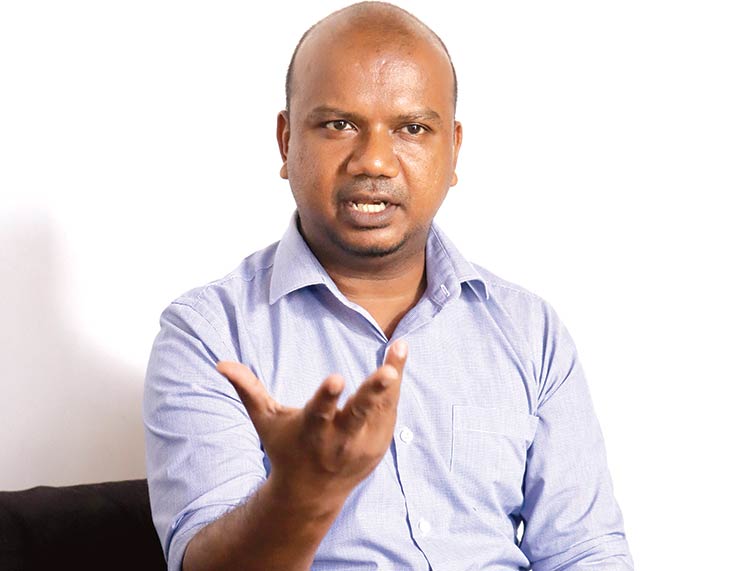
The Aragalaya movement has formed a political outfit called the People’s Struggle Alliance (PSA) and has nominated Nuwan Bopage as its candidate for the upcoming Presidential election. Bopage, an attorney-at-law, was a prominent leader in the Galle Face Aragalaya movement, which successfully led to the resignation of former President Gotabaya Rajapaksa.
Born in Kolonnawa, Bopage received his primary education at D.S. Senanayake College in Colombo and completed his higher education at Sri Lanka Law College. He has spearheaded several notable public campaigns, including efforts to remove the garbage dump in Meetotamulla, his hometown. As a lawyer, Bopage achieved a landmark legal victory for the residents of Chunnakam, who were suffering from environmental pollution caused by a power plant.
His legal focus spans human rights, environmental protection, and constitutional law. During the 2022 protests, he played a crucial role both as a protest leader at Galle Face and as a lawyer, despite the state’s repression of the protests. Currently, Bopage serves as an executive member of the PSA.
During an interview with the Sunday Island, Bopage emphasized that without creating a pan-Sri Lankan national identity that transcends identity politics and unites all citizens as Sri Lankans, there will be no solutions to the crises facing the nation. He stated that the PSA believes the 13th Amendment to the Constitution will not resolve the national issue. The PSA proposes a political solution to the national problem, including the introduction of self-governing units and areas for oppressed and marginalized communities.
Excerpts of the interview:
Q: The PSA is a coalition of several political parties and includes many experienced activists, including Duminda Nagamuwa, who has previously run for president. Why have they selected you?
A:With the announcement of the presidential election, there is increased focus on the candidates. Media discussions are centered around who the candidates are and who might win. However, what is crucial for Sri Lanka, which is currently facing economic and political crises, is finding a genuine solution. It’s not about having faith in a particular candidate, but about evaluating policies and plans. The key question is: who will present a policy framework and action plan that meets the people’s expectations?
For nearly two years, various political campaigns have been underway for the presidential election, yet none have offered a clear solution, plan, or policy. This situation reflects a recurring pattern seen over decades. Despite numerous promises from various individuals to resolve Sri Lanka’s crises and lead the country forward, public trust has often been betrayed, leading to unmet expectations. A presidential election should not be a mere popularity contest; the public must take responsibility for their choice. It is crucial to move beyond being swayed by individuals who gain popularity through state power, financial influence, media presence, or civil power. For instance, in the last presidential election, a significant portion of the public placed their trust in Gotabaya Rajapaksa, only to have their expectations dashed within two years, resulting in his removal.
As a society, we cannot continue making the same mistakes. Trust should be placed in policies and plans, not in individuals. The People’s Struggle Alliance urges the public to base their trust on policies rather than personalities. On July 31, the Alliance presented its policy framework and action plan to the public. The Alliance’s candidate not only embodies these policies and plans but also has a proven track record of standing with the people, participating in protests, and maintaining their trust. All factions of the Alliance have endorsed this candidate.
Q: There are many traditional parties and parties with parliamentary representation contesting the election. Some alliances seem to have a better chance of winning due to their resources and support. Why did the PSA decide to enter this election?
A: What is the purpose of the other alliances that are being formed? Are they focused on retaining or gaining power? None of these alliances were initially formed based on policy agreements. They began by forming alliances to secure power and only later discussed their policies. In contrast, the People’s Struggle Alliance operates differently. From the start, the alliance members proposed a short-term transitional plan and its fundamental policy framework, which attracted other groups to join. This is why we were able to present a policy statement to the public within a week of the presidential election announcement.
On the other hand, the remaining alliances are largely based on a single plan—the neoliberal economic agenda promoted by institutions like the IMF. Political parties such as the United National Party and the People’s Front, as well as opposition groups like the Samagi Jana Balawegaya, National People’s Power, Tamil National Alliance, and the Muslim Congress, all adhere to this IMF-driven plan. These groups, fearing a loss of public support, advocate a powerful executive presidency and parliamentarians elected by the people, while maintaining the existing state structure that fails to serve the public.
The PSA offers an alternative economic plan and a new constitution that empowers the people. Other alliances are essentially working against the majority of the population. They have formed coalitions with entities such as the government, opposition, IMF, transnational financial organizations, local exploitative capitalists, global imperialists, and foreign intelligence services. While these alliances may appear as different factions under various names, they are united in their opposition to the people’s interests.
The PSA is a coalition formed to challenge this opposition and unite the people. It includes workers, farmers, fishermen, small producers, students, youth, women, and marginalized groups, as well as leftists, progressives, and democrats. We felt it was necessary to build an alliance of the people because the other alliances you mentioned are being created in opposition to the public’s aspirations.
Q: This is an election you cannot win. Whose votes will you break and why do you want to do that?
A: What will all those other candidates do after winning? For whose sake are they seeking power? One thing is certain: they will shift the burden onto the people, allowing the rich to continue their extravagance. Sell off public assets, sell common property, and take on more and more debt, trapping the country in a debt trap. When the people oppose these actions, bring in new repressive laws. The People’s Struggle Alliance is coming to the presidential election to abolish the executive presidential system, ensure that the people have the power to determine state policies and legislation, expand the fundamental rights of the people, and provide solutions to the national problem with a new constitutional framework.
It is for establishing economic justice. Our goal is not narrow, but to give power to the people. There has been a saying for so long. It is not just a saying, but what actually happened. To see who won the election, go in front of the TV when the election results are announced; to see who lost, go in front of a mirror, the saying goes. Truly, every time someone wins an election, the people who cast their votes have always lost. To prevent this from happening again, for the people to win, a policy and a program must be victorious. We are coming to the presidential election for that purpose. So we have no aim of breaking into anyone’s votes specifically.
Q: Do you support the principle of self-determination for minorities?
A: Currently, all other parties contesting the presidential election are still bound by the 13th Amendment, a 37-year-old solution that was relevant at its inception. This amendment, created in response to conditions at the time, has become outdated as significant social changes have occurred over nearly four decades. The needs and aspirations of society, as well as national issues, have evolved. Therefore, a solution that addresses today’s context is needed.
The 13th Amendment was designed as a solution for the North and South at the time, but even the LTTE did not accept it. The current advocates of the 13th Amendment seem to be using it more out of obligation rather than genuine commitment to solving national issues. They are not sincerely addressing the problem but are using it as a political tool.
In contrast, the People’s Struggle Alliance does not view the Tamil, Muslim, or Up-Country Tamil communities merely as votes to be won. We are focused on addressing national oppression and fostering true nationalism. The People’s Struggle Alliance proposes a political solution to national issues, including the introduction of self-governing units and areas for oppressed national communities. The boundaries of these areas should be reassessed based on population distribution and historical context, rather than adhering to current provincial or district boundaries.
Furthermore, we propose that the governing structures in these areas be monitored, regulated, and controlled by democratic bodies formed among the people, rather than being governed solely by elected representatives. Given that the Sinhala majority constitutes about three-quarters of the population, we have also considered the risk of majoritarianism within the legislature. Our proposal includes a bicameral legislature, requiring approval from both chambers for laws on sensitive issues such as national, religious, and cultural matters, as well as for state policy formulation.
Having endured 30 years of war, we must work towards a permanent solution to prevent such issues from arising again. It should be a genuine effort, not just a political maneuver.
Q: What solution does the PSA offer for the national problem?
A: Our vision is to create a society where all people come together to build a global human culture. However, addressing contemporary national issues requires giving equal recognition, respect, and rights to all national, religious, and cultural differences. In short, our solution is based on the principles of equality and democracy.
Q: The IMF has frequently been discussed in the election platform, with some even threatening to withdraw from the IMF bailout program. What is the PSA’s stance?
A: One key issue is that the IMF has not yet intervened in foreign debt restructuring. The Sri Lankan government has only engaged in discussions about bilateral, multilateral, and commercial loans with its creditors. Initially, the IMF’s involvement was intended to focus on local debt restructuring. However, the IMF became involved in local debt restructuring, which was not necessary. The issue of Sri Lanka’s debt should have been addressed domestically.
When dealing with foreign debt restructuring, the government should have focused on negotiating debt relief and forgiveness from the outset. There is a global practice recognized by the United Nations for debt forgiveness in developing countries. Sri Lanka should have collaborated with other nations in Asia, Africa, Latin America, and Eastern Europe, which also face debt burdens, to advocate debt justice on an international level. Instead, agreeing to policies under the IMF framework that impose public hardship is not a viable solution.
Even now, it is essential to explore whether a portion of the debt can be written off using existing international norms and practices for the cancellation of odious debt. We have borrowed funds at high interest rates with large risk premiums, and it may be possible to attempt non-payment for such risky debts.
However, implementing this process requires genuine public representation in the debt restructuring negotiations. Currently, politicians and central bank officials involved in these discussions represent not the aspirations of Sri Lankan citizens but the interests of global creditors and financial institutions. This is the political issue at hand.

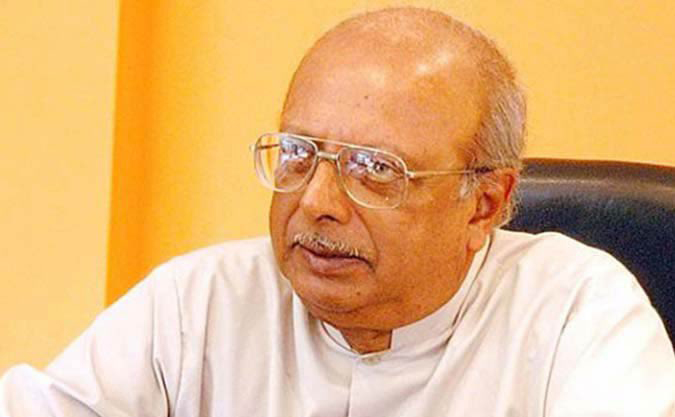
Veteran leftist politician and former Minister Professor Tissa Vitarana (92) passed away on Friday morning at his home in Kotte following a prolonged illness, bis family confirmed.Vitarana enjoyed a long and distinguished public career spanning several decades, serving as the Director of the MRI, a Member of Parliament, Cabinet Minister and Provincial Governor. The nephew (sister’s son) of Dr. NM Perera, he was the leader of the Lanka Sama Samaja Party (LSSP), one of the country’s oldest political parties.
He worked hard to keep Dr. Perera’s memory alive with annual orations as well as other left oriented activities at the NM Perera Center located in Dr. Perera’s former home in Borella.Entering active politics with the LSSP in 1974, Prof. Vitarana later emerged as a key figure within leftist political circles. Following the 2004 General Election, he was appointed to Parliament as a United People’s Freedom Alliance (UPFA) National List MP and was subsequently sworn in as Minister of Science and Technology.
He was re-appointed to Parliament via the UPFA National List after the 2010 General Election. Although he initially did not retain a Cabinet portfolio, he was appointed Minister of Technology and Research in May 2010. In November the same year, he was elevated to the position of Senior Minister of Scientific Affairs.
Prof. Vitarana lost his Cabinet portfolio following the 2015 Presidential Election. At the subsequent Parliamentary Election in 2015, he was included in the UPFA’s National List nominations but was not appointed to Parliament.
In recognition of his significant contributions to the fields of science and technology, he was conferred the prestigious Vidya Jyothi title in 2017.
On December 4, 2019, he was appointed Governor of the North Central Province and was sworn in before then President Gotabaya Rajapaksa. He served in that capacity until 2020.
Prof. Vitarana’s passing marks the end of an era in leftist politics in Sri Lanka. Funeral arrangements are yet to be announced.
His remains lay at the N. M. Perera Centre, 106 N. M. Perera Mawatha (Cotta Road) from 8 am yesterday (14). The funeral will take place at the New Crematorium, General Cemetery, Borella at 4.30 pm on Monday, February 16.
Prof. Vitarana leaves his children Menika, Ranmal, and Ranil, and brother Nihal. He was predeceased by his wife, Kamini.
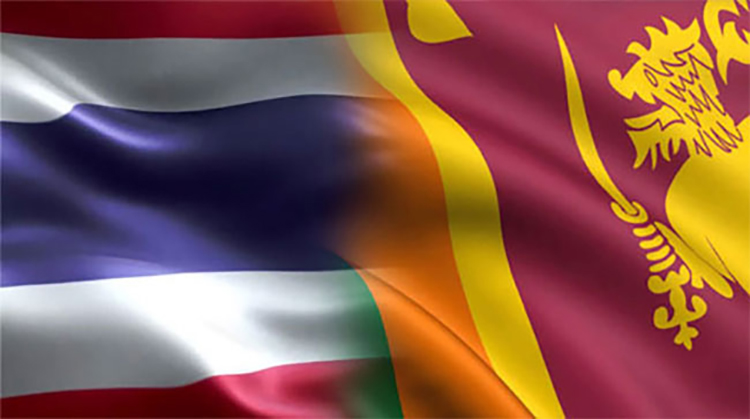
Sri Lanka and Thailand have concluded negotiations on a landmark labour cooperation framework that will pave the way for the recruitment of 10,000 Sri Lankan workers under a pilot project approved by the Thai Cabinet.
The development follows a series of virtual negotiations between officials of both countries to finalise two key bilateral instruments — a Memorandum of Understanding on Labour Cooperation and an Agreement on the Employment of Sri Lankan Workers in Thailand.
The discussions were facilitated by Sri Lanka’s Embassy and Permanent Mission in Bangkok, with the participation of Ambassador and Permanent Representative Wijayanthi Edirisinghe and officials from the Ministry of Labour and the Sri Lanka Bureau of Foreign Employment (SLBFE), alongside their Thai counterparts.
According to officials, the Thai Cabinet has already granted approval to recruit 10,000 Sri Lankan workers to address labour shortages in several sectors of the Thai economy. The pilot initiative is expected to generate structured and gainful employment opportunities for Sri Lankans in fields including construction, agriculture and livestock, food and beverage, industry, educational institutions, aquatic animal processing and mining.
Following comprehensive discussions, both sides finalised the draft texts of the two agreements.
The documents will now be submitted to the respective Governments for formal approval prior to signing. The signing ceremony is expected to take place at ministerial level in the first quarter of 2026.
Officials described the conclusion of negotiations as a significant milestone in bilateral relations, noting that the framework is designed to ensure safe, orderly and regular labour mobility while safeguarding the rights and welfare of Sri Lankan workers under a transparent and regulated mechanism.
The initiative comes amid ongoing efforts by Sri Lanka to expand overseas employment opportunities and enhance foreign remittance inflows, while ensuring stronger protection for migrant workers through government-to-government arrangements.
Officials from the Digital Economy Ministry state that there are plans to provide every person in the country with High-Speed Broadband connectivity by 2029, parliament sources said on Friday.The announcement was made during a meeting of the Sectoral Oversight Committee on Science, Technology and Digital Transformation held in Parliament on February 6, chaired by MP Dr. Janaka Senarathne, where the allocation of 2026 budget provisions for the Ministry of Digital Economy and the Ministry of Science and Technology was discussed.
During the session, Dr. Hans Wijayasuriya, Senior Advisor to the President, presented details of the nationwide High-Speed Broadband programme. He confirmed that 100 new telecommunication towers will be installed this year as part of the initiative, with a total of 600 to 1,000 towers planned to meet national requirements, to be rolled out in stages.
Dr. Wijayasuriya noted that while current internet coverage stands at approximately 98%, it falls short of High-Speed Broadband standards. He emphasized that existing capacity must be increased by around 25% to ensure that every citizen, including schoolchildren, has access to high-speed internet.
He also stated that a commercial model will be developed for the telecommunication towers, allowing private sector participation through a bidding process.
The Committee additionally highlighted the importance of digital literacy initiatives in areas outside Colombo, proposing programmes to be coordinated through District Secretariat offices.
The meeting further covered the allocation of 2026 budget provisions for the Ministry of Science and Technology, with several annual and performance reports of affiliated institutions approved.The session was attended by Deputy Minister Chathuranga Abeysinghe and MPs Chandima Hettiarachchi, Lasith Bhashana Gamage, Chathura Galappaththi, Aboobucker Athambawa, and Ruwan Wijeweera.

Death of Prof. Tissa Vitarana, funeral Monday

Thailand to recruit 10,000 Lankans under new labour pact

Lanka aims for nationwide high-speed broadband by 2029

Big Brother coming?

Reconciliation: Grand Hopes or Simple Steps

Salman Faiz leads with vision and legacy

‘Dates have the highest sugar content to fight Coronavirus’

Sunday Island 27 December – Headlines

#SundayIsland 17th December – Headlines

Sunday Island – 28th March

Sunday Island Headlines – 21 March

Sunday Island – 21st February – Headlines
-
 Business4 days ago
Autodoc 360 relocates to reinforce commitment to premium auto care
-
 Midweek Review4 days ago
A question of national pride
-
 Opinion3 days ago
Will computers ever be intelligent?
-
 Midweek Review4 days ago
Theatre and Anthropocentrism in the age of Climate Emergency
-

 Editorial6 days ago
The JRJ syndrome
-
 Opinion4 days ago
The Walk for Peace in America a Sri Lankan initiative: A startling truth hidden by govt.
-
 Foreign News6 days ago
Portugal elects Socialist Party’s Seguro as president in landslide
-
 Foreign News7 days ago
Washington Post chief executive steps down after mass lay-offs