
Opinion
Anura Rajapaksa, physician and musician


Anura Rajapaksa hailed from Panadura, born to RME (Rohan) and Nalini Rajapaksa. His was an illustrious family of four brothers – late Anil of Perth, Australia, late Naveen of Colombo, Sri Lanka, and Priyan of Auckland New Zealand. His early upbringing was in Panadura where he started his schooling, finishing at Royal College, Colombo.
My friendship with him started at Royal College when we were in classes which included boys belonging to the different communities of then Ceylon. His parents were warm people full of warmth and hospitality. We spent weekends on a tea estate upcountry where his parents had an interest.. Anura’s warmth and friendship was ingrained in his genes!
In our teens we looked forward to the Big Match when ‘old crock’ hearses were rented from a funeral parlors to parade the streets with a ‘papare’ trumpeter whose music was supplemented by Anura who had an accordion and a drum. Vocalists included many our classmates singing with him. Anura was versatile musically and could play any instrument and sing as well.
We entered Medical School in 1963. He was in the organizing committee that resurrected the Block Concert which has been put on hold by the then Dean Prof OER Abhayaratna. Dr Joe Wijaynayagam (now in Canada) would write the play and many of us eagerly participated with stage names that cannot be published.
Anura came to Brooklyn, New York with his friend Ranjan Hulugalle in the summer of 1971. Having been here two years earlier, I picked them up from JFK Airport and broke them into the new cultural norms. They were part of the exodus at the time of the ‘Che Guevara’ JVP upheaval. Trikanthi, quite pregnant, followed him and daughter Roshini was born here in Brooklyn.
Upon completing specialty training, Anura settled in Westchester to practice Internal medicine and Critical Care. Once established, within a short period of time he purchased a home in Scarsdale NY. Being an exceptional physician, he had a great reputation and would treat many Lankan immigrants, rich or poor, who sought his services.
We kept our friendship and our passion to work hard and play hard as well. Our parties ended with a sing song with Anura effortlessly playing the piano. He was an amazing dancer and it was a real treat to watch when he took to the floor with Trika. His culinary talent was also exceptional. At Thanksgiving, Anura would complement the customary Turkey dinner with a roast Leg of Lamb done exquisitely. He was a man of many talents and did anything he put his mind to remarkably well.
The Royal Thomian match attracted many expatriates to return to relive their youth! The culmination of the week was at Ken and Swyrie Balendra’s home where we would have Anura on the accordion to lead a small band with Late Sidath Jayanneti(USA) on drums and vocal accompanists, Late Tissa Wickramasuriya (SL), Para Waran (USA), Sarath Samarasinghe(SL) and Lakshman Kaluaratchi.(SL)
Anura was involved with multiple societies which gave him access to many younger individuals who immigrated later to the US. He was a Past President of the RCOBECA (Royal College OBA East) and Past President of SLAMANA East (Sri Lanka Medical Association Of North America). He championed many charitable endeavors in Sri Lanka during his tenure. He was truly a practicing Buddhist with tolerance to all religions and people.
On a personal level, he was warm-hearted and always interested of the pursuits of the younger generation. He always found time to speak to the next generation with words of encouragement whether they were his friends’ children or those of his patients. A great example is his own daughter Roshini who matriculated at Harvard and went on to Medical School where she serves in the faculty.
I have lost a dear friend, advisor, counselor and talented musician. I will forever cherish our lifetime of wonderful memories and remember all of Anura’s innumerable contributions to my life and the lives of so many. He was truly a remarkable person, and will be forever missed.
Para

by Sena Thoradeniya
I Refer to the article published under the above title in The Island of 14 Sept. It was written by Dr. Uswatte-aratchi, whose insights into art, literature, and culture have long resonated with mine. In those domains, we have shared similar views; yet in matters of political theory, political leadership, and governance, our perspectives have not converged.
I do not intend to discuss the entire article by Dr. Uswatte, for he is entitled to his views on our politicians, even to the point of publicly attacking them when opportunity arises. I am neither an apologist nor an agent of any among those he has named. My concern here is solely to highlight Uswatte’s curious attribution of his knowledge of mathematics and physics to a person who, in his public addresses, has revealed no trace of intellectual capacity.
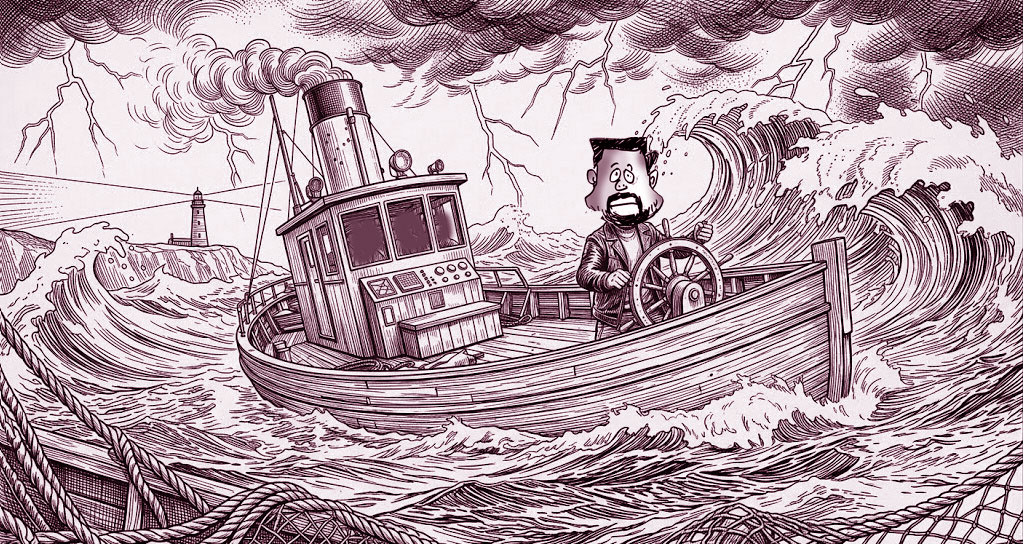
Dr. Uswatte says: “Unlike the earlier rulers Dissanayake (referring to the President) attended government schools in Tambuttegama and Kelaniya University. He studied science and mathematics. He can differentiate an equation for you and speak intelligently about Paul Dirac and Higgs Boson with the same felicity as accusations against former politicians”.
We are waiting for a theoretical or scientific publication by the current President that might justify such a claim. To ascribe scholarly depth to one whose record is not noticeable is absurd. It is a gesture that compliments without foundation and confers laurels where none have been earned.
This is what Dr. Uswatte says about the Prime Minister: “There is a Prime Minister who can talk to you impromptu about Auguste Comte and Claude LéviStrauss”.
A person who is said to have studied sociology should be knowledgeable about Comte, regarded as the father of sociology and the founder of positivism, and Claude Lévi-Strauss, a leading figure in structural anthropology; yet we remain uncertain whether she speaks of them with genuine familiarity and scholarly understanding, or is merely name-dropping them in an impromptu fashion. What on earth is she saying about these men on public platforms?
Since I possess no knowledge of either physics or mathematics, it was sheer curiosity that led me to consult AI only to discover what a marvelous President we have!
Paul Dirac was a pioneering English physicist, who helped establish quantum mechanics, co-founder of quantum electrodynamics and contributed to quantum field theory. In 1933, he shared the Nobel Prize in Physics. The Higgs boson is a fundamental particle discovered in 2012 that explains how particles acquire mass, solving a central mystery in physics. Peter Higgs, a British theoretical physicist won the Nobel prize for physics in 2013, decades after Anura Kumara obtained his degree.
Trying to rediscover theoretical physicists among ordinary science graduates who left university decades ago is indeed a futile exercise, like looking for a needle in a haystack. Theoretical physics thrives on continuity, requiring sustained engagement with evolving mathematics, new theories and experimental findings, and is a discipline that demands lifelong intellectual engagement.
Dr. Uswatte should listen to speeches made by his new found friends at public meetings and see the reaction of social media activists. As Chairman Mao observed, theory divorced from reality is useless. “No investigation, no right to speak (“Preface and Postscript to Rural Surveys” -1941).
For the time being, I refrain from commenting on some of the President’s promises, such as ‘producing graphite from graphene’ (which ought, of course, to be the reverse), producing sulphuric acid using seawater, fortifying the stem of the banana through advanced research, devising lifesaving remedies for cancer, or unveiling the world’s first app for locating shoals of fish. The list is too long to reproduce here. An exaggerated parade of claims and the sheer implausibility of such boasts are not the stuff of theoretical physics.

by Jehan Perera
There are some journalists whose work we read and then move on. And there are others whose writing makes us stop, think and look at the country differently. D. B. S. Jeyaraj who passed away on 17 May 2026 was one of them. Whenever I saw an article by DBS, as he was widely known, appear in a newspaper, it was the first I read. He was primarily a columnist and political analyst, with a deep knowledge of the history of Sri Lanka’s ethnic conflict. But his columns were not simply analysis or opinion. They were rooted in what was happening in Sri Lanka and in what people involved in those developments were saying. We could see this in his frequent references to first-hand comments from people he had spoken to. He did this both when he lived in Sri Lanka and later, when he was living in Canada. That was no easy task.
In a 2013 interview, after returning to Sri Lanka for the first time in 25 years, DBS described how he had continued to report on Sri Lanka from Canada by maintaining contacts at home. He said that he broke his rest daily to communicate with contacts in Sri Lanka and that this dual existence of living physically in Canada and mentally in Sri Lanka took a heavy toll on his health and finances. But that commitment mattered and allowed him to write about Sri Lanka from afar without losing touch with what was happening on the ground. His writings gave readers a sense of what was happening in the north and east, as well as of politics more generally in Sri Lanka.
Speaking at the commemoration and book launch organised by the Tamil Media Alliance last week, Vijitha Yapa, the founding editor of The Island and Sunday Times, under whom DBS worked, captured an important quality of his journalism when he said, “DBS had no venom. That was his greatness.” He also recalled how DBS stood up to pressure and threats and continued writing about the Tamil community while insisting on fair play irrespective of race or religion. M. A. Sumanthiran, General Secretary of the ITAK, put another aspect of DBS’s contribution even more directly: “Truth is the first casualty of war. DBS fought to keep the truth alive.” He recalled that DBS always cross-checked his news and noted that even those who hated him read his columns to find the truth.
These observations capture two qualities that made DBS special. The first was his commitment to truth and, second, was his ability to write about a deeply divisive subject without venom. DBS was a Tamil writing about the north and east and the Tamil national question in a deeply polarised environment. Yet he wrote for the mainstream English-language press and was widely read not only by Tamils but also by people from other communities. His writing helped make the concerns, political aspirations and historical experiences of the Tamil community accessible to readers beyond it. His importance was not limited to his being a Tamil journalist. His writing mattered because it addressed the country as a whole. Issues and perspectives that might otherwise have remained within particular communities could become part of a wider national debate.
Another noteworthy feature of DBS was his ability to be realistic in his assessments. With his wide knowledge of history, he understood that each side in the national conflict had its own history, fears and perceptions of threat. He recognised that the conflict could not be properly understood through the narrative of one side alone. He understood that there could be no unilateral solution imposed by one side or the other. That realism is particularly important in a country where political positions have often been presented as if the concerns of one community could be resolved without addressing those of another. A journalist who understands this complexity needs to do more than simply take sides. He or she can help readers understand why the conflict has endured, why trust has been so difficult to establish, and why lasting peace requires more than one dominant story.
There was also something revealing about DBS’s return to Sri Lanka in 2013. In the interview he gave during that visit, he said he deliberately avoided politics. He wanted to experience the country from the perspective of an ordinary person rather than through the views of politicians or political associates. He observed a disconnect between the needs of the people and those of the political class. In retrospect, that observation was remarkably prescient. The disconnect he identified in 2013 would become dramatically visible in the Aragalaya of 2022.
In the same interview, he offered an observation that deserves to be remembered. A journalist may not be able to write all that he or she wants because of external constraints, he said. But no journalist should write what he or she does not want to write because of external pressure. His commitment to independent journalism came at a considerable personal cost. He was arrested and detained by the Sri Lankan Police in 1987 after his reporting on the war in Jaffna, and in 1993, while living in Canada, he was brutally assaulted by LTTE supporters who fractured both his legs.
For all these reasons, I consider DBS to have been a mentor of mine. I never said so to him. Mentors are not always people who formally teach us or with whom we have a close personal relationship. Sometimes they are people whose work we follow, whose judgement we respect and whose example helps shape our own understanding of what we should strive to do. DBS was such a person for me. His passing has left a gap. His journalism was informed by history but connected to the present, rooted in facts but open to interpretation, and concerned with the realities of all communities.
The collection of his writings launched in his memory by the Tamil Media Alliance is therefore more than a record of an important period in Sri Lanka’s history. It is also a reminder of what journalism can be at its best. DBS showed that a journalist could understand one community without becoming confined to it, analyse conflict without being partisan, and take a position without losing sight of complexity. Above all, he showed the value of journalism that seeks to keep the truth alive. For those who read him regularly, the greatest reminder of his absence is the absence of his next column.
by N. A. de S. Amaratunga
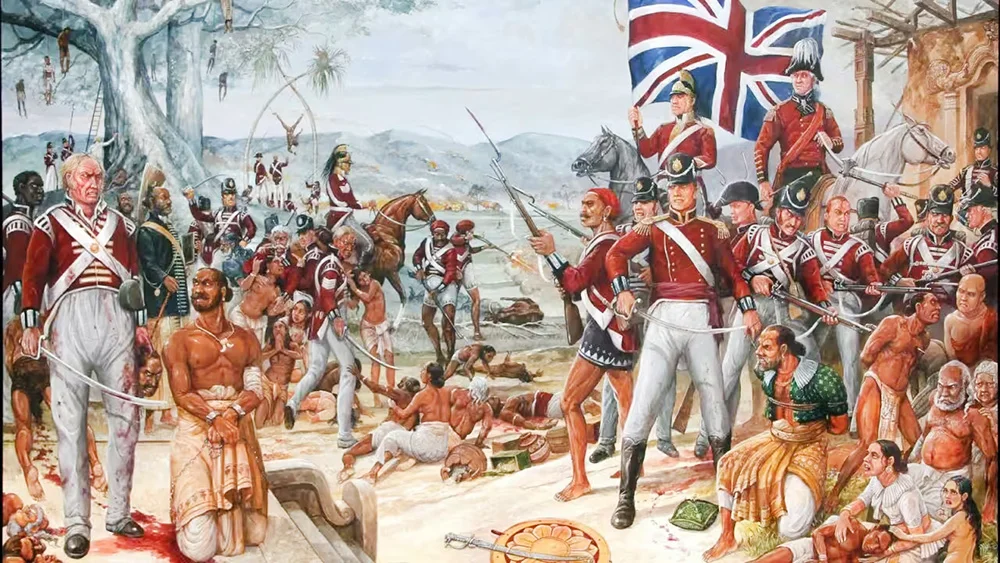
At a time when the word genocide is used with political motive and defensive war misconstrued as genocide, and a brutal genocide is taking place on a global scale with impunity, one should reflect on genocide committed by those who falsely accuse the Sri Lankan armed forces and the government for such crimes. The British who systematically annihilated people including “babies suckling”, in Uva-Wellassa in 1818 and the LTTE, which carried out numerous massacres to drive away the Sinhalese and Muslims in the so-called border villages are now shamelessly levelling unsubstantiated allegations of genocide against the Sri Lankan military. The British, jointly with the US, massacred about a million people, including children, in Iraq on a fabricated charge of possessing weapons of mass destruction. The British helped the LTTE continue their genocide of the Sinhalese and Muslims in the North and the East in an attempt to drive them away and grab their lands, and such crimes constitute genocide according to 1948 Genocide Convention.
“Slaughter every man, woman and child”
“Slaughter every man, woman, and child (including babies suckling at the breast)” was the order given by Governor Robert Brownrigg (3rd British Governor of Ceylon from 1813 – 1820) to Maj. Gen. Hay MacDowell in 1818. The British left the entire Uva-Wellassa region in a state of famine and starvation. The British used the scorched earth policy including mass murder and genocide of Sinhala civilians to crush the rebellion. British human rights campaigners now pointing accusing fingers at Sri Lanka have forgotten the Madulla Massacre, which led to razing and annihilating entire villages. In the entire Uva region members of the male population above the age of 18 were killed in revenge for resisting British imperial occupation under Governor Brownrigg.
Britain at present is leading a core group at the UNHRC Geneva, which bashes Sri Lanka for alleged human rights violations. Britain seems to have no remorse about its genocidal violence in Sri Lanka and happily leads the way in castigating Sri Lanka on unsubstantiated allegations of human right violations during the war against the LTTE. The US, which is the biggest war criminal in the world, is supporting these neo-colonial strategies to control and exploit the poor countries.
The Chemmani mass grave
The Chemmani mass grave has become a political tool liberally used by the pro-LTTE groups and their supporters in the West and also their local agents to pressure the government to take action against the war winning armed forces. Let the government be urged to get to the bottom of the mass graves found in the North and elsewhere. People of this country owe it to the armed forces who saved their country to ensure that the name of the national military is cleared. And if there are any war criminals among them, punish them after conviction. Sri Lanka is not Israel, the US or the UK.
The Genocide Convention was conceived largely in response to World War II, which saw atrocities such as the Holocaust that lacked an adequate description or legal definition. Polish-Jewish lawyer Raphael Lemkin, who coined the term genocide in 1944 to describe Nazi policies in occupied Europe and the Armenian genocide, campaigned for its recognition as a crime under international law. Lemkin also linked colonialism with genocide, mentioning colonial genocides outside of Europe in his writings. The Convention defines genocide as any of five “acts committed with intent to destroy, in whole or in part, a national, ethnic, racial or religious group.” These five acts include killing members of the group, causing them serious bodily or mental harm, imposing living conditions intended to destroy the group, preventing births, and forcibly transferring children out of the group. Victims are targeted because of their real or perceived membership of a group, not randomly.
Genocide in Gaza
However, Israel in collaboration with the United States, which has the worst record in genocidal warfare, has violated this Convention with impunity in Gaza, knowing that the rest of the world cannot act against it except condemn its actions. The UN has miserably failed to take any action against Israel, though it has the necessary tools like the Convention mentioned above. Its Commissioner for Human Rights Volker Turk visited the Chemmani mass grave and issued a strongly-worded statement calling for investigation under international supervision. He has not visited the place where genocide is currently taking place in broad daylight. Neither has the UNHRC made any worthwhile response in respect of Iraq, Syria, Libya and other parts of the world, where the US and Europe have been engaged in genocidal warfare. This type of double standards will further erode the credibility of the UNHRC, and if countries tend to ignore its writ, it has itself to blame.
We still don’t know the identities of the people whose skeletal remains have been found in the Chemmani mass grave. It was a prolonged war situation that created these graves. There were allegations of killings, including civilians, by both parties to the war.
The Office of Missing Persons has received about 10,000 complaints about missing persons from the north and east and investigations into these complaints are ongoing (source – reports of the OMP). Apart from verbal complaints there is very little incriminating evidence, if at all, against the armed forces. A few isolated incidents where excesses were committed have been investigated and action is being taken against the suspects.
Campaign by Pro-LTTE groups
Pro-LTTE groups are trying their utmost to connect the missing persons with the mass graves. They claim that the people who went missing were buried in the Chemmani mass grave. The Island journalist Shamindra Ferdinando dealt with this matter comprehensively in the Midweek Review on 9 September. He shows that the narrative built up by the pro-LTTE groups and the Western imperialists regarding the alleged disappearances could be more myth than fact.
The LTTE massacred hundreds of civilians in cold blood in many places, such as Sri Maha Bodhi, Aluth Oya, Aranthalawa (where the victims were Buddhist monks), Kattankudy mosque, Palliyagodella, Eravur, Gonagala and Kebethigollewa. Most of those killings, committed outside the war zone, were aimed at terrorising the ordinary people, and that amounts to genocide according to 1948 Genocide Convention. The LTTE carried out many bomb attacks on civilian targets, such as the Central Bus Station in Pettah, the Central Bank, crowded trains and buses. In the eastern villages people were bludgeoned and slashed to death so that ammunition could be saved.
Apart from killing and injuring, the LTTE chased away Muslims and Sinhalese from the Northern province, which amounted to ethnic cleansing, an act of genocide according to the above mentioned Convention. The people who were chased away have not yet returned to their homes and property, perhaps because of the memory of terror they had experienced in the North. Aren’t these acts of genocide ? The 1948 Convention defines genocide as any of five “acts committed with intent to destroy, in whole or in part, a national, ethnic, racial or religious group.”
Attacks on centres of worship like temples and mosques and killing of priests are unpardonable acts of terror aimed at destroying religious groups. Similarly murdering surrendered police officers is butchery of the worst kind. It was such acts of naked terrorism and insane mass murder that made the FBI label the LTTE “the most brutal terrorist organization in the world”.
Silence of UNHRC
Isn’t the UNHRC keen to ensure that justice is done for the victims of genocide committed by the LTTE? Perhaps, we should not make such a request to an organisation that keeps mum while genocide is rampant in the contemporary world ? Palestinians are being systematically murdered and driven away from their country with the UNHCR doing nothing to protect them. The US President is threatening the countries which support the Palestinians.
Sri Lanka must call for an international investigation into genocide committed by the LTTE.

Abhishek Sharma hits record T20 ton as India beat Afghanistan by 127 runs

Trump administration approves sale of F-35 jets to Saudi Arabia

Banton steers England into unassailable 2-0 series lead

Showers expected in the Western, Norrh-western and Sabaragamuwa provinces and in Galle, Matara, Kandy and Nuwara-Eliya Districts.

Bid for Basil’s extradition nears final stage: Police

High blood pressure, diabetes lead to about 80% of deaths in Sri Lanka

‘Dates have the highest sugar content to fight Coronavirus’

Sunday Island 27 December – Headlines

#SundayIsland 17th December – Headlines

Sunday Island – 28th March

Sunday Island Headlines – 21 March

Sunday Island – 21st February – Headlines
-

 Latest News6 days ago
Sri Lanka thwart Fatima Sana challenge to secure Asia Cup final spot
-

 News5 days ago
Gnanasara Thero absconding after SC ruling
-

 News6 days ago
Ammunition cache found in old Kandy bungalow
-

 News6 days ago
Green Climate Fund (GCF) Regional Dialogue for East and South Asia will be held from 14 to 17 September 2026 at Cinnamon Life at City of Dreams Hotel, Colombo
-

 News6 days ago
Prof. Pieris says Buddha Dhamma recognised as source of law under Constitution
-

 News7 days ago
Bambalapitiya Railway Station renovated under the “Dream Destination” project opened to the public
-

 Latest News6 days ago
ITS Giuseppe Garibaldi’ departs Colombo
-

 Opinion4 days ago
From Galkissa (Mount Lavinia) to Tambuttegama